


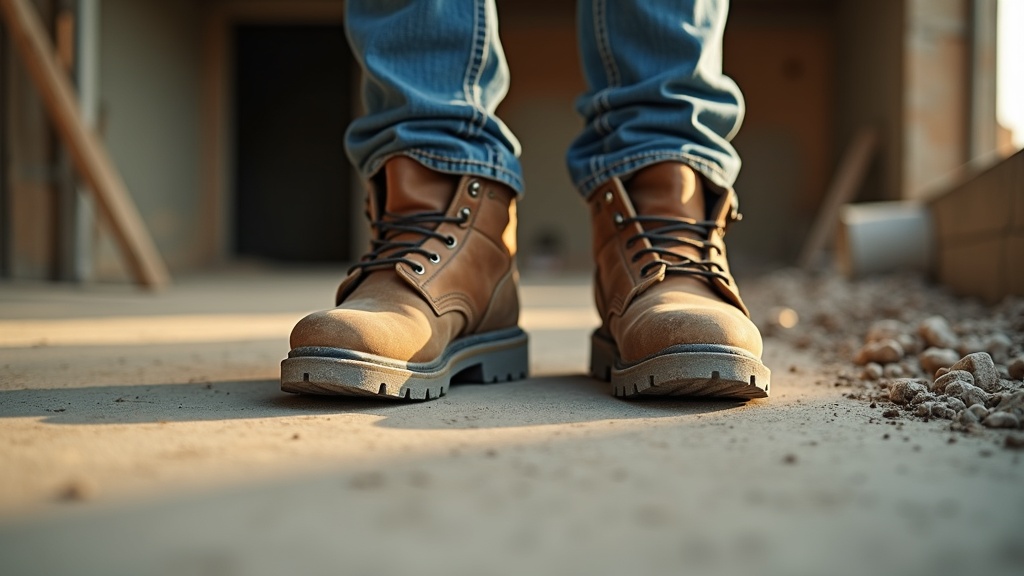
Your boots get all the attention. Meanwhile, the sock sitting between your foot and that boot is doing most of the actual work, and most guys grab whatever's on sale without a second thought. That's how you end up with blisters by lunch and wet feet by three o'clock.
Getting the fit right on a work sock isn't complicated, but it does require knowing what to look for. Get it right and you'll stop thinking about your feet entirely. That's the goal.
Key points at a glance
- Sock size and boot size are not the same thing, sizing errors cause most blisters and bunching issues.
- Merino wool outperforms cotton on long shifts in nearly every condition, hot or cold.
- Cushioning placement matters: look for reinforced heel and toe zones, not just overall bulk.
- Match your sock weight and height to your specific trade and boot type.
- Sweaty feet need moisture-wicking fibers, not thicker cotton, cotton holds water against your skin.
- A quality work sock costs $15 to $30 a pair and lasts years. Cheap socks cost more in the long run.
What a good work sock does for you
Why Your Work Socks Matter More Than You Think
Foot pain is one of the top reasons skilled tradespeople develop chronic knee, hip, and lower back problems. The sock is the first layer of shock absorption, before the insole, before the midsole, before any of the boot's structure comes into play.
A sock that slips, bunches, or soaks through early in the day changes the way you walk. Over weeks and months, that compensation adds up. The right sock isn't a comfort luxury; it's occupational protection.
How to Choose the Right Work Sock Size (and Why Most Guys Get It Wrong)
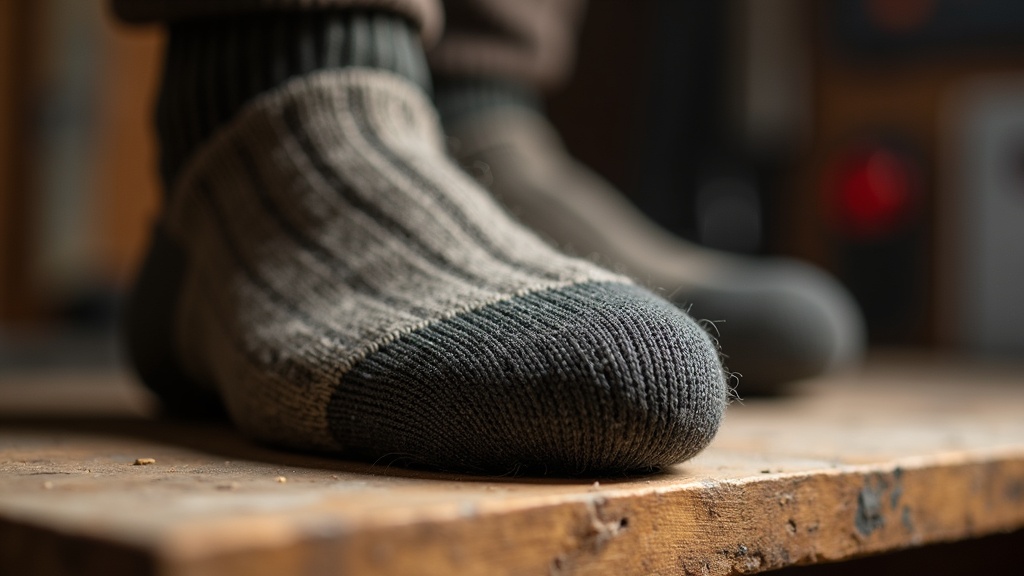
Most men buy their sock size by shoe size. That's a start, but it's not the full picture. A sock that fits correctly should have zero excess fabric at the toe box and shouldn't constrict your arch.
If the heel cup on the sock rides up toward your ankle mid-shift, the sock is too big. If your toes feel cramped after the first hour, go up a size. Both problems generate friction, and friction creates blisters.
- Size M: typically fits shoe sizes 6 to 9
- Size L: typically fits shoe sizes 9 to 12
- Size XL: typically fits shoe sizes 12 to 14
- Always check the brand's specific size chart, ranges vary more than you'd expect
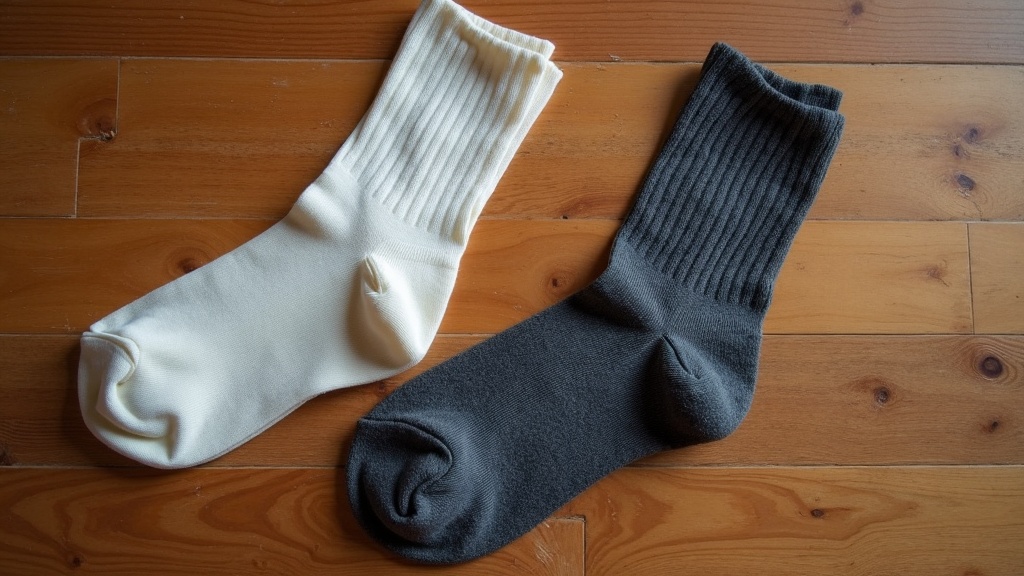
Also check the sock's cuff height against your boot shaft. A crew-length sock in a tall logger boot will slide down every hour. Match the two properly.
Cotton vs. Wool vs. Synthetic: Which Material Actually Holds Up on the Job
This is where most buying guides get vague. Let's be direct about what each material does and doesn't do on a real jobsite.
Did you know?
Merino wool fibers can absorb up to 35% of their own weight in moisture before they start to feel wet against your skin. Cotton, by contrast, begins to feel damp almost immediately and retains that moisture throughout the day.
| Material | Best For | Weakness | Durability |
|---|---|---|---|
| Merino Wool | All-season, temperature regulation, odor control | Higher cost, needs gentle washing | High (blended with nylon) |
| Cotton | Light indoor work, low-sweat conditions | Holds moisture, causes blisters in boots | Low to medium |
| Nylon / Polyester Blend | High-wear abrasion zones, added durability | Less breathable on its own | Very high |
| CoolMax / Moisture-Wicking Synthetic | Hot conditions, sweaty feet, summer sites | Less cushion than wool, odor over time | Medium to high |
| Merino/Nylon Blend | Best all-around for heavy-duty work socks | Price point is higher | Very high |
The short answer: a merino/nylon blend is the workhorse choice for most tradesmen. It manages temperature, wicks moisture, resists odor, and holds up to repeated washing. Cotton has its place, but that place is not inside a work boot for a 10-hour shift.
Cushioning, Compression, and Fit: What to Look for in a Work Sock
Not all cushioning is created equal. A sock that's uniformly thick everywhere just makes your boot tight. What you want is targeted cushioning at the heel and ball of the foot, where the actual impact happens.
Three zones that matter
- Heel cup: reinforced knit that holds the sock in place and absorbs heel strike impact
- Ball and toe box: extra padding to handle pressure from standing and walking on hard surfaces all day
- Arch support band: a snug, slightly compressive knit through the arch that keeps the sock from migrating
Light compression through the calf helps with circulation on long standing shifts. It shouldn't feel tight, just supportive. If your leg is numb or has visible sock marks after a shift, the compression is too aggressive for your build.
Matching Your Sock to Your Boot and Your Trade
A framer working in a 6-inch leather work boot has different needs than a warehouse worker in a low-cut safety shoe. The sock has to work with the boot, not against it.
- Steel-toed construction boots: go with a heavy-duty crew or over-the-calf sock with a padded toe to buffer against the metal cap, best work socks for construction workers will be at least mid-cushion weight
- Logger or lineman boots: over-the-calf height is non-negotiable to prevent shaft rub on the shin
- Low-cut safety shoes (warehouse, logistics): a no-show or ankle crew works, but still prioritize cushion at the heel
- Rubber or waterproof boots: wool is your best friend here, it keeps feet warm even when the boot interior gets damp
Best Work Socks for Sweaty Feet and Hot Conditions
If your feet are soaked by mid-morning, the problem isn't just discomfort. Wet skin blisters faster and is more vulnerable to fungal infections. You need a sock that moves moisture away before it builds up.
Look for these terms on the label: moisture-wicking, quick-dry, CoolMax fiber, or merino wool. Avoid anything labeled 80% cotton or higher, that's a sponge sitting on your foot.
Did you know?
The average person's feet produce about half a pint of sweat per day. In an enclosed work boot under physical exertion, that number goes higher. A sock that can't manage that volume will fail well before quitting time.
For hot summer sites, a lightweight merino or a merino/CoolMax blend gives you the best of both: natural temperature regulation and active moisture pull. Thinner sock, well-fitted, beats a thick cotton sock every time in heat.
How to Spot a Work Sock That Will Fall Apart in Two Weeks
Cheap socks reveal themselves fast. Here's what to check before you buy.
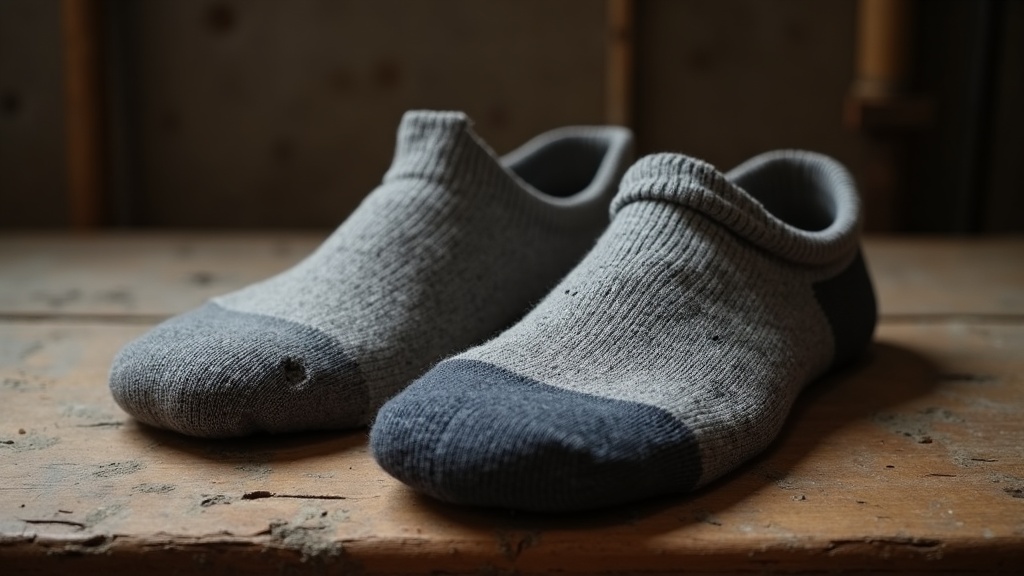
- Thin heel and toe zones: if the fabric is the same weight throughout, it'll wear through at the heel in weeks
- Loose cuff elastic: squeeze the cuff, if it doesn't spring back firmly, it won't hold position in a boot
- High cotton content: anything above 70% cotton is a moisture trap in a closed boot
- No reinforcement stitching: quality socks show visible denser knit at the heel and toe, look for it
- Vague sizing: "One size fits most" is a warning sign for both comfort and durability
What You Should Expect to Pay for a Sock Worth Buying
You can spend $3 on a pair of socks. You can also spend $3 on a cup of coffee that's gone in five minutes. At least the coffee was good.
Here's the honest price breakdown for heavy duty work socks for men that are actually worth the money:
- $8 to $14 per pair: entry-level synthetic blends, decent for light-duty or short shifts, won't last more than a season of heavy use
- $15 to $22 per pair: mid-range merino/nylon blends, solid performers, the sweet spot for most tradesmen
- $23 to $35 per pair: premium merino or specialized trade socks (logger, lineman), built to last two to three years with proper care
Buy three to four pairs at the right price point and rotate them. That rotation extends sock life significantly and gives each pair time to fully dry between wears. A $25 sock that lasts three years costs less per day than a $6 sock replaced every two months.
Your Buying Checklist Before You Order
Use this before you pull the trigger on any work sock purchase.
- Confirm the size against the brand's chart, not just your shoe size
- Check the fiber content: merino or synthetic wicking fiber should lead the label
- Look for reinforced heel and toe zones in the product description or photos
- Match sock height to your boot shaft height
- Buy at least three pairs to rotate through the week
- Check the washing instructions: machine wash warm, not hot, extends life considerably
