


If you’re wondering how to prevent foot pain at work, you’re not alone. Working long hours on your feet or walking constantly can cause foot pain, fatigue, and even affect your posture and focus. According to a study by the Cleveland Clinic, over 80% of people who stand all day experience foot pain (Cleveland Clinic, 2023).
To help prevent these issues, we’ve gathered practical, proven methods based on ergonomic advice, scientific studies, and tested products. You’ll learn how to choose the right orthopedic work boots, use comfortable insoles, perform simple exercises, and take care of your feet after work.
We’ll also highlight Mason’s orthopedic solutions, designed to provide maximum comfort and reduce the risk of chronic foot pain. With these tips, you can finally stay on your feet without discomfort, improving your comfort and well-being throughout the workday.
Method 1: Choose the Right Work Shoes

One of the first steps to prevent foot pain at work is wearing shoes suited to your activity. The right pair can significantly reduce fatigue, distribute pressure across the foot, and prevent chronic pain. According to a study published in the Journal of Foot and Ankle Research, shoes with proper arch support and adequate cushioning reduce standing-related pain by 30–40% (Journal of Foot and Ankle Research, 2022).
When choosing work shoes:
- Arch support: essential to prevent heel and plantar tension.
- Cushioning and shock-absorbing soles: reduce impact and muscle fatigue.
- Spacious toe box: prevents compression and irritation.
- Non-slip sole: keeps you safe, especially on slippery surfaces.
Recommended Mason products:
- ATLAS® S3 Pro Safety Trainer: safety sneaker with excellent cushioning and support.
- POLAR™ S3 Winter Boots: perfect for long days on your feet in cold conditions.
- MOTION™ Tactical Comfort Boots: lightweight, flexible, and designed to reduce foot fatigue.
Choosing the right shoes lays a solid foundation to prevent foot pain at work from the start of the day. A good pair can transform your comfort and improve endurance.
Method 2: Use the Right Insoles and Inserts

How to prevent foot pain at work? Another key is using appropriate insoles or inserts. Even with good shoes, extra support can make a significant difference. Insoles help distribute pressure, absorb shocks, and slightly correct posture, reducing heel and arch pain.
According to a study in the British Journal of Sports Medicine, orthopedic insoles reduce plantar pain by up to 35% in people who stand all day (British Journal of Sports Medicine, 2021). When choosing insoles:
- Arch support: essential to prevent plantar fasciitis.
- Enhanced cushioning: absorbs impact and reduces muscle fatigue.
- Breathable and durable materials: ensure all-day comfort and hygiene.
Recommended Mason products:
- TECKRS® Pro Cushion Insoles: ergonomic, comfortable insoles compatible with all Mason shoes.
- Combining Mason shoes with these insoles maximizes comfort and significantly reduces pain from long hours on your feet.
Adding these insoles to your daily routine is a practical, immediate solution to prevent foot pain at work, while improving comfort and endurance.
Discover also: Best Work Boots Comfortable—Expert Guide for Walking All Day
Method 3: Do Simple Exercises at Work

To prevent foot pain at work, incorporating simple, regular exercises throughout the day can make a big difference. Even a few minutes of targeted stretches or movements can stimulate circulation, relax muscles, and prevent foot fatigue. According to a study published in the Journal of Occupational Health, short foot exercises significantly reduce plantar pain and improve mobility in workers who stand for long periods (Journal of Occupational Health, 2020).
How to prevent foot pain at work? Practical exercises to do at work:
- Roll the sole of your foot over a ball or bottle for 1–2 minutes to relax the plantar fascia.
- Raise and lower your heels 10–15 times to activate calf muscles and improve circulation.
- Calf stretch against a wall: hold for 20–30 seconds per leg, 2–3 times a day.
These exercises are easy to perform, require no special equipment, and can be included in your regular breaks. Combined with proper work boots and ergonomic insoles, they are an effective, practical way to prevent foot pain at work.
Method 4: Alternate Positions and Take Strategic Breaks

Another effective method to prevent foot pain at work is to vary your positions and include regular breaks. Staying in one position for too long, even with good shoes and insoles, can cause muscle fatigue, foot tension, and heel pain. According to the Occupational Safety and Health Administration (OSHA), alternating between sitting and standing every 30–60 minutes significantly reduces the risk of musculoskeletal pain in workers (OSHA, 2022).
Practical tips:
- Alternate between standing and sitting whenever possible, even for a few minutes.
- Walk a few minutes every hour to stimulate blood circulation.
- Use an anti-fatigue mat if standing for long periods: it reduces pressure on the soles and decreases fatigue.
- Combining these breaks with proper shoes and insoles maximizes comfort and pain prevention.
Incorporating these simple changes into your daily routine is a practical and effective way to prevent foot pain at work, while also improving posture and overall well-being.
Method 5: Take Care of Your Feet After Work
Even after wearing the right shoes, using proper insoles, and taking regular breaks, it is essential to take care of your feet after work to truly prevent pain and avoid chronic issues. This step is a key part of how to prevent foot pain at work.
According to a study published in the Journal of Foot and Ankle Research, regular care and recovery techniques significantly reduce plantar pain and improve mobility (Journal of Foot and Ankle Research, 2022).
Practical tips:
- Warm foot baths with Epsom salt: relax muscles and reduce inflammation.
- Massage the soles with a ball or roller: relieves tension and stimulates circulation.
- Elevate your feet for a few minutes: decrease swelling after a long day on your feet.
- Apply moisturizer or specialized products: maintain skin flexibility and reduce irritation.
Incorporating these simple routines at the end of the day ensures effective prevention of foot pain, enhances recovery, and prepares your feet for the next workday.
Discover this: Best Work Boots for Plantar Fasciitis Men—Expert Picks and Advice
Mason Orthopedic Solutions to Prevent Pain at Work
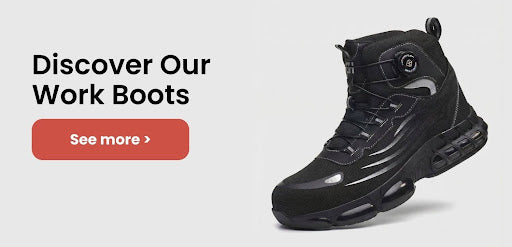
To complement practical methods and truly know how to prevent foot pain at work, it is essential to consider Mason’s orthopedic solutions. These products are designed to provide long-lasting comfort, optimal support, and effective prevention of foot pain, even during long hours on your feet.
Shoes and Boots
-
ATLAS® S3 Pro Safety Trainer: safety sneaker offering excellent cushioning and arch support. Ideal for reducing fatigue during long hours standing.
-
POLAR™ S3 Winter Boots: durable, comfortable, and insulated, perfect for cold environments or long walks.
-
MOTION™ Tactical Comfort Boots: lightweight and flexible, designed to minimize muscle fatigue and pressure on the soles.
Insoles and Inserts
-
TECKRS® Pro Cushion Insoles: ergonomic insoles compatible with all Mason shoes. They distribute pressure, absorb shocks, and reduce tension on the arches.
Key Benefits
- Long-lasting support: reduces pain and prevents chronic injuries.
- Effective cushioning: absorbs impact from walking or prolonged standing.
- All-day comfort: maintains posture and reduces fatigue.
By combining Mason shoes and insoles, you create a complete solution to prevent foot pain at work, while enhancing comfort and daily well-being. These products are a smart investment to protect your feet and work without discomfort.
When to Consult a Professional?
Even with proper shoes, suitable insoles, and regular routines, some foot pain may require professional medical advice to prevent complications. Knowing when to consult is a key step in how to prevent foot pain at work safely and effectively.
Warning Signs
- Persistent or intense pain that doesn’t improve after a few days of rest or adjustments.
- Significant swelling or numbness.
- Visible deformities, corns, or painful calluses.
Why See a Professional?
A podiatrist or specialized doctor can:
- Identify the exact cause of the pain.
- Prescribe custom orthopedic insoles if necessary.
- Recommend specific exercises to correct posture or strengthen foot muscles.
Ignoring chronic pain can lead to more serious injuries and limit your ability to stand or walk for long periods at work. Consulting early ensures relief and prevents long-term foot problems.
Improve Your Foot Comfort Today
Taking care of your feet at work is not just about comfort: it is also an effective prevention against chronic pain. By combining proper shoes, ergonomic insoles, simple exercises, regular breaks, and post-work foot care, you give yourself the best chance to work on your feet without pain and maintain overall well-being.
Mason’s orthopedic solutions provide long-lasting support and optimal cushioning, ensuring comfort and prevention over the long term. To take it a step further, you can download our practical checklist “5 Methods to Prevent Foot Pain at Work”. It summarizes all the steps to follow and helps you create a simple, effective daily routine.
Adopting these good practices today and discovering how to prevent foot pain at work becomes an achievable goal while improving your comfort, posture, and performance at work.
FAQ—How to prevent foot pain at work
What is the best shoe for standing all day?
Shoes with arch support, effective cushioning, and a spacious toe box are ideal. Mason models like ATLAS® S3 Pro Safety Trainer or MOTION™ Tactical Comfort Boots provide comfort and help prevent foot pain.
Should insoles be soft or firm?
Insoles should combine cushioning and support. Too soft, and they don’t support the arch; too hard, and they don’t distribute pressure properly. TECKRS® Pro Cushion Insoles from Mason offer the optimal balance.
How long before I feel relief?
With proper shoes and insoles, along with recommended exercises and breaks, relief can appear within a few days, though long-term improvements require consistent practice over several weeks.
