


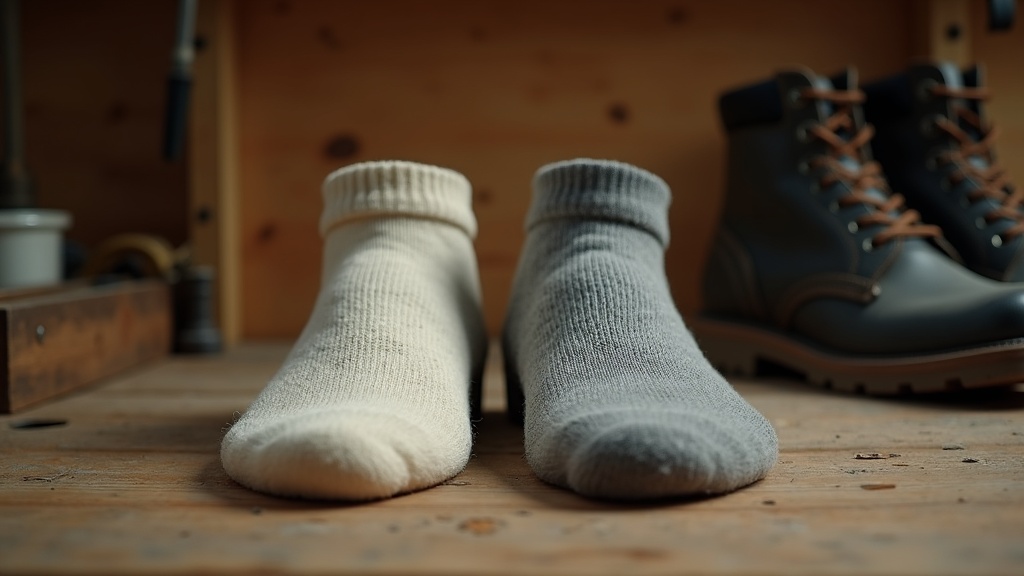
Your feet don't care about marketing. They care about whether you're soaked in sweat by 9 a.m. or still comfortable at the end of a ten-hour shift in July.
Two materials keep coming up when guys start asking about the best work socks for heat: merino wool and bamboo. Both get talked up. Both cost more than the dollar-store three-pack. Here's what actually separates them when the temperature climbs.
Key points at a glance
- Merino wool regulates temperature actively and resists odor better than any synthetic, but it costs more and wears faster under heavy boots.
- Bamboo wicks moisture fast, feels cool against the skin, and holds up better to repeated washing on a tight budget.
- In extreme heat, bamboo has a slight edge on immediate cooling. For all-day odor control, merino wins.
- Merino-bamboo blends are a real option, not just a label trick, if the blend ratio is right.
- Your job type matters: construction and trades demand durability first, warehouse workers benefit most from bamboo's airflow.
- Neither material survives cheap construction. Knit quality and thickness matter as much as the fiber itself.
What This Comparison Covers
Why Your Sock Choice Matters More in Heat Than in Cold
In cold weather, almost any decent sock adds insulation. Heat is different. The wrong sock traps moisture, breeds bacteria, and turns a manageable shift into a foot problem that follows you home.
Blisters, hot spots, and foot odor are not inevitable. They are what happens when the fiber against your skin can't move sweat away fast enough. That's the whole game in summer.
What Merino Wool Actually Does When Temperatures Climb
Merino wool is a natural temperature regulator. The fiber absorbs up to 35% of its weight in moisture without feeling wet against your skin. That buffering effect keeps your foot from going from dry to soaked in one go.
The big advantage of merino wool socks in summer is odor resistance. Wool fibers bind to odor molecules chemically, which means a merino sock can survive multiple wears between washes without turning into a biohazard. That's not a sales line, it's fiber science.
The downside: fine merino is not indestructible. Under steel-toe boots and constant abrasion, a 100% merino sock will thin out at the heel faster than a bamboo or synthetic blend.
Did you know?
Merino wool fibers are roughly 17 to 24 microns in diameter, fine enough that they bend on contact with skin instead of scratching it. That's why a merino sock feels softer than a standard wool blend even in warm conditions.
What Bamboo Brings to the Table on a Hot Jobsite
Bamboo fabric is made from bamboo pulp processed into viscose or rayon fibers. The end result is a soft, silky-feeling material with a natural hollow micro-structure that moves air.
Bamboo socks for hot weather excel at immediate moisture wicking. They pull sweat away from skin quickly and dry faster than merino. On a warehouse floor or a delivery route where you're moving constantly, that fast-dry property is worth paying for.
Bamboo also has natural antimicrobial properties, though they're less durable over time than merino's odor resistance. After 50 washes, a bamboo sock's antimicrobial performance drops noticeably. Merino holds its odor control far longer.
Head-to-Head: Merino Wool vs Bamboo Work Socks in the Heat
Here's where the rubber meets the road. Both materials are good. They're not good at the same things.
| Criteria | Merino Wool | Bamboo |
|---|---|---|
| Moisture wicking | Absorbs and buffers sweat, stays feeling dry | Pulls sweat away fast, dries quicker |
| Odor resistance | Excellent, holds after many washes | Good initially, fades over time |
| Temperature regulation | Active: warms when cool, cools when hot | Passive: stays cool, no warming effect |
| Durability under boots | Moderate, thins faster without nylon reinforcement | Better abrasion resistance at same price point |
| Cost | Higher, typically $18 to $30 per pair | Lower to mid, typically $10 to $22 per pair |
| Feel on skin in heat | Soft, slight warmth sensation | Silky, immediately cool |
What About a Merino-Bamboo Blend? Worth It or Marketing Noise?
Some brands mix the two. When it's done right, a merino-bamboo blend is genuinely useful: you get bamboo's fast wicking and cool feel combined with merino's odor control. Look for blends that are at least 40% merino to get real temperature regulation. Below that, you're mostly just paying for the merino name on the label.
A common ratio is 45% merino, 45% bamboo, 10% nylon. The nylon is there for durability and that's a smart call. Skip any blend that leaves nylon out entirely if you're wearing these under work boots.
Did you know?
Bamboo viscose is technically a regenerated cellulose fiber. The raw bamboo plant is naturally antimicrobial, but that property is partially lost during the chemical pulping process. What remains is still useful, but it is not as robust as the marketing on some packages suggests.
Which One Lasts Longer After Shift After Shift?
Bamboo work socks generally outlast 100% merino under hard use. The fiber is tougher against constant friction inside a steel-toe or composite-toe boot. If you're on your feet eight to twelve hours a day on concrete or gravel, a bamboo sock with reinforced heel and toe will hold up better over six months of daily rotation.
Merino picks up the advantage if you rotate five or six pairs and wash them carefully on a gentle cycle. Treated right, a quality merino sock lasts two to three years. Thrown in a hot dryer every night, it won't make it through winter.
Best Work Socks for Heat by Job Type (Construction, Warehouse, Trades)
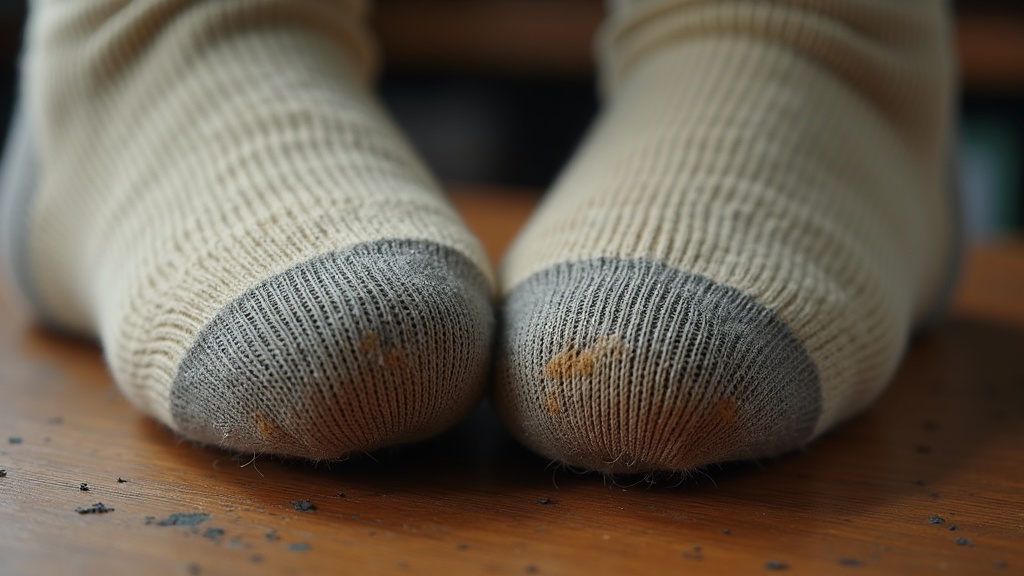
Construction and Heavy Trades
- Priority: Durability, blister prevention, moisture control under thick boots.
- Best pick: Merino-bamboo blend with nylon reinforcement, mid-cushion weight. Darn Tough and Cloudline make solid options here.
- Avoid: Thin bamboo-only socks. They won't pad the foot enough and will wear through at the heel fast on rough terrain.
Warehouse and Distribution
- Priority: All-day comfort on concrete, breathability, fast drying between back-to-back shifts.
- Best pick: High-bamboo blend (60%+) with light cushion. The cooler feel on hard floors is a real daily benefit.
- Bonus: Bamboo socks that don't smell hold up better in a locker room situation where you're changing between shifts.
Electrical, Plumbing, HVAC Trades
- Priority: Temperature swings (attic to crawlspace), odor control across a full day of varied environments.
- Best pick: Pure merino or high-merino blend. The active temperature regulation earns its price when you go from a 90-degree attic to an air-conditioned crawlspace in the same afternoon.
The Bottom Line: Which Sock Do You Actually Buy?
If odor control and all-day temperature regulation are your top two needs, buy merino. If you want the coolest immediate feel, fast drying, and a lower price point you can justify buying more pairs, buy bamboo.
If you can spend a little more and want one sock that covers most bases, a 40-50% merino blend with bamboo and nylon reinforcement is the smartest buy for the money. It won't be the best at any single thing, but it won't fail you at anything either.
Buy at least five pairs per rotation. One pair is not a test. Five pairs worn and washed consistently across one summer will tell you everything you need to know about whether the investment was worth it. That's how you actually judge a work sock.
