


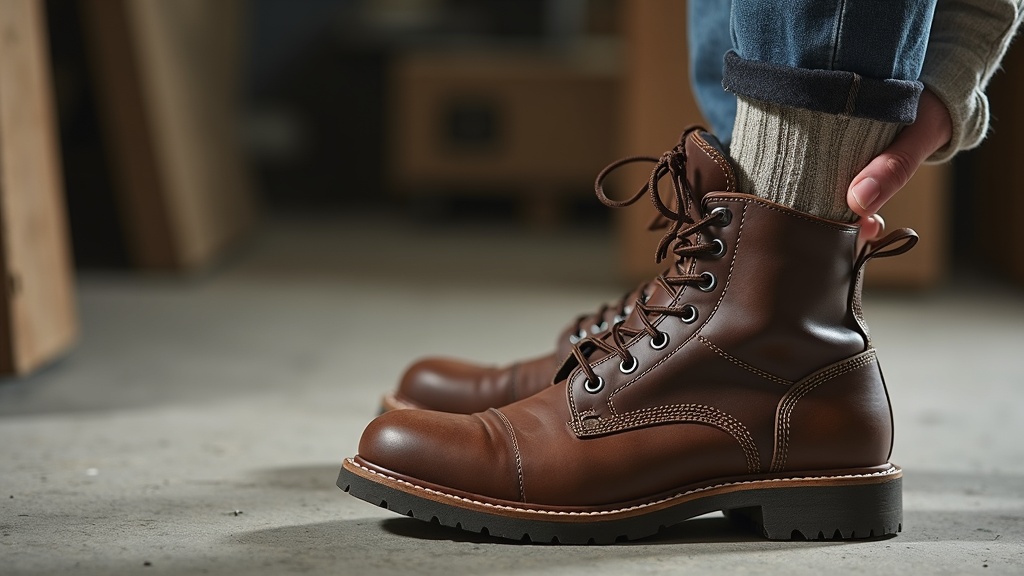
Your boots cost you good money. But without the right socks, they'll chew your feet apart before noon. It's not a comfort thing, it's a performance thing.
If you've ever come home with blisters the size of quarters, soaked socks, or feet that ache past midnight, this is the fix. Socks are not optional in work boots. Here's exactly why, and what to do about it.
Key points at a glance
- Going sockless in work boots causes blisters, odor, and accelerated boot wear.
- Merino wool is the best all-around material for work boot socks, summer included.
- Sock weight should match your job: light for summer, midweight for most trades, heavy for cold environments.
- Steel toe boots need reinforced heel and toe cushioning to prevent pinch points.
- Two pairs of socks is rarely the answer. One well-chosen pair does the job better.
- Cotton is the worst choice. It holds moisture and creates friction fast.
Why the right sock changes everything
Skip Socks and You'll Regret It by Lunch
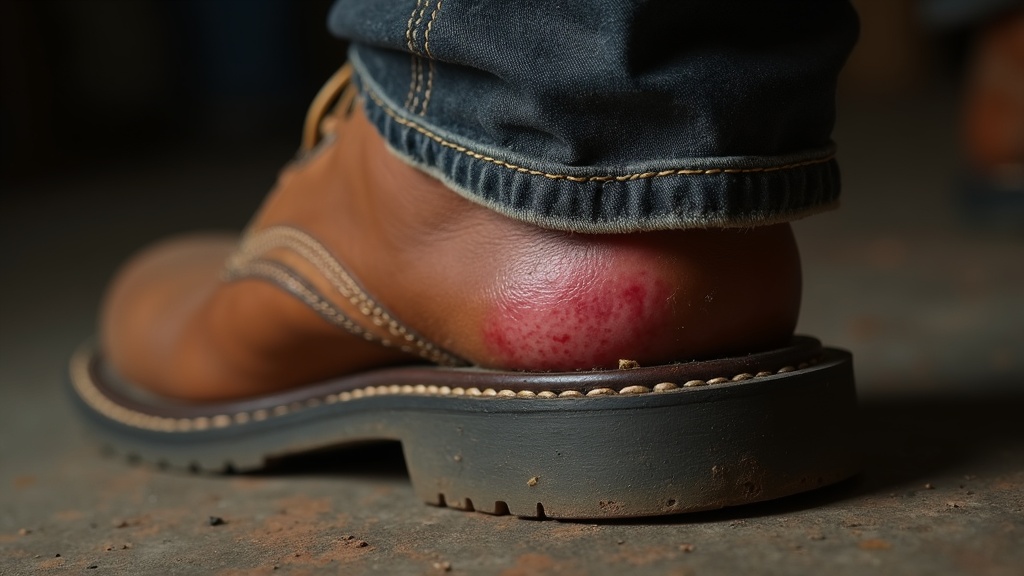
A bare foot inside a work boot creates three problems fast: friction, sweat, and smell. The leather or synthetic lining rubs directly against your skin, and that's a blister waiting to happen.
Your foot produces around half a pint of sweat per day. Without a sock absorbing that moisture, it soaks straight into the boot lining. That breaks down the leather from the inside and breeds bacteria. Your boots will stink and wear out in half the time.
Do Socks Actually Make a Difference in Work Boots?
Yes, and the difference is measurable. A sock cushions impact, reduces heel slip, and creates a friction buffer between your foot and the boot. That matters on a 10-hour shift on concrete.
A good work sock also keeps your foot in a stable position inside the boot. Less movement means less rubbing. Less rubbing means no blisters, no hot spots, and feet that feel closer to normal when you clock out.
Did you know?
The average person takes between 8,000 and 10,000 steps a day. On a construction site or warehouse floor, that number can climb higher. Every one of those steps creates friction inside your boot. A quality sock absorbs the bulk of that stress before it reaches your skin.
Thick vs. Thin: What Sock Weight Works for Your Job
Sock weight comes down to three categories: lightweight, midweight, and heavyweight. Most tradespeople do best with midweight. Enough cushion to handle impact, not so thick that the boot fits tight.
- Lightweight: Best for summer, warm climates, or boots that already fit snug. Breathable, thin, minimal bulk.
- Midweight: The go-to for most jobs. Good cushion at the heel and ball of the foot, handles temperature swings well.
- Heavyweight: Built for cold-weather work, outdoor winter jobs, insulated boots. Extra insulation, extra padding.
If your boots feel tight when you put on a thicker sock, that's a fit issue with the boot, not the sock. Don't go thinner just to make a bad fit work.
Best Sock Materials for Work Boots (Merino Wool, Synthetics, Cotton)
Material is where most people make their mistake. They grab whatever's in the drawer. That usually means cotton, and cotton is the wrong call in a work boot.
Merino Wool
Best overall pick. Merino regulates temperature, wicks moisture, resists odor naturally, and stays comfortable even when damp. It's not scratchy like coarse wool. It works in summer and winter, which makes it the most versatile option on the shelf.
Synthetic Blends (Nylon, Polyester, Spandex)
Durable, moisture-wicking, and usually cheaper than merino. They hold shape well and dry fast. Not quite as good at odor control, but a solid choice for heavy-duty use where durability matters more than breathability.
Cotton
Skip it for work. Cotton absorbs sweat and holds onto it. Wet cotton creates friction. That's a direct path to blisters and raw skin. Fine for lounging, wrong for a full shift on your feet.
| Material | Moisture Wicking | Odor Control | Best For |
|---|---|---|---|
| Merino Wool | Excellent | Excellent | All seasons, all trades |
| Nylon / Polyester Blend | Good | Fair | Heavy-duty, high-wear jobs |
| Wool / Synthetic Blend | Very Good | Very Good | Cold weather, outdoor work |
| Cotton | Poor | Poor | Not recommended for work boots |
| Bamboo / Modal | Good | Good | Light to midweight summer wear |
Best Socks for Work Boots in Summer When Your Feet Are Already Sweating
Hot weather is the one time people think they should go thinner, or skip socks entirely. Both are bad moves. A lightweight merino or moisture-wicking synthetic sock is your best tool against summer sweat.
Look for a sock with a ventilation panel on top of the foot. That open-knit zone pushes heat out and pulls cooler air in. Paired with a breathable boot, you'll feel the difference by hour two of your shift.
Should You Wear Two Pairs of Socks With Work Boots?
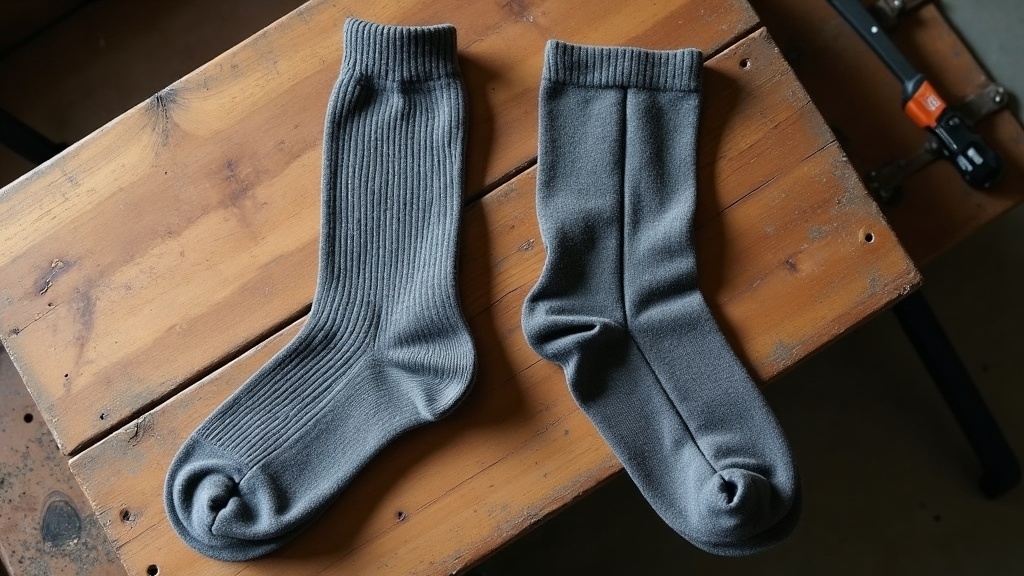
Some guys swear by a thin liner sock under a thicker work sock. The idea is that the two layers slide against each other instead of against your skin. It can work, but only if your boots have room for the extra volume.
Most of the time, one quality midweight sock does the job better than two mediocre ones. Two pairs in a tight boot creates pressure points and restricts blood flow. If you're going the double-sock route, make sure the boot fits with both layers before committing to it on a full shift.
What to Look for in a Work Sock for Steel Toe Boots
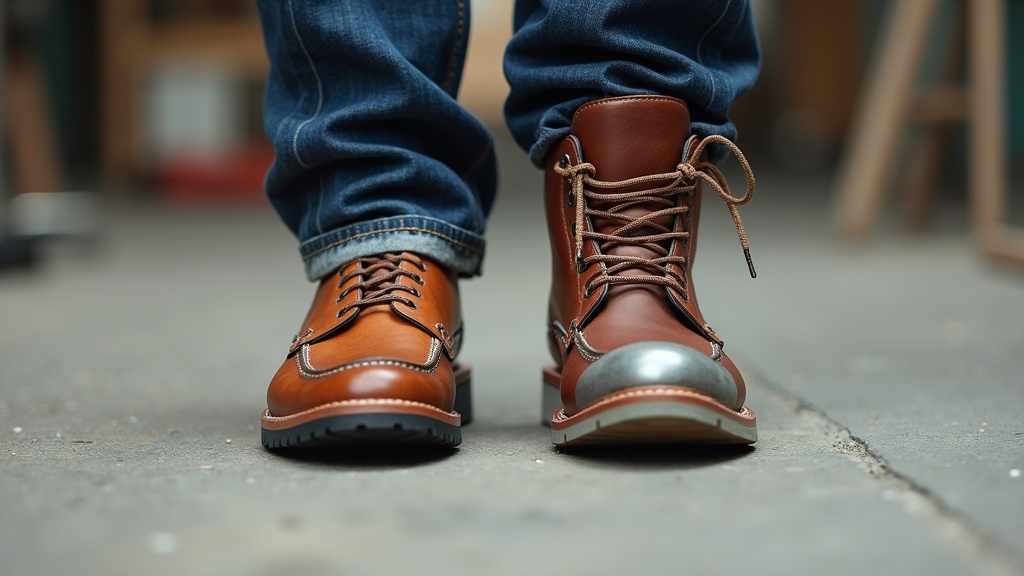
Steel toe boots have a hard cap that creates its own friction zone at the front of the foot. Thin socks let that cap dig into your toes. You need reinforced cushioning at the toe box and heel.
- Extra padding at the toe: absorbs impact from the steel cap, especially when kneeling or crouching.
- Reinforced heel: stops the heel counter from grinding when you're climbing ladders or stairs.
- Arch support zone: reduces fatigue on long shifts on hard surfaces.
- Over-the-calf length: keeps the sock from sliding down and bunching inside the boot.
Did you know?
OSHA doesn't mandate specific socks, but foot injuries are among the most common workplace injuries in the U.S. According to the Bureau of Labor Statistics, foot and toe injuries account for hundreds of thousands of lost workdays every year. A reinforced sock won't stop a dropped beam, but it does reduce daily friction injuries that add up over a career.
What the No-Socks Rule Is and Why It Doesn't Apply to Work Boots
The no-sock trend comes from fashion sneakers and boat shoes, footwear designed with soft linings, low volume, and casual wear in mind. Those shoes are built to be worn without socks, sometimes with a hidden liner sock at best.
Work boots are built differently. They're made for protection and structure, not skin contact comfort. Stiff leather, heavy stitching, reinforced toe caps, these are not foot-friendly surfaces without a buffer between them and your skin. The no-sock rule has no business inside a 6-inch lace-up work boot.
What to Buy and What to Skip
Here's the short version for the guy who doesn't have time to overthink it:
- Buy merino wool midweight socks if you want one pair that works year-round. Darn Tough and Smartwool make socks built specifically for work boots, with lifetime guarantees on some models.
- Buy a lightweight merino or synthetic blend for summer shifts. Look for ventilation panels and moisture-wicking construction.
- Buy over-the-calf socks if you wear tall boots. They won't bunch, won't slide, won't create a pressure ridge mid-shin.
- Skip cotton work socks. Even the thick ones. Once they're wet, they're a problem.
- Skip ankle socks in lace-up boots. The boot shaft will rub your ankle raw by midmorning.
Spend $20 to $25 on a pair of socks that last two years. Or spend $5 on socks that blow out in a month and cost you in blisters and boot liner damage. The math isn't close.
