


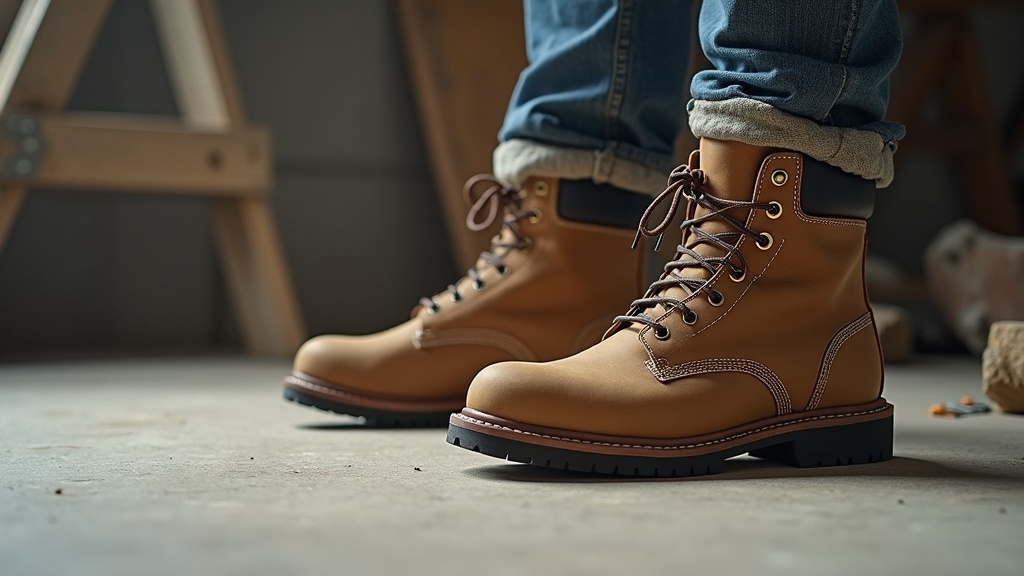
You pull off your boots after a ten-hour shift and there it is: a deep red groove around your ankle, like a rubber band had been cutting into you all day. It hurts, it looks bad, and after months of it, it starts to worry you.
The good news: this is a solvable problem. The right pair of work socks that don't leave marks exists, and it doesn't cost a fortune to find it. Here's what actually works.
Key points at a glance
- Sock marks are caused by elastic tension, wrong sizing, and heat-swollen ankles, not just cheap socks.
- Non-binding work socks use a wider, looser cuff with no-dig construction, look for that phrase on the label.
- Merino wool handles sweat and temperature better than cotton for all-day wear.
- Darn Tough makes the most durable non-binding option; brands like Sockwell and Feetures cover the budget and women's angles.
- Wide calf work socks are a specific product category worth seeking out if standard sizes always leave marks.
- Persistent, painful sock marks can signal fluid retention or circulation issues worth checking with a doctor.
What a great work sock actually does for you
Why Your Work Socks Are Leaving Marks (It's Not Just Tight Elastic)
Most guys blame the elastic. Sometimes that's right. But three other factors matter just as much: sock size, fabric weight, and what your body does over a long shift.
Your ankles and feet swell throughout the day. Fluid pools when you're on concrete for eight or ten hours. A sock that fits fine at 7 a.m. can turn into a tourniquet by 3 p.m. That groove you're seeing? It's the sock cuff pressing into swollen tissue.
Synthetic-heavy socks trap heat, which speeds up swelling. Cotton holds moisture, which softens the skin and makes it easier to mark. Neither one is your friend if you're working hard all day.
What to Look For: Fit, Elastic, and Fabric That Won't Cut Off Circulation
The cuff is everything
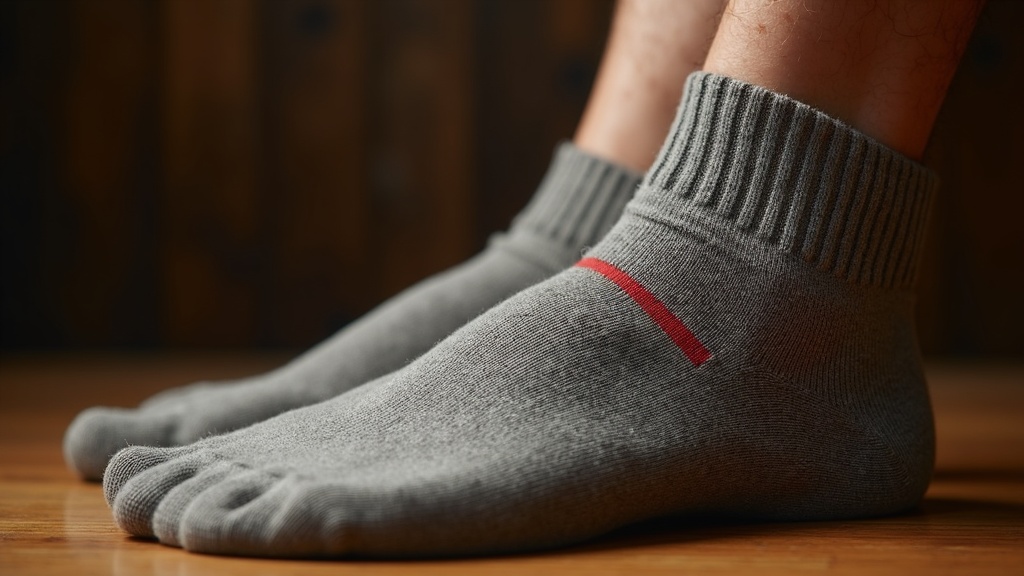
Look for socks labeled non-binding or no-dig cuff. These use a wider band of looser elastic that distributes pressure across a larger area instead of concentrating it in one thin line. The sock still stays up; it just doesn't strangle your ankle.
Sizing is more than S/M/L
Most people wear the wrong sock size because they pick based on shoe size alone. Sock circumference matters too. If you have larger calves or ankles, a standard large may still leave marks. That's where wide calf work socks come in, which list a specific calf circumference on the package.
Fabric changes everything at hour six
Merino wool breathes, regulates temperature, and doesn't compress the same way cotton does after it absorbs sweat. For all-day wear in work boots, it's the gold standard. More on this below.
Did you know?
Foot volume can increase by up to 8% over the course of a day spent standing or walking on hard surfaces. That's documented in clinical research on occupational foot health. A sock that fits at the start of your shift is genuinely smaller relative to your foot by the end of it.
The Best Work Socks That Don't Leave Marks in 2026
These are the names that keep coming up for a reason, backed by real-world use, not just spec sheets.
Darn Tough Non-Binding Work Socks
Darn Tough's non-binding line is built specifically for people who stand all day. The Vermont-made merino blend uses a graduated fit cuff with no tight band at all. The sock grips your leg through the fabric density itself, not elastic pressure. Backed by a lifetime guarantee, so if they wear out, you get a new pair. Full stop.
Sockwell Elevation Graduated Compression Socks
Sockwell takes a different approach: mild graduated compression that actually reduces swelling rather than causing it. The pressure is firmest at the foot and lightest at the calf, which is the opposite of what a regular tight-cuffed sock does. Good pick if your legs ache by end of shift.
Wrightsock Coolmesh II
A double-layer design that prevents blisters and uses a loose, flat-knit cuff. Lighter weight than Darn Tough, which makes it better for warmer environments or lighter work boots. Affordable, available at most running and outdoor stores.
Dickies Dri-Tech Moisture Control Work Socks
The budget option that actually holds up. These are not merino, but they use a wide ribbed cuff that's noticeably less aggressive than most cheap work socks. Available in multipacks, which makes sense when you're rotating through them five days a week.
Merino Wool vs. Cotton vs. Synthetic: Which Holds Up on the Job
| Material | Moisture Control | Temperature | Mark Risk |
|---|---|---|---|
| Merino wool | Excellent, wicks and breathes | Self-regulating, warm or cool | Low (stays stable all day) |
| Cotton | Poor, holds sweat | Hot and heavy when wet | High (swollen foot by noon) |
| Polyester blend | Good if engineered right | Can run hot in work boots | Medium (depends on cuff) |
| Nylon/spandex blend | Decent, dries fast | Neutral, thin feel | Low if cuff is non-binding |
| Bamboo viscose | Good, soft on skin | Cooler feel, good for summer | Low to medium |
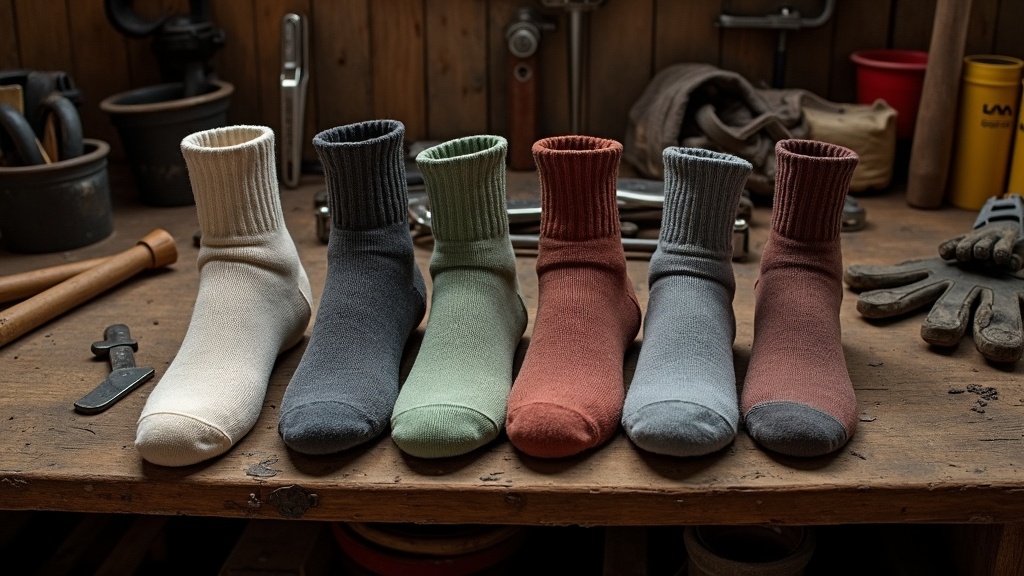
Bottom line on materials: merino wins for year-round all-day work. If the price stings, a nylon-spandex blend with a non-binding cuff is a solid second choice. Avoid pure cotton for anything more than a half-day light-duty job.
What About Women's Work Socks That Don't Leave Marks
Women's work socks that don't leave marks are an under-served category. Most brands just relabel a smaller men's sock. A few do it right.
- Darn Tough Women's Hiker Micro Crew uses the same non-binding cuff technology in a proportionally correct women's fit, not a scaled-down men's sock.
- Feetures Elite Light Cushion No Show works well for women in lower-cut work shoes or sneaker-style safety footwear.
- Sockwell Women's Ascent Graduated Compression is worth it for nurses, retail workers, and anyone standing on hard floors all shift.
The key with women's options: check that the cuff circumference is listed, not just a generic small or medium. Women's ankles vary just as much as men's, and a sock cut for a narrow ankle will leave a mark on anyone outside that narrow range.
Should You Be Worried If Your Socks Leave Indentations
If you switch to a proper non-binding sock and the marks disappear, you're fine. That was a sock problem.
Be more concerned if: the marks are there in the morning before you even put on socks, if the skin pits when you press it with your thumb (pitting edema), or if the swelling is in one leg only. Those are signs of fluid retention, venous insufficiency, or something else worth a doctor's visit, not a sock problem.
Did you know?
Graduated compression socks, originally designed for people with venous insufficiency, are now widely used by nurses, construction workers, and retail employees. Studies from occupational health journals show they reduce end-of-day leg fatigue and swelling in people who stand for more than six hours at a stretch.
How to Stop Your Current Socks From Leaving Marks
Before you buy anything new, try these fixes with what you already own.
- Size up. If you're in a medium, try a large. The cuff will be slightly looser and the extra fabric often removes the dig.
- Fold the cuff down. Folding a crew sock cuff outward doubles the fabric and distributes elastic pressure over a wider area.
- Rotate two pairs per day. Take a spare pair to work and switch mid-shift. Fresh socks before the afternoon swelling peak makes a real difference.
- Wash in cold water, air dry. Hot dryers shrink elastic and degrade it faster. Your socks get tighter after every hot-cycle wash.
What Real Workers Are Saying (Reddit and the Trades)
On r/Construction and r/nursing, the Darn Tough non-binding sock is the most consistently recommended option for people who mention the mark problem specifically. The lifetime guarantee comes up in nearly every thread, because people have actually used it.
On r/Firefighting and r/EMS, Wrightsock gets heavy mention for its double-layer design on hot feet in heavy boots. Several posters note that going one size up in Darn Tough eliminated marks they'd had for years with the regular size.
The honest consensus from the trades: spend the money once on Darn Tough or Sockwell, stop replacing $5 packs every month. The math usually works out in favor of the premium sock within three to four months.
Bottom Line: What's Worth Your Hard-Earned Money
If you're on your feet all day and tired of the groove around your ankle every evening, here's the short version of what to do.
- Get a sock with a non-binding or no-dig cuff, that phrase matters.
- Go with merino wool if the budget allows. Darn Tough's non-binding line is the top pick.
- If you have larger ankles or calves, search specifically for wide calf work socks with listed measurements.
- For women: don't accept a relabeled men's sock. Darn Tough and Sockwell make proper women's fits.
- If switching socks doesn't fix the marks within a week, the swelling itself may be the issue, not the socks.
Your feet take the full weight of your work every single day. A sock that fits right is not a luxury. It's basic equipment.
