


Every year, over 200,000 foot injuries occur in American workplaces — most of them preventable with the right safety footwear (Bureau of Labor Statistics, 2023). When it comes to choosing between aluminum toe vs composite toe work boots, most workers already know they don't want steel — they want something lighter, smarter, and better suited to their actual job conditions.
Here's the short answer: composite toe wins for most workers. But aluminum toe isn't a bad choice — it's just the right choice for fewer situations. This guide breaks down the key differences on the criteria that actually matter: weight, protection level, temperature performance, metal detectors, and price — so you can make the right call before you buy.
What's the Difference? A Quick Technical Breakdown
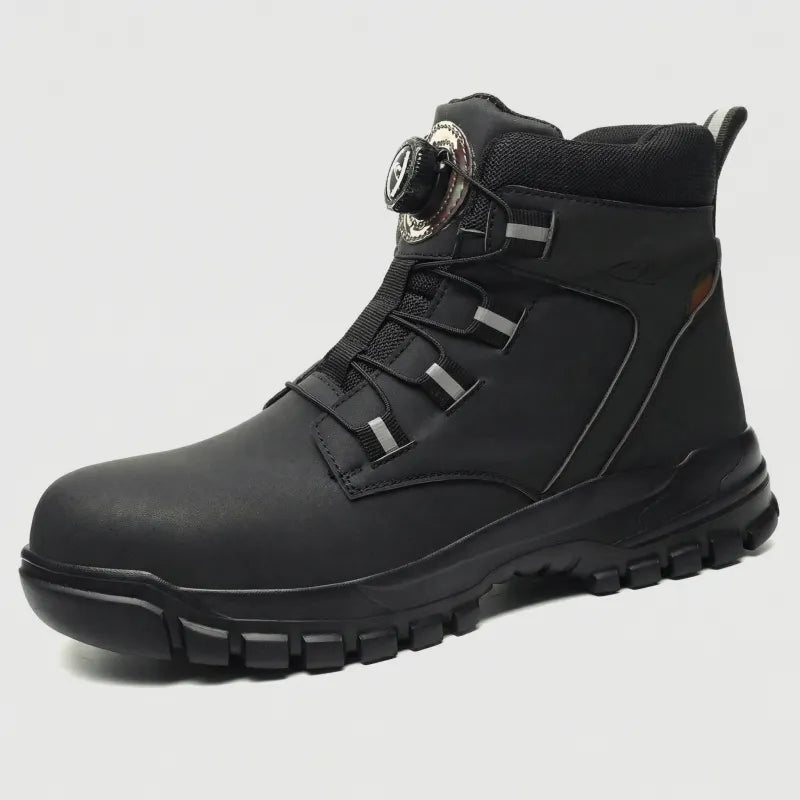
Both toe cap types meet the same ASTM F2413 standard — the US benchmark for impact resistance (75 ft-lbs) and compression resistance (2,500 lbs). That's the first thing to understand: neither is "safer" than the other on paper. The difference lies in how they're built and how they perform in real-world conditions.
- Aluminum toe caps are made from lightweight aluminum alloy. The cap walls are thinner than steel, giving a slimmer toe box profile. However, aluminum is still a metal — it conducts cold temperatures directly to your toes and will trigger metal detectors.
- Composite toe caps are made from non-metallic materials: fiberglass, Kevlar, carbon fiber, or advanced plastics. To achieve the same ASTM-certified protection as metal, the cap must be slightly thicker — but the payoff is significant. No metal conductivity, no detector triggers, better thermal insulation, and zero corrosion risk.
One critical point most buyers overlook: under extreme compression forces, a metal toe cap can deform and trap the foot inside the boot. A composite cap, by contrast, will either rebound or fracture outward — dramatically reducing the risk of entrapment injury.
Check out this guide too: Work Wear Trousers: How to Choose Durable, Comfortable Work Pants
Aluminum Toe vs Composite Toe: Head-to-Head Comparison
|
Criteria |
Aluminum Toe |
Composite Toe |
|
Weight |
Lighter than steel |
Lightest option |
|
ASTM F2413 Protection |
✅ Certified |
✅ Certified |
|
Metal detector |
❌ Triggers |
✅ Passes through |
|
Cold temperature insulation |
❌ Conducts cold |
✅ Insulates well |
|
Toe box profile |
Slim, streamlined |
Slightly bulkier |
|
Electrical hazard (EH) |
✅ Available |
✅ Available |
|
Corrosion resistance |
❌ Can oxidize |
✅ Does not corrode |
|
Price |
Mid-range |
Mid to higher range |
What the table doesn't show:
Comfort over long shifts is where composite pulls ahead. Aluminum toe work boots are lighter than steel, but composite toe boots are lighter still — and over a 10-hour shift, every ounce matters. Workers in warehousing, logistics, and construction consistently report less foot fatigue in composite footwear.
Electrical environments are often misunderstood. Both types can carry an EH (Electrical Hazard) rating under ASTM F2413 — but composite toe adds a layer of reassurance since the cap itself carries zero electrical conductivity, with no metal whatsoever in the toe area.
Temperature matters more than most people think. In refrigerated facilities or outdoor winter conditions, aluminum toe caps transfer cold directly to the foot — the same way steel does. Composite materials act as a natural thermal barrier, keeping toes warmer without any added insulation layer.
When Aluminum Toe Boots Are the Right Call

Aluminum toe work boots make sense in specific, well-defined situations. Don't rule them out — just know exactly when they earn their place.
Choose aluminum toe if:
- You work in trades or logistics where a slim, streamlined toe box matters for mobility and fit — aluminum's thinner cap walls give more room than composite in some boot models
- You're upgrading from steel and want the familiarity of a metal cap with meaningful weight savings — aluminum runs noticeably lighter than steel without sacrificing that solid, structured feel
- Your worksite has no metal detector requirements: if you're never passing through security checkpoints, the detector issue is irrelevant
- Your work environment stays temperature-neutral: indoor facilities with controlled climates eliminate composite's thermal advantage entirely
- Budget is a priority: aluminum toe boots typically sit at a slightly lower price point than equivalent composite models
The honest limitation: aluminum toe is a solid middle-ground option — better than steel for weight, worse than composite for versatility. For workers who cross through secured facilities, work outdoors in cold conditions, or log long shifts on hard surfaces, aluminum toe rarely wins the comparison.
Check out this guide too: Summer Workwear: Expert Picks and Tips for Staying Comfortable at Work
When Composite Toe Boots Are the Right Call
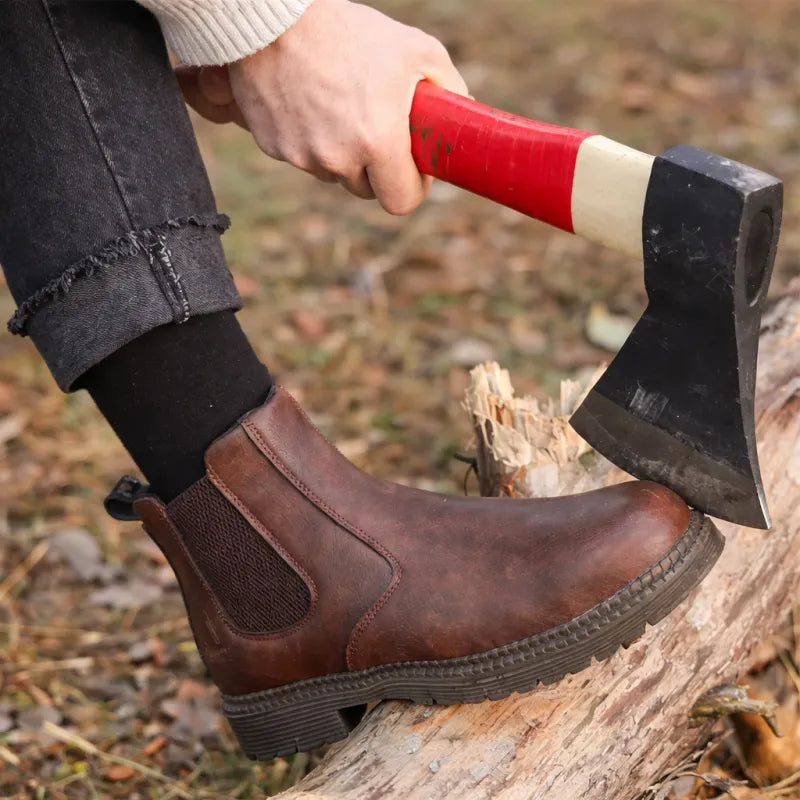
For most workers, composite toe work boots are the smarter long-term investment. Here's when they clearly pull ahead.
Choose composite toe if:
- You work in cold environments: refrigerated warehouses, outdoor construction in winter, or food processing plants where temperature transfer from aluminum or steel toe caps creates real discomfort over long shifts
- Your site has metal detectors: airports, government facilities, correctional institutions, and high-security manufacturing plants all require non-metallic footwear. Composite toe passes through without a second thought
- You're an electrician or work near live circuits: composite toe carries zero electrical conductivity in the cap itself, adding a genuine layer of protection beyond the EH rating alone
- You log 8-10 hour shifts on hard surfaces: the lightest safety toe option available means measurably less fatigue by end of shift
- You work in humid or wet conditions: composite materials never corrode, rust, or degrade from moisture exposure the way aluminum can over time
Bottom line: composite toe work boots cover more job environments, more hazard profiles, and more worker needs than aluminum toe — without compromising on certified ASTM protection.
Best Composite Toe Work Boots to Buy Right Now
If you've landed on composite toe as your choice — smart call. Here are top picks from Mason Clothing's composite toe work boots collection, selected for protection, comfort, and all-day wearability.
ATLAS S3 Pro | Safety Boots
Best for warehouse and logistics workers. Full ASTM F2413 certification, lightweight composite cap, slip-resistant outsole built for long shifts on concrete. A no-compromise daily driver.
STRIDE S1 Pro | Slip-On Steel Toe Boots
Top pick for outdoor and construction work. Waterproof upper, thermal insulation, and a composite toe that keeps cold out where aluminum toe boots simply can't compete.
POLAR S3 Pro | Winter Safety Boots
Best for electricians and high-security sites. EH-rated, fully metal-free construction, passes all detector checkpoints without slowing your workday down.
Browse the full collection of composite toe work boots at Mason Clothing — all models ASTM-certified, built for real job conditions.

Aluminum or Composite Toe: Make the Call That Fits Your Job
Both aluminum toe vs composite toe work boots meet the same ASTM F2413 safety standard — so protection level is never the deciding factor. What separates them is real-world performance across your specific conditions.
Three questions to make your decision right now:
- Do you pass through metal detectors or work in secured facilities? → Composite toe, no debate
- Do you work in cold environments or wet/humid conditions? → Composite toe wins clearly
- Do you work indoors in a temperature-controlled environment with no detector requirements and want a slim toe box feel? → Aluminum toe is a solid choice
For the vast majority of workers in construction, warehousing, logistics, electrical trades, and outdoor environments, composite toe work boots deliver better all-around performance — lighter, more versatile, thermally superior, and metal-free.
Don't compromise on footwear that protects you 10 hours a day. Shop Mason Clothing's composite toe work boots and find the right pair for your job, your conditions, and your comfort.
