


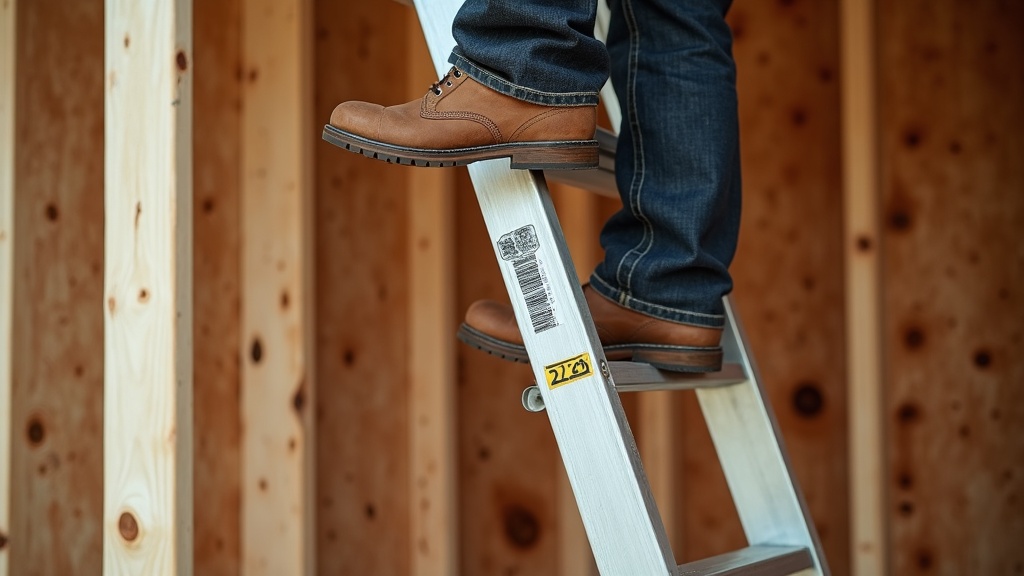
Stand on a ladder rung for eight hours and you'll understand things a podiatrist can't explain from their office chair. That narrow steel edge cuts right into your arch, your heel gets no cushion, and by 3 p.m. your feet feel like they went ten rounds.
The right insole changes that equation completely. Not magic, just targeted support where your foot actually loads during ladder work, which is different from walking a warehouse floor or standing on concrete all day.
Key points at a glance
- Ladder work concentrates almost all pressure on the forefoot and arch, not the heel, so heel-heavy cushion insoles miss the point.
- A semi-rigid shell with a deep heel cup and firm arch support is the best foundation for rung standing.
- For steel toe boots, trim-to-fit matters: the toebox geometry is different and a bad fit causes more pain than no insole at all.
- Foam insoles wear out fastest; a quality rigid-shell insole can last 12 to 18 months of daily trade use.
- Replace your insoles when the arch support flattens, not just when the top cover wears through.
- Six insoles stand out for carpenter and construction use in 2025, covering different budgets and foot types.
What a Good Ladder Insole Does for You
Why Ladder Work Destroys Your Feet Faster Than Almost Anything Else
When you walk, your body weight spreads across your whole foot. When you stand on a rung, that rung concentrates all your weight into a strip roughly an inch and a half wide, right across your midfoot and arch.
Do that repeatedly, hour after hour, and you're setting yourself up for plantar fasciitis, metatarsalgia, and arch strain. These aren't injuries you get from one bad day. They're the slow accumulation of thousands of rung contacts with zero support underneath.
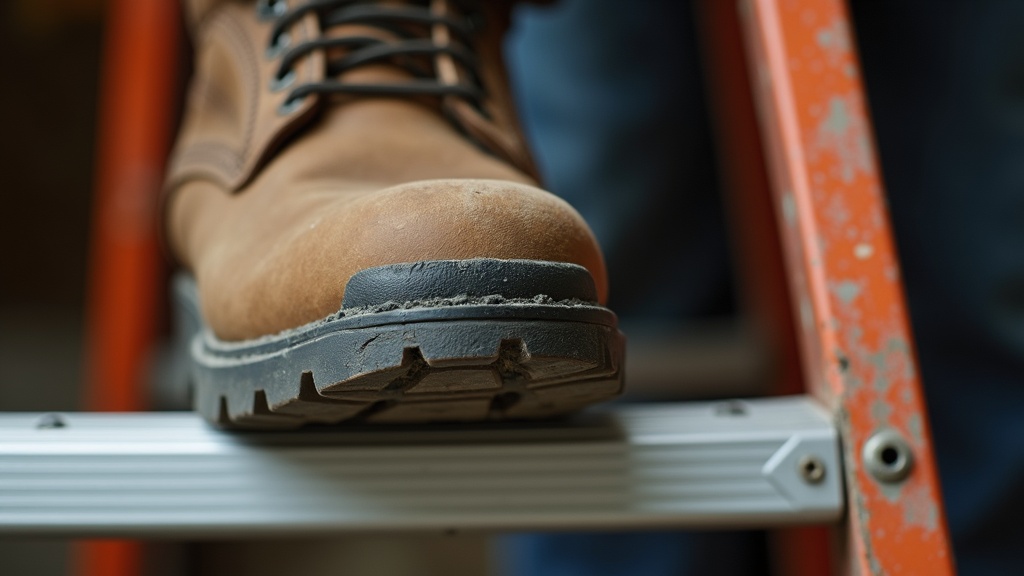
Concrete floors are rough too, but at least they're flat. A rung is a fulcrum. It's working against your foot's natural shape all day long.
What to Actually Look for in an Insole If You Work on Ladders
Skip the marketing. Here's what actually matters when you're picking insoles for ladder and construction work.
Arch support that doesn't collapse
You need a semi-rigid or rigid shell under the arch. Soft foam feels great in the store and turns into a flat pancake by month two on the job.
A deep heel cup
When you step off a rung onto a hard surface, that heel takes a shot. A deep heel cup keeps your fat pad centered and absorbs the impact properly.
Forefoot cushioning
On a ladder, your forefoot and toes grip the rung. Some cushioning under the metatarsal heads saves you from the grinding soreness that builds up through a long shift.
Slim enough to fit
A thick insole in a snug work boot creates a whole new problem: toe box pressure and heel slippage. Slim profile with strong support is the target, not bulk.
Did you know?
According to the Bureau of Labor Statistics, carpenters and construction laborers report musculoskeletal injuries at nearly twice the rate of the average private-sector worker. A significant portion of those injuries trace back to the lower extremities, including the feet, ankles, and knees stressed by ladder and hard-surface work.
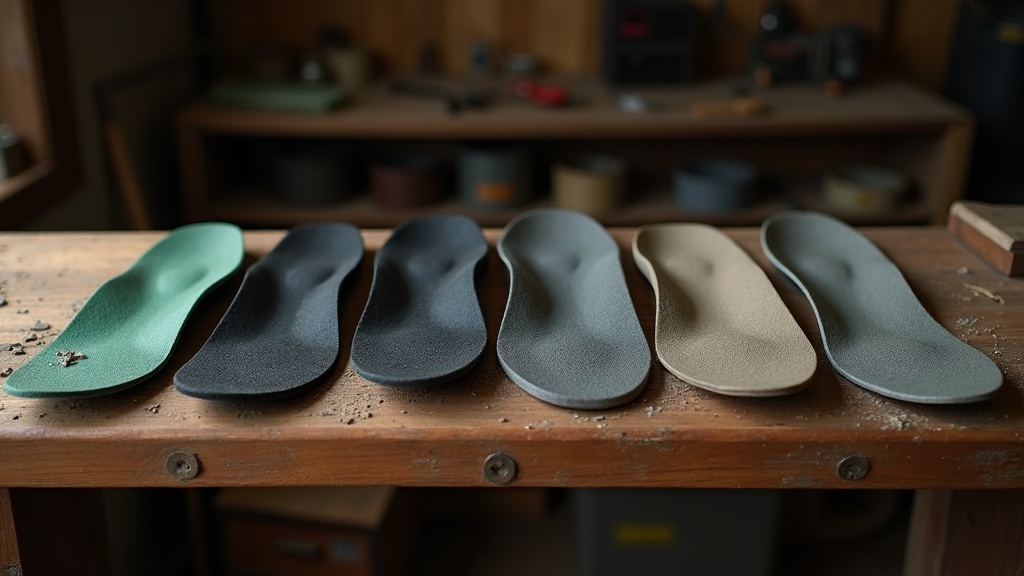
The 6 Best Insoles for Carpenters Standing on Ladders
1. Superfeet GREEN
The green legend in the trade world. High-profile rigid shell, deep heel cup, and a biomechanical shape that actually holds your arch on uneven surfaces. It's not the softest ride, but carpenters who've worn them for years swear nothing else keeps them on their feet past 4 p.m. Best for medium to high arches.
2. Powerstep Pinnacle
A step down in rigidity from Superfeet GREEN but adds a dual-layer foam base that works well on concrete. Good for guys who split time between ladder work and floor work. Fits most standard work boots without needing to trim much.
3. Sof Sole Airr Orthotic
The air-filled heel pod absorbs impact hard, which matters when you're stepping off ladders onto packed dirt or concrete all shift. Solid midfoot support and a breathable top layer. Priced mid-range and widely available at hardware store chains.
4. Timberland PRO Anti-Fatigue Insoles
Designed specifically for work boot geometry, including steel toe boxes. The inverted cone foam technology isn't gimmick, it genuinely returns energy and reduces that dead-leg feeling after hours on your feet. Fits Timberland PRO boots perfectly, works well in other brands too.
5. Protalus T-100
Built around a patented alignment system that corrects subtle overpronation, which gets worse when you're torquing your ankle on ladder rungs. If you've noticed knee or hip pain alongside foot pain, this is the insole worth trying first. Takes a few days to break in, then it clicks.
6. Dr. Scholl's WORK Insoles
The budget pick that actually earns its place on the list. Not as durable as Superfeet, but if you're buying for a crew or rotating between three pairs of boots, the price makes sense. Replace every four to five months on heavy rotation.
Foam vs. Gel vs. Rigid Shell: Which One Holds Up on the Job
This is where most guys get burned. They buy comfort, not support, and three months later they're back at square one.
| Type | Best For | Weakness | Typical Lifespan |
|---|---|---|---|
| Foam only | Short-term cushion, light duty | Compresses fast, zero arch support after weeks | 2 to 4 months |
| Gel | Heel impact absorption | Heavy, can shift in boot, poor arch structure | 4 to 6 months |
| Semi-rigid shell | All-day standing, mixed surfaces | Takes a few days to break in | 8 to 12 months |
| Rigid shell (e.g. Superfeet GREEN) | Ladder work, heavy loads, high arches | Firmer feel, not for everyone | 12 to 18 months |
| Dual-layer (shell + foam) | Ladder and concrete combo days | Slightly thicker profile | 10 to 14 months |
For ladder work specifically, semi-rigid or rigid shell wins every time. The rung needs something to push against, not something to sink into.
Do You Need a Different Insole for Steel Toe Boots?
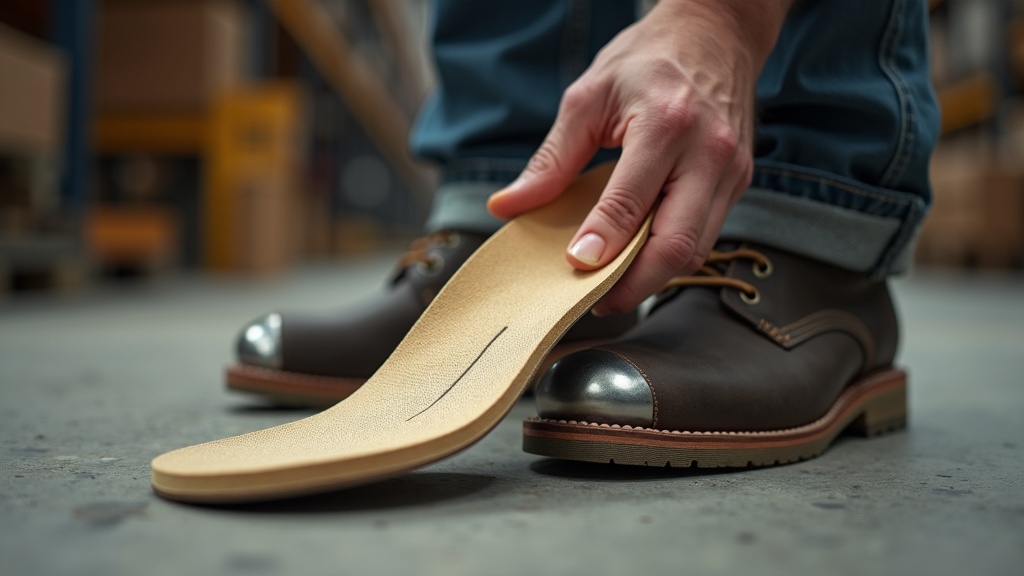
Yes, and most guys don't think about this until they're already in pain. Steel toe boots have a shorter internal length because the cap takes up real estate at the front. Drop a full-length insole in without trimming, and it bunches under your toes.
Two things to look for in insoles for steel toe boots:
- Trim-to-fit design with size lines marked on the insole bottom.
- A thinner forefoot profile so the insole doesn't push your toes into the cap.
The Timberland PRO Anti-Fatigue and Powerstep Pinnacle both accommodate steel toe geometry well. The Superfeet GREEN can work but may need a more aggressive trim on the toe end.
Did you know?
The internal volume of a steel toe cap is regulated by ASTM F2413 standards, and it varies by manufacturer. That means an insole that fits perfectly in your Redwings may bunch in your Carhartts even in the same stated size. Always trim and test before committing to a full day on the job.
How Long Should a Good Work Insole Last (And When to Replace It)
The number one mistake: guys replace insoles by how the top cover looks, not how the support feels. A worn top cover is cosmetic. A collapsed arch is a health problem.
Signs it's time to swap them out:
- You press your thumb into the arch zone and it flattens with almost no resistance.
- Your feet start hurting again the same way they did before you had the insoles.
- The heel cup has cracked or the foam layer has a permanent indentation.
- You've been running them hard for over a year on daily use.
Budget around $30 to $60 for a quality insole that goes the distance. Compare that to a copay, lost work days, or months of foot pain and it's not even a conversation.
Make the Right Call Before Your Next Shift
Pull the stock insoles out of your work boots right now and press both thumbs into the arch zone. If they flatten without resistance, they're not doing anything useful. That's the first test.
For most carpenters doing ladder work on residential or commercial framing, the Superfeet GREEN or Powerstep Pinnacle will cover 90 percent of needs. High arch, firm support, deep heel cup, trim to fit your steel toes.
If you pronate noticeably or have had knee and hip issues tied to your feet, look at the Protalus T-100 first. If you're outfitting a crew on a tighter budget, the Dr. Scholl's WORK insoles at quantity make more sense than leaving everyone on flat stock footbeds.
Your feet are the foundation. They hold up the whole day. Treat them like a tool worth maintaining.
