


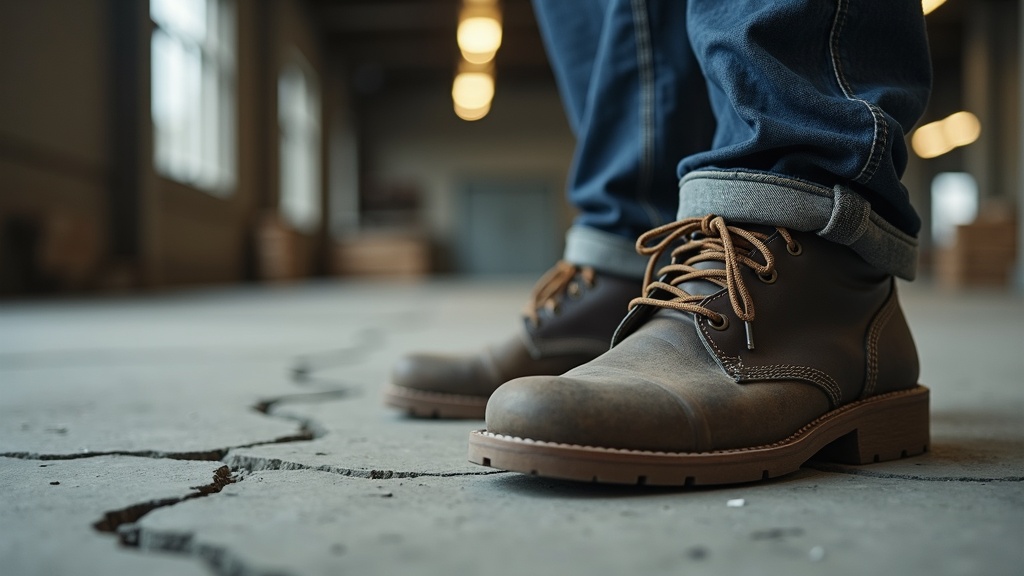
You clock in, you stand, you walk. Eight, ten, twelve hours on concrete or asphalt, and by the end of the shift your feet feel like they've been run through a press. A good insole won't fix a broken boot, but it can be the difference between walking to your truck and limping to it.
The problem is most guys grab whatever's on the shelf at the hardware store and wonder why it falls apart in six weeks. Concrete and asphalt are not the same surface. They don't beat your feet the same way, and they don't call for the same solution. Here's what actually works.
Key points at a glance
- Concrete is unforgiving and flat; it needs maximum cushioning and rigid arch support.
- Asphalt adds heat and uneven surface; you need some give plus temperature resistance.
- Top picks include Superfeet Green, PowerStep Pinnacle, and Spenco Polysorb Heavy Duty.
- One insole can work for both surfaces, but only if it hits specific checkboxes.
- Insoles wear out faster than boots; replacing them every 6 months is not optional.
- The right boot still matters. An insole can't fix a boot with a dead midsole.
What a solid work insole does for you
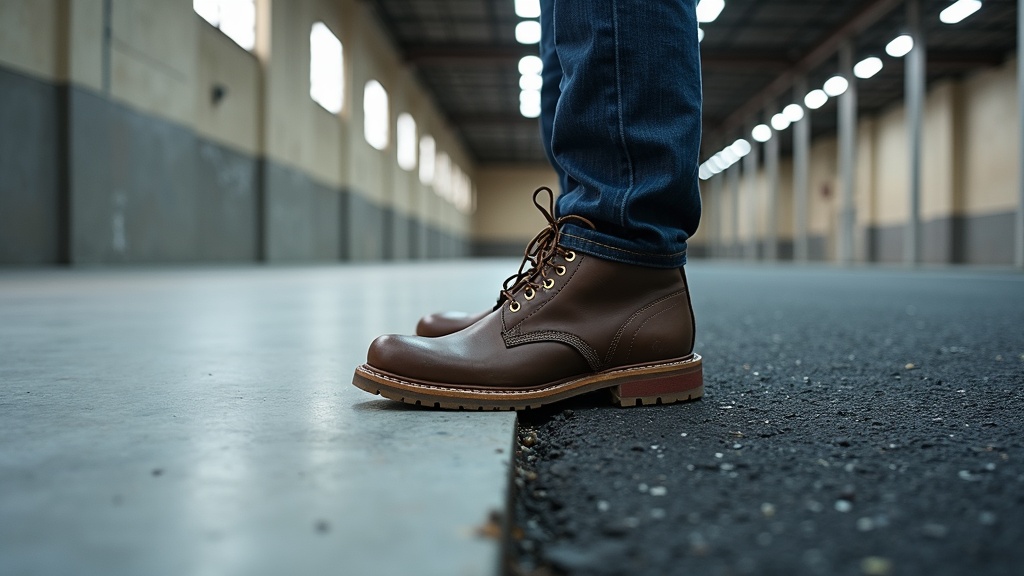
Concrete vs. Asphalt: Why the Surface Decides the Insole
Concrete is basically stone. It has zero give, zero flex, and it doesn't absorb a single joule of the energy your heel hits it with. Every step sends that force straight back up through your foot. Over twelve hours, that's thousands of impact cycles with no relief.
Asphalt is different. It has a slight flex, especially when it's warm. But it's also uneven, often sloped for drainage, and in summer it radiates heat upward through the sole of your boot. Your insole needs to handle thermal transfer, not just impact.
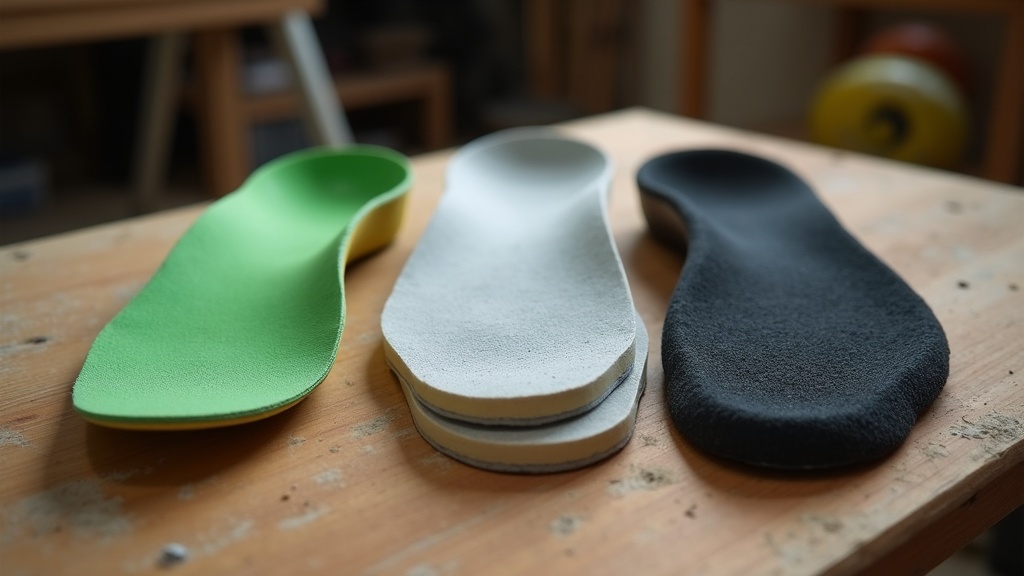
What to Look For in an Insole Before You Buy
Skip anything made of flat foam with a printed pattern. That material compresses in the first two weeks and you're back to standing on cardboard.
Here's what actually matters:
- Deep heel cup: keeps your foot from rolling and protects the fat pad under your heel
- Firm arch support: not soft memory foam, actual structural support that doesn't collapse
- Shock-absorbing top layer: EVA foam or polyurethane, not gel (gel migrates and bottoms out)
- Moisture management top cover: your foot sweats, especially on hot asphalt
- Thickness compatibility: it needs to fit without cramming your foot into the toe box
Did you know?
A 185-pound worker walking 10,000 steps on concrete puts roughly 925 tons of cumulative force through their feet in a single day. That number climbs if they're carrying materials or climbing ladders.
Best Insoles for Concrete Floors (Ranked for Long Shifts)
1. Superfeet Green: the benchmark for concrete
Superfeet Green has been the go-to for tradespeople on hard floors for decades. The high-profile nylon stabilizer cap keeps the heel locked in place, and the dense foam layer holds its shape through months of daily use. It's not the softest ride, but on concrete, soft is not what saves your feet long-term. Structure does.
2. PowerStep Pinnacle: for workers who also need comfort
The PowerStep Pinnacle sits between medical-grade orthotics and drugstore insoles. The double-layer EVA base gives real shock absorption, and the semi-rigid arch doesn't fold under load. Warehouse workers in particular report significant heel pain reduction within the first week. It fits most steel-toe boots without needing to trim much.
3. Spenco Polysorb Heavy Duty: built for punishment
Spenco Polysorb Heavy Duty is designed for workers carrying weight on hard floors. The forefoot cushion is notably thick, which helps on concrete where toe and ball-of-foot pain builds up over a shift. The top cover is antimicrobial, which matters when your boot is on all day.
Best Insoles for Asphalt Work (Heat, Give, and Uneven Ground)
1. Timberland PRO Anti-Fatigue Technology insole
The inverted cone geometry in the heel absorbs impact from uneven asphalt and converts it into return energy. It doesn't collapse when the ground under it shifts. The material also handles heat reasonably well, which matters on a road crew in July.
2. Sof Sole Airr Orthotic
The air chamber in the heel cushions the jarring that comes from cracked, sloped, or gravel-edged asphalt. The Hydrologix top layer pulls moisture away from the foot. Worth considering for paving crews and utility workers who cover a lot of ground on hot pavement.
3. Dr. Scholl's Work insole (Heavy Duty Support)
Not a premium pick, but honest value. The reinforced arch and gel heel pad handle asphalt's moderate flex better than flat foam. It fits a wider range of boot sizes without trimming. If you need a no-fuss option that's easy to replace, this one holds up for about four months of daily wear.
| Insole | Best Surface | Arch Support | Durability |
|---|---|---|---|
| Superfeet Green | Concrete | High / Rigid | 12+ months |
| PowerStep Pinnacle | Concrete / Both | Medium / Semi-rigid | 8 to 10 months |
| Spenco Polysorb HD | Concrete | Medium / Cushioned | 6 to 8 months |
| Timberland PRO AF | Asphalt / Both | Medium / Dynamic | 8 to 12 months |
| Sof Sole Airr Orthotic | Asphalt | Low to Medium | 5 to 7 months |
| Dr. Scholl's Work HD | Asphalt / Budget | Low / Gel | 3 to 5 months |
Can You Use the Same Insole for Both Surfaces?
Yes, with conditions. The PowerStep Pinnacle and the Timberland PRO Anti-Fatigue are the two that cross over well. They split the difference between rigid support for concrete and adaptive cushioning for asphalt.
If you rotate between a warehouse and a parking lot crew in the same week, go with one of those two. If you're locked into one surface every day, a surface-specific insole will serve you better for longer.
Did you know?
Asphalt surface temperatures can exceed 150°F (65°C) on a hot summer day, even when air temps are in the low 90s. Standard foam insoles begin to soften and lose structural integrity above 140°F, which is exactly when you need them most.
Are Insoles Alone Enough, or Do You Need Better Boots Too?
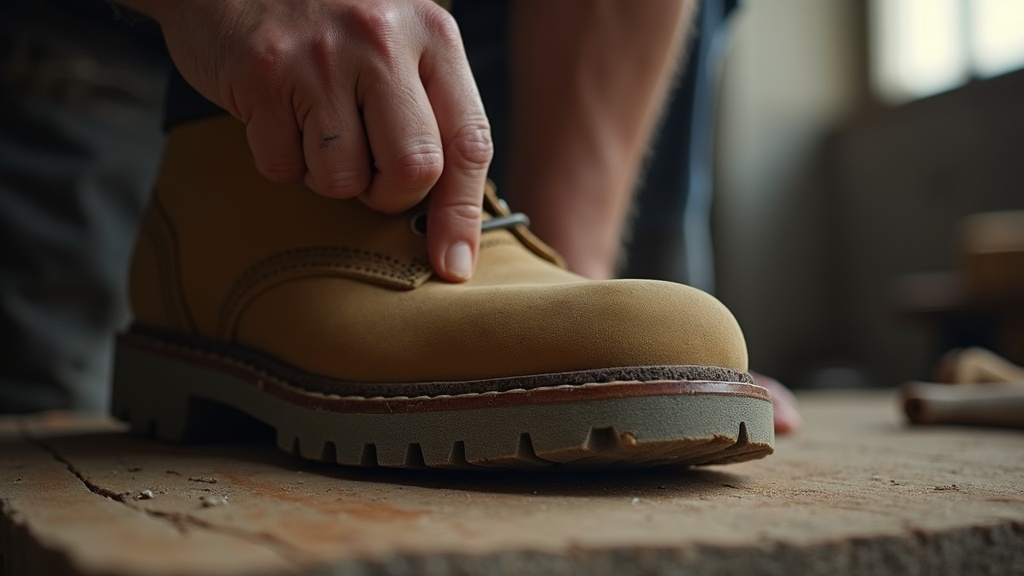
An insole cannot fix a boot with a collapsed midsole. If you press your thumb into the midsole of your current boot and it compresses all the way with barely any resistance, the boot is done and no insole will make up the difference.
A good insole works best inside a boot that still has structural integrity. Look for boots with a thick rubber outsole, a shank running through the midfoot, and a midsole that still has some rebound. Brands like Thorogood, Red Wing, and Wolverine build boots that pair well with aftermarket insoles because they have enough internal volume to accommodate them.
How to Make Your Insoles Last Longer on the Job
- Rotate two pairs: alternate insoles every day so the foam fully recovers overnight. Same reason you shouldn't wear the same boot two days in a row.
- Let them air dry: pull insoles out after every shift and leave them outside the boot. Moisture degrades foam faster than impact does.
- Check them monthly: push your thumb into the heel pad. If it bottoms out instantly, the insole is gone even if it looks fine.
- Don't trim more than needed: overtrimming removes support structure from the heel and arch. Size down if needed.
- Match replacement to wear pattern: if you wear through the ball of the foot first, you need more forefoot cushion in your next pair.
The Bottom Line: Spend $30, Save Your Feet
You're spending eight to twelve hours a day on some of the hardest surfaces humans have ever poured. A $30 insole is not a luxury. At that price, it's the cheapest thing standing between you and plantar fasciitis, knee problems, or lower back pain that follows you home every night.
For concrete: Superfeet Green or PowerStep Pinnacle. For asphalt: Timberland PRO Anti-Fatigue or Sof Sole Airr. For both: PowerStep Pinnacle or Timberland PRO. Replace them every six months whether they look worn or not. Your feet work too hard to run them on dead equipment.
