


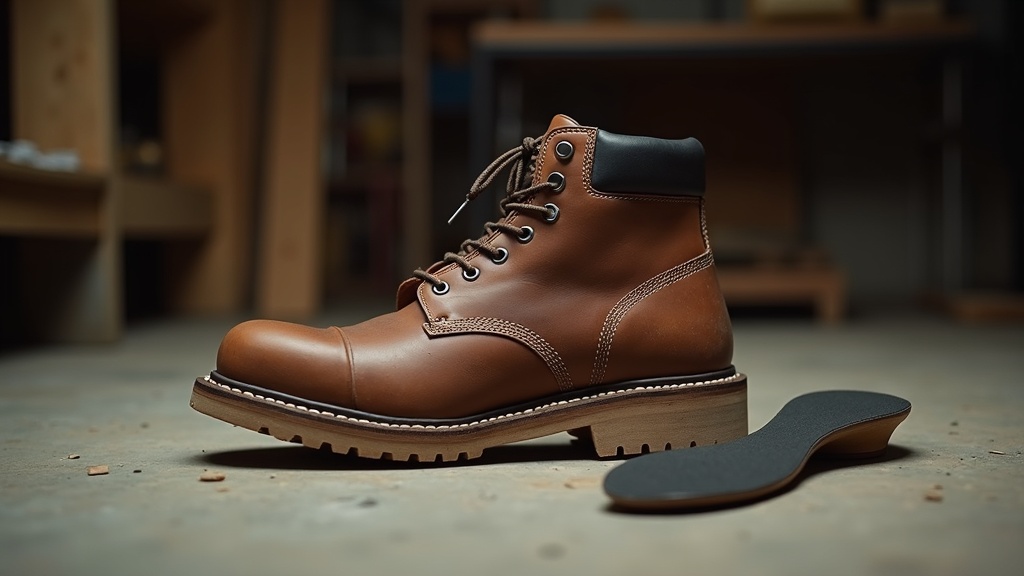
Your heel hits concrete before 7 a.m. and doesn't stop until the sun's going down. If every step off the ladder feels like stepping on a nail, plantar fasciitis has found you, and it gets uglier the longer you ignore it.
The right insole won't fix your feet overnight. But it can put enough distance between you and the pain that you stop dreading your morning walk to the truck. Here's what actually works, from someone who's stood on a cold slab for more hours than he'd like to count.
Key points at a glance
- Electricians face a specific combination of hard floors, ladder climbing, and constant position changes that makes plantar fasciitis worse than most trades.
- Non-conductive insoles are a real safety consideration, not just marketing: standard gel inserts can contain conductive materials.
- Deep heel cups and firm arch support matter more than cushion thickness for plantar fasciitis relief.
- The top picks for 2025 cover heavy workers, flat-footed guys, and budget-conscious tradesmen alike.
- Most insoles need replacing every 6 months on a hard-labor schedule, not once a year.
- Stretching and morning habits matter as much as the insole itself: both together is what actually moves the needle.
What a Good Insole Does for You
Why Electricians Get Plantar Fasciitis Worse Than Most (And What That Means for Your Insole Choice)
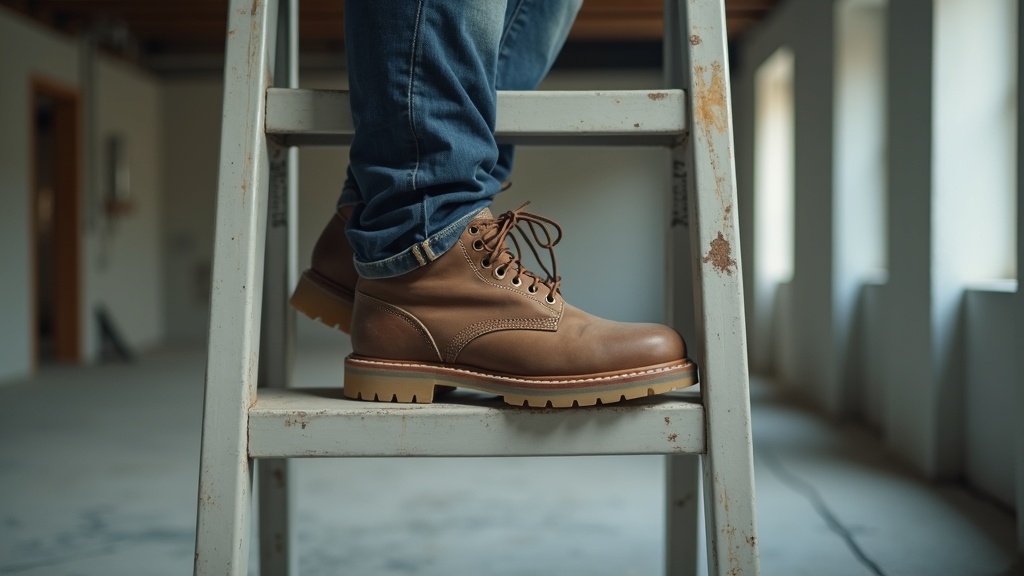
Framers and roofers move around. Office workers sit. Electricians do something worse: they stand still on concrete in boots that weren't designed for it, then suddenly climb a ladder, crouch in a crawl space, and repeat for eight to twelve hours.
That combination of static loading and sudden position changes puts the plantar fascia under cyclical stress all day. The fascia tightens when you're stationary, then gets yanked when you push off a ladder rung. That cycle is what causes the micro-tears.
Your insole needs to handle both: cushion for the standing, and arch support firm enough to not collapse the moment you climb. A soft gel insert alone won't cut it.
What to Actually Look for in an Insole (Before You Spend a Dime)
Deep heel cup
This is non-negotiable. A deep heel cup cradles your heel fat pad and stops it from spreading sideways under load. Without it, you're just adding a layer of foam that does nothing for the source of pain.
Firm arch support, not just a bump
Soft arch supports compress flat within weeks under a heavy guy in work boots. You want a semi-rigid or rigid shell under the arch, with enough structure to actually offload the fascia.
Non-conductive materials
Some gel-based insoles use materials that can conduct electricity. For electricians working around live panels or in environments where OSHA EH-rated footwear matters, this is worth checking. Look for insoles made entirely of polyurethane, EVA foam, or cork, and verify no carbon or metallic additives.
Fit within the boot, not just shoe size
Work boot toe boxes are wider and the last is shaped differently from a running shoe. An insole sized for an athletic shoe may bunch up or curl. Trim-to-fit options give you more control here.
Did you know?
Concrete floors have zero energy return. Every step on concrete absorbs roughly 10 times more shock than walking on a suspended wood floor, because concrete doesn't flex at all. That energy has to go somewhere: your heel, your fascia, your knees.
The 5 Best Insoles for Electricians with Plantar Fasciitis
1. Superfeet GREEN
The industry standard for a reason. High-profile arch, rigid stabilizer cap, deep heel cup. It's not the most cushioned insole, but it's the most structurally sound option for all-day concrete work. Available in standard sizes that fit most work boots without trimming.
2. Powerstep Pinnacle
Semi-rigid shell with a double layer of foam: firm enough to support, soft enough to feel it on hour ten. The low-friction top cover also reduces hot spots inside stiff leather boots. A solid pick if Superfeet feel too hard under your arch.
3. Sof Sole AIRR Orthotic
The air chamber at the heel is the differentiator here. For guys who feel the shock in their heels specifically, the air cushioning adds a layer of impact absorption that pure foam can't match. Fits well in wide-toe-box boots.
4. Timberland PRO Anti-Fatigue Insoles
Designed specifically for work boots, which matters for fit. The inverted cone geometry in the heel is engineered to return energy with each step. Works especially well in Timberland and Red Wing lasts, though it trims down for other brands too.
5. Tread Labs Stride Insole
This one has a lifetime-guaranteed carbon fiber arch support shell with replaceable top covers. Expensive upfront, but if you're replacing insoles twice a season, the math works out. Comes in four arch heights, so you can actually match your foot instead of guessing.
Do Insoles Actually Help Plantar Fasciitis, or Are You Throwing Money Away?
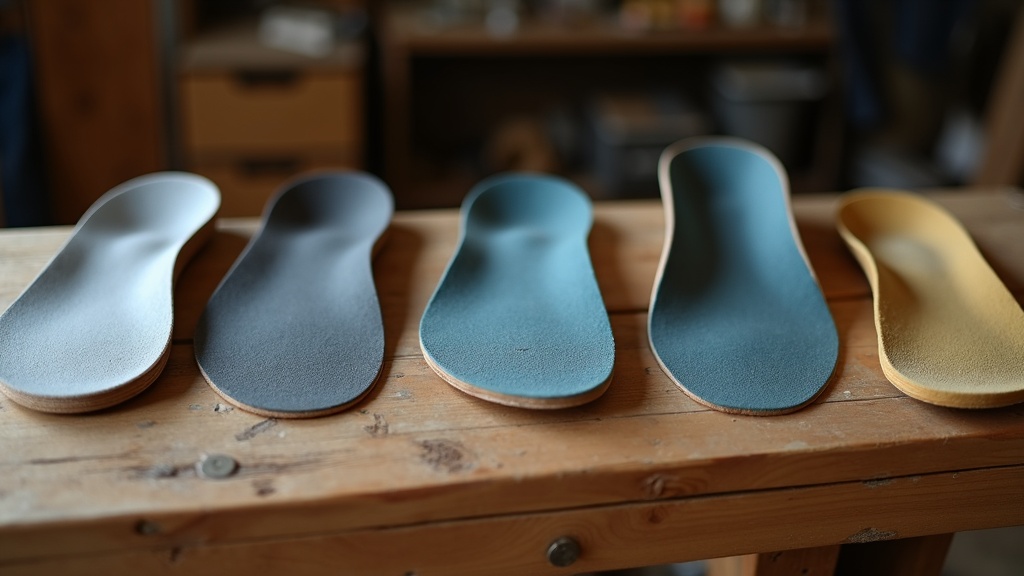
Insoles help. But they're a load management tool, not a cure. What they do is reduce the strain on the fascia during the hours you can't stay off your feet. That gives the tissue a chance to heal instead of being re-injured every shift.
Studies consistently show orthotic insoles reduce plantar fascia strain by offloading the arch and redistributing pressure away from the heel attachment point. You're not imagining the relief. It's mechanical.
That said: if your boots are completely shot, no insole fixes that. A broken-down midsole transfers force straight through to your foot regardless of what's sitting on top of it.
| Insole | Arch Support Level | Best For | Price Range |
|---|---|---|---|
| Superfeet GREEN | High / Rigid | Normal to high arch, all-day concrete | $50, $55 |
| Powerstep Pinnacle | Medium / Semi-rigid | Most foot types, comfort-first | $40, $50 |
| Sof Sole AIRR Orthotic | Medium / Semi-rigid | Heel-dominant pain, wide boots | $35, $45 |
| Timberland PRO Anti-Fatigue | Medium / EVA cone | Timberland / Red Wing boots, energy return | $30, $40 |
| Tread Labs Stride | High / Carbon fiber shell | Long-term investment, precise arch fit | $85, $95 |
The Worst Things You Can Do for Plantar Fasciitis on the Job
- Walking barefoot first thing in the morning is what turns mild pain into sharp stabbing: the fascia contracts overnight and needs to be loaded gradually.
- Cheap flat insoles from the pharmacy add thickness without structure. They can actually increase fascia tension by slightly elevating the heel without supporting the arch.
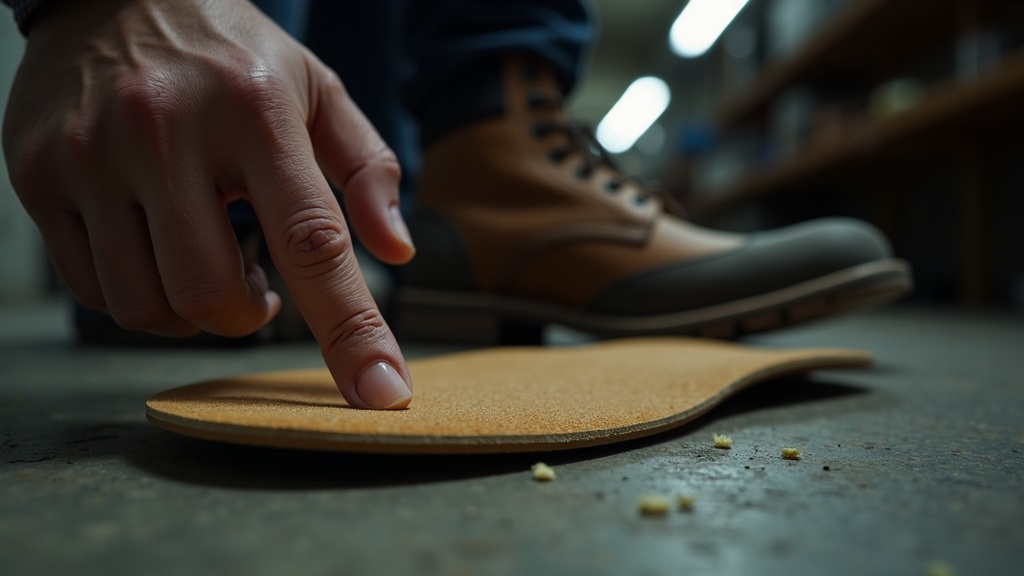
- Ignoring worn-out boot midsoles. If your thumb compresses the midsole more than a quarter inch, the boot is done. An insole can't compensate for a dead midsole.
- Skipping the break-in period on a new rigid insole. Your foot needs 3 to 5 days to adapt to new arch support, or the support itself causes pain.
Did you know?
Plantar fasciitis is the most common cause of heel pain in the U.S., affecting roughly 2 million people per year. Tradesmen and workers who log more than 8 hours of standing daily are 3.6 times more likely to develop it than desk workers, according to occupational health research published in the Journal of Foot and Ankle Research.
Flat Feet, Heavy Guys, and Hard Floors: Picking the Right Insole for Your Specific Situation
Flat feet in work boots
Flat-footed guys need maximum arch support, not cushion. When there's no natural arch to support, the fascia takes the full tensile load. Go with Superfeet GREEN or Tread Labs at the highest arch setting. Avoid anything labeled "neutral" or "low profile."
Heavy workers (220 lbs+)
Standard foam insoles compress and bottom out within weeks under higher body weight. You need a semi-rigid or rigid shell that won't collapse under load. Tread Labs and Superfeet hold up. Powerstep is borderline: check the firm variant specifically.
Standing all day on concrete
Concrete fatigue is cumulative. Pair a firm arch insole with a cushioned anti-fatigue mat at your stationary work area when possible. The insole handles your moving hours; the mat handles the static ones.
How to Make Your Insoles Last the Full Season
- Rotate two pairs if you can. Foam needs 24 hours to fully decompress after a hard shift. Using the same pair daily shortens its life significantly.
- Pull them out at the end of the day and let them air out. Moisture accelerates foam breakdown.
- Hand wash with mild soap every two to three weeks. Machine washing tears up the top cover and delaminates the layers.
- Replace at the first sign of the arch feeling soft or the heel cup losing its shape. That's usually every 6 months on a heavy labor schedule.
What Finally Cured My Plantar Fasciitis (Straight Talk from the Trades)
No insole cured it on its own. What actually worked was a combination: Superfeet GREEN in both pairs of boots, 2 minutes of calf and plantar stretches before getting out of bed, and a frozen water bottle rolled underfoot for 10 minutes every evening.
The stretching matters more than people admit. The fascia is tight from overnight rest. If you put full weight on it cold, you're re-tearing it every morning. Stretch before you stand up, every single day, for at least six weeks straight.
Give the insoles 4 to 6 weeks before you judge them. The pain won't disappear in a week. But if you're consistent, you'll notice the first hour of your shift stops hurting first, then the second, then by week five you're halfway through the day before it comes up.
That's the realistic timeline. Anyone who promises faster results is selling something.
