


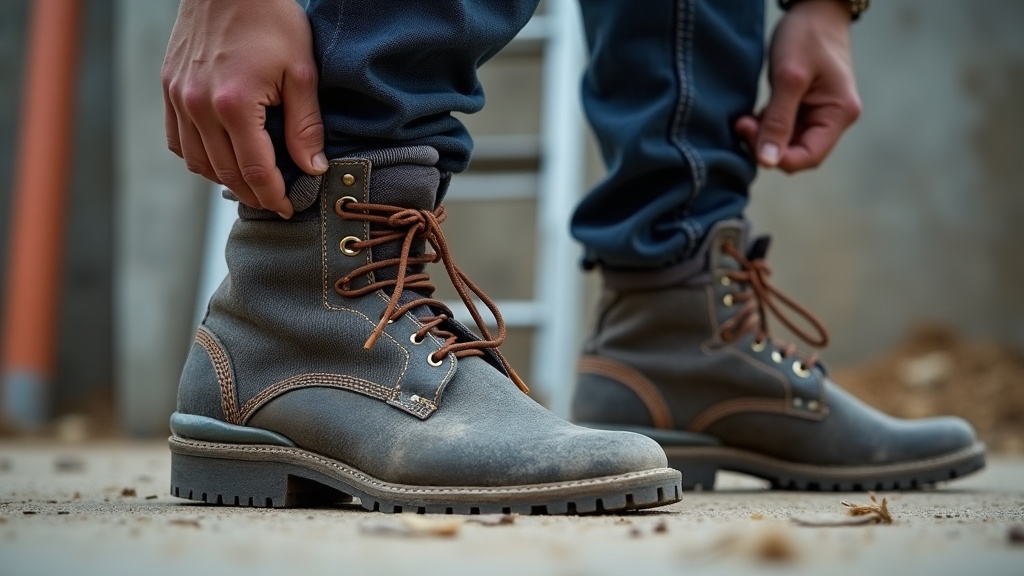
Your feet hit the rungs of that ladder a hundred times a day, and every single time, the sock fabric bunches behind your ankle, slips under your heel, or thins out against the steel toe edge. That's not a minor annoyance. That's a blister, a distraction at height, and a pair of socks in the trash by Friday.
This guide covers exactly what holds up for electricians doing real ladder work: the materials, the fits, the specific products worth your money, and the ones you can skip.
Key points at a glance
- Ladder rungs create localized pressure that destroys thin cotton socks within weeks
- Cushion placement matters: you need it at the heel, toe, and shin, not just the ball of the foot
- Merino wool outperforms synthetic in odor control and all-day comfort; synthetics win on raw durability and cost
- Steel toe boots need a sock with a flat, seamless toe box to prevent pressure sores
- The best work socks for cold weather add insulation without bulk that traps your foot
- Washing habits kill more socks than the job does: hot dryers are the silent destroyer
What a Great Work Sock Actually Does For You
Why Ladder Work Destroys Regular Socks (And Your Feet)
Every time you step up a rung, the narrow metal edge digs into the middle of your foot with your full body weight behind it. A thin cotton sock offers basically nothing between that rung and your arch.
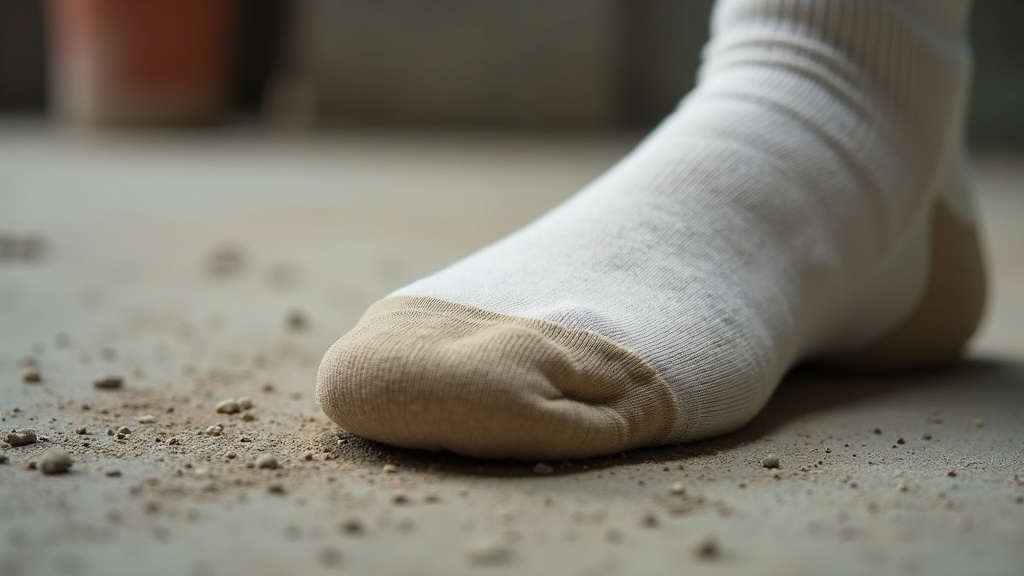
Regular socks also bunch. When you're planting your foot on a rung and pushing up, the fabric creases under your heel or across your toes. That crease becomes a pressure point, and pressure points on ladders become blisters fast.
Add eight to ten hours of sweating inside a steel toe boot, and a cheap sock turns into wet cardboard. The moisture causes your foot to shift inside the boot, which means you're constantly microadjusting your stance on the ladder just to stay stable.
What to Look for in a Work Sock Before You Buy
Not every "work sock" is built for climbing. Most are built for walking on flat concrete. There's a difference.
Cushion zones that actually match ladder use
You want dense cushioning under the heel and across the ball of the foot. For ladder work specifically, shin and ankle padding matters too, since that's where the boot collar digs in when you flex your ankle stepping up.
Moisture management
Wool pulls sweat away from skin and holds it until it evaporates. Synthetic fibers move moisture faster but dry quicker if your boot ventilates at all. Cotton holds moisture against your skin. Skip cotton for any serious work application.
Compression and arch support
A sock with a knit-in arch band keeps the fabric from shifting during repeated ladder steps. If the sock slides, you're toast.
Cuff height
For over-the-calf or crew height boots, you want at least a mid-calf sock. Anything shorter will roll down inside the boot and bunch at the ankle.
Did you know?
The average electrician climbs the equivalent of 30 to 50 feet of vertical ladder per shift on a commercial jobsite. Over a 5-day week, that's roughly the height of a 20-story building, and every step puts lateral shear force on the sock fabric at the heel and arch.
The 6 Best Work Socks for Electricians Climbing Ladders
These picks are based on what holds up specifically for people on ladders all day. Each one earns its spot for a different reason.
1. Darn Tough Hiker Boot Sock (Midweight Cushion)
Made in Vermont with merino wool. Lifetime guarantee, no questions asked. The cushion is dense but not bulky, and the fabric doesn't thin out at the heel even after 200 washes. Best all-around pick for electricians who want to buy once.
2. Carhartt Force Over-the-Calf Boot Sock
Polyester and nylon blend, FastDry technology. This is the pick for hot weather and sweaty feet. The over-the-calf height stays put in tall boots, and the reinforced shin panel handles boot collar friction on the ladder.
3. Farm to Feet Damascus Midweight Crew
100% American merino wool. Slightly more cushion than Darn Tough, which makes it the better choice for guys who do a lot of concrete walking between ladder climbs. Cold-weather jobsite favorite.
4. Wigwam Merino Wool 10 Below Boot Sock
This is the answer to the best work socks for cold weather question. Serious insulation, extended foot bed cushioning, and an elastic arch that actually grips. Runs warm enough for unheated structures in winter.
5. Dickies Dri-Tech Moisture Control Crew Sock (6-Pack)
The budget workhorse. Not as durable as Darn Tough over the long run, but for the price per pair, they perform well above their weight. Good backup rotation while your merino pairs dry.
6. Thorlos Experia Ultra Light Cushion Crew
Thin-cushion option for electricians who run hot or work in warm climates. The targeted padding system puts more foam exactly where the rung hits your foot. Best option if you hate thick socks but still want rung protection.
Steel Toe Boots and Socks: Getting the Fit Right
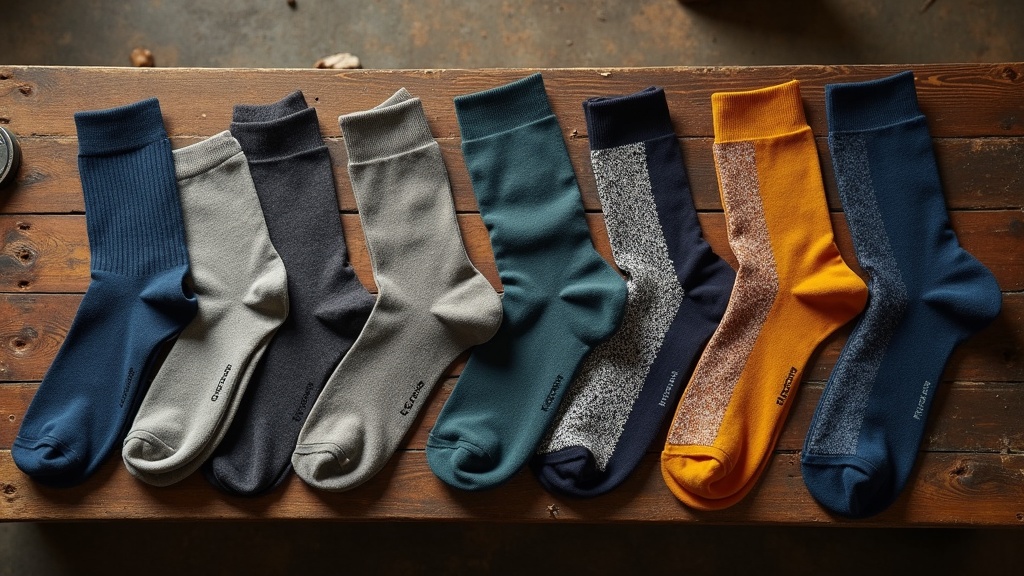
Steel toe boots have a hard interior that doesn't give. Any seam or bunching at the toe box turns into a pressure sore within a few hours. You need a sock with a smooth, flat, seamless toe or a hand-linked toe closure.
Volume matters too. A thick sock in a snug-fitting steel toe boot cuts off circulation, which causes cold feet faster than the weather does. If you're sized right in your boot with a medium-weight sock, don't size up the sock to add warmth. Add an insulating sock liner instead and keep your boot fit intact.
| Sock Weight | Best For | Steel Toe Fit | Ladder Cushion |
|---|---|---|---|
| Lightweight | Hot weather, tight-fit boots | Excellent | Minimal |
| Midweight | Year-round all-day use | Good with proper boot sizing | Strong |
| Heavyweight | Cold jobsites, open-toe boots | Requires half-size larger boot | Maximum |
| Liner + Mid-Layer | Extreme cold, variable temps | Tight, needs a roomy boot | Depends on mid-layer |
Merino Wool vs. Synthetic: Which One Holds Up on the Job
Merino wool regulates temperature better, manages odor without question, and stays comfortable even when wet. If you're on your feet all day in variable conditions, merino is the better material.
Synthetic blends (nylon, polyester, spandex) dry faster, resist abrasion better, and cost less per pair. For guys doing high-abrasion work where socks wear through fast, a durable synthetic blend stretches the budget further.
The honest answer: buy one Darn Tough merino pair and one Carhartt synthetic pair, wear both for two weeks, and your feet will tell you what works for your particular job and boot.
Did you know?
Merino wool fibers can absorb up to 35% of their own weight in moisture before they feel wet to the touch. Synthetic fibers start feeling damp almost immediately. That difference matters a lot when you're eight hours into a shift and your boots haven't breathed since 7 AM.
Best Work Socks for Women in the Trades
Women's feet run narrower through the heel and ankle than men's, which means most "unisex" work socks bunch at the back and roll down inside the boot. A sock cut for women's geometry actually stays put.
- Darn Tough Women's Hiker Boot Sock: Same merino construction as the men's version, narrower heel cup, full lifetime warranty
- Smartwool Women's Hike Medium Crew: Excellent arch support, merino blend, proportioned for women's boot sizing
- Wigwam Women's Merino Comfort Hiker: Slightly lower profile cuff, works well in women's steel toe styles
The fit issue is real. Don't let anyone tell you a men's small works just as well. It doesn't, and by hour six on the ladder you'll know exactly why.
How to Make Your Work Socks Last Longer
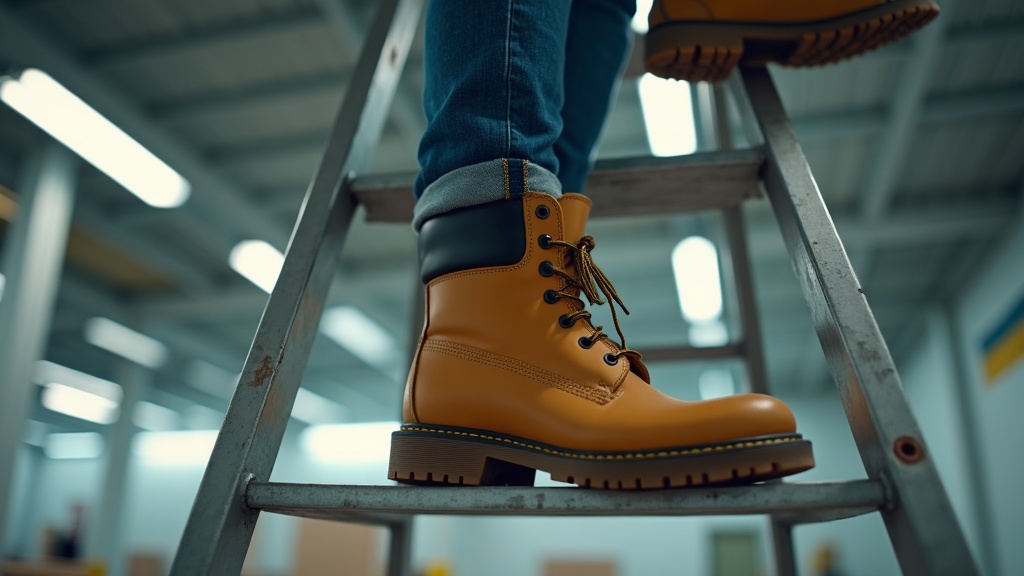
You can buy the best heavy-duty work socks for construction and kill them in a month if you machine dry on high heat. Heat degrades elastic fibers and shrinks wool. Hang dry or tumble on low.
- Wash inside out to reduce surface pilling
- Don't wash merino wool with fabric softener, it coats the fibers and kills moisture wicking
- Rotate at least 5 to 7 pairs so each pair gets a full 48-hour rest between wears
- Trim toenails regularly: jagged edges are the number one cause of toe box blowout
- Never put boots on wet socks, the friction damage is dramatically worse on damp fabric
What Other Electricians and Tradespeople Actually Wear
Check any electricians' forum or trades subreddit and the same three brands keep coming up: Darn Tough, Carhartt, and Wigwam. That's not a coincidence. These brands get field-tested by thousands of guys doing exactly what you're doing, and they survive the vote because they hold up.
The most common complaint from guys who switch to quality work socks is always the same: "I wish I'd done this years ago instead of going through cheap six-packs." A pair of Darn Tough merino wool work boot socks runs around $25 to $30. If they last two years instead of six weeks, the math isn't hard.
Buy four to six pairs of the same model. Rotate them. Wash them right. Your feet will thank you every single time you step on that first rung.
