



You've got an early call, the lot is glazed over, and someone at the shop mentioned snow socks. Now you're standing there wondering if a piece of fabric wrapped around your tire is actually going to keep a two-ton truck on the road.
Fair question. Snow socks do work, but not for everything, and not forever. Here's what you actually need to know before you trust them with your rig and your neck.
Key points at a glance
- Snow socks grip ice by wicking away the thin melt-water film that makes bare tires slide.
- They work best on light ice and packed snow, not thick black ice at high speed.
- Chains outperform snow socks on severe ice, but snow socks are faster to fit and easier on pavement.
- Speed limit with snow socks on: 30 mph max, less if the road is rough.
- A quality pair lasts 60 to 200 miles depending on surface; rough asphalt eats them fast.
- For work trucks doing short icy runs between sites, they earn their keep. For sustained highway driving in a storm, reach for chains.
What Snow Socks Actually Give You
What Snow Socks Actually Are (And What They Are Not)
A snow sock is a textile sleeve, usually woven polyester or a polyester-nylon blend, that stretches over a mounted tire like a fitted sheet over a mattress. That's the whole product.
They are not a snow tire. They are not chains. They are a traction aid, a temporary fix designed to get you moving when the road is slippery and you don't have better options mounted already.

How Snow Socks Work on Ice: The Real Mechanics
Here's the thing most people miss. Ice isn't just slippery because it's hard. It's slippery because there's a razor-thin film of liquid water sitting on top of it, created by the pressure and friction of your tire rolling over it.
A bare rubber tire has nothing to do with that water film. A snow sock's woven textile absorbs and disperses that micro-layer, letting the fabric fibers make direct contact with the ice surface. More contact means more friction. More friction means grip.
Did you know?
Independent braking tests conducted by the AutoSock manufacturer show snow socks can reduce braking distances on ice by up to 35% compared to a bare summer tire. On winter tires already designed for cold, the improvement is smaller but still measurable on thin ice.
Where Snow Socks Hold Up and Where They Fall Apart
Snow socks perform well in a specific window. Outside that window, they struggle fast.
Where they do the job
- Light glaze ice on a parking lot or jobsite entrance road
- Packed snow with an icy underlay
- Short runs at low speed: gate to building, site to site within a complex
- Emergency situations when you didn't plan for ice and need to move
Where they fall short
- Thick, multi-layered black ice at any meaningful speed
- Sustained highway driving in a winter storm
- Heavy trucks carrying full loads on steep icy grades
- Rough gravel or broken asphalt surfaces (the abrasion shreds them)
Check out our guide: Best Work Socks – Experts' picks for 2026 for comfort at work
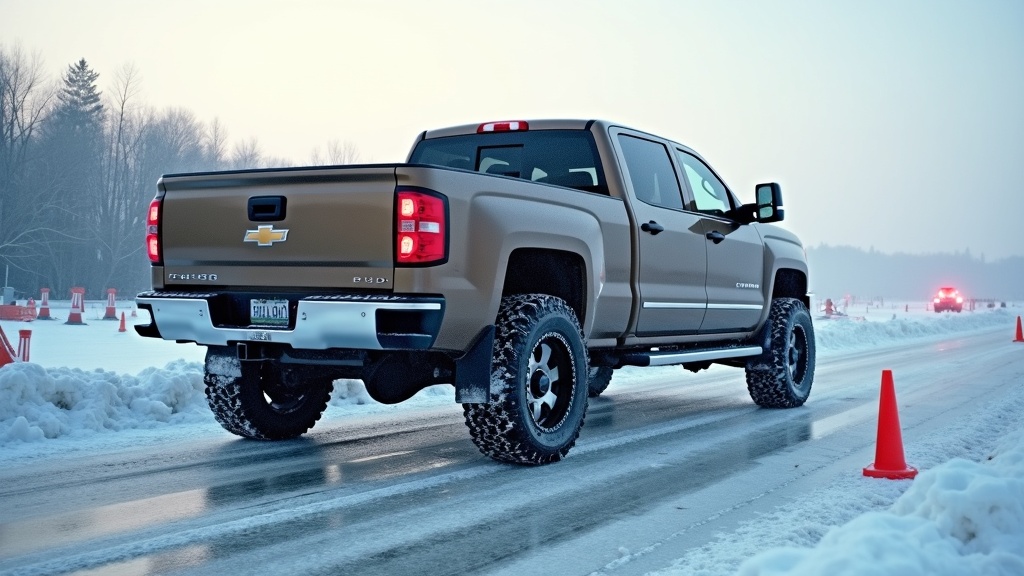
Snow Socks vs. Chains on Ice: Which One Wins
On pure ice traction, chains win. Steel bites into ice in a way fabric physically cannot. If you're hauling material up a steep icy grade or driving 45 miles through a mountain pass in a blizzard, chains are the right tool.
But chains have real costs. They take 10 to 20 minutes to fit properly, they destroy pavement if you forget to take them off, and they make your truck sound like a bucket of bolts at anything over 25 mph.
| Criteria | Snow Socks | Metal Chains |
|---|---|---|
| Ice traction | Moderate | High |
| Install time | ~1 min per tire | 10 to 20 min total |
| Pavement safe | Yes | No |
| Max speed | 30 mph | 25 to 30 mph |
| Durability | 60 to 200 miles | Season-long with care |
| Best for | Short icy runs, light conditions | Heavy loads, steep grades, extended ice |
Bottom line: if you're choosing between the two for a work truck doing short hops on a glazed lot, snow socks are the smarter daily carry. For the mountain pass run in February, bring the chains.
Disadvantages of Snow Socks You Need to Know Before You Buy
Nobody should buy these without knowing the downsides. Here they are, straight.
- They wear out on rough pavement. Any exposed aggregate, broken chip-seal, or graveled surface will shred the fabric in a few miles.
- They slip off if not fitted right. A sock that's one size too large on a worn tire will migrate and bunch up. Fit matters.
- They're not rated for heavy trucks in most certification standards. Many snow sock brands are tested on passenger cars. Check load ratings before putting them on a 3/4-ton or full-ton truck.
- Temperature limits exist. Some textile materials stiffen and lose flexibility in extreme cold, below about -4°F (-20°C).
- They can't be driven on bare pavement at any speed. Well, they can, but you'll burn through them in minutes.
Did you know?
Several European countries including France, Austria, and Germany now legally accept snow socks as a valid alternative to chains under winter equipment regulations. In the U.S., acceptance varies by state: always check your DOT chain laws before relying on socks as a legal substitute.
How Fast Can You Drive with Snow Socks On
30 mph is the hard ceiling. Most manufacturers print this clearly on the packaging. Some rate their product even lower, at 25 mph.
This isn't just a liability disclaimer. At speeds above 30 mph, the centrifugal force pulling on the fabric increases sharply, and the sock can work loose. On ice, a sock that slips mid-corner is worse than no sock at all because you'll feel false confidence right up until you don't.
Keep it slow. These are a low-speed tool. If your commute requires highway speeds in a storm, snow socks are not the answer for that part of the drive.
Check out our guide: Top 5 Methods to Prevent Foot Pain at Work and Expert Advice

How Long Do Snow Socks Last on the Job
Expect somewhere between 60 and 200 miles of use from a quality pair. That range is wide because surface type matters more than anything else.
- Smooth, compacted snow: up to 200 miles, no problem
- Light glaze ice on asphalt: 100 to 150 miles
- Rough or broken pavement: 30 to 60 miles before visible wear
- Gravel or aggregate roads: less than 20 miles, possibly less
For most workers using them to get in and out of a icy lot a few days a winter, one pair will last multiple seasons. For someone driving icy gravel access roads to a remote site every day, plan to replace them often.
Are Snow Socks Worth It for Workers Who Drive in Winter
If you drive a work truck in a region that gets one to three bad ice events per winter, snow socks are absolutely worth keeping behind the seat. They fit in a small bag, cost $60 to $130 for a decent pair, and can get you out of a situation that would otherwise leave you spinning in a lot waiting for a tow or a bag of sand.
They are not a replacement for good winter tires. They are not a replacement for chains when chains are the right call. But as an emergency traction tool that you can fit in under two minutes without getting on your back in a parking lot, they earn their place in a working truck.
The honest answer: snow socks work on ice within their limits. Know those limits, respect the speed cap, match them to the right conditions, and they will not let you down. Ask them to do more than they're built for and they will.
