


That first step out of bed. The one where your heel hits the floor and you have to decide whether to limp to the bathroom or just stand there for a moment. If you've had plantar fasciitis, you know exactly what that feels like. Now put yourself in work boots for ten hours on concrete. The question isn't just whether boots can help — it's whether your boots are helping or quietly making the whole thing worse. The answer is complicated. But there is one.
What Plantar Fasciitis Actually Is?

The plantar fascia is a thick band of connective tissue that runs along the bottom of your foot, from your heel bone to the base of your toes. It absorbs load, supports your arch, and acts like a spring every time you take a step.
When it gets overloaded — through too many hours on hard floors, poor footwear, sudden increases in activity, or simply the wrong biomechanics — it becomes inflamed. Tiny micro-tears develop in the tissue, usually right where it attaches to the heel bone.
That's plantar fasciitis. And it's one of the most common reasons workers in warehouses, construction sites, and manufacturing plants end up hobbling off the job.
The morning pain is especially characteristic: the fascia tightens overnight, and those first few steps stretch it before it's ready. After a few minutes of walking, it usually loosens up — until you've been on your feet for hours and it flares again.
So Does Wearing Boots Help Plantar Fasciitis?
Yes — if the boots are right. No — if they're not. That's not a cop-out. It's the honest answer, and the distinction is worth understanding before you spend money on new footwear.
The right boot reduces the mechanical stress on the plantar fascia by supporting the arch, cushioning the heel, and preventing the foot from collapsing inward. All three of those things directly reduce the tension pulling on the fascia insertion point.
The wrong boot — flat, unsupportive, or worn past its useful life — puts your foot in exactly the position that caused the problem in the first place.
Boot Features That Actually Help Plantar Fasciitis
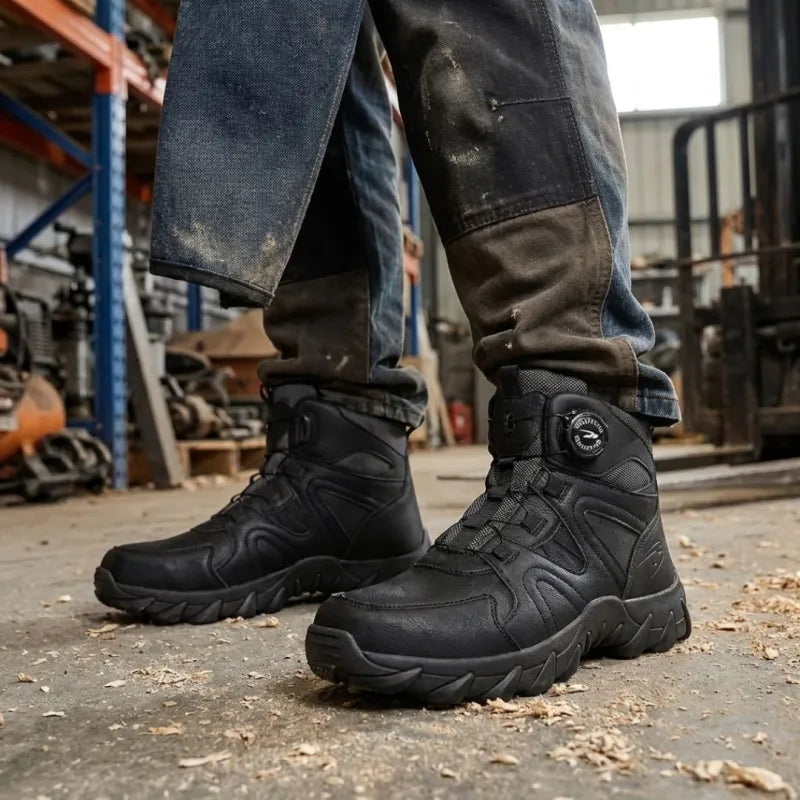
Discover the best boot features that can help relieve plantar fasciitis:
Firm arch support — not just a cushioned insole
There's a difference between a soft foam insole and genuine arch support. Foam compresses under load and offers almost nothing by mid-shift. Real arch support is structural — it holds the midfoot up and stops the arch from flattening every time you put weight on it.
When the arch doesn't collapse, the plantar fascia doesn't have to work as hard. Less strain, less pain. That's the whole mechanism.
A moderate heel lift (10–15mm)
Elevating the heel slightly takes tension off both the Achilles tendon and the plantar fascia. It's a small change that has a meaningful effect across a full workday. This is partly why traditional work boots — with their built-up heels — often feel better for plantar fasciitis sufferers than flat athletic shoes. Zero-drop boots look sleek. They're rough on inflamed fascia.
Heel cup and cushioning
A deep, firm heel cup does two things: it stabilizes the heel bone and it compresses the fat pad under the heel, which distributes impact more evenly. Pair that with a cushioned midsole and you're significantly reducing the impact load at the very spot where plantar fasciitis hurts most.
This is the feature most people underestimate. Cushioning at the heel doesn't just feel better — it physically reduces the stress going into the fascia attachment.
A rigid or semi-rigid shank
The shank is the stiff insert running through the midsole of the boot. A proper shank prevents excessive bending of the boot under load, which means the foot isn't being bent and flexed thousands of times a shift. For plantar fasciitis, that matters — every bend is a pull on the fascia.
Enough toe box room
Tight toe boxes push the foot into positions that increase plantar tension. It's subtle, but over ten hours it adds up. A boot that lets your toes sit naturally, without compression, is one less source of strain on the fascia.
What Makes Boots Worse for Plantar Fasciitis?
Flat soles. Worn-out midsoles that look fine but have lost all their cushioning. Cheap foam insoles that compress to nothing by hour three. Narrow toe boxes. No heel support. Hard outsoles with zero shock absorption.
Also: boots that are too old. The midsole of a work boot typically loses meaningful cushioning after 400–500 hours of use. If you're wearing the same pair you bought two years ago and you're on your feet 40+ hours a week — those boots are long past the point of helping anything.
Mason's Top Work Boots for Plantar Fasciitis Sufferers
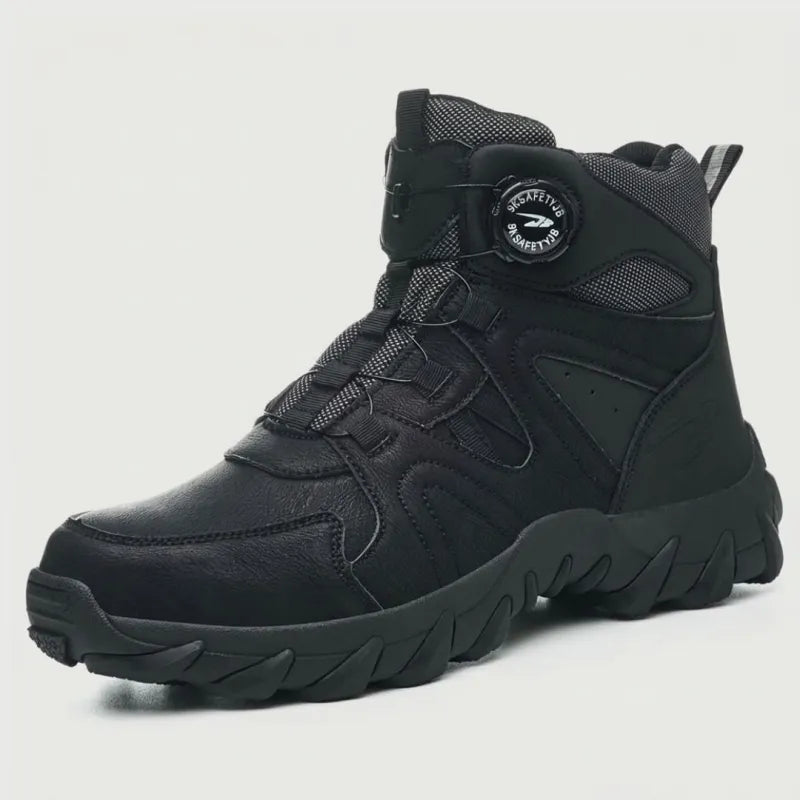
If you work on your feet and you're dealing with heel or arch pain, here are the Mason work boots worth considering. Each one brings something specific to the table for plantar fasciitis management.
1. ATLAS S3 Pro | Safety Boots
The Atlas S3 Pro is the workhorse of the Mason lineup — built for full days on hard surfaces, with a midsole that actually cushions rather than just looking like it does.
The heel construction offers a proper lift that takes pressure off the fascia insertion, and the steel toe protection means you don't have to choose between safety and foot health. For warehouse and construction workers dealing with plantar fasciitis, this is the most complete option in the range.
See the Atlas S3 Pro
2. STRIDE S1 Pro | Slip-On Steel Toe Boots
If you need something you can get on and off quickly without bending the heel counter out of shape, the Stride S1 Pro is worth a look. The slip-on design keeps the back of the boot soft and pliable, which matters when the area around your heel is already sensitive.
The steel toe meets S1 safety standards, and the price point makes it the most accessible option in the Mason range. A good choice if you're unsure whether new boots will make a difference — lower commitment, real results.
See the Stride S1 Pro
3. POLAR S3 Pro | Winter Safety Boots
Cold temperatures and plantar fasciitis are a rough combination. Tissue gets less pliable in the cold — the fascia included — and a stiff, frozen boot that fights your foot's movement on top of that is a recipe for a miserable shift.
The Polar S3 Pro handles sub-zero conditions while keeping the underfoot cushioning and support that plantar fasciitis sufferers need. If you work outdoors through winter, this is the one to reach for.
See the Polar S3 Pro
4. Mason Composite Toe Work Boots
For workers in environments where steel toe isn't ideal — around electrical hazards, for instance — Mason's composite toe work boots offer the same protective standards with a lighter overall weight.
Less weight means less load through the foot with every step. Over a 10-hour shift, that reduction is felt. Plantar fasciitis sufferers who find their symptoms worsen later in the day often do better in lighter boots.
See composite toe options
5. Mason Lightweight Work Boots
Sometimes the issue isn't just support — it's the cumulative fatigue of carrying heavy boots all day. Mason's lightweight work boots are designed to reduce that overall load while maintaining the structure and protection you need.
For plantar fasciitis, lighter boots reduce muscular fatigue in the foot and lower leg, which indirectly reduces the compensatory tension that feeds the fascia problem. Not the first choice if you need maximum cushioning, but worth considering for workers whose pain worsens with general foot fatigue.
See lightweight options
The Insole Question
Even a good boot comes with a stock insole designed for the average foot. If you have plantar fasciitis, you're probably not average in the relevant way.
An aftermarket insole with firm heel cushioning and real arch support is often the fastest way to feel a difference. Mason carries insoles made specifically for work boots — worth pairing with any of the options above, especially if your condition is moderate to severe. Think of the boot as the structure and the insole as the fine-tuning.

What Boots Can't Do?
Boots reduce mechanical stress. They don't fix the underlying inflammation. If you've been dealing with plantar fasciitis for more than a few weeks, better footwear is necessary — but not sufficient.
Plantar fascia stretching (calf stretches, towel stretches before getting out of bed), frozen water bottle rolling, and in more persistent cases physiotherapy-led strengthening — these matter alongside footwear changes. Wearing the right boots while continuing to overload an inflamed fascia with zero recovery work will slow progress.
Also: if the pain is severe, one-sided, or not improving at all after several weeks, see a podiatrist. Plantar fasciitis is common and treatable, but it's possible to mistake it for a stress fracture or fat pad atrophy, which need different management.
The Short Version
Does wearing boots help plantar fasciitis? Yes — if they have real arch support, a moderate heel lift, genuine heel cushioning, and a rigid shank. No — if they're flat, worn out, or just foam over a hard insole. Your work boots are on your feet for a significant portion of your waking life. That's either a lot of strain or a lot of support, depending on what's inside them.
See Mason's best work boots for plantar fasciitis
