


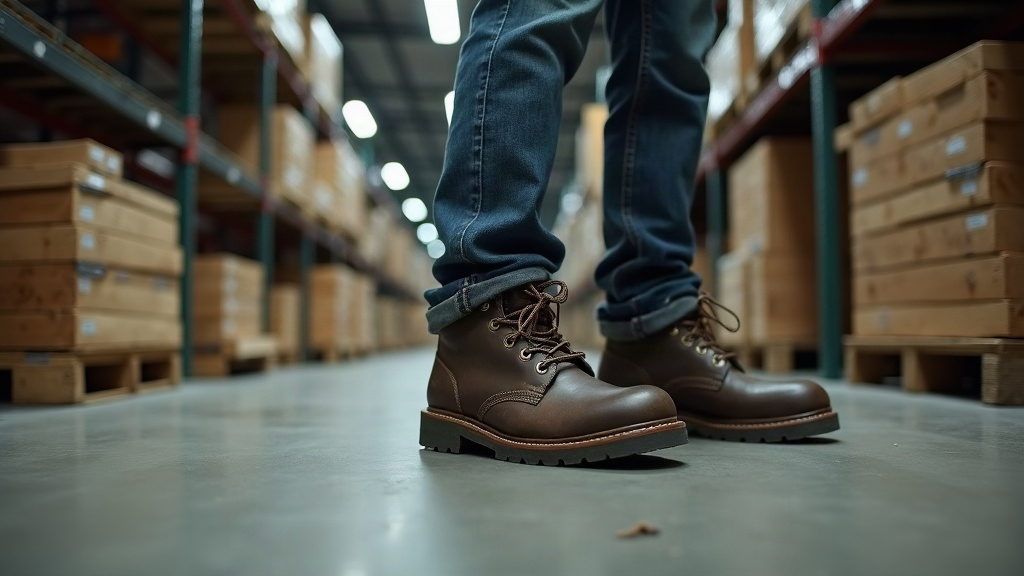
Your feet are screaming by noon, your knees ache before quitting time, and your arch feels like it's been steamrolled. If you have flat feet and spend your shift on concrete, that's not bad luck. That's biomechanics working against you, every single step.
This guide cuts straight to what works for flat feet warehouse workers support: the right insoles, the right boots, and the habits that keep you walking out of that warehouse under your own power at 60.
Key points at a glance
- Flat arches on concrete cause a chain reaction: foot pain, knee stress, and lower-back tightening that compounds over months.
- A quality aftermarket insole typically does more for flat feet than the foam insert that came with your boot.
- Overpronation is the core mechanical problem. The right arch support corrects the angle before damage adds up.
- Boot fit matters as much as insole choice. A wide toe box and firm heel counter are non-negotiable for flat arches.
- Warning signs like heel pain first thing in the morning often mean plantar fasciitis is already developing.
- Breaking in new support gradually, not all at once, prevents the first week from feeling worse than before.
What this guide gives you
Why Flat Feet Hit Different When You're on Concrete All Day
Concrete has zero give. Wood floors, rubber mats, even asphalt absorb some impact. Concrete absorbs nothing. Every step sends force straight back up through your heel, ankle, and knee.
With flat feet, your arch collapses inward on contact. That's overpronation, and when you're standing all day, it's happening thousands of times per shift. The tendons on the inside of your ankle stretch beyond their intended range every single rep.
The result isn't just sore feet. It's knee tracking problems, tight calves, hip imbalance, and lower-back tension that builds up over months and years on the job.
What 'Support' Actually Means for a Flat Arch (Skip the Medical Jargon)
Support means one thing: stopping your foot from rolling inward. That's it. A good insole or boot creates a surface that holds your foot in a neutral position instead of letting it collapse.
Three things good arch support does
- Distributes pressure across the whole foot instead of dumping it on the heel and ball
- Reduces overpronation so your ankle, knee, and hip stay in line
- Takes stress off the plantar fascia, the thick band of tissue that causes that stabbing heel pain in the morning
If a product just adds cushion without any structural support, it's a pillow, not a fix. Cushion and support are not the same thing.
Did you know?
The average warehouse worker walks 7 to 12 miles per shift, according to productivity studies from distribution center operations. For someone with flat feet and no arch support, that's 7 to 12 miles of uncorrected overpronation, every day.
Insoles vs. Orthotics vs. Supportive Boots: What to Buy First
Most guys want to know where to spend their money first. Here's the honest answer: start with a quality aftermarket insole.
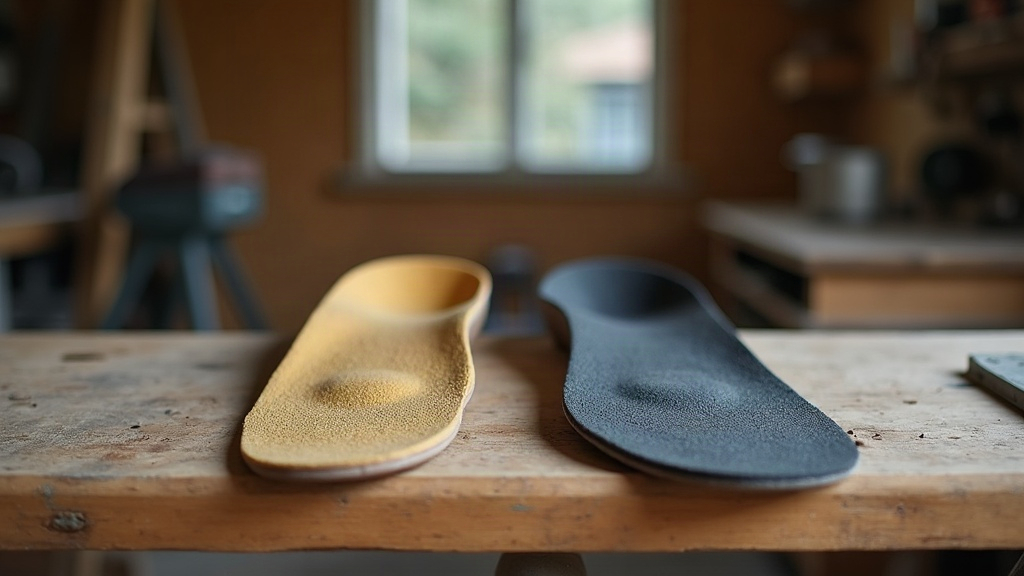
Custom orthotics from a podiatrist are excellent, but they run $300 to $600 and require a prescription. Over-the-counter insoles from brands like Superfeet, Powerstep, or Dr. Scholl's Work cost $30 to $60 and fix the problem for a large percentage of flat-footed workers.
A supportive boot matters too, but even a great boot is limited by its stock insole. Swap the insole first, then evaluate. If foot pain persists after 6 to 8 weeks, see a podiatrist about custom orthotics.
Top Insole Picks for Flat-Footed Warehouse Workers in 2025
These are products workers actually use and keep using after the first pair wears out. That's the real test.
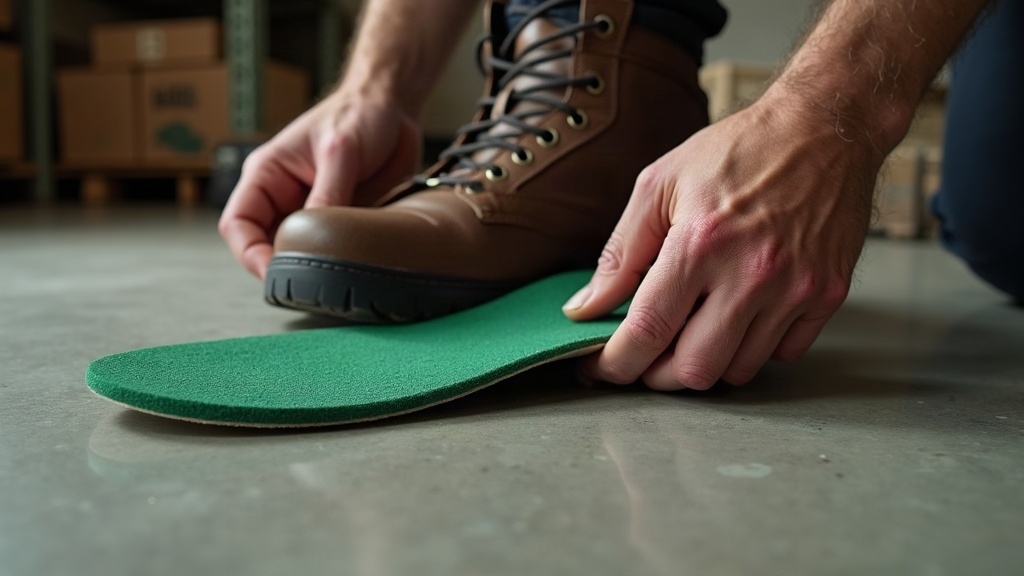
- Superfeet Green: Deep heel cup, firm arch, holds up for months of heavy use. Best for medium-to-high arches that need correction, but works well for flat feet that need rigid support.
- Powerstep Pinnacle: Semi-rigid arch with dual-layer foam. More forgiving than Superfeet Green for guys who find rigid insoles too aggressive at first.
- Dr. Scholl's Work Massaging Gel Advanced: Not the most structured option, but adds significant cushion for workers on concrete who already have a supportive boot. Budget-friendly at under $20.
- Sof Sole Arch: Targeted for overpronators specifically, with a pronounced medial arch post. Good match for best insoles for flat feet warehouse work if you know overpronation is your issue.
| Insole | Support Type | Best For | Price Range |
|---|---|---|---|
| Superfeet Green | Rigid arch, deep heel cup | Maximum correction, long shifts | $45, $55 |
| Powerstep Pinnacle | Semi-rigid, dual foam layer | First-time insole users, moderate flat feet | $40, $50 |
| Sof Sole Arch | Medial arch post | Overpronators, wide feet | $25, $35 |
| Dr. Scholl's Work | Gel cushion, light structure | Budget pick, comfort over correction | $16, $22 |
| Custom orthotics | Fully molded to your foot | Chronic pain, plantar fasciitis | $300, $600 |
Boot Features That Matter When You Have Flat Feet
The boot you choose is the foundation before the insole even goes in. Certain features are worth paying for when you have flat arches.
What to look for in flat feet work boots for men
- Wide toe box: Flat feet often spread wider than a standard last allows. Cramped toes accelerate fatigue and increase blister risk.
- Firm heel counter: This is the rigid cup at the back of the boot. It controls heel movement and reduces the ankle rolling that flat-footed workers experience.
- Removable footbed: If you can't pull out the stock insole to replace it, the boot is fighting your fix.
- Shank support: A steel or fiberglass shank runs along the mid-sole. It prevents the boot from bending in the middle, which matters when there's no natural arch to do that job.
Brands like Thorogood, Red Wing, and Wolverine consistently build boots with these features. They're not cheap, but a $200 pair that lasts three years costs less per day than a $80 pair that falls apart in eight months.
Warning Signs Your Flat Feet Are Causing Bigger Problems
Pain is a message. These are the ones you shouldn't let go another month without addressing.
- Heel pain first thing in the morning that eases after a few minutes of walking: that's a textbook sign of plantar fasciitis in warehouse workers, and it gets significantly worse if you keep ignoring it.
- Pain on the inside of your ankle during or after a shift: that's your posterior tibial tendon working too hard to compensate for your collapsing arch.
- Knee pain that moves to the inner side: overpronation pulls the kneecap out of alignment over time.
- Lower back pain that started without any injury: often traced back to the hip rotation caused by flat-footed gait on hard floors.
Did you know?
Plantar fasciitis is the most common cause of heel pain in adults and affects roughly 2 million Americans annually, with physically demanding jobs like warehouse work listed as a primary risk factor by the American Academy of Orthopaedic Surgeons.
How to Break In New Support Without Wrecking Your First Week
Swapping from zero support to a firm orthotic insole on a 10-hour shift is a mistake. Your foot muscles, tendons, and calf have adapted to working without support. Change that too fast and you'll be sore in places you didn't expect.
A realistic break-in schedule
- Days 1 to 3: Wear the new insoles for 2 to 3 hours per day, not a full shift. Swap back to your old setup for the rest.
- Days 4 to 7: Push to half a shift. Some muscle soreness in the arch is normal. Sharp pain anywhere is not.
- Week 2: Full shift, every day. Most workers feel meaningful improvement in fatigue levels by the end of week two.
The same logic applies to new boots. Never wear a brand-new pair of work boots on a Monday when you have five full shifts ahead of you.
What Other Warehouse Workers Are Using (Real Feedback, No Sponsorships)
Across Reddit threads, warehouse worker forums, and Amazon reviews from verified buyers in distribution and logistics, a few names come up consistently.
- Superfeet Green has a near-cult following among workers who tried softer insoles first and kept coming back to something rigid. Common feedback: "I thought it felt weird the first week. Now I won't work without it."
- Powerstep Pinnacle gets praised by guys with mild-to-moderate flat feet who found Superfeet too aggressive. Often described as the right balance of structure and cushion for best shoes for flat feet on concrete environments.
- Thorogood American Heritage boots (6-inch moc-toe) come up repeatedly as one of the top flat feet work boots for men who need both compliance and comfort. Wide sizing, quality leather, and a removable footbed.
- New Balance 627v2 appears often in non-safety-toe warehouses. It's a work sneaker, not a boot, but its built-in arch support is better than most boots out of the box.
Build the Habit Before the Pain Builds for You
Flat feet don't have to be a career-limiting condition. Plenty of workers put in 20-plus years on concrete with good support and walk away without chronic foot or joint problems.
The formula is not complicated. Get a structured insole. Pick a boot with a firm heel counter and removable footbed. Break them in properly. Pay attention to early warning signs. That's the whole playbook.
Spend $50 on insoles now or spend a lot more on podiatrist visits, missed shifts, and knee problems later. The math is easy.
