


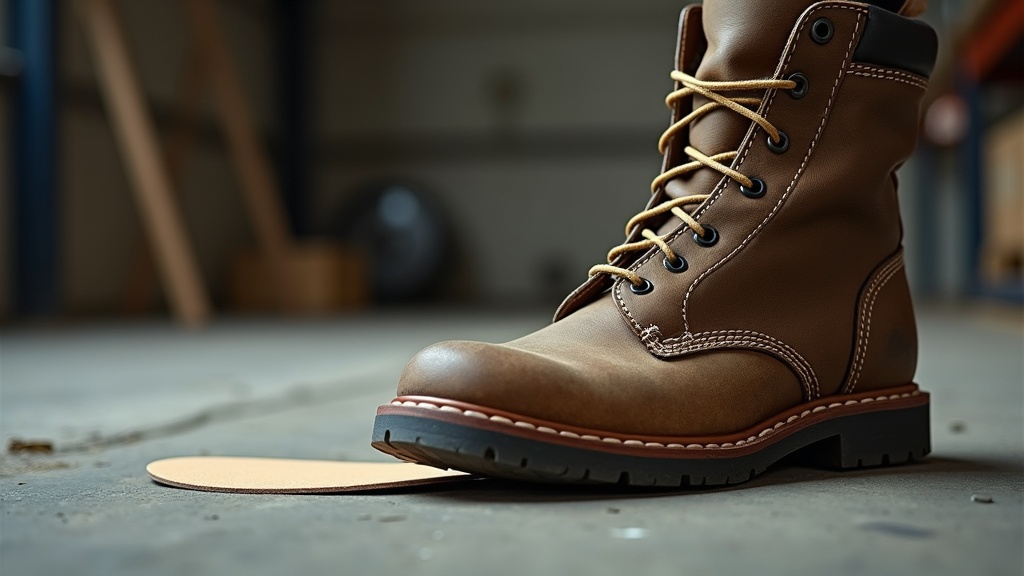
Your feet take somewhere between 8,000 and 10,000 steps on a shift. The foam pad that came glued inside your work boot was designed to hit a price point, not to protect you for ten hours on concrete. By noon, you're standing on compressed cardboard.
The right insole changes that. Not in a spa-day way. In a "my knees don't ache at 3 PM" way. Here's what's actually worth buying and why.
Key points at a glance
- Stock insoles lose most of their cushion within the first 30 to 60 days of daily wear.
- For concrete, you need dual-density foam or a gel heel pad, not a single flat layer.
- Steel-toe boots need slimmer, firmer insoles so your toes aren't crushed.
- Women's work insoles differ in heel width and arch placement, not just size.
- Signs of overpronation show up as uneven heel wear, not just foot pain.
- A quality work insole lasts 6 to 12 months depending on surface and body weight.
What a good work insole does for you
Why Your Work Shoes Need Better Insoles (and Why Stock Ones Fail)
The factory insole in most work boots is a thin layer of EVA foam, sometimes less than 5mm thick. It's there to make the boot feel acceptable in the store for thirty seconds. That's its entire job.
After two weeks of real shifts, that foam is flat. Your heel is now hitting a molded hard-plastic footbed or, in cheaper boots, a cardboard stiffener. Every step sends impact straight up your ankle, shin, and knee.
The consequences pile up fast: plantar fasciitis, Achilles tendon strain, lower back fatigue, and knee pain. None of those are freak accidents. They're what happens when you stand 8 to 10 hours on an unsupported foot, day after day.
What to Look For Before You Buy: Arch Support, Cushion, and Durability
Three things matter, in this order: arch support, impact absorption, and how long the material holds its shape.
Arch support
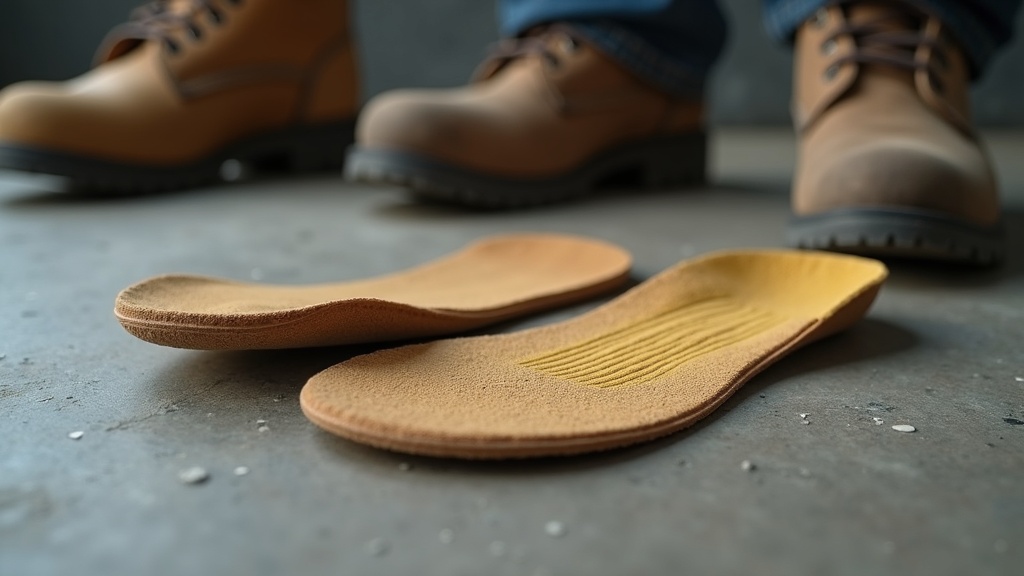
You want a defined arch that actually contacts your midfoot. A flat insert is just a softer floor. Look for a contoured shell, usually polypropylene or a firm composite, under the foam layer.
Cushion and impact absorption
Gel heel cups handle point-impact well. Dual-density foam (firm base, softer top) handles sustained pressure better over a full shift. If you're over 200 lbs or working on concrete all day, you want both.
Durability
Memory foam feels great on day one and collapses by month two. Polyurethane foam and EVA blends with a hard shell base last significantly longer. The shell is the skeleton. Without it, the foam just spreads and pancakes under your weight.
Read also: Best Work Boots Comfortable—Expert Guide for Walking All Day
Did you know?
According to the American Podiatric Medical Association, roughly 77% of Americans experience foot pain at some point, and ill-fitting footwear or inadequate support is one of the top contributing factors. Workers who stand more than 6 hours a day are at significantly higher risk of plantar fasciitis than those who sit.
The 6 Best Insoles for Work Shoes, Ranked by Real-World Use
These aren't ranked by marketing budget. They're ranked by what workers actually report holding up across months of hard use.
- Superfeet GREEN: The benchmark for arch support. Firm, structured, lasts 500+ hours of use. Best for high arches and workers who need corrective support over cushion.
- Dr. Scholl's WORK Massaging Gel: The budget pick that actually delivers. Gel heel and forefoot pads, decent arch, available everywhere. Replace every 4 to 6 months.
- Timberland PRO Anti-Fatigue: Inverted cone technology absorbs shock and returns energy. Built specifically for work boots. Holds up well under heavy body weight.
- Sof Sole ATHLETE: Good all-around dual-density foam option. Neutral arch, breathable mesh top. Works well for workers with normal to mid-height arches.
- Powerstep Pinnacle: Strong choice for overpronation. Firm shell with a neutral to mild support arch. Podiatrist-designed without the orthotics price tag.
- New Balance 3810: Slim profile with solid support. A solid pick for tighter-fitting boots where most insoles add too much bulk.
| Insole | Best For | Profile | Est. Lifespan |
|---|---|---|---|
| Superfeet GREEN | High arch, corrective support | Medium-thick | 12+ months |
| Dr. Scholl's WORK Gel | Budget, all-day standing | Slim | 4 to 6 months |
| Timberland PRO Anti-Fatigue | Heavy workers, concrete | Medium-thick | 8 to 12 months |
| Powerstep Pinnacle | Overpronation, plantar fasciitis | Medium | 8 to 10 months |
| New Balance 3810 | Steel-toe, tight boots | Slim | 6 to 9 months |
Best Insoles for Work Boots on Concrete Specifically
Concrete is unforgiving. It has zero give, which means every ounce of impact absorption has to come from your shoe stack: outsole, midsole, insole, and sock. When the first three are fixed, the insole carries a lot of that load.
For concrete, prioritize a gel heel cup and a firm polyurethane base over pure memory foam. Memory foam compresses too quickly under static load. After two hours standing at a workstation, it's bottomed out.
The Timberland PRO Anti-Fatigue is the most commonly recommended insole among warehouse workers and construction trades. The inverted cone geometry under the heel and forefoot specifically targets impact return on hard surfaces. Superfeet GREEN is the runner-up for workers who need more arch correction than cushion.
Best Insoles for Steel Toe Shoes and Tight-Fitting Boots
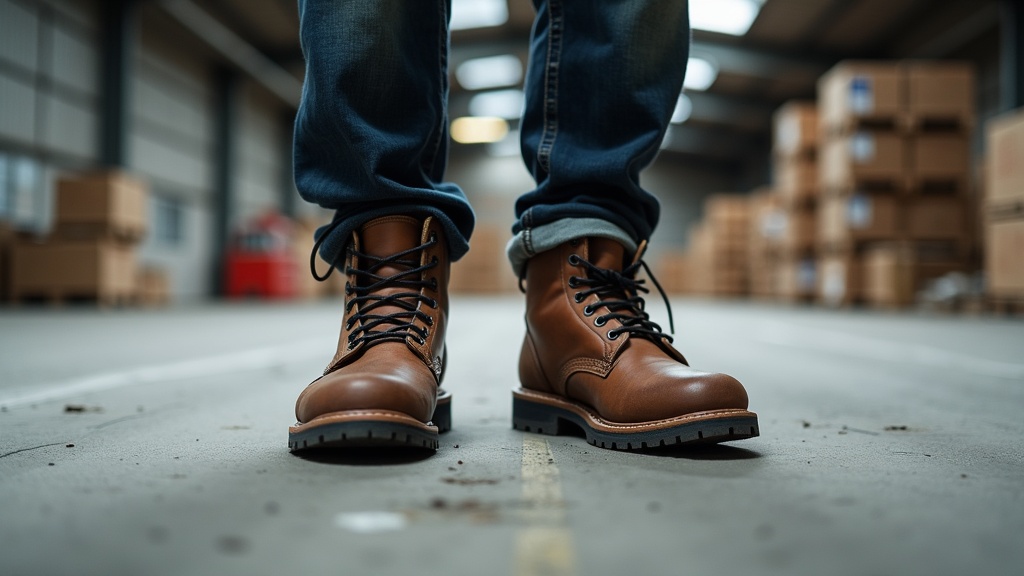
Steel-toe boots already have less internal volume than standard boots. Drop a thick insole in there and your toes are jammed against that cap by lunchtime. That causes nail problems, numbness, and blisters.
Slim-profile insoles are mandatory here. Look for anything under 6mm at the toe box. The New Balance 3810 and the Sof Sole AIRR Orthotic are two that fit without crowding.
You can also trim a standard insole at the toe, cutting back to just behind where the steel cap starts. That frees up room while keeping heel and arch support where you need it.
Good Insoles for Work Shoes for Women: What's Different
Women's feet are not just smaller versions of men's feet. The heel is proportionally narrower, the arch peaks further forward, and the forefoot is wider relative to length. A unisex insole built around male foot geometry will miss the arch entirely on many women.
Look for insoles specifically designed for women's lasts, or at minimum check that the arch peak lands at roughly 40% from the heel end of the insole. Superfeet BERRY and Powerstep Pinnacle Plus (women's version) both account for this geometry.
For women working in boots with any heel height, the insole should also have a slight heel elevation built in to reduce Achilles tendon strain at the back of the boot.
Read also: Best Work Socks – Experts' picks for 2026 for comfort at work
Did you know?
Research from the Journal of Foot and Ankle Research found that custom and over-the-counter arch-support insoles reduced lower back pain in standing workers by up to 25% over a 6-week period. You don't have to spend $400 on custom orthotics to get measurable relief.
Can Insoles Help with Blisters, Overpronation, and Neuropathy?
Blisters
Blisters form from friction and moisture. A moisture-wicking top cover on your insole (look for a Dri-Lex or Polygiene-treated surface) reduces both. It won't eliminate blisters from a boot that doesn't fit, but it handles the friction generated by normal movement.
Overpronation
Overpronation means your foot rolls inward on each step, putting stress on your arch, ankle, and knee. A firm medial post (the reinforced section on the inner edge of the heel) corrects this mechanically. Powerstep Pinnacle and Superfeet GREEN both do this well. If you're buying for overpronation work boots specifically, avoid soft gel-only insoles since they give too much and allow the roll to continue.
Neuropathy
For diabetic neuropathy or nerve sensitivity, extra-depth boots paired with a soft, cushioned insole (not a firm corrective one) is the standard recommendation. The goal is zero pressure points. Look for a full-contact foam top layer and no raised arch that could create localized pressure. Always loop in your doctor for any neuropathy-related footwear choice.
How Long Should a Good Work Insole Last, and When to Replace It
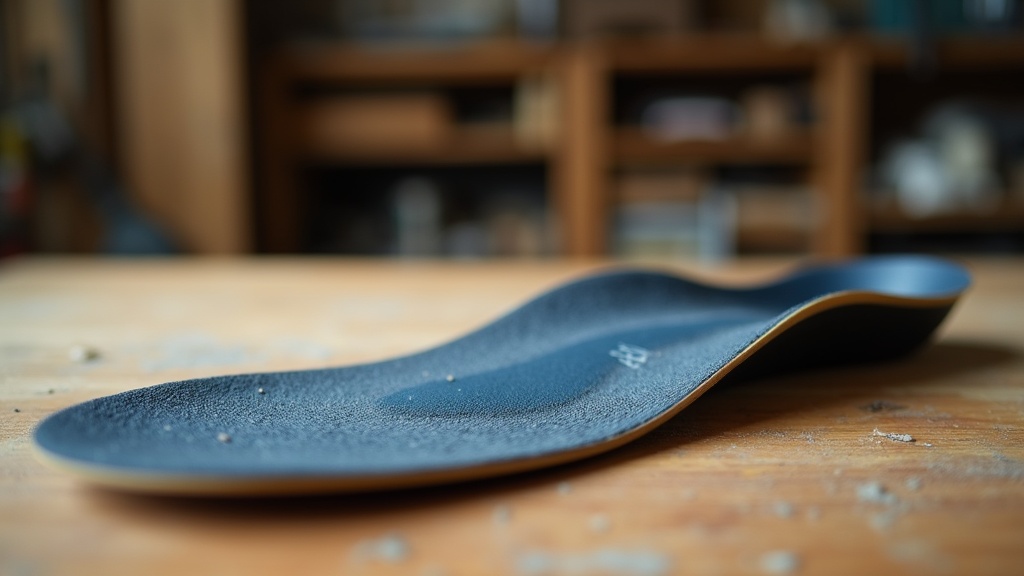
A quality insole typically lasts 6 to 12 months of daily work use, or roughly 500 hours of wear. That's a rough number that shifts based on your weight, your surface, and the insole material.
How to tell it's done:
- The heel cup feels thin and hard under your foot
- You can see flattening or cracking in the foam
- Foot and knee pain that had improved starts coming back
- The top cover is worn smooth and no longer breathes
Rotating between two pairs of insoles (like you would with boots) extends the life of each. A day to decompress and dry out does more than you'd expect.
Bottom Line: What to Buy Based on Your Job and Budget
Here's the short version, no guesswork required.
- Warehouse / concrete all day: Timberland PRO Anti-Fatigue or Superfeet GREEN. Budget option: Dr. Scholl's WORK Gel.
- Construction / steel-toe boot: New Balance 3810 or Sof Sole AIRR. Trim to fit if needed at the toe.
- Women's work shoes or heeled work boots: Superfeet BERRY or Powerstep Pinnacle Plus women's version.
- Overpronation: Powerstep Pinnacle or Superfeet GREEN. Skip the gel-only options.
- Heavy-duty / over 220 lbs: Timberland PRO Anti-Fatigue. The cone geometry holds under load better than flat foam.
- Tight budget, light use: Dr. Scholl's WORK Gel. Replace every 5 months and you'll stay ahead of the breakdown curve.
Spend $30 to $50 on a good insole. It's a fraction of what a doctor visit costs, and it's the one upgrade that pays you back every single shift.
