


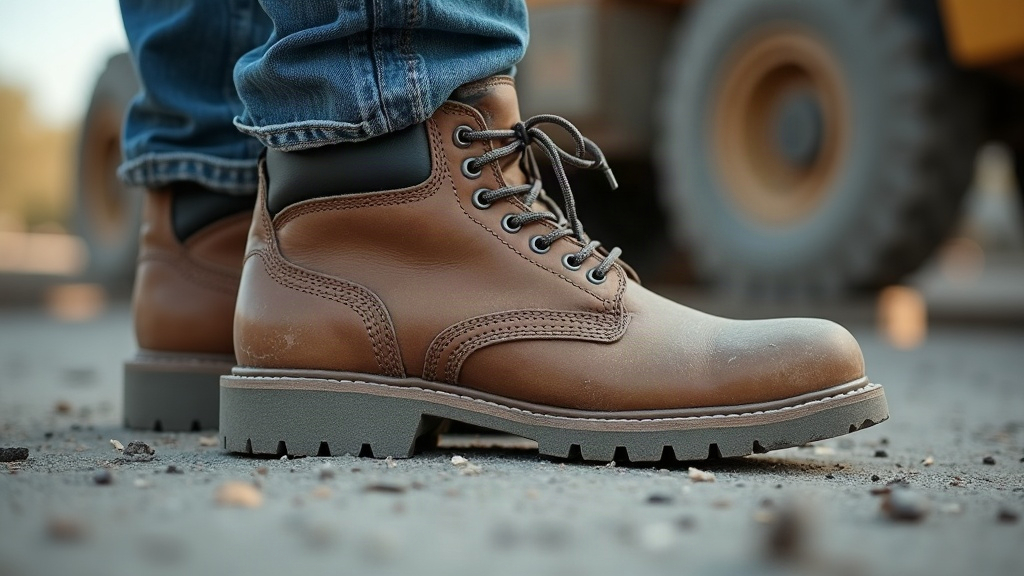
You hit the floor at 5 a.m., take three steps toward the coffee maker, and your heel fires like someone jabbed a nail into it. By lunch you're limping. By Friday you're wondering how much longer you can keep this up.
This guide is built for anyone who spends their day on concrete, gravel, or hard-packed dirt. No fluff, no "consult your physician" runaround as the only answer. Just what works, what doesn't, and what you need to know before this thing sidelines you for good.
Key points at a glance
- Heel spurs are calcium deposits that form when the plantar fascia pulls on the heel bone repeatedly, and concrete floors accelerate that process fast.
- Most cases resolve without surgery if you catch them early and make the right changes to your boots and daily routine.
- The right insole inside the right boot is the single highest-leverage fix available to a working tradesman.
- Three specific stretches done before you put weight on your foot each morning can cut morning pain by half within two weeks.
- Ice, anti-inflammatories, and a few targeted exercises handle the rest at home, for free.
- A doctor visit becomes necessary when pain is constant, swelling shows up, or you've tried everything for three months without improvement.
What this guide does for you
What a Heel Spur Actually Is (And Why Concrete Floors Make It Worse)
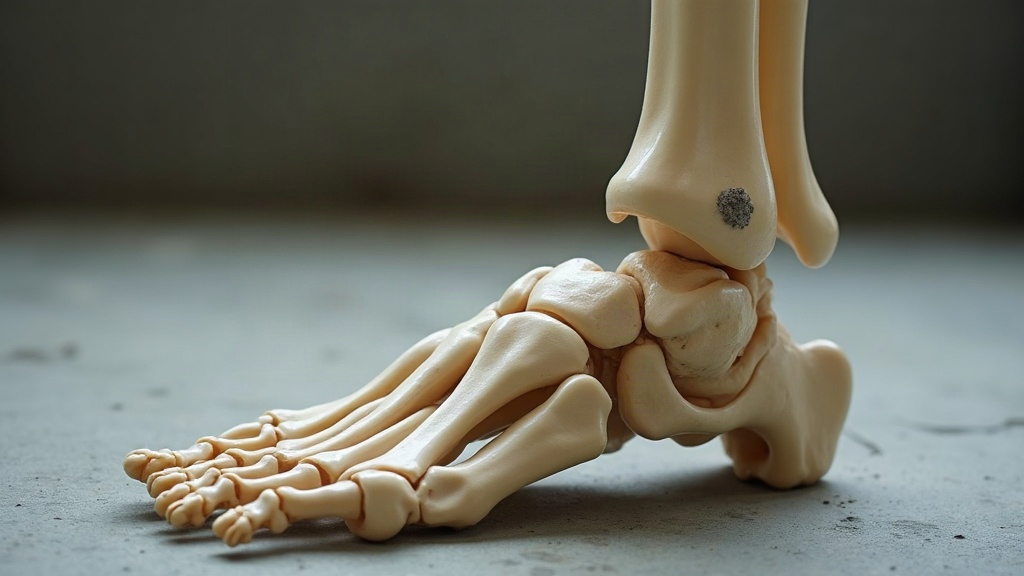
A heel spur is a calcium deposit that grows along the bottom of your heel bone, usually right where the plantar fascia attaches. It doesn't appear overnight. It builds up over months of repeated stress on that tissue.
The plantar fascia is a thick band of tissue running from your heel to the ball of your foot. Every time it pulls too hard on the heel bone, your body responds by laying down calcium. Do that thousands of times a day on an unforgiving surface, and you've got a spur.
Concrete is the worst surface for this. It has zero give. Every step sends a shock straight up through your heel with nothing to absorb it. Gravel and asphalt aren't much better. Add ten or twelve hours of standing, and the fascia never gets a real break.
How to Tell If That Heel Pain Is a Spur or Something Else
Heel spurs and plantar fasciitis often travel together, but they're not the same thing. Plantar fasciitis is inflammation of the fascia itself. A spur is the bony growth that sometimes develops alongside it. You can have fasciitis without a spur, and a spur without much pain at all.
Signs that point toward a heel spur or plantar fasciitis
- Sharp, stabbing pain on the bottom of the heel, worst with the first steps of the morning
- Pain that eases after you've been moving for 20 to 30 minutes, then returns after long periods of standing
- Tenderness when you press on the inside edge of the heel
- Pain that gets worse after, not during, heavy activity
Reasons to see someone sooner rather than later
- Swelling or bruising that wasn't caused by a direct hit
- Pain that wraps around the back of the heel (could be Achilles tendinitis)
- Numbness or tingling (possible nerve issue)
- Pain that doesn't let up even when you're sitting or lying down
Did you know?
Studies show that roughly 70% of people with plantar fasciitis also have a heel spur visible on X-ray, but up to 50% of people with spurs on X-ray feel no pain at all. The spur itself may not be the pain source: it's the inflamed tissue around it that hurts.
Can You Fix a Heel Spur Without Surgery? The Honest Answer
Yes, the large majority of the time. About 90% of heel spur cases respond to conservative treatment within 6 to 12 months. Surgery is the last resort, not the default.
The catch: you have to actually do the work. New boots, better insoles, consistent stretching, ice when it flares, and giving your body enough time to respond. Half-measures get half-results.
If you've been grinding through the pain for years without any changes to your footwear or routine, don't expect a week of stretching to fix it. Give yourself at least 6 to 8 weeks of real consistency before you judge whether something is working.
The Right Boots and Insoles: Your First Line of Defense on the Jobsite
Your boots spend ten hours a day between your heel and a concrete floor. This is not the place to cheap out or to keep wearing a pair that's two years past its prime.
What to look for in a boot
- Deep heel cup: cradles and stabilizes the heel, keeps it from rolling inward
- Firm midsole with real cushioning: not a flat slab of hard rubber
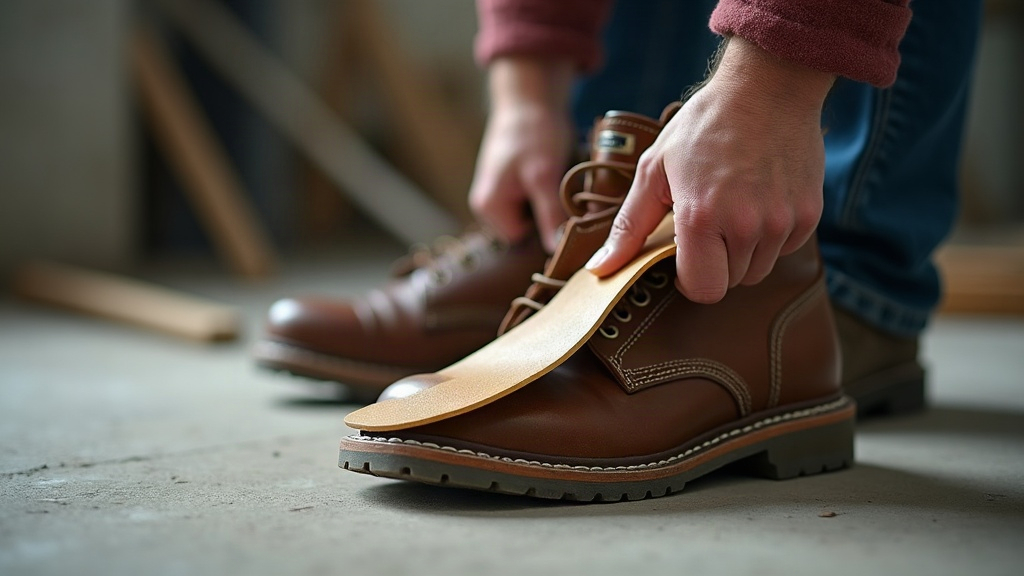
- Removable footbed: lets you swap in a quality orthotic insole
- Slight heel elevation: around half an inch reduces tension on the plantar fascia
- Adequate toe box width: cramped toes shift your gait and add stress to the heel
| Insole Type | Best For | Drawback |
|---|---|---|
| Rigid orthotic (custom) | Severe pronation, structural issues | Expensive, takes time to get |
| Semi-rigid OTC orthotic | Most heel spur cases, daily use | May need trimming to fit boot |
| Gel heel cup insert | Quick relief, tight budget | Doesn't address arch support |
| Cushioned foam insole | Shock absorption on concrete | Wears out fast under heavy use |
| Heel wedge lift | Reducing fascia tension quickly | Not a long-term standalone fix |
For most construction workers dealing with heel spur pain, a semi-rigid OTC orthotic with a deep heel cup is the sweet spot: enough support to matter, available same-day at any pharmacy or big-box store.
Stretches You Can Do Before the First Whistle Blows
The worst moment of the day for plantar fascia pain is those first steps out of bed. Overnight, the tissue tightens up. You load it cold, and it screams. Two minutes of stretching before you stand changes that.
The three stretches that count
- Seated towel stretch: Loop a belt or towel around the ball of your foot while sitting on the edge of the bed. Pull back gently, hold 30 seconds, repeat three times. Do this before your feet hit the floor.
- Calf wall stretch: Hands on the wall, one foot back, heel flat on the ground. Hold 30 seconds per side. Tight calves yank the Achilles, which yanks the fascia.
- Seated foot roll: Sit in a chair, roll the arch of your foot over a water bottle or a golf ball for 60 seconds. Loosens the fascia tissue before you load it.
Do all three before lacing up your boots. Takes less than five minutes total. That consistency, done daily, is what moves the needle over weeks.
Exercises That Actually Help (And Moves to Skip When You're Hurting)
Strengthening the muscles that support the arch reduces the load on the fascia over time. But timing matters. Don't push into sharp pain.
Exercises worth doing
- Towel toe curls: Lay a small towel on the floor and scrunch it toward you with your toes. Builds intrinsic foot strength.
- Single-leg calf raises: Hold a counter for balance, rise up on one foot slowly, lower slowly. Strengthens the entire posterior chain that supports the heel.
- Marble pickups: Pick up marbles with your toes and drop them into a cup. Sounds goofy, actually works.
Moves to avoid during a flare
- Running or jogging on hard surfaces
- Jump rope or box jumps
- Any barefoot work on concrete or tile
Did you know?
A 2014 study published in the Journal of Foot and Ankle Research found that calf stretching alone reduced plantar fasciitis pain significantly within 8 weeks in patients who did it consistently twice a day. No special equipment, no gym membership required.
Ice, Rest, and Other At-Home Fixes That Pull Their Weight
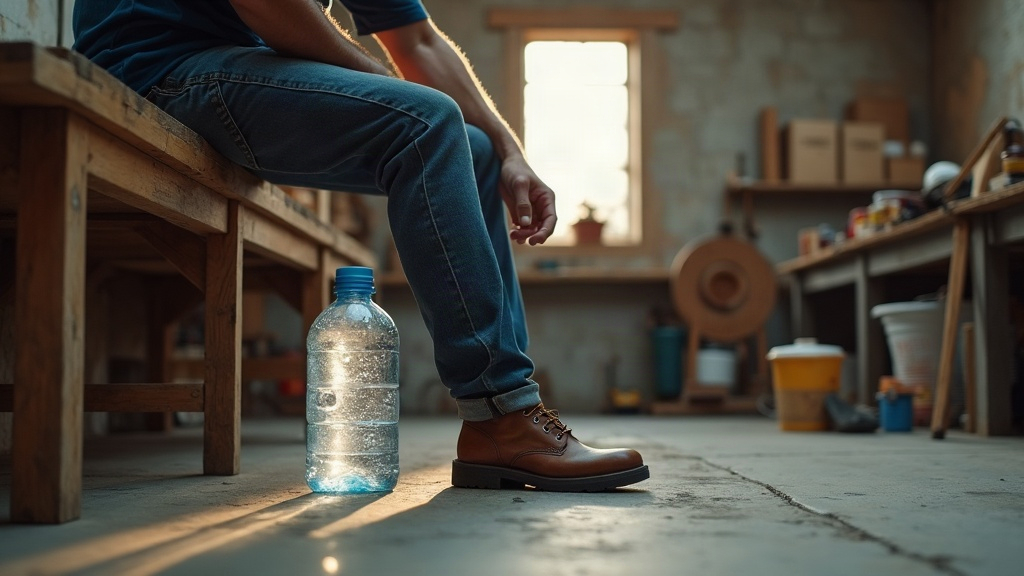
After a long day on your feet, inflammation builds up in the fascia. Ice is cheap and it works. Freeze a water bottle and roll your foot over it for 10 to 15 minutes after work. Direct cold, plus the gentle massage, handles a lot of the end-of-day soreness.
Over-the-counter anti-inflammatories like ibuprofen or naproxen can take the edge off during flare-ups. Don't make them a daily crutch, but don't suffer through a bad week without using them either.
Night splints are worth trying if the morning pain is your worst symptom. They hold the foot in a gentle stretch while you sleep, so the fascia doesn't tighten overnight. You can find a basic version for under $30 online.
When It's Time to Stop Toughing It Out and See a Doctor
Toughing it out has its place. This isn't one of them if you've crossed certain lines. Get in front of a doctor when:
- Pain has lasted more than three months despite consistent at-home treatment
- You've changed your walk to compensate and now your knee or hip hurts too
- Swelling, redness, or warmth shows up in the heel
- The pain wakes you up at night
- You can't do your job safely because of it
A podiatrist or orthopedic specialist can confirm the diagnosis with an X-ray, discuss corticosteroid injections if the inflammation is severe, or refer you for physical therapy. Cortisone shots can provide meaningful relief when nothing else is moving the needle, though they're not a permanent fix on their own.
Extracorporeal shock wave therapy (ESWT) is another option before surgery. It uses sound waves to stimulate healing in the tissue and has a solid track record for chronic cases.
Keeping Heel Spurs From Coming Back: Daily Habits That Cost Nothing
Once the pain backs off, the goal is making sure it stays off. The habits that prevent recurrence are the same ones that helped you heal.
- Stretch every morning before you stand. Non-negotiable, takes two minutes.
- Replace your boots before the midsole collapses. A midsole that's bottomed out provides zero shock absorption. Most work boots need replacing every 12 to 18 months under daily heavy use.
- Maintain a healthy weight. Every extra pound adds pressure to the fascia with every step.
- Avoid prolonged barefoot time on hard floors at home, especially in the morning when the fascia is stiff.
- Swap standing positions regularly on the job. If you can use an anti-fatigue mat at a fixed workstation, use it.
The guys who keep heel spurs from coming back aren't the ones who found a miracle product. They're the ones who built three or four simple habits and stuck with them. That's it. Consistency beats any single fix every time.
