


You wake up, swing your legs over the side of the bed, and the second your heel touches the floor, it feels like someone buried a nail in it. That's your morning. Then you go stand on concrete for ten hours anyway, because the job doesn't stop for sore feet.
This isn't about miracle cures or taking a week off. It's about what actually holds up on a real work schedule, what protects your heel when you're pulling long days, and what's worth spending your paycheck on.
Key points at a glance
- Heel spurs are bony growths on your heel bone, usually caused by months of pressure and tension on the plantar fascia.
- Construction work accelerates the damage because of concrete, heavy loads, and cheap footwear.
- The right boots and orthotics can cut pain by more than half without you stepping off the site.
- A handful of specific stretches done consistently are more effective than most treatments people try first.
- Surgery is rarely necessary if you catch this early and handle it right.
- There are clear signs that mean it's time to see a doctor, not just push through.
What this guide gives you
What a Heel Spur Actually Is (and Why Your Job Is Making It Worse)
A heel spur is a calcium deposit, a small bony spike that forms on the underside of your heel bone. It builds up over time, usually because your plantar fascia, the thick band of tissue running along the bottom of your foot, is under constant stress.
Here's the problem with construction work specifically: concrete has zero give. Every step transfers full impact straight up through your heel. Add heavy boots with worn-out soles, long shifts, and carrying weight, and you've got a recipe for plantar fascia damage that accelerates bone spur formation faster than almost any other occupation.
How to Tell If It's a Heel Spur or Just Beat-Up Feet
The telltale sign of a heel spur is that first-step pain in the morning. It tends to ease after you've been moving for 10 to 15 minutes, then comes back hard after long periods of standing or at the end of a shift.
Common symptoms to watch
- Sharp stabbing pain right at the center or front of the heel
- Tenderness when you press on the heel with your thumb
- Pain that's worse after sitting for a while, then standing up
- A dull ache across the arch that doesn't quit
- Swelling around the heel base after a full shift
General foot soreness from a long day spreads across the whole foot and fades overnight. Heel spur pain is localized, sharp, and shows up in a predictable pattern tied to rest and movement cycles.
Did you know?
Around 70% of people with heel spurs also have plantar fasciitis. The two conditions share the same root cause and almost always respond to the same treatment approach. Fixing the fascia tension is the key move in both cases.
What's Causing Sudden Heel Pain With No Obvious Injury
You didn't twist it. You didn't drop anything on it. But one week your heel just started killing you. That's actually typical. Heel spurs don't show up from a single incident.
They build quietly over months of repetitive stress. The moment you feel it, the damage has been accumulating for a while. Common triggers on a jobsite include switching to a new pair of boots without breaking them in, a sudden increase in overtime hours, switching from a softer surface to all-concrete work, or losing weight in your midsole without realizing it.
The Fixes That Work on a Job Schedule (No Rest Days Required)
You can't stay off your feet. So here's what actually moves the needle without requiring time off.
Immediate pain management
- Ice the heel for 15 minutes after your shift, not during. A frozen water bottle rolled under your foot works well.
- Anti-inflammatories like ibuprofen help short-term, but they're not a fix. Don't lean on them for more than a week without seeing someone.
- Heel cups inside your boots reduce direct impact on the spur. Silicone cups from a pharmacy work better than cheap foam ones.
Longer-term on-the-job habits
- Rotate between two pairs of boots so midsole foam can recover overnight.
- Avoid walking barefoot on hard floors at home. The heel needs support off the site too.
- Replace your work boots every 12 months if you're putting in full-time hours. Midsoles compress and stop protecting you well before the upper looks worn out.
Stretches You Can Do Before the First Whistle and After the Last Bell
Stretching the plantar fascia and calf consistently is the single most effective non-surgical treatment for this condition. Five minutes twice a day is enough to make a real difference within two to three weeks.
Before you start your shift
- Seated towel stretch: Sit on the edge of your truck seat, loop a belt or rag around your toes, pull gently toward you, hold 30 seconds. Do it three times per foot.
- Calf wall stretch: Hands on your truck or a wall, back leg straight, front knee bent, push your back heel to the ground. Hold 30 seconds, three times per side.
After your shift
- Plantar fascia massage: Roll a golf ball or frozen water bottle under your foot for two minutes. Hit the arch and the heel.
- Stair calf drop: Stand on the edge of a step, drop your heel below the step level, hold for 20 seconds. Three reps per foot. This one works especially well for plantar fasciitis construction workers.
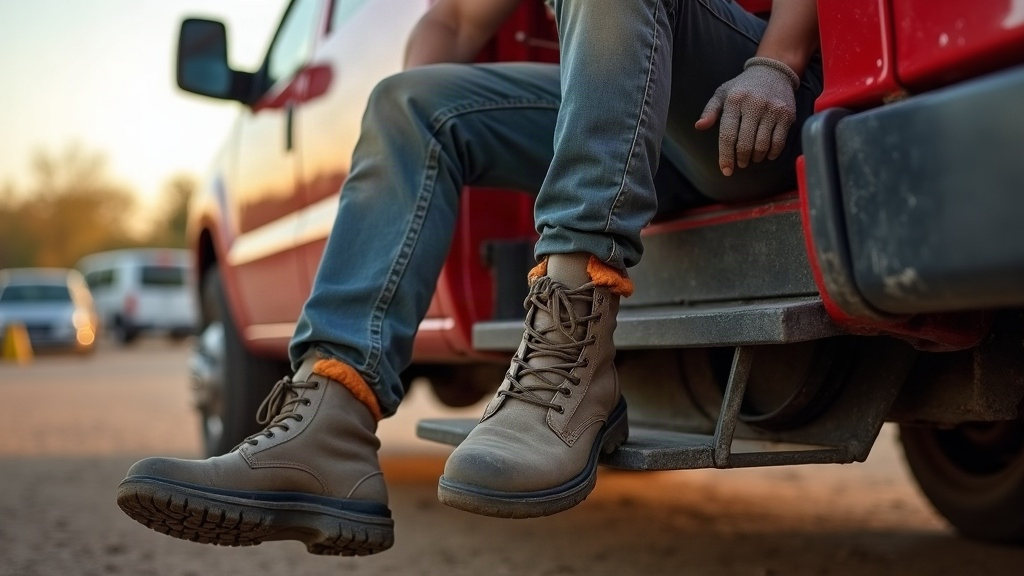
Boots and Orthotics That Make a Real Difference on Concrete
This is where most workers spend their money wrong. They buy for looks, for price, or for what their buddy recommended. For heel spurs, the midsole and heel cup matter more than anything else on the boot.
What to look for in a boot
- A firm shank for arch support through the midfoot
- A cushioned heel strike zone, not just a hard rubber outsole
- Enough toe box room so your weight distributes evenly
- Removable insoles so you can swap in a proper orthotic
| Boot Feature | Why It Matters for Heel Spurs | What to Avoid |
|---|---|---|
| Cushioned heel strike zone | Absorbs the impact that aggravates the spur | Thin rubber heel with no foam layer |
| Removable insole | Lets you add a medical-grade orthotic | Glued-in foam that can't be replaced |
| Rigid shank | Supports the arch and reduces fascia tension | Flexible midsole that bends too easily |
| Wide toe box | Prevents toe crowding that shifts weight to heel | Narrow pointed toe that compresses the foot |
| Deep heel cup | Centers the heel fat pad under the bone | Shallow heel seat that lets the foot shift |
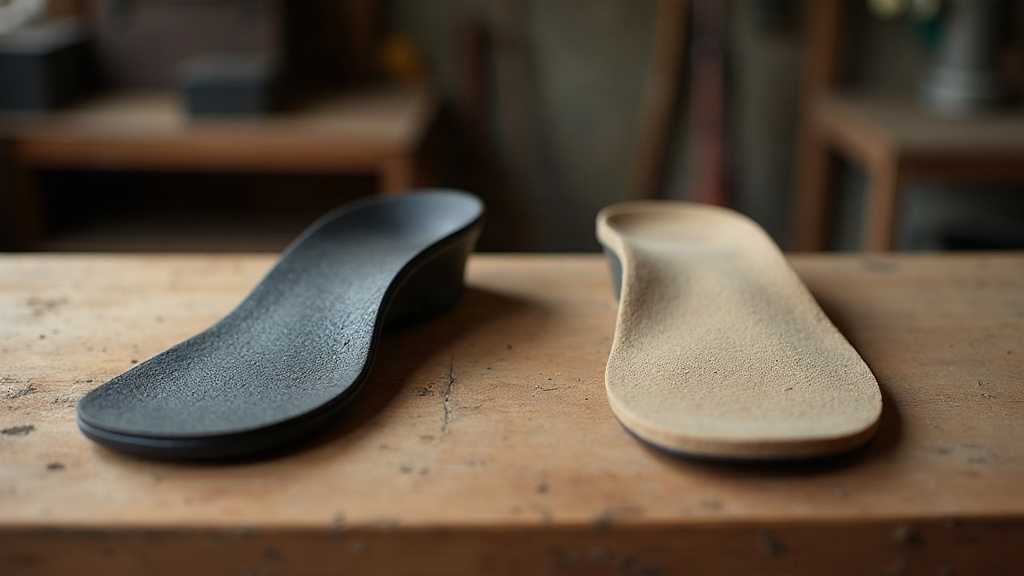
For orthotics for work boots, semi-rigid options work better than soft foam insoles for most construction workers. Pure gel or foam feels good in the store but compresses flat by noon on a hard surface. Look for an orthotic with a firm arch plate and a cushioned heel pod.
Did you know?
Studies on workers in physically demanding trades show that proper arch support insoles reduce heel pain severity by up to 52% within six weeks, without any other changes to routine. The insole you pull out of a new boot on day one is not providing that level of support.
Exercises to Skip When Your Heel Is Flaring Up
Some things people try that make it worse, not better.
- Running or jogging to "loosen it up" adds repetitive impact on an already inflamed structure.
- Standing calf raises on flat ground without a heel lift can overload the plantar fascia at the wrong angle during a flare.
- Jumping movements of any kind. No box jumps, no jump rope, not while it's hot.
- Walking barefoot on tile or concrete at home. Even a short trip to the kitchen matters.
Can You Beat a Heel Spur Without Surgery
Yes, and most people do. Surgery is the last resort, not the first answer, and most orthopedic surgeons won't even consider it until you've done six months of conservative treatment.
What conservative treatment actually means:
- Consistent stretching (the two-a-day routine above)
- Proper footwear and orthotics
- Anti-inflammatory protocol during flare-ups
- Possibly a corticosteroid injection from a doctor if pain is severe
- Physical therapy if self-managed stretching isn't cutting it
Research shows that over 90% of heel spur and plantar fasciitis cases resolve without surgery when conservative treatment is applied consistently. The catch is "consistently." Doing the stretches for three days and then stopping doesn't count.
When It's Time to Stop Toughing It Out and See Someone
There's a line between managing discomfort and doing real damage. Here's when you need to get in front of a doctor.
- Pain that stops you from walking normally, not just hurts, but changes your gait
- Heel pain that's getting worse every week despite stretching and better footwear
- Numbness or tingling in the heel or arch
- Swelling that doesn't go down after a rest day
- Pain that started in the heel and has spread to the ankle or up the back of the leg
A podiatrist or orthopedist can X-ray the foot, confirm the spur, and rule out other conditions like a stress fracture or tarsal tunnel syndrome that feel similar but need different treatment. Don't wait six months on something that might not be a spur at all.
Your starting point right now
Tonight, ice your heel for 15 minutes and do the towel stretch. Tomorrow morning, do it again before you put your boots on. Pull the factory insoles from your boots and order a semi-rigid orthotic this week. If your boots have more than 12 months of full-time use on them, start saving for a new pair with a proper heel cup.
That's it. That's the plan. Heel spur pain relief on the job is not complicated, it's just consistent. Do the basics right every day, and most guys start feeling a real difference within three to four weeks.
