


Work pants take a beating. According to a 2023 report by the American Society of Safety Professionals, damaged or ill-fitting workwear is a contributing factor in over 26% of workplace musculoskeletal injuries — and premature wear is the top reason workers replace pants within 6 months. If you want to know how to choose durable work pants, the answer isn't about picking the most expensive pair. It's about matching the right construction, fabric, and features to your actual job demands. This guide gives you the exact criteria that separate pants that last one season from those that survive years of hard use.
Start With the Fabric — It's the Foundation of Durability
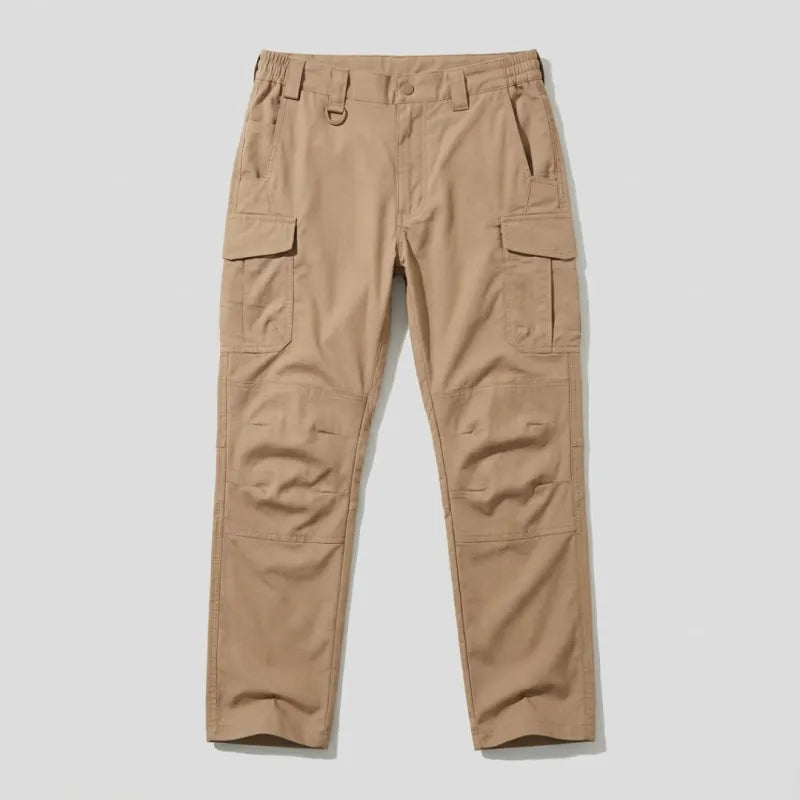
The fabric is the single biggest predictor of how long your work pants will last. Not the brand. Not the price tag.
For most trades, the sweet spot is a cotton/polyester blend at 250–300 g/m². Cotton adds breathability and comfort during long shifts; polyester brings dimensional stability and resistance to abrasion. Go below 220 g/m², and you're buying pants that will thin out within months of daily use.
For high-abrasion environments — construction, roofing, mechanical work — look for panels reinforced with Cordura or ripstop weave. These technologies, used in military and industrial gear, dramatically extend the lifespan of the highest-stress zones: knees, seat, and inner thighs.
One detail most buyers overlook: elastane content. A 2–4% elastane addition gives stretch without compromising durability — critical for jobs that involve kneeling, climbing, or squatting. Beyond 5%, the fabric becomes less resistant to repeated stress and washing cycles.
Our FLEX Pro and CORE Pro are built on exactly this principle — a performance blend engineered for daily punishment without sacrificing freedom of movement.
Check out this guide too: Different Types of Safety Boots – Complete Guide
Check the Construction — Where Pants Really Fail
You can have the best fabric on the market and still end up with pants that fall apart in three months. Construction is where cheap workwear gets exposed.
The first thing to inspect is seam quality. Quality work pants use triple-stitched seams at every high-tension point — the crotch, inseam, and waistband. A single-stitch seam in these areas is a warranty claim waiting to happen. In our experience fitting out trade teams, blown-out inseams and crotch failures account for the vast majority of early replacements — not fabric wear.
Next: bartacks. These small reinforcement stitches at pocket corners and belt loops are a reliable quality signal. No bartacks = the manufacturer cut corners. For physically demanding jobs, knee pad pockets are non-negotiable. They protect the fabric from direct contact wear and allow you to add certified knee protection (EN 14404) when needed. Without them, knees are the first point of failure — every time.
Finally, check the hardware. Metal zippers and rivets outlast plastic equivalents by years under daily use. YKK zippers are the industry benchmark. Our TITAN Pro and ATLAS are built with reinforced stress points and metal hardware throughout — designed to hold up where standard pants give out.
Match the Pants to Your Work Environment
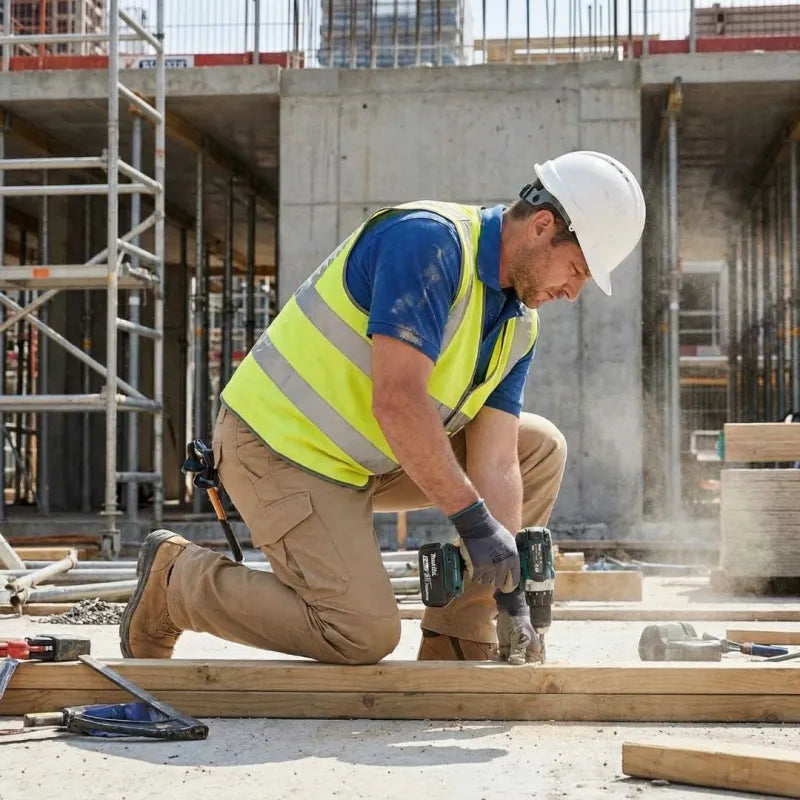
Durability isn't absolute — it's relative to your conditions. A pant built for a cold outdoor site will underperform in a hot warehouse, and vice versa. Knowing how to choose durable work pants for your specific environment is what separates a smart buy from an expensive mistake.
Here's a practical breakdown by job type:
|
Work Environment |
Key Requirements |
Best Pick |
|
Cold / Outdoor |
Insulation + water resistance |
THERMO Pro |
|
Hot / Summer |
Lightweight + breathable fabric |
AIR Pro |
|
Heavy physical work |
Reinforced knees + flex panels |
FLEX Pro |
|
Wet conditions |
Waterproof shell + sealed seams |
TITAN Pro |
|
Everyday trades |
Balanced durability + comfort |
CORE Pro |
|
Warm climate / mobility |
Ventilation + freedom of movement |
AIR Pro Light |
|
Hot weather + agility |
Durable short cut + tool pockets |
ATLAS |
Two factors consistently get overlooked in this equation.
- First, climate adaptability: workers in variable conditions need pants with DWR (Durable Water Repellent) treatment — a lightweight defense against light rain and morning dew without the bulk of full waterproofing.
- Second, fit for mobility: a gusseted crotch and articulated knees aren't comfort features — they're durability features. Pants that fight your movement wear out faster at every flex point.
Check out this guide too: Expert Guide to Waterproof Work Boots: Protection, Comfort & Durability
Prioritize These Features for Long-Term Value
Once fabric and construction are solid, the details determine whether your pants stay functional for the long haul — or become a nuisance after six months.
- Pocket reinforcement is the first thing to assess. Tool pockets take constant abuse — phones, knives, tape measures, fasteners. Double-layered pocket bags and bar-tacked openings are the standard in professional workwear. Thin, single-layer pockets tear from the inside out faster than any other failure point.
- Belt loop strength is underrated. Loops that are stitched only at the top pull away from the waistband under the weight of a heavy tool belt. Look for loops stitched at both ends with bartack reinforcement.
- Waistband construction matters more than most buyers realize. A wide, structured waistband — ideally with an internal elastic section — distributes the weight of tools evenly and prevents the pants from dropping during active movement.
On the value equation: a well-built pair of work pants at $90–$110 that lasts two years costs half as much per day as a $45 pair replaced every five months. Durability is an investment, not a premium.
Our CORE Pro and THERMO Pro integrate all of these details — reinforced pockets, dual-stitched belt loops, and structured waistbands — built for workers who can't afford downtime.
How to Read a Workwear Label Like a Pro
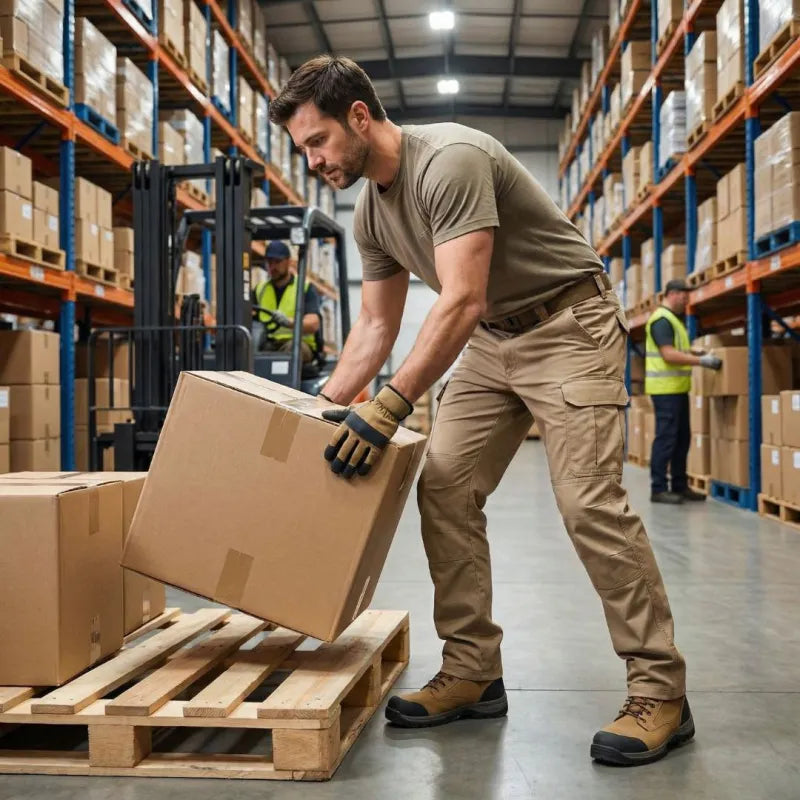
Most workers never look at the label. That's a mistake — it contains everything you need to assess quality before you buy.
Fabric composition ratio is your first data point. A blend above 65% polyester typically means lower breathability and reduced abrasion resistance over time — polyester pills and degrades faster under repeated mechanical stress than a balanced cotton/poly mix. The ideal ratio for most trades sits between 50/50 and 65% cotton.
Certified standards are a non-negotiable signal of professional-grade construction. Key certifications to look for:
- EN ISO 13688 — baseline comfort, ergonomics, and sizing accuracy for protective clothing
- EN 14404 — knee protection compatibility, mandatory for kneeling-intensive trades
- EN 343 — water and wind resistance for outdoor work
If a workwear brand can't reference these standards, they're not building for professional use.
Care instructions are an often-ignored durability indicator. Pants rated for industrial washing cycles (60°C+, repeated) are constructed to a fundamentally different standard than those requiring gentle cycles. If the label says "wash cold, do not tumble dry" — these are not serious work pants.
Understanding these markers is how professionals separate genuine workwear from workwear-adjacent fashion. Every pair in our lineup meets EN ISO 13688 as a baseline — because we build for the job site, not the catalogue.
Check out this guide too: Construction Worker Accessories: 7 Must-Have Expert Picks
Durable Work Pants: Our Top Picks by Job Type
Knowing how to choose durable work pants means nothing without the right options in front of you. Here's where our lineup maps directly to real job demands:
- THERMO Pro: Insulated work pants built for cold outdoor environments. Warm, structured, and water-resistant without restricting movement on site.
- FLEX Pro: Lightweight work shorts engineered for high-mobility trades. Flex panels at key joints, reinforced stress points, ideal for warm-weather physical work.
- AIR Pro (Pants): Breathable work pants for demanding environments where heat is the primary challenge. Lightweight fabric, ventilation zones, full-day comfort.
- TITAN Pro: Waterproof work pants for wet or unpredictable outdoor conditions. Sealed construction, DWR treatment, built to perform when weather turns.
- CORE Pro: Everyday work pants for trade professionals who need balanced durability, comfort, and functionality across varied conditions.
- AIR Pro (Lightweight): Summer-optimized work pants for maximum breathability. The go-to when temperature is the biggest obstacle to performance.
- ATLAS: Work shorts built for agility and heat. Durable cut, tool pockets, and freedom of movement for warm-climate job sites.

Invest Once, Work Better Every Day
Choosing durable work pants comes down to four decisions: the right fabric weight, solid construction at stress points, features matched to your environment, and labels that back up quality claims with certified standards. Get these right, and your pants become a tool — not a recurring expense.
Browse our full collection and find the pair built for your job.
