


Work pants take a beating. Between grease, mud, paint, and chemicals, they're arguably the hardest-working garment in your wardrobe — and the most mistreated at laundry time. Studies show that improper washing is the leading cause of premature workwear failure, reducing garment lifespan by up to 40%. Knowing how to clean work pants correctly isn't just about keeping them looking sharp — it's about protecting the technical performance built into every fibre. Here's exactly how to do it right.
Before You Wash: 3 Things to Always Check First
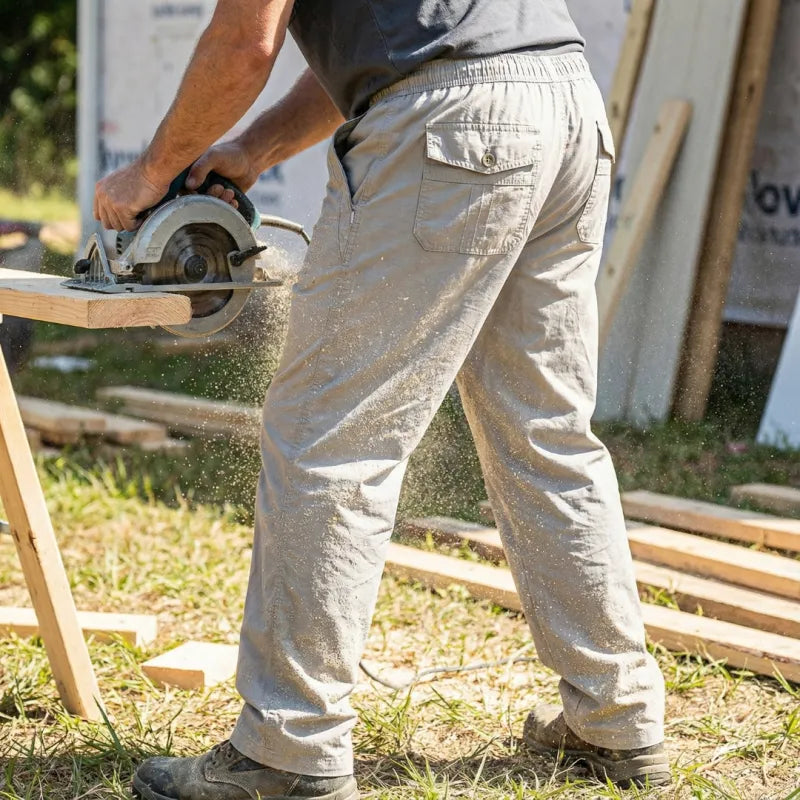
Before you throw your work pants in the machine, three checks can save you from an irreversible mistake.
1. Read the care label. Every fabric behaves differently. Waterproof membranes, flame-retardant treatments, and stretch fibres all have specific temperature and cycle requirements. Ignoring the label voids any performance guarantee.
2. Empty all pockets and remove knee pads. Loose screws, nails, or tools can tear fabric from the inside and damage your machine drum. Knee pads must always be removed unless explicitly stated otherwise on the label.
3. Turn the pants inside out and close all fastenings. Zips, velcro, and buttons left open cause abrasion on reflective strips and wear down fabric prematurely.
How to Wash Work Pants: Step-by-Step
The golden rule: cold to warm water, gentle cycle, liquid detergent only. Here's the breakdown.
Machine settings: Wash at 30°C — 40°C maximum. Always select a gentle spin cycle. High temperatures cause shrinkage and break down technical fibres; aggressive spin speeds worsen worn areas and stress seams.
Detergent: Use a mild liquid detergent. Never powder detergent — it doesn't dissolve fully and leaves residue that degrades fabric performance over time. Fabric softeners, conditioners, and bleach are strictly off the table. They coat fibres, strip DWR (Durable Water Repellent) treatments, and can neutralise flame-retardant properties.
By fabric type — because not all work pants wash the same:
- Waterproof pants (e.g. TITAN Pro): Wash in cold water to preserve the DWR membrane. Use a technical outerwear detergent like Nikwax.
- Insulated pants (e.g. THERMO Pro): Gentle cycle, lukewarm water. Never hot — insulation clusters and loses its thermal properties.
- Stretch & lightweight pants (e.g. FLEX Pro, AIR Pro): Permanent press cycle, lukewarm water. Elastane fibres degrade fast under heat.
- Everyday pants (e.g. CORE Pro): Standard gentle cycle at 30°C. Most forgiving, but still no bleach.
Knowing how to wash work pants by material type is what separates a two-year pair from a six-month one.

How to Remove Tough Stains from Work Pants
Stain treatment is where most people get it wrong — and where work pants are most often permanently damaged. The rule is simple: treat first, wash second. Never put a stained pair straight into the machine; heat sets stains into fibres for good.
- Grease & oil: Apply a dry-cleaning solvent directly to the stain, let it penetrate for 5 minutes, then work in a small amount of liquid detergent before machine washing. Never use chlorine-based cleaners — they react with synthetic fibres and cause discolouration.
- Mud & dirt: Resist the urge to rub it wet. Let the mud dry completely, then brush off the bulk before washing. Rubbing wet mud drives particles deeper into the weave and makes removal significantly harder.
- Paint: Act fast. Water-based and latex paints respond to cold water and dish soap if treated immediately. Once dry, you'll need a solvent — but results aren't guaranteed. Acrylic paint dried into technical fabric is often permanent.
- Rust & metal stains: Apply a paste of lemon juice and salt, leave for 10 minutes, then rinse with cold water before machine washing. Avoid iron-based stain removers on treated fabrics.
- Sweat & chemical odours: Pre-treat with a solution of white vinegar and bicarbonate of soda — let it sit for 15 minutes before washing. This is especially critical for how to clean work pants exposed to industrial chemicals, where odour can indicate residual contamination requiring a second wash cycle.
Check out this guide too: Best Work Boots for Plantar Fasciitis: Comfort, Support & Durability
Drying Work Pants: What You Must Never Do?
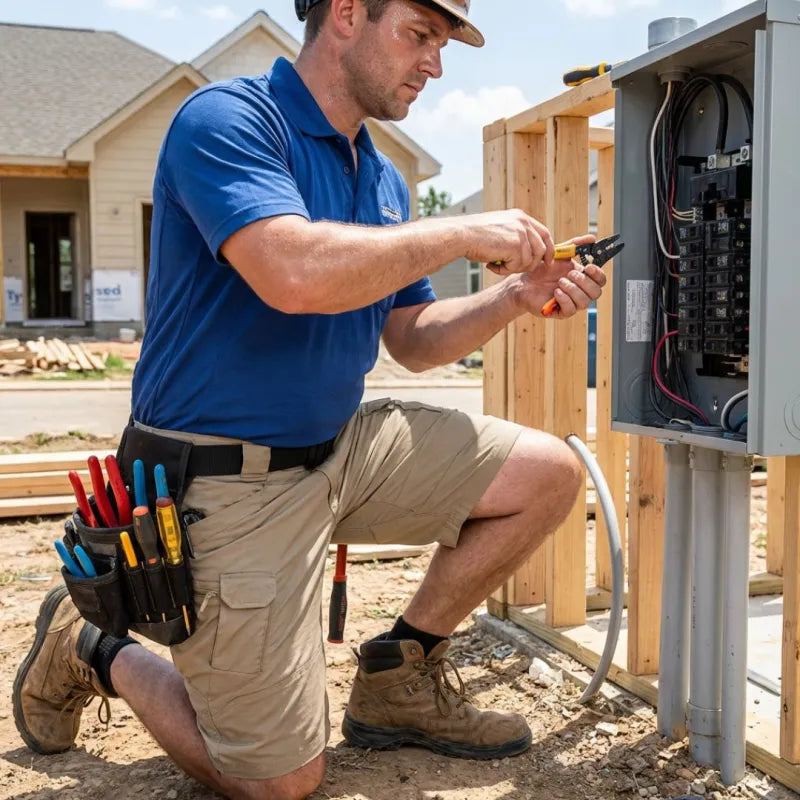
Getting the wash right means nothing if you ruin your work pants in the dryer. Tumble drying is the single biggest cause of premature workwear failure — shrinkage, fibre breakdown, delamination of waterproof membranes, and loss of insulation loft all trace back to excessive heat.
Always air dry. Hang your pants on a drying rack immediately after the wash cycle ends — never leave them sitting in the drum. Creases set fast in technical fabrics and are difficult to remove without ironing, which itself carries risks.
For waterproof pants specifically (e.g. TITAN Pro): Once dry, briefly run a warm iron over the outer shell — or use a hair dryer on a low setting. Heat reactivates the DWR treatment, restoring water repellency that washing temporarily suppresses. This step is non-negotiable if you work in wet conditions.
Never dry in direct sunlight for extended periods. UV exposure degrades synthetic fibres and fades high-visibility treatments faster than any wash cycle.
How Often Should You Wash Work Pants?
There's no universal answer — it depends on your working environment. That said, a few practical rules apply across the board.
- Standard conditions (construction, trades, logistics): Wash every 2 to 3 days of active wear. Dirt and dust particles act as abrasives inside the fabric weave, accelerating fibre breakdown with every movement. Regular washing actually extends lifespan — not the other way around.
- Chemical or flame exposure: Wash immediately after each shift, no exceptions. Residual chemical contamination doesn't just damage fabric — it can pose a direct safety risk to the wearer.
Pro tip: Rotate between two pairs of work pants. Alternating wear reduces wash frequency per pair and can effectively double their working lifespan — one of the simplest and most overlooked maintenance strategies in workwear.
The Right Work Pants for Easier Maintenance
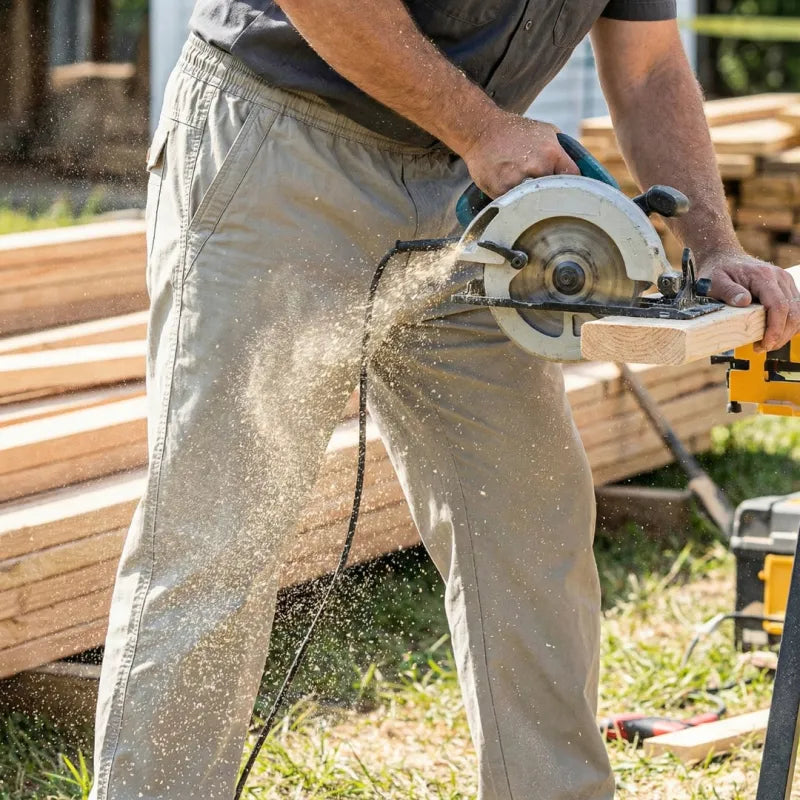
Learning how to clean work pants properly is half the equation. The other half is choosing a pair engineered to withstand repeated washing without losing its technical properties.
Wet & muddy conditions: The TITAN Pro waterproof work pants feature a sealed membrane that maintains its integrity through dozens of wash cycles — provided you follow the cold wash and DWR reactivation protocol above.
High-heat & high-sweat environments: The AIR Pro breathable work pants are constructed with fast-drying fibres that resist odour build-up and require fewer washes overall — a significant advantage in demanding summer conditions.
Versatile everyday use: The CORE Pro everyday work pants are the most maintenance-friendly in the range. Standard gentle cycle at 30°C, air dry, done. No special detergents, no reactivation steps.
Cold weather & outdoor work: The THERMO Pro insulated work pants retain their thermal performance wash after wash — as long as tumble drying is avoided entirely.
Every pair in the range is built for how to clean work pants repeatedly without compromising the features you paid for.
Check out this guide too: Best Work Boots for Plantar Fasciitis Men—Expert Picks and Advice
Keep Them Clean, Keep Them Working
Three rules govern everything covered in this guide: cold to warm water, liquid detergent only, and always air dry. Follow them consistently and your work pants will outlast the job site, the seasons, and the competition. The best how to clean work pants routine is the one you actually stick to — simple, repeatable, and matched to your fabric type. Protect your gear the way your gear protects you.
Explore the full range and find the pair built for your conditions.
