


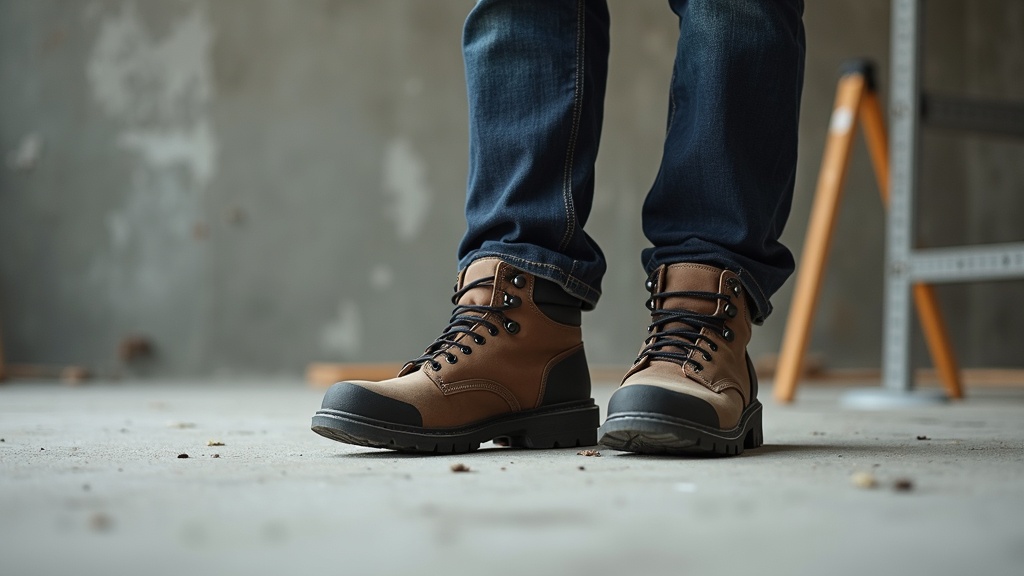
You bought the socks. You put them on every morning before a long shift. But after a few weeks, you're still not sure they're doing anything. That question is worth answering, because wearing the wrong pair the wrong way is just as bad as wearing nothing at all.
Here's how to read what your body is telling you, spot the warning signs of a bad fit, and get real results from compression gear that's supposed to protect your legs, not just fill a drawer.
Key points at a glance
- Working compression socks reduce swelling, fatigue, and leg heaviness noticeably within days.
- If your legs look and feel the same after two weeks, the fit or compression level is wrong.
- Too loose means no benefit. Too tight means cut-off circulation and real harm.
- Correct application matters as much as the sock itself: heel in place, no bunching.
- Most people feel a difference within the first few days of proper daily use.
- Certain medical conditions make compression socks dangerous. Know the list before you buy.
What Good Compression Actually Does for You
The Short Answer: What Working Compression Socks Actually Feel Like
A compression sock that's doing its job creates a firm, even squeeze from the ankle up toward the calf. Not painful. Not numb. Firm, like a solid handshake around your lower leg.
The pressure is strongest at the ankle and gradually eases as it moves up. That gradient is the whole point. It pushes blood upward, back toward the heart, instead of letting it pool in your feet after eight hours on concrete.
If you pull on a pair and they feel like regular socks with a bit more stretch, they are not compressing. That's the first red flag.
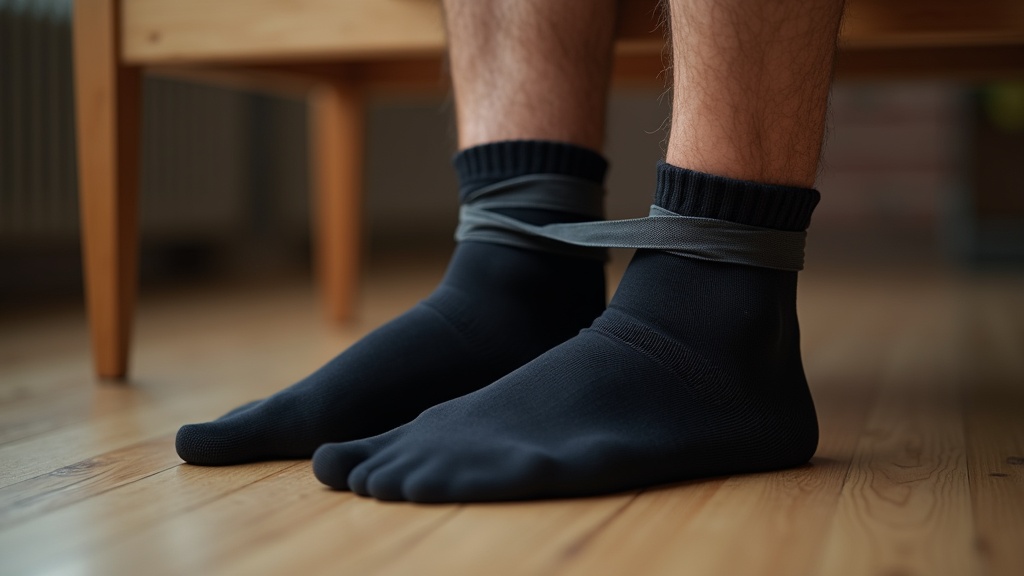
5 Signs Your Compression Socks Are Doing Their Job
You don't need a clinic visit to know your socks are working. Your legs will tell you.
- Less swelling by end of shift. Compare your ankles at 6 AM versus 6 PM. Working socks shrink that gap significantly.
- Reduced leg heaviness. That brick-in-each-boot feeling should ease within a few days of consistent wear.
- Fewer cramps at night. Better circulation means fewer muscle cramps after you finally sit down.
- Skin looks healthier. Less redness, less puffiness, less of that tight, shiny skin across the ankle.
- You notice it when you forget them. That's usually the clearest proof: one sock-free day and your legs feel twice as wrecked.
Did you know?
Blood pools in the lower legs with roughly twice the volume when you stand still compared to walking. Workers who stand in one spot, like cashiers or assembly line workers, are at far higher risk of vein damage than those who walk throughout their shift, even if both groups spend the same number of hours on their feet.
Signs They Are NOT Working (and Why That Matters on a Long Shift)
If you're still dragging your legs off the floor at the end of the day after two weeks of daily wear, something's off. A few things to check:
- Ankles still puffed up like they always were
- The sock slides down during the shift
- Visible red marks at the top band by end of day
- Skin feels numb or tingly while wearing them
- No change in fatigue whatsoever
Any of these points to a fit problem, a compression level mismatch, or improper application. None of them go away on their own.
Read also: Best Heavy Duty Work Socks Tested for All-Day Comfort and Durability
Too Tight or Too Loose: How to Tell the Difference
This is where most people get it wrong. They assume tighter means better. It doesn't.
Signs compression socks are too tight
- Numbness or tingling in the foot or toes
- Deep red indentation lines at the top band
- Skin color change: blue or very pale toes
- Throbbing or increased pain after putting them on
Signs compression socks are too loose
- Sock bunches or folds around the ankle
- Slides down before lunch
- You feel no squeeze at the ankle
- Zero improvement in swelling or fatigue
| Compression Level | mmHg Range | Best For |
|---|---|---|
| Mild | 8, 15 mmHg | Travel, mild fatigue, prevention |
| Moderate | 15, 20 mmHg | Standing all day, nurses, retail workers |
| Firm | 20, 30 mmHg | Varicose veins, moderate edema, post-surgery (doctor-guided) |
| Extra Firm | 30, 40 mmHg | Severe venous conditions, prescription only |
For most workers putting in long shifts on hard floors, 15, 20 mmHg is the sweet spot. Enough to make a real difference, not so much that you're fighting your socks all day.
How to Make Sure You Have Them On Correctly
A good sock on wrong does nothing. Here's the right process, and it's not complicated.
- Put them on in the morning before you stand up, while your legs are least swollen.
- Turn the sock inside-out down to the heel cup, slip your foot in, then roll it up the leg.
- Heel must sit in the heel pocket. If it's riding up on the arch, start over.
- Smooth out any folds or wrinkles. A fold under the ankle creates a pressure point, not compression.
- The top band should sit flat, not curl or dig in.
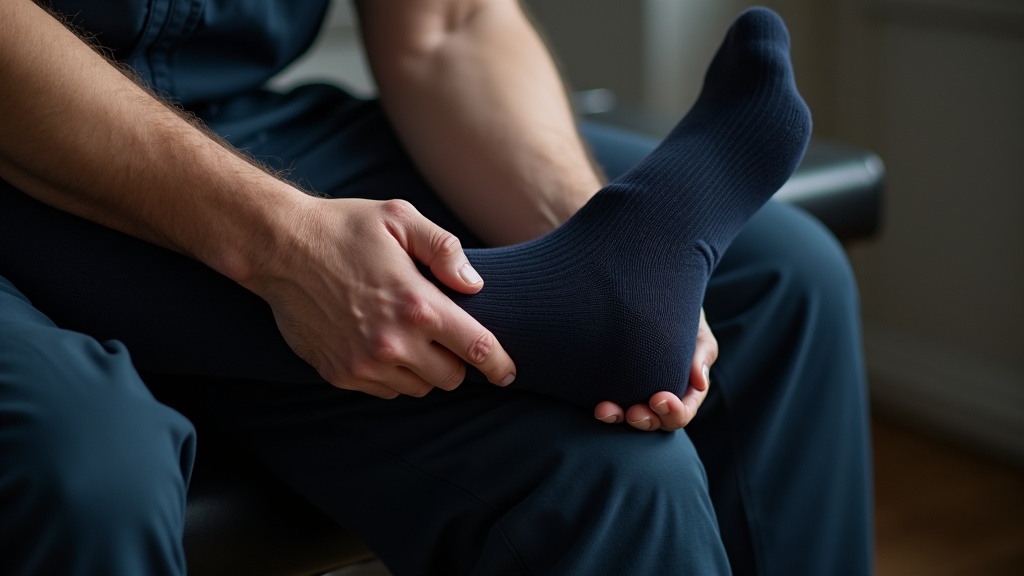
How Long Before You Feel a Difference
Most people feel some relief on day one or two: less heaviness, a bit more spring by mid-afternoon. The bigger changes, like consistent swelling reduction and fewer cramps, usually show up after five to seven days of daily wear.
If you're past two weeks with zero improvement, the sock isn't the right fit, compression level, or size for you. Return them and size up on the information before you size up on the mmHg.
Did you know?
Compression socks lose roughly 30% of their elasticity after 30 to 40 washing cycles. If you've been wearing the same pair daily for six months, they may be providing almost no compression at all, even if they look fine on the outside.
What Not to Do While Wearing Compression Socks
These things cancel out most of the benefit.
- Don't sleep in them unless a doctor told you to. Lying flat already improves circulation. Compression at night can restrict blood flow unnecessarily.
- Don't wear them bunched or folded. One crease across the ankle and you've created a tourniquet effect right where you don't want it.
- Don't size by shoe size alone. Measure your calf circumference. That's what determines how hard the sock squeezes.
- Don't skip days thinking it'll even out. Consistency is how compression therapy works. Irregular wear gives irregular results.
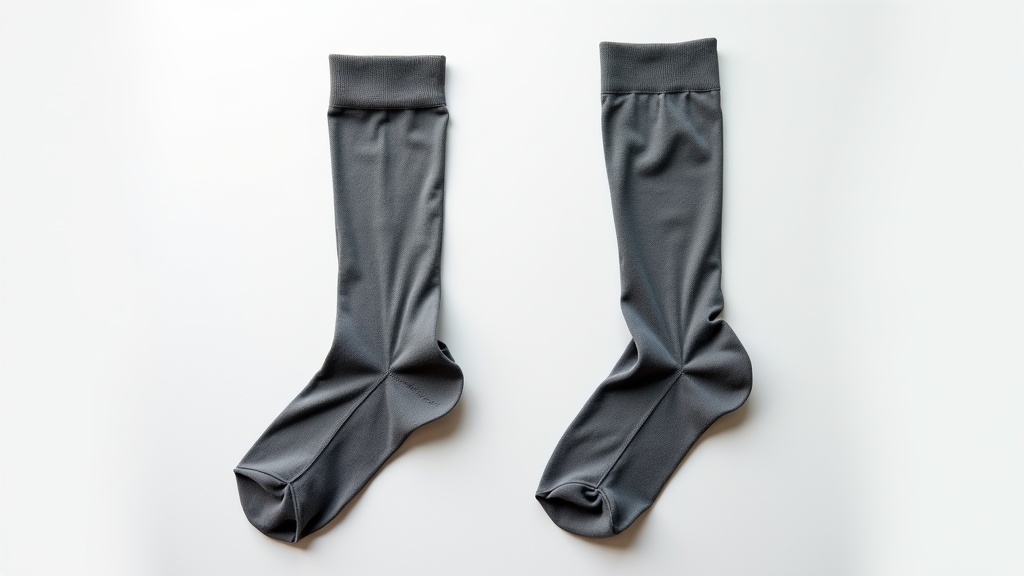
Who Should Skip Compression Socks Altogether
Compression socks are not for everyone. Some conditions make them genuinely dangerous, not just uncomfortable.
- Peripheral artery disease (PAD): Reduced arterial blood flow plus external compression is a serious risk.
- Severe peripheral neuropathy: You can't feel damage happening, which makes monitoring impossible.
- Skin infections or open wounds on the leg: Compression traps bacteria and slows healing.
- Congestive heart failure (without medical supervision): Pushing more fluid back to the heart can overload it.
- Fragile or easily broken skin: Common in elderly patients on blood thinners.
If any of these apply to you or someone you know, talk to a doctor first. This isn't a liability disclaimer, it's just straight-up important information.
Read also: Best Socks for Work Boots: Expert Tips to Prevent Foot Pain at Work
Bottom Line: Are Your Compression Socks Worth Keeping
If your legs feel noticeably better, swelling is down, and you dread the days you forget them, keep them. They're working.
If after two weeks of correct daily use nothing has changed, don't throw more money at the same sock. Check your size, check your compression level, check your application method. One of those three is off.
Good compression socks are a real tool. Like any tool, they only do their job when you use them right.
