


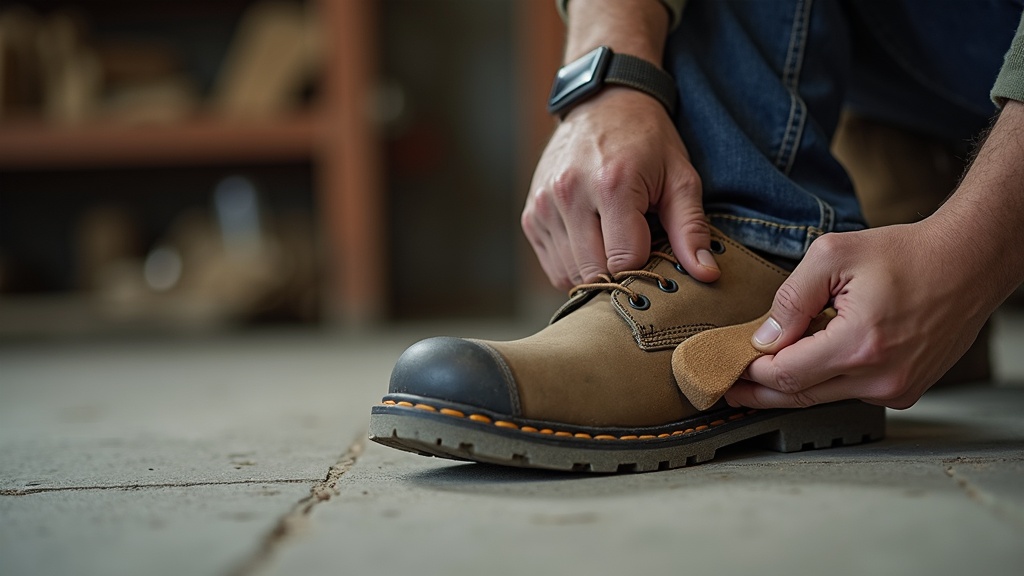
Your safety boots cost you a hundred and fifty bucks. The insole inside them cost the manufacturer about sixty cents. That gap tells you everything about what you're walking on for ten hours straight.
Most workers figure sore feet are just part of the job. They're not. The right insole for safety shoes changes how your legs feel at 4 PM, how your back holds up by Friday, and whether you make it through a long season without a trip to the clinic.
Key points at a glance
- The stock insole in most safety shoes is designed to pass minimum standards, not to support a full workday.
- Arch support, heel cupping, and anti-fatigue foam are the three features that actually move the needle on comfort.
- Steel toe boots need thinner insoles with a firm heel to avoid throwing off the fit and protection zone.
- Workers standing on concrete all day need a dual-density insole, not just a soft one that bottoms out by noon.
- Quality aftermarket insoles last 6 to 12 months under daily jobsite conditions before they need replacing.
- Plantar fasciitis and arch pain can often be managed with the right insole, but deep structural issues need a podiatrist.
What a good work insole actually does for you
Why the insole that came with your safety shoes is already failing you
Boot manufacturers build to a price point. The included liner is there to fill space and pass ASTM comfort specs, not to support a roofer doing eight hours on a pitch or a warehouse worker clocking 20,000 steps on sealed concrete.
Most stock insoles are flat foam with no arch structure. They compress within the first hour and spend the rest of the day as a thin, useless pad. By the time you notice the soreness, the damage to your heel and arch is already accumulating.
What to look for in an insole for safety shoes (without getting played)
There's a lot of marketing noise in this category. Focus on three things that actually matter on the job.
Arch support: match it to your foot type
Flat feet need a firm, low arch. High arches need a deeper cup with more fill. Buying a one-size generic medium arch and hoping for the best is how you end up with a new problem on top of the old one.
Heel cup depth
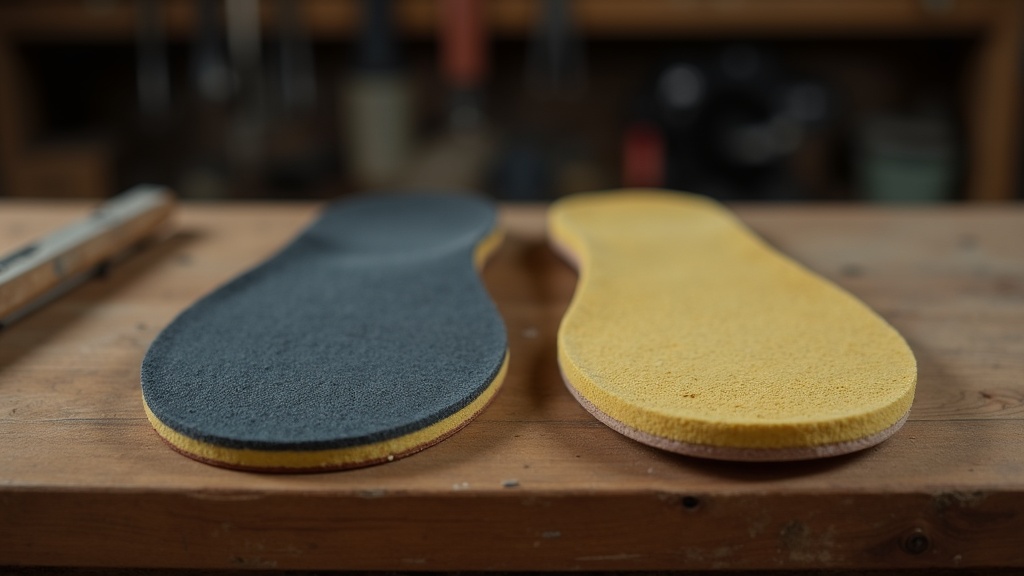
A deep heel cup (at least 18mm) stabilizes the fat pad under your heel and stops the side-to-side rolling that wrecks your ankles on uneven ground. This is non-negotiable for trades work.
Foam density: soft is not better
Soft memory foam feels great in the store. On a concrete floor after four hours, it bottoms out and gives you nothing. Look for dual-density foam or EVA with a firmer base layer and a softer top surface.
Read also: Work Boot Insoles for Plantar Fasciitis Relief & All-Day Support
Did you know?
A study published in Applied Ergonomics found that workers using structured insoles with arch support reported a 34% reduction in lower limb fatigue compared to those using standard flat liners after a full 8-hour shift on hard floors.
The best insoles for safety shoes in 2026, ranked for real work
These are the options that consistently hold up across trades, warehouses, and construction sites.
- Superfeet GREEN: High arch, firm nylon shell, best for workers with medium to high arches. A benchmark for a reason.
- Dr. Scholl's Heavy Duty Support: Built for men over 200 lbs, good heel absorption, solid daily driver at a fair price.
- Powerstep Pinnacle: Dual-layer foam, strong heel cup, works well for plantar fasciitis. A staple recommendation from podiatrists who treat tradespeople.
- Timberland PRO Anti-Fatigue: Inverted cone foam technology returns energy on each step. Designed specifically for work boots.
- Sof Sole Airr Orthotic: Airbag heel cushioning, good for workers who carry heavy loads or are on their feet 10+ hours.
Steel toe boots need a different fit: here's why it matters
Steel toe boots have less internal volume at the toe box. Add a thick insole and you're cramping your toes against a steel plate, which creates pressure points, numbness, and blisters.
For the best insoles for steel toe boots, go thinner at the forefoot (3mm or less) and keep the structure in the heel and arch. You want support without stealing space where the steel cap sits.
Standing all day on concrete? Here's what your feet actually need
Concrete is the worst surface for joints. It returns zero energy on impact and transmits every pound of force straight up through your heel, knee, and lower back.
The best insoles for work boots on concrete combine an anti-fatigue base with genuine arch support. Anti-fatigue alone (just soft foam) won't cut it past hour three. You need the structure underneath to prevent your arch from collapsing under load.
| Insole Type | Best For | Weak Spot | Avg. Lifespan |
|---|---|---|---|
| Soft foam / memory foam | Short shifts, light duty | Bottoms out fast on concrete | 3 to 4 months |
| Dual-density EVA | All-day concrete standing | Can feel stiff at first | 6 to 9 months |
| Rigid orthotic shell | Serious arch or overpronation issues | Takes 1 to 2 weeks to break in | 9 to 14 months |
| Anti-fatigue gel | High-impact tasks, heavy loads | Adds weight, can shift in boot | 5 to 8 months |
| Custom molded | Persistent pain, specific diagnosis | Cost ($300 to $600+) | 2 to 5 years |
Do insoles fix blisters, arch pain, and plantar fasciitis on the job?
Blisters usually come from friction and moisture, not lack of cushion. A moisture-wicking top cover on your insole helps, but pairing it with the right sock makes more difference.
Arch pain responds well to insoles with genuine arch support. Most workers see improvement within the first week of switching from a flat stock liner to a structured one.
Plantar fasciitis is trickier. A quality insole with strong heel support and a slight heel lift takes pressure off the fascia and gives it room to heal. It won't fix a severe case overnight, but it stops the condition from getting worse every time you lace up.
Did you know?
Plantar fasciitis accounts for roughly 1 million doctor visits per year in the United States, and workers in physical trades are among the highest-risk groups. Footwear with no arch support is consistently cited as a leading contributing factor.
How to make your safety shoes more comfortable without buying new boots
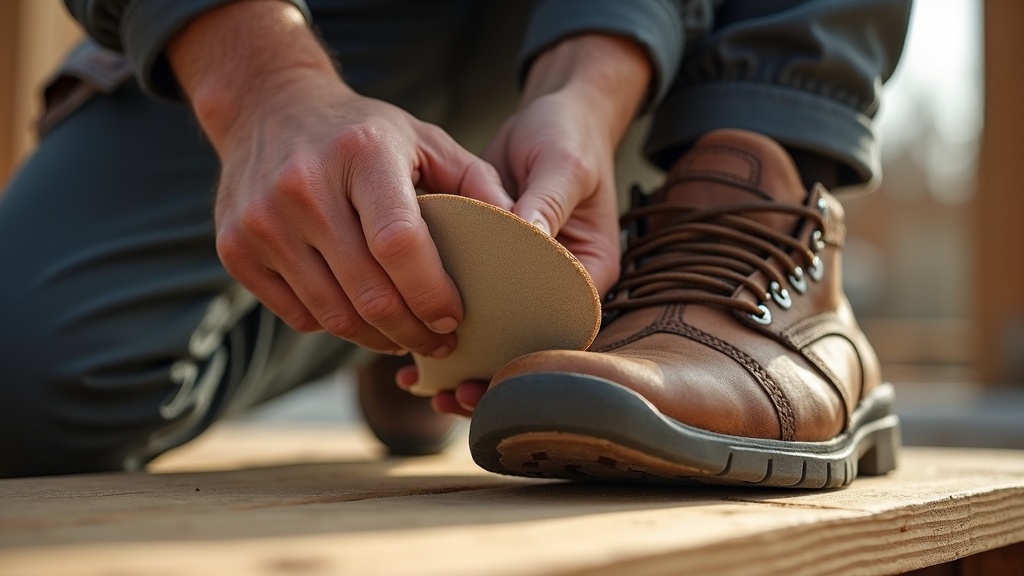
Start with a quality insole swap. Pull the stock liner out first (most peel right off the footbed) and replace it. That alone can transform a stiff boot into something you can wear all day.
- Add a moisture-wicking sock: Merino wool or synthetic blends, not cotton. Cotton holds sweat and creates friction.
- Lace correctly: If your heel slips inside the boot, use a heel-lock lacing pattern before tightening.
- Break in boot and insole together: Wear them for half a day first, not a full ten-hour shift. The insole needs time to conform to your foot shape.
- Rotate two pairs: If you can, alternating boots daily lets foam decompress overnight and extends the life of both pairs.
How long should a good work insole last before you replace it
A quality insole used five days a week in a physical trade lasts six to nine months on average. Custom molded orthotics can push two to four years.
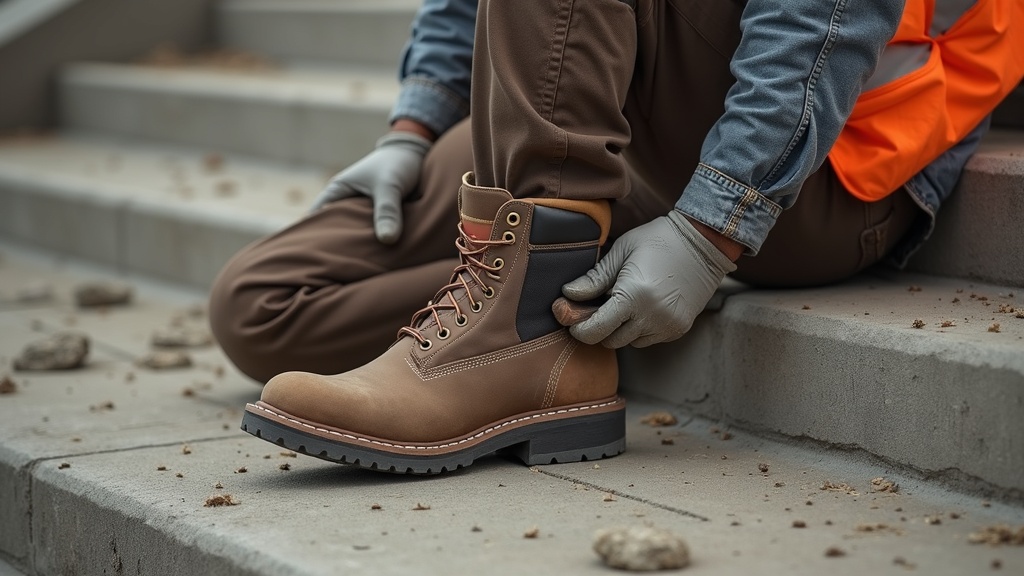
The test is simple: press your thumb into the heel and arch zone. If the foam compresses easily and doesn't spring back, it's done. Another sign: if your heel pain or fatigue comes back after a few weeks of relief, the insole has bottomed out.
Mark the date on the insole with a Sharpie when you put it in. You'll forget when you bought it, and guessing costs you a season of sore feet.
Read this guide: Best work boots for construction workers: Safe, Durable & Trusted
How to make the right call: your action checklist
- Know your arch type before you buy. Wet your foot, step on cardboard, and look at the print. Flat print means low arch. A thin strip on the outside means high arch.
- Remove the stock insole and compare thickness to the one you're buying. If your boot is already snug, go thinner.
- For steel toe boots: choose an insole marketed specifically as low-profile or slim-fit to protect toe clearance.
- For concrete floors: prioritize dual-density foam over single-layer soft foam, every time.
- If pain persists after 30 days with a quality insole, see a podiatrist. Some issues need custom insoles for work boots built from a mold of your foot.
- Replace every 6 to 9 months, or whenever the foam stops rebounding.
