


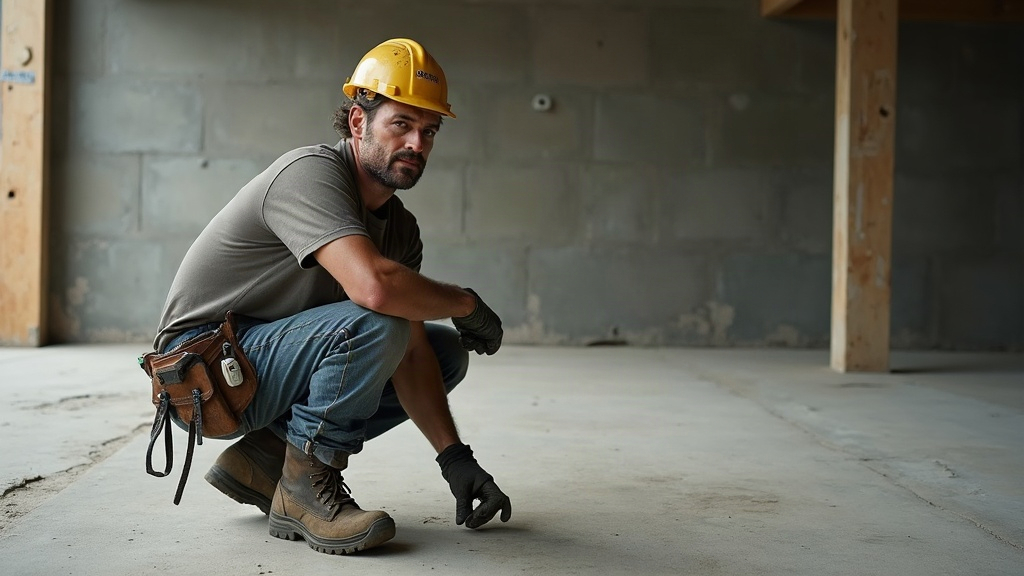
You clocked in at six, you've been on your feet since, and now your knees are talking back on every step down the ladder. That's not bad luck. That's what happens when a human body spends eight to twelve hours a day on concrete with no real plan to deal with it.
The good news: most of this damage is preventable, and a lot of it is reversible if you catch it early. Here's what you need to know, in plain language, without the clinic brochure tone.
Key points at a glance
- Concrete is the single worst surface your knees can stand on for hours, and most trades workers do it every day.
- End-of-shift soreness is common but not something you should just accept as part of the job.
- The right footwear and insoles make a measurable difference, not a marginal one.
- Simple stretches before and after your shift cut recovery time and reduce long-term joint damage.
- Ignoring sharp or swollen knee pain for more than a week puts your career at risk.
What this article will do for you
Why Standing All Day on the Job Destroys Your Knees
The knee joint wasn't designed for uninterrupted static loading. When you stand still, especially on a hard surface, the pressure inside the joint stays constant with no pumping action to move fluid around and no relief for the cartilage.
Add eight hours of that, five days a week, on unforgiving concrete, and you're talking about a cumulative load that wears cartilage down the way water wears stone. The pace is slow but the damage is real.

Is Knee Pain After a Long Shift Normal or a Warning Sign?
Some ache after a full day is normal. A dull heaviness behind the kneecap when you sit down at the end of a shift, that's your body telling you it worked hard.
What's not normal: sharp pain during movement, swelling that doesn't go down overnight, pain that wakes you up, or a knee that feels like it's about to buckle. Those are warning signs, not just "part of the job."
Did you know?
Construction and extraction workers have among the highest rates of osteoarthritis of any occupational group in the United States, according to the CDC. Prolonged standing on hard surfaces is one of the top contributing factors, right alongside heavy lifting and kneeling.
The Specific Ways Trades Work Wrecks Your Knees
It's not just the standing. It's the combination of stresses that trades workers face that makes this category of knee damage unique.
Concrete floors
Concrete has a stiffness rating close to zero give. Every pound of bodyweight you carry goes straight into your joints with no absorption. A padded carpet absorbs roughly 20 to 30 percent of that impact. Concrete absorbs nothing.
Repetitive kneeling
Plumbers, electricians, tile setters: you're dropping to one or both knees dozens of times per shift. That compresses the bursa sac in front of the kneecap repeatedly, leading to bursitis if you don't protect it.
Hauling and load shifting
Carrying heavy materials up stairs or across uneven ground adds compressive force to an already tired joint. A 50-pound load can triple the effective pressure on your knee cartilage with each step.

How to Stand All Day Without Your Knees Giving Out
The fix isn't complicated but it requires consistency. Three things matter most: surface, posture, and movement breaks.
- Anti-fatigue mats: If you're stationary at a work bench or station, a half-inch foam or gel mat cuts knee and back strain significantly. They cost less than a doctor visit copay.
- Shift your weight: Don't lock your knees. Stand with a slight bend, shift weight side to side every few minutes. Static locking cuts off circulation and stiffens the joint fast.
- Micro-breaks: Two minutes of walking or stretching every 45 minutes is enough to reset joint fluid circulation. Set a reminder if you have to.
- Foot position: Shoulder-width apart, toes slightly out. Pigeon-toed or feet together crowds the knee and throws off tracking.
Gear That Actually Helps: Footwear, Insoles, and Knee Support Worth Buying
Don't spend money on the wrong things. Here's what has real impact for knee pain trades workers versus what's mostly marketing.
| Product Type | What It Actually Does | Worth It? |
|---|---|---|
| Work boots with shank support | Stabilizes arch, reduces pronation stress up the chain into the knee | Yes, absolutely |
| Orthotic insoles (Superfeet, Powerstep) | Corrects foot alignment, cuts knee torque on each step | Yes, high value for low cost |
| Knee sleeves (compression) | Improves proprioception, reduces swelling, mild warmth benefit | Yes, for ongoing soreness |
| Hard-cap knee pads | Protects bursa from repetitive kneeling impact | Essential if you kneel regularly |
| Magnetic or copper braces | No clinical evidence of benefit beyond compression | Skip it |
The best insoles for knee pain in tradesmen are the ones that match your arch type. Flat-footed workers need firmer medial support. High arches need cushioning and a neutral cup. Superfeet Green works for most medium to high arches. Powerstep Pinnacle is a solid pick for low to medium arches and runs narrower, which fits most work boots better.
Stretches and Habits That Work Before, During, and After Your Shift
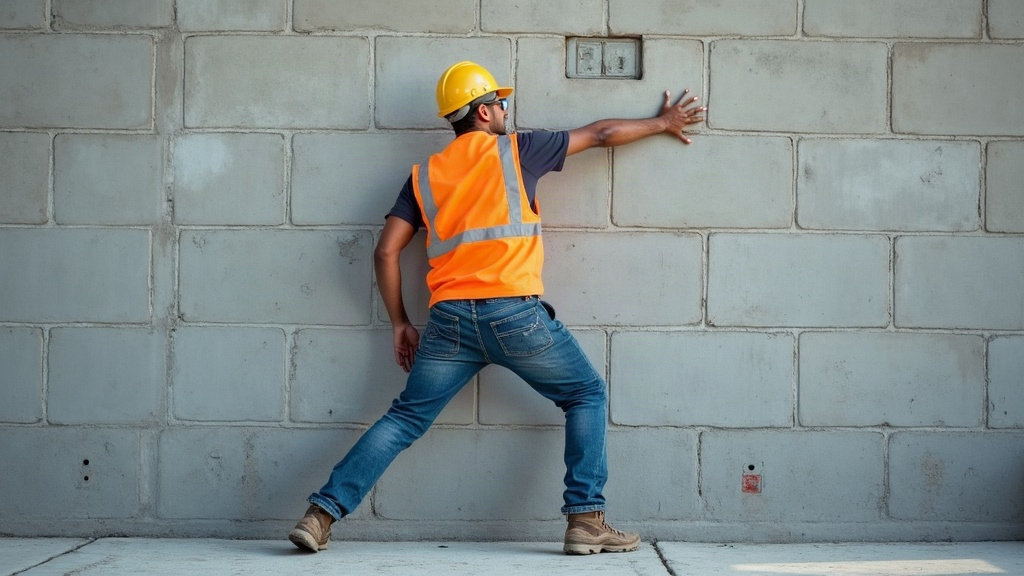
You don't need a gym or a yoga mat. You need five minutes and a concrete wall.
Before your shift
- Standing quad stretch: Pull your heel to your glute, hold 20 seconds each side. Loosens the quad tendon that pulls on the kneecap.
- Hip flexor lunge stretch: One knee on the ground, lean forward. Tight hip flexors force your knee to compensate on every step.
During your shift
- Calf raises: 10 to 15 reps while waiting or on a break. Pumps fluid back up from the lower leg and reduces joint stiffness.
- Short walks: Even 60 seconds of walking resets the joint pressure cycle better than standing still.
After your shift
- Ice (not heat) if there's any swelling: 15 minutes on, 15 off. Heat on a swollen joint makes it worse.
- Hamstring stretch on a step: Straighten one leg on a step, lean forward slightly. Tight hamstrings pull the knee joint out of alignment.
Did you know?
A study published in Occupational and Environmental Medicine found that workers who stood on hard floors for more than 8 hours a day had a significantly higher prevalence of knee pain compared to those who worked on softer or mixed surfaces, even when age and BMI were controlled for.
Should You Stay Off Work With Knee Pain or Push Through?
Soreness that fades by mid-morning the next day: push through, but change something (your boots, your mat, your break habits).
Pain that's there when you wake up and doesn't loosen up after 20 minutes on the job: you need to modify your work, lighten your load, and see someone within a week if it doesn't improve.
Swelling plus pain equals stop. Working through a swollen knee grinds inflamed tissue and fast-tracks cartilage damage that could have been a simple fix.
When It Stops Being Soreness and Starts Being a Real Problem
These are the signs that mean you're past the DIY fix stage and need a medical professional to look at it:
- Swelling that doesn't go down after a night off your feet
- A clicking, grinding, or locking sensation inside the joint
- Pain specifically on the inner or outer side of the knee (possible ligament or meniscus issue)
- Knee gives way or buckles under normal weight
- Pain that rates above a 6 out of 10 consistently for more than two weeks
An orthopedic urgent care or sports medicine clinic will get you answers faster than waiting for a referral through your GP. Many accept workers' comp directly if this is job-related.
Start Here: Your Three-Day Action Plan
Don't try to fix everything at once. Do this in order:
- Day 1: Check your boots. If they're over a year old and you're on them daily, the midsole is compressed and giving you nothing. Order a pair of quality insoles tonight.
- Day 2: Set a phone alarm for every 45 minutes on shift. When it goes off, walk for two minutes. Non-negotiable.
- Day 3: Add the before-shift quad and hip flexor stretch. Five minutes before you start. Do it three days in a row and it becomes a habit.
Your knees have to last you another 20 or 30 years on the job. Treat them like the tools they are: maintained, protected, and replaced before they fail completely.
