


You made it through another shift. Your back is locked up, your lower spine is burning, and you're walking to the truck like a man twice your age. You figure it's the lifting. Maybe it is. But your boots deserve a harder look.
Lower back pain from heavy lifting work boots is one of the most overlooked problems on the jobsite. The wrong footwear quietly destroys your posture, your gait, and your spine, one eight-hour shift at a time.
Key points at a glance
- Work boots with flat soles, zero arch support, or worn-out midsoles actively cause lower back strain.
- The link between bad footwear and spinal compression is real and well-documented by occupational health research.
- A quality aftermarket insole can fix most boot problems for under $60 before you buy new boots.
- Three daily habits, heel striking, skipping breaks, and bad load positioning, multiply back pain from boots.
- If pain shoots down your leg or wakes you at night, stop waiting and see a professional.
What this guide delivers
Why Your Lower Back Is Screaming After a Long Shift
Your lower back, specifically the lumbar spine, handles all the load transfer between your upper body and your legs. Every time your foot hits the ground wrong, that shock travels straight up the chain.
Standing on concrete for 8 to 10 hours is already brutal. Add heavy lifting, a loaded tool belt, and boots that flex in the wrong places, and those lumbar discs are absorbing punishment they were never designed to take continuously.
Muscle fatigue sets in around hour four. After that, your stabilizer muscles quit, your spine compresses more with each step, and you feel it as a dull, spreading ache from your belt line down toward your glutes.
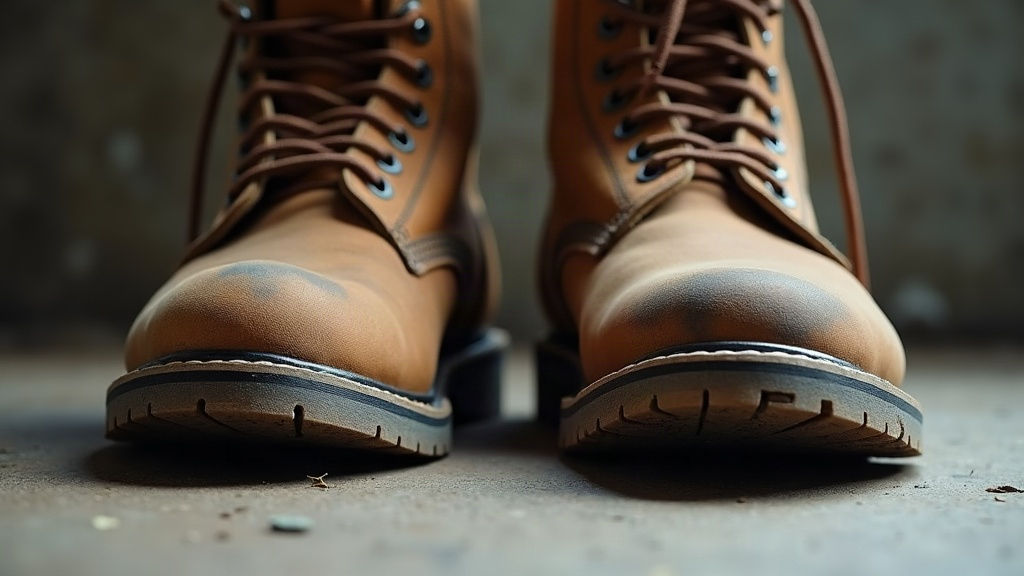
Can Work Boots Actually Cause Lower Back Pain?
Yes. The short answer is yes, and this is not a fringe opinion. Biomechanics research consistently shows that footwear directly affects lumbar loading and gait mechanics.
Flat, unsupported soles force your foot into a pronated position. Pronation rotates the knee inward, tips the pelvis forward, and increases the curve in your lumbar spine. That hyperlordotic posture crushes the posterior joints of the lower back all day long.
Heavy lifting compounds this. When you bend and lift in boots that don't stabilize your ankle, your body compensates with your lower back. That's where the injury happens.
Did you know?
A 2018 study in Applied Ergonomics found that workers who wore footwear with inadequate arch support had significantly higher lumbar muscle activity over an 8-hour shift, meaning their lower back muscles were working harder simply because of their shoes.
What Bad Boots Do to Your Spine Over Time
One bad shift doesn't wreck your back. Six months of bad shifts does.
The cumulative effect is what gets people. Chronic compression on lumbar discs leads to disc thinning, which narrows the spaces where nerves exit the spine. That's when you stop feeling generalized soreness and start feeling pain that shoots down your leg.
- Months 1-2: Fatigue and tightness at the end of the day, stretches out overnight.
- Months 3-4: Morning stiffness starts, soreness lingers into the evening.
- Months 5+: Persistent pain, possible radiating symptoms, harder to recover between shifts.
The trajectory is predictable. The fix, catching it early and changing what's on your feet, is also predictable.
What to Look For in a Work Boot If Your Back Is Already Beat Up
Not every boot marketed as "comfortable" is worth a damn for your spine. Here's what actually matters.
Arch support
Arch support work boots are not a luxury. The arch controls how your foot pronates. A boot with a structured arch keeps your foot neutral, which keeps your knee, hip, and pelvis stacked correctly. Look for a firm, contoured footbed, not a flat foam pad.
Heel height and cushioning
A modest heel lift of 1 to 1.5 inches helps take tension off the lower back by slightly tilting the pelvis. Too much heel and you're back in trouble. The heel cup should be firm, not squishy. Squishy collapses under load.
Shank stiffness
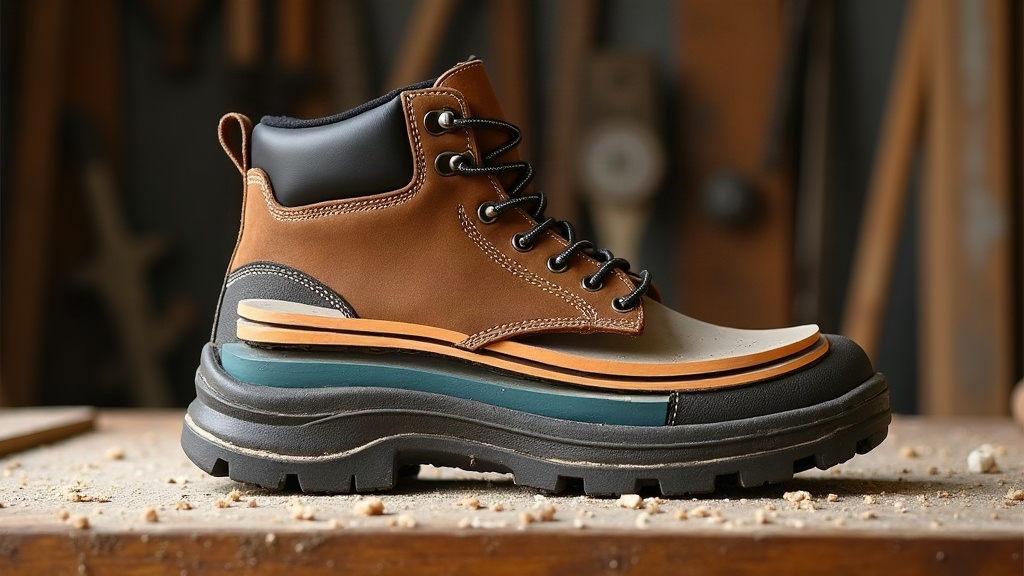
The shank is the rigid internal plate running from heel to ball. A steel or fiberglass shank prevents the boot from bending in the middle, which keeps your foot from rolling when you're carrying weight.
Ankle support
A higher cut, 6 inches or more, limits excessive ankle motion. Less ankle wobble means less knee and hip compensation, which means less lumbar strain under load.
The Big 3 Habits That Make Lower Back Pain Worse on the Job
Even the best boots won't save you if you're doing these three things every shift.
1. Hard heel striking
Driving your heel into concrete with every step sends a shockwave straight to the lumbar spine. Shorten your stride slightly and land with your foot more under your hips, not out in front.
2. Skipping micro-breaks
Standing static is worse than walking. A 2-minute walk every 45 minutes keeps spinal fluids circulating and prevents the muscle fatigue cascade that leads to the shift-ending back lock-up.
3. Loading the back instead of the legs
When you lift, if your boots don't give you stable ankle and arch support, you subconsciously shift the load to your lower back because your foundation isn't solid. Fix the boots, fix the lift mechanics automatically.
Did you know?
The National Institute for Occupational Safety and Health (NIOSH) identifies prolonged standing on hard surfaces as a primary ergonomic risk factor for chronic lower back disorders in manual labor workers, independent of the lifting itself.
Immediate Relief When Your Back Goes Out Mid-Shift
When pain spikes mid-shift, you have limited options. These are the ones that actually help.
- Sit on a hard surface, not a bucket. A bucket lets your pelvis tilt backward, rounding your lumbar spine under load. A flat surface keeps your pelvis neutral.
- Standing lumbar extension: Hands on your lower back, gently arch backward 5 to 10 times. Reverses the forward flexion you've been in all day.
- Walk, don't stand still. Static posture locks up faster. Even a 5-minute slow walk resets circulation and reduces muscle spasm.
- Check your boot lacing. A loose boot makes your foot work harder to stabilize, which fires up the back chain. Tighten from the toe up.
These are not cures. They buy you the rest of the shift. The real fix happens before you put your boots on tomorrow morning.
Insoles vs. New Boots: What's Worth Your Money First
This is the question everyone has. Here's the honest answer: start with insoles if your boots are less than 18 months old and still have a solid midsole.
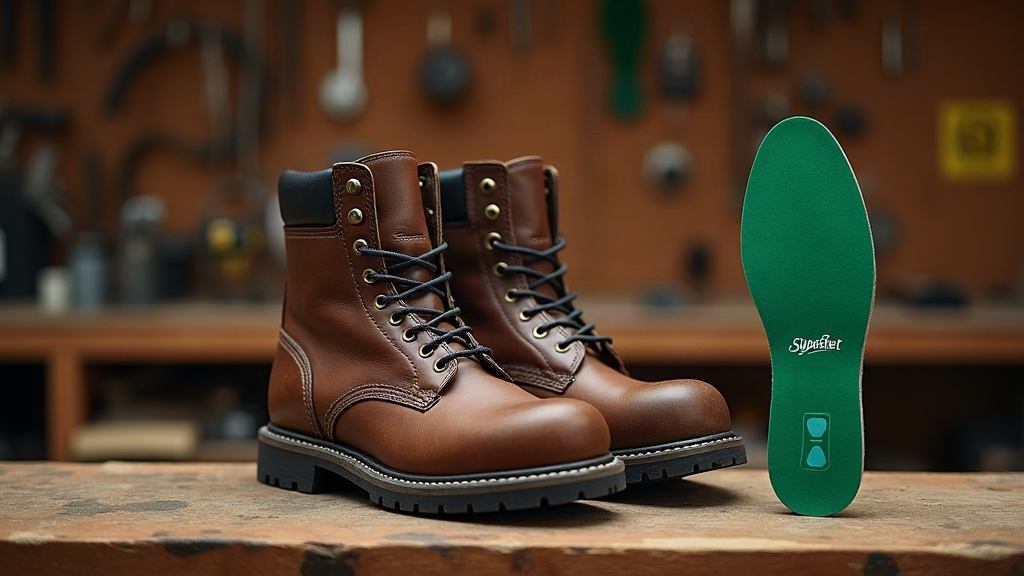
A good insole like Superfeet Green or Powerstep Pinnacle costs $40 to $60 and fixes the arch support problem immediately. If your pain drops noticeably in two weeks, you bought yourself time.
If your boots are older than two years, the midsole is likely compressed past the point where an insole can compensate. At that point, you're stacking a good insole on a dead platform and wasting both the money and the effort.
| Option | Cost | Best for | Skip it if |
|---|---|---|---|
| Aftermarket insoles | $40-$60 | Boots under 18 months old, solid midsole | Midsole is visibly compressed or cracked |
| Budget new boots | $80-$130 | Replacement when old boots are dead | You have serious back issues (go premium) |
| Premium work boots | $180-$300 | Daily heavy lifting, chronic back pain | You'll replace them in under a year anyway |
| Custom orthotics | $300-$600 | Diagnosed flat foot or overpronation | You haven't tried quality OTC insoles first |
Work Boots Worth Considering If Lower Back Pain Is a Daily Fight
These aren't paid placements. They're boots that come up consistently when you talk to workers who dealt with back pain and fixed it.
Thorogood American Heritage 6-Inch
Made in the US, fiberglass shank, genuine leather upper that doesn't break your ankle during break-in. The footbed is replaceable, so you can drop in your own insole from day one. Holds up for 3 to 4 years of hard use.
Keen Utility Pittsburgh
Asymmetric steel toe that doesn't crowd your toes and throw off your gait. The midsole cushioning is above average for a steel-toe boot. Good pick if you're on concrete most of the day.
Red Wing Iron Ranger (with aftermarket insole)
The stock footbed is mediocre, but the boot itself is excellent: full-grain leather, solid heel, real shank. Replace the footbed with a Superfeet Green and you have a serious back-pain boot for people who also need durability.
When to Stop Toughing It Out and See Someone
Hard work and a high pain tolerance are assets. Ignoring warning signs until you can't get off the floor is not.
Get in front of a doctor or physical therapist when you notice:
- Pain that runs from your lower back down through your glute and into your leg (sciatic nerve involvement)
- Numbness or tingling in your foot or toes
- Back pain that wakes you up at night when you're not moving
- Pain that doesn't ease at all after two days of rest
- Weakness in your leg when climbing stairs or walking uphill
These are not "pushed too hard on Friday" symptoms. These are "something structural is happening" symptoms. A physical therapist who works with manual labor clients can also give you specific lift mechanics and boot recommendations based on your actual gait, which is worth more than any generic advice, including this article.
The bottom line: your boots are either part of the problem or part of the fix. There's no neutral ground when you're on your feet for ten hours carrying weight. Check the midsole, fix the arch support, and give your lower back a foundation that's actually doing its job.
