


Eight hours in work boots. Hard floors, heavy loads, no breaks. By noon your socks are soaked, your heels are starting to rub, and you've got a full afternoon ahead. The socks are doing more damage than you think.
Why Wet Feet Are a Real Work Hazard?
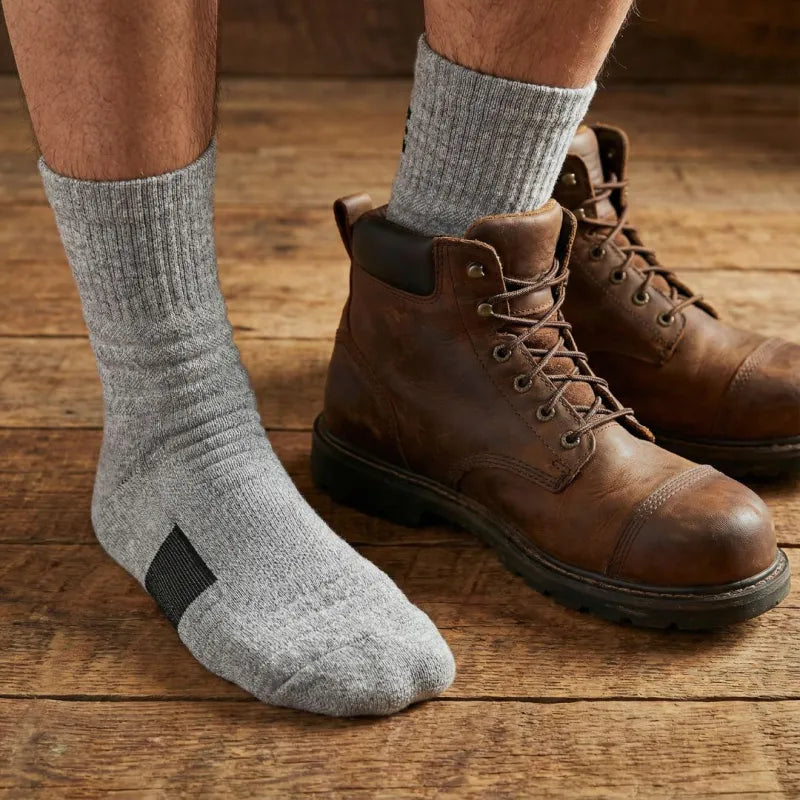
Most people treat sweaty feet as a minor inconvenience. It's not. Moisture trapped inside a work boot softens the skin, which makes friction worse, not better. That's how blisters start — not from dry rubbing, but from wet skin giving way under repeated pressure.
There's also the temperature issue. When sweat can't escape, it sits against your foot. In summer, your feet overheat. In winter, that same trapped moisture drops your foot temperature fast — even inside an insulated boot. A wet sock is a cold sock, eventually.
And then there's the long game: persistent moisture leads to fungal growth, skin breakdown, and foot odor that no boot spray can fix long-term. It starts with choosing the right moisture wicking socks for work boots — ones that actually move sweat away from your skin instead of holding it in.
What "Moisture Wicking" Actually Means And What It Doesn't?
The term gets thrown around so loosely it's almost lost meaning. So let's be direct. True moisture wicking means the fabric pulls sweat away from your skin and moves it toward the outer surface of the sock, where it can evaporate. This requires fibers with capillary action — the ability to transport liquid through microscopic channels in the weave.
Cotton doesn't do this. Cotton absorbs moisture and holds onto it. That's why your gym teacher told you to avoid cotton for sports — same principle applies to a 10-hour shift in steel-toes.
What actually works:
- Merino wool: wicks moisture, regulates temperature in both directions (warm when cold, cool when hot), and resists odor naturally. It's the gold standard for demanding work environments.
- Technical synthetic blends: polyester and nylon-based fabrics can be engineered to wick effectively and dry faster than wool. They're also more durable in high-friction zones.
- Bamboo fibers: softer than synthetics, naturally moisture-regulating, and gentler on sensitive skin. Discover this:
What doesn't work: anything marketed as "moisture wicking" based on a thin layer of synthetic added to a mostly-cotton construction. Check the fiber breakdown before you buy.

The Boot Problem Nobody Talks About
Here's something that rarely comes up in sock guides: the boot matters as much as the sock.
Moisture wicking socks for work boots only do their job if there's somewhere for that moisture to go. A boot with zero breathability just traps evaporated sweat back against your foot. You're wicking into a sealed container. This doesn't mean you need a new pair of boots. It means your socks need to work harder — and that means thickness matters too.
A sock with proper cushioning creates a small air gap between your foot and the boot's interior. That gap allows some airflow and gives the moisture somewhere to diffuse rather than sitting on your skin. Thin socks, no matter how good their fiber composition, can't replicate this.
The best setups pair a genuinely thick, cushioned sock with a boot that has at least some mesh or breathable lining at the ankle. More on what that looks like in practice — below.
What to Actually Look For: A Practical Checklist

You don't need to read a material science paper to pick the right pair. Run through this before you buy:
1. Fiber content. Look for merino wool, bamboo, or technical synthetics (polyester/nylon blends). If cotton is the first ingredient listed, move on.
2. Cushioning zones. Heel and forefoot padding reduce impact and friction. They also create the micro-airflow layer mentioned earlier. Reinforced zones last longer and protect the areas that take the most abuse.
3. Fit and compression. A sock that bunches or slips creates friction points. Look for arch support bands and a snug cuff that holds without cutting circulation. Some workers prefer mid-calf length for additional ankle stability in tall boots.
4. Length. Ankle socks work for low-cut boots but are a poor choice for anything above the ankle — the boot collar will rub directly on exposed skin. For most work boots, a crew or mid-calf cut is the safer bet.
5. Pack value. Work socks take a beating. Rotating through 5–10 pairs keeps wear even, extends lifespan, and means you're never stuck in a damp pair because laundry is backed up. Multi-packs designed for this kind of rotation are almost always better value than single pairs.
Check this out: Construction Worker Accessories: 7 Must-Have Expert Picks
How Mason's Work Socks Handle This?
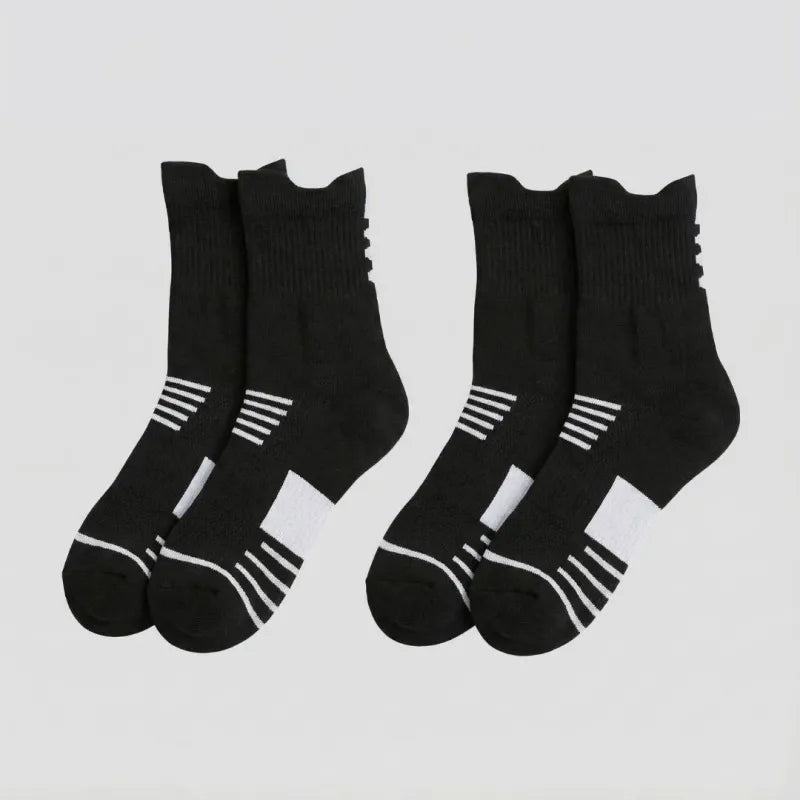
Mason's thick work socks collection is built specifically for the conditions described above — long shifts, heavy boots, demanding surfaces. The construction combines dense cushioning at the heel and forefoot with breathable technical fibers that actively move moisture away from the foot.
The warming variants use breathable fibers that retain heat while letting sweat escape — which sounds contradictory until you realize that proper insulation and moisture management work in tandem, not against each other. Verified buyers working long shifts consistently note that their feet stay dry and comfortable through full workdays. One buyer called them "the best socks I've ever bought" after putting multiple pairs through weeks of daily use.
The fit stays in place. The cushioning holds up over time. And the multi-pack format means you can rotate properly without running out mid-week. For sweaty feet specifically, Mason's breathable work socks lean into technical fabric construction optimized for moisture control — a better choice for hot indoor environments or warm-weather work.
The full range is worth browsing if you work across different conditions — different formulations for cold, warm, and wet environments, all built around the same core principle: keep your feet dry and supported.
A Few Things That Won't Help But People Try Anyway
Foot powder — useful short-term, not a substitute for proper fiber. It masks odor but doesn't move moisture.
Double-socking — wearing two thin socks doubles the friction risk and doesn't improve wicking. One well-constructed thick sock is better.
Airing out boots mid-shift — helpful if you can, but you can't always. Your socks need to handle the full shift without depending on a 10-minute break to reset.
Washing less to preserve elasticity — this is a myth. Washing regularly removes the salt and bacteria buildup that breaks down fibers from the inside. Proper rotation means any individual pair washes less often while staying clean.
Check this out: What to Wear for Warehouse Work: Complete Guide for Safety & Comfort
One Last Thing
Moisture wicking socks for work boots aren't a luxury purchase. For anyone putting in long days on their feet, they're the difference between feet that hold up and feet that don't. The material has to actually wick — not just claim to. The cushioning has to be thick enough to do real work. And the fit has to stay stable for eight hours, not just the first two.
Mason's thick work socks collection is a straightforward place to start if you want socks built around those criteria rather than around a marketing concept.
