


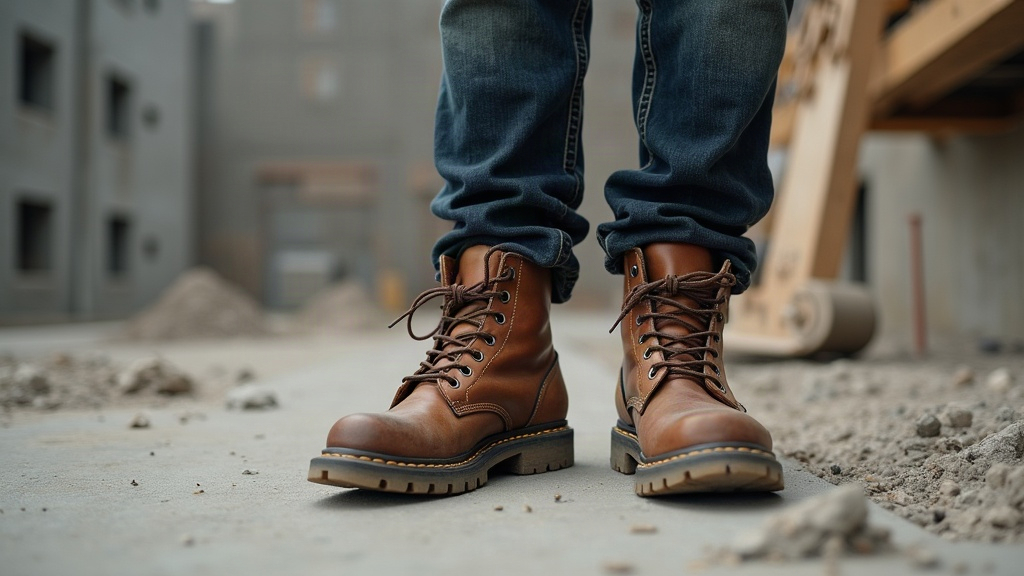
Your feet go numb three hours into a shift and you shake them out, walk it off, and forget about it. That's the trades. But that tingling isn't just discomfort, it's your nervous system flagging a real problem that gets worse the longer you ignore it.
Nerve pain from standing all day is one of the most common and most dismissed injuries in construction, warehousing, and any trade that keeps you on hard floors. Here's what's actually happening and what you can do about it without taking a week off.
Key points at a glance
- Numb feet after a shift usually signal nerve compression, not poor circulation, they're different problems with different fixes.
- Morton's neuroma, tarsal tunnel syndrome, and sciatica each cause foot numbness but in distinct patterns you can learn to tell apart.
- Fat pad atrophy from years on hard floors is permanent, prevention is far easier than recovery.
- Most boots sold at big-box stores offer almost no meaningful arch support or metatarsal cushioning.
- A proper aftermarket insole costs $30, $80 and can make more difference than a $200 boot upgrade.
- Tingling or numbness that doesn't clear up within 20 minutes of sitting down needs professional evaluation.
What this article gets you
What Numb Feet After a Shift Is Actually Telling You
Numbness is your nerves being compressed or starved of blood flow. On a jobsite, both happen at the same time. Standing on concrete for 8 to 12 hours compresses the small nerves running through your forefoot while also reducing circulation to the extremities.
If the feeling comes back within a few minutes of sitting down, you've got compression. If it lingers, burns, or shows up in one specific spot every single shift, that's a nerve injury in progress.
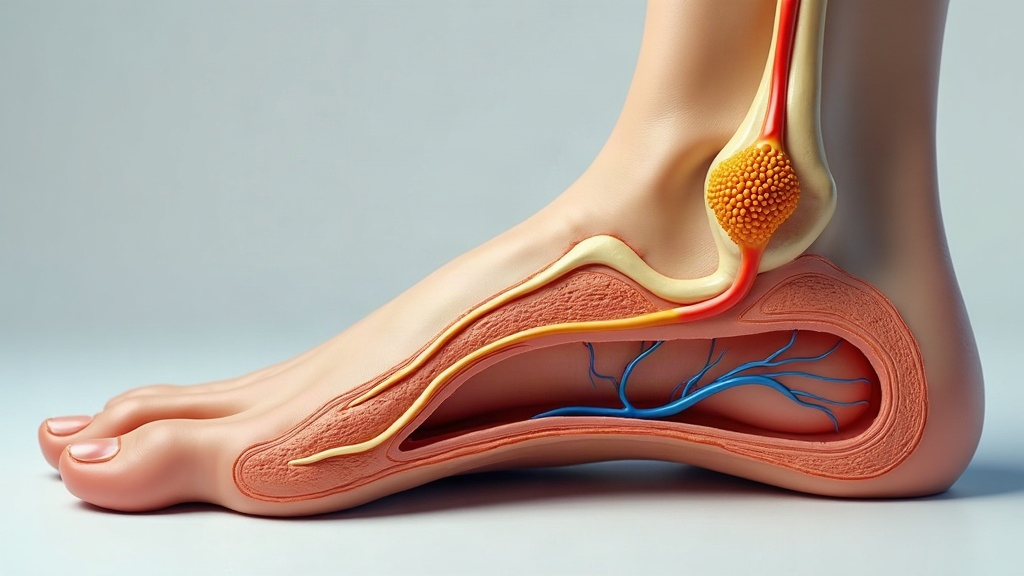
The Main Culprits: Nerve Compression, Bad Boots, and Hard Floors
Concrete and steel have zero give. Every step transfers impact straight into your metatarsals. Most work boots have a rigid shank and almost no forefoot cushioning, they protect against punctures, not nerve damage.
Add a boot that's slightly too narrow in the toe box and you've got a vice grip on your forefoot nerves for 10 hours. That's the daily reality for most framers, ironworkers, warehouse pickers, and tile setters.
Three compounding factors
- Heel drop: Most work boots have a raised heel, shifting your weight forward onto the ball of the foot where nerve density is highest.
- Toe box width: Steel-toe and composite-toe boots often compress the metatarsal heads together, pinching the interdigital nerves.
- Floor hardness: Concrete is rated at roughly 3,000, 5,000 PSI of hardness. Your foot fat pad is not built to absorb that over a decade.
Morton's Neuroma, Tarsal Tunnel, and Sciatica: Know the Difference
These three conditions all cause numb feet from standing at work, but they come from completely different sources. Treating the wrong one wastes your time and money.
| Condition | Where You Feel It | Key Trigger | First Fix |
|---|---|---|---|
| Morton's Neuroma | Ball of foot, between 3rd and 4th toes | Narrow toe box, forefoot compression | Wider boot, metatarsal pad |
| Tarsal Tunnel Syndrome | Inside ankle, arch, heel, toes | Flat feet, overpronation, ankle swelling | Arch support insole |
| Sciatica | Leg, calf, bottom of foot | Lower back nerve compression | Lumbar support, stretching |
| Metatarsalgia | Ball of foot, burning and aching | Fat pad loss, hard surfaces, overload | Cushioned insole, forefoot pad |
| Peripheral Neuropathy | Both feet, symmetric, stocking-like | Diabetes, vitamin deficiency, toxin exposure | Medical evaluation required |
Sciatica foot numbness from standing is different from the others because the problem isn't in your foot at all. The sciatic nerve gets pinched in the lumbar spine or piriformis muscle, and the signal drops out in your foot. If you feel numbness running down the back of your leg and into your heel or sole, that's your back talking, not your boot.
Did you know?
Morton's neuroma is up to 10 times more common in people who stand on hard floors for work than in the general population. It's not bad luck, it's direct mechanical wear on the interdigital nerve, year after year.
First Signs of Neuropathy You Shouldn't Brush Off
Occasional tingling after a long shift is one thing. These signs mean the nerve damage is moving past temporary compression:
- Numbness that doesn't resolve within 20, 30 minutes of getting off your feet
- Burning or electric pain that wakes you up at night
- Feeling like you're walking on a pebble that isn't there
- Toes that feel thick or wooden even in the morning before your shift
- Loss of balance on uneven ground
That last one is the most dangerous on a jobsite. Sensory neuropathy reduces proprioception, your ability to sense where your foot is in space. That's a fall risk on scaffolding, ladders, or any uneven surface.
Can You Actually Get Permanent Nerve Damage from Standing All Day?
Yes. And the most overlooked way it happens isn't a single injury, it's foot fat pad atrophy.
The fat pad under your heel and ball of foot is a natural shock absorber. Decades of hard-floor standing physically compresses and thins it out. Once it's gone, it doesn't grow back. The nerves that pad used to protect are now sitting closer to the surface with less cushion between them and the concrete.
Trades workers in their 40s and 50s who've been at it since their 20s show measurably thinner fat pads on ultrasound compared to office workers the same age. That's not anecdotal, that's tissue loss from sustained mechanical loading.
Did you know?
The heel fat pad in a healthy adult is about 18mm thick. Studies of long-term manual workers show average thicknesses dropping to 11, 13mm after 20 years on hard floors. That 5mm difference is the gap between normal walking and chronic nerve pain.
What Works: Real Relief for Trades Workers on a Budget
You don't need to stop working. You need to be smarter about how you load your feet.
On the job, right now
- Anti-fatigue mats: If you're standing in one spot, a saw station, a workbench, a checkout, a mat with 3/4" to 1" of foam cuts nerve compression significantly. They cost $20, $60 and they work.
- Heel lifts: A simple silicone heel cup ($10, $15) redistributes pressure away from inflamed tissue while you figure out a longer-term solution.
- Metatarsal pads: These small foam or gel pads sit just behind the ball of the foot, spreading the metatarsal heads apart. Directly addresses Morton's neuroma and metatarsalgia without buying new boots.
At home, end of shift
- Contrast foot soaks (cold then warm water, alternating) reduce swelling and stimulate nerve recovery faster than ice alone.
- Calf stretching reduces tension on the plantar fascia and posterior tibial nerve simultaneously.
- Sleeping with feet slightly elevated decreases the inflammation buildup that makes morning pain worse.
Boots, Insoles, and Orthotics: What's Worth Your Money
The boot matters less than most guys think. What's inside the boot matters more.
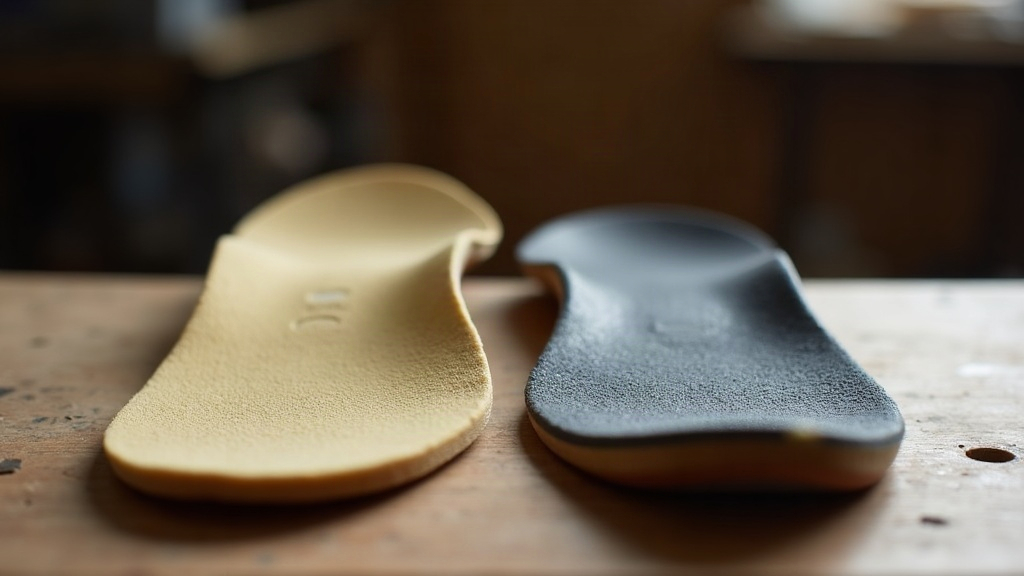
Insoles worth considering
- Superfeet Green or Orange: Deep heel cup, firm arch support. Orange has more forefoot cushioning, better for metatarsalgia. Around $55.
- Powerstep Pinnacle: Semi-rigid support, good for tarsal tunnel. Fits most work boots without trimming. Around $40.
- Spenco Total Support: Budget pick at $25, $30, noticeable improvement over factory insoles for warehouse workers on concrete.
On boots
For Morton's neuroma in work boots, the single most important feature is a wide toe box. Brands like Thorogood, Red Wing, and New Balance work boots offer EE and EEE widths. A wider toe box costs nothing extra on some models and eliminates the primary compression mechanism entirely.
Custom orthotics
If you've already got significant fat pad atrophy or diagnosed tarsal tunnel syndrome, custom orthotics prescribed by a podiatrist run $300, $600 but are often covered partially by insurance. For trades workers with a real diagnosis, they're the correct tool for the job, not a luxury.
When to Stop Self-Treating and See a Podiatrist
Most minor nerve compression clears up with better footwear and a few weeks of consistency. These situations are different:
- Numbness that's been going on for more than 4, 6 weeks without improvement
- Visible changes in foot shape, toes curling, arch collapsing, skin discoloration
- Any numbness that comes with leg pain, back pain, or radiates above the ankle
- Numbness in both feet symmetrically, this pattern points to systemic issues like diabetes or B12 deficiency, not mechanical compression
- Weakness in the foot or difficulty pointing your toes, motor nerve involvement is more serious than sensory
A podiatrist can order an ultrasound to check fat pad thickness, confirm Morton's neuroma, and refer for nerve conduction studies if they suspect tarsal tunnel or early peripheral neuropathy. Catching it at stage one beats managing it at stage three.
Your action checklist for this week
- Pull the insoles out of your current boots. If they're less than 6mm thick and totally flat, replace them before your next shift.
- Check your toe box. Can you wiggle all five toes without them touching the sides? If not, you're compressing your forefoot nerves every day.
- Add a metatarsal pad if your pain is in the ball of the foot. Three bucks at a pharmacy or $15 online. Try it for two weeks.
- Start calf stretching morning and night, 3 sets of 30 seconds per leg. It directly unloads the tarsal tunnel.
- If symptoms haven't improved in 30 days of consistent changes, book a podiatrist appointment. Most initial visits cost $100, $200 without insurance and less with it.
