


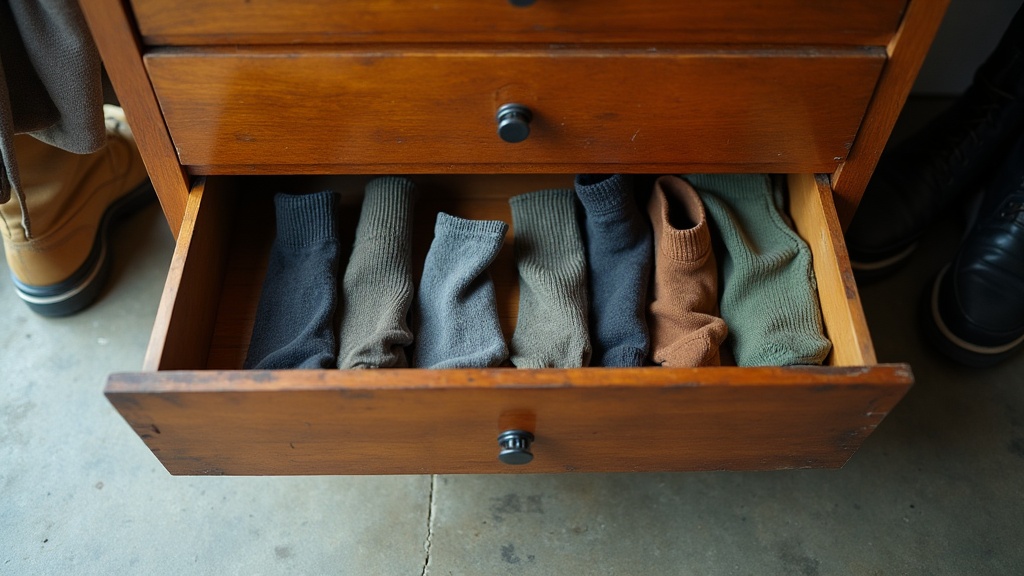
You're up before dawn, thermos in one hand, looking for a matching pair of wool socks in a drawer that looks like a yard sale. Three minutes wasted. That's three minutes you could have spent eating or sitting down before a ten-hour shift on your feet.
This isn't about being tidy for its own sake. A disorganized sock drawer costs you time, kills your morning, and means you end up grabbing the wrong pair for the job. Fix it once, and it stays fixed.
Key points at a glance
- Pull everything out first, trash what's worn out, period.
- Sort socks by job type, not by color: work, casual, compression, liner.
- The ranger roll beats the ball method every time for drawer space.
- Cheap drawer dividers work fine; you don't need to spend more than $10.
- No drawer? A hanging shoe organizer or a labeled bin handles it just as well.
- A three-minute grab routine only works when the setup is already correct.
What You Get Out of This
Why Your Sock Drawer Actually Matters on the Job
The wrong socks on a ten-hour day cause real problems: blisters, sweat pooling inside your boot, pressure on the ankle from a sock that slides down. It's not cosmetic. The right sock for the right job is a basic safety and comfort decision.
When your drawer is a mess, you gamble every morning. You might grab a thin dress sock and spend your shift with your foot sliding around in a steel-toed boot. That's how hot spots and blisters happen.
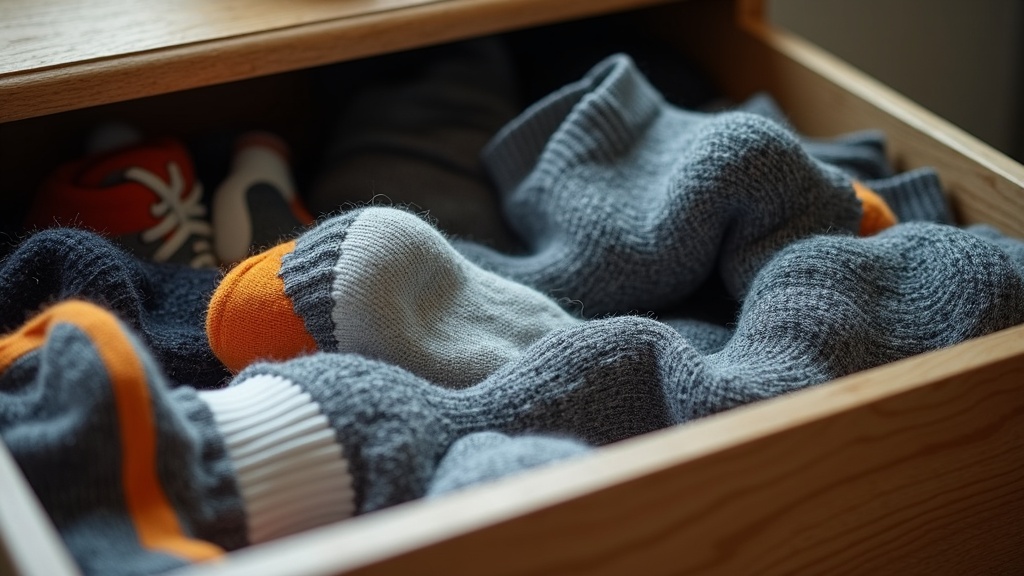
Step One: Pull Everything Out and Ditch the Garbage
Empty the drawer completely. Put every sock on a flat surface where you can see them.
Now be honest. Toss anything with a hole, a stretched-out cuff, or a worn-through heel. If the cushioning is gone, it's gone. Worn-out socks don't protect you, and they take up space that a good pair should have.
Also throw out lone socks without a match. If you haven't found the partner in three weeks, it's not coming back.
Did you know?
The average American owns 24 pairs of socks but rotates through fewer than 10 regularly. The rest sit at the bottom of the drawer, stretching out elastic and taking up real estate. A one-time purge typically removes 30 to 40 percent of drawer volume.
Sort by Job, Not by Color (Work Socks, Casual, Compression, Liner)
Color-coding is useless at 5 AM in dim light. Sort by what the sock is actually for. Four categories cover most tradesmen:
- Work socks: thick cushion, crew or over-the-calf height, for boots all day
- Casual socks: lighter weight, for weekends, errands, days off the site
- Compression socks: for long days on concrete, after a leg injury, or when swelling is an issue
- Liner socks: thin merino or synthetic, worn under a thick work sock to prevent blister friction
Each category gets its own zone in the drawer or its own bin. You should never have to think about which section you're reaching into.
Read also: Best mens workwear approved by experts for 2026
The Best Folding Method for Work Socks That Hold Up in a Drawer
Balling socks by turning one cuff over the other stretches out the elastic over time. The ranger roll keeps pairs compact and intact.
How to ranger roll a work sock pair
- Lay both socks flat on top of each other, perfectly aligned.
- Fold the cuff of the top sock down about two inches, creating a cuff band around both socks.
- Roll the whole pair tightly from toe to cuff.
- Tuck the rolled pair into the folded cuff to hold it closed.
The result stands upright in a drawer. You see every pair at once. No digging, no unrolling to check what you grabbed.
For ankle socks
Fold them flat in half, then fold in thirds. They stack cleanly and take up minimal space, which matters when you're dealing with sock storage in small spaces.
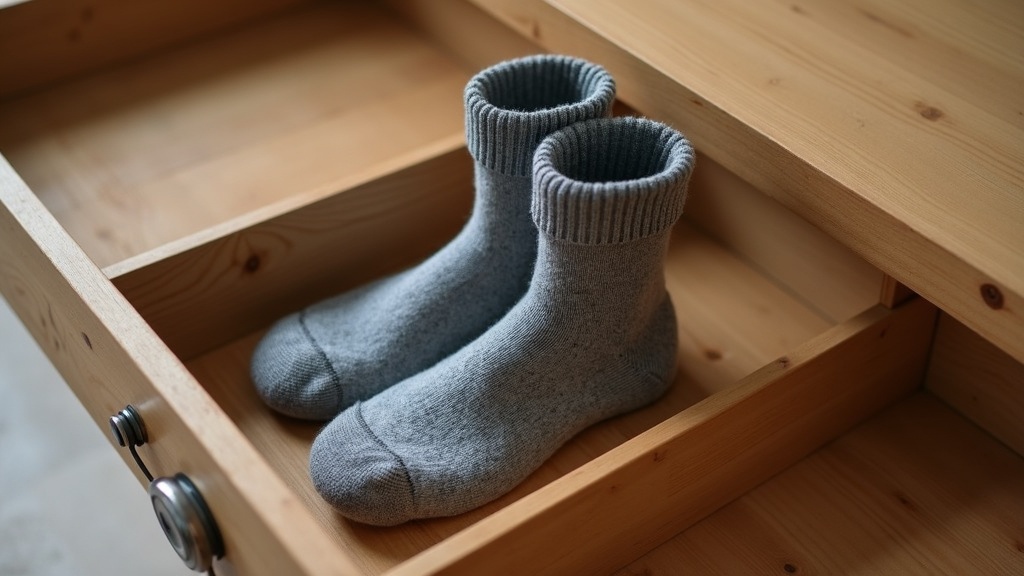
Drawer Dividers: What Works, What's a Waste of Money
You don't need a $40 bamboo organizer. A $6 pack of plastic dividers from any big-box store does the exact same job. What matters is that the cells are the right size for a rolled work sock, roughly 3 to 4 inches wide.
| Divider Type | Avg. Cost | Best For | Worth It? |
|---|---|---|---|
| Plastic adjustable dividers | $5 to $8 | Most standard drawers | Yes, every time |
| Bamboo honeycomb organizer | $18 to $35 | Lightweight dress socks | Cells too small for thick work socks |
| DIY cardboard dividers | Free | Temporary or trial setup | Yes, if you take 10 minutes to cut them right |
| Fabric drawer bins (set) | $10 to $14 | Deep drawers, mixed categories | Good option for bulky sock types |
| Sock-specific drawer insert | $25 to $50 | Thin fashion socks only | No, not for work socks |
For DIY sock drawer dividers, cut strips of cardboard from a cereal box, score and fold them into a grid that fits your drawer. Tape the joints. It holds up for months and costs nothing.
How to Organize Socks When You Have No Drawer Space
Not everyone has a dedicated dresser. If you're working out of a small apartment, a shared bedroom, or a room with one closet and a rod, there are practical fixes.
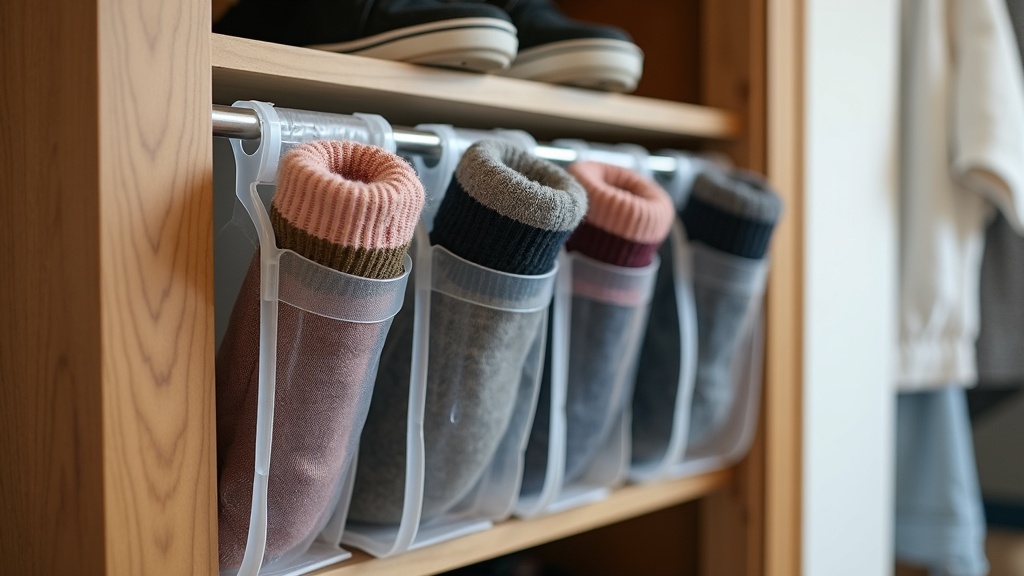
- Over-door shoe organizer: hang it on the inside of your closet door and use one pocket per sock category. Costs about $12 and holds 24 pairs easily.
- Labeled bins on a shelf: four bins, one per sock type, stacked or lined up. Pull the whole bin when you need it.
- Under-bed flat storage box: a shallow plastic tote slides under the bed with zero floor space used. Roll socks and stand them upright inside.
- A small basket on the closet floor: less precise but works fine if you keep only your active rotation in there and store the rest elsewhere.
Did you know?
A standard over-door shoe organizer with clear pockets holds up to 36 pairs of socks, uses zero floor or shelf space, and costs less than a single pair of quality work socks. It's one of the highest-value sock storage upgrades for tight quarters.
Keeping It Organized After Laundry Day Without Losing Your Mind
The system fails at laundry time if you don't have a routine. Most guys dump a clean load on the bed and shove it in wherever there's room. That undoes everything in about four minutes.
Pair and roll immediately out of the dryer. Don't let socks sit in a laundry basket unmatched. Two minutes of rolling right after pulling them out keeps the system intact.
Simple laundry-day rule
Set a clean empty basket next to the dryer. As socks come out, toss them in, pair them before you leave the laundry room, roll them, and put them directly into the right zone. One trip, done.
Read also: Best Carpenter Work Boots Tested by Professionals for Jobsite Safety
The Three-Minute Morning Grab (and Why the Right Setup Makes It Happen)
When the system is right, you open the drawer, you see every category at a glance, and you pull what you need in one motion. That's it. That's the whole payoff.
Heavy boot day: reach into the work sock zone, pull a rolled pair, go. Cold morning with liner socks under your thick wool pair: one grab from each zone, ten seconds total. No thinking, no digging.
The setup takes you about 45 minutes one Saturday morning. What you get back is a faster start every single workday. Over a year, that adds up to hours.
Your action checklist
- Pick a day this week, empty the drawer, and throw out anything worn through.
- Buy one pack of plastic adjustable dividers (under $8) or cut your own from cardboard.
- Ranger roll every pair and stand them upright, sorted by category.
- If you have no drawer, grab an over-door organizer or a set of labeled bins.
- After your next laundry, pair and roll at the dryer, not later.
