


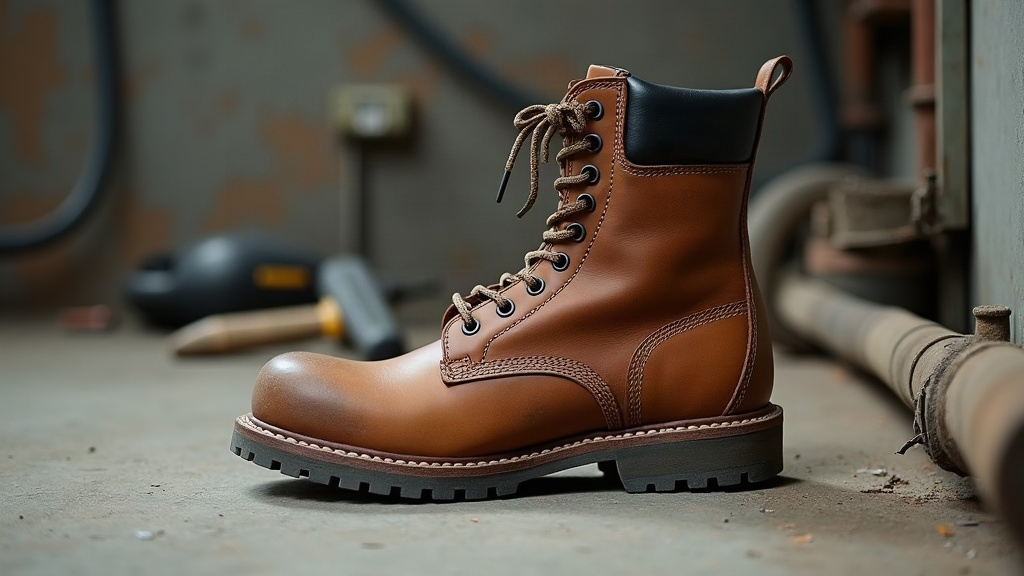
If your first step out of bed in the morning feels like stepping on broken glass, you already know what plantar fasciitis is. You don't need a medical definition. You need a boot that doesn't make it worse by 10 a.m.
Electricians spend long shifts on concrete, crawling under raised floors, climbing ladders, and standing on hard surfaces all day. That kind of work punishes feet that aren't properly supported. The right boot changes everything. The wrong one turns a manageable condition into a chronic nightmare.
Key points at a glance
- Plantar fasciitis hits electricians harder than most trades because of constant hard-surface standing and awkward foot positions.
- The right boot needs arch support, deep heel cup, cushioned midsole, and enough toe box room to let your foot breathe.
- Yes, your current work boots could be the reason your plantar fasciitis won't heal.
- EH-rated boots and plantar fasciitis relief are not mutually exclusive. Several top picks do both.
- Women electricians need gender-specific fits, not just smaller versions of men's boots.
- Orthotics, stretching, and rest matter, but they work best when the boot underneath actually cooperates.
What a good boot actually gives you
Why Electricians Get Hit Hard by Plantar Fasciitis (And What Makes It Worse)
The plantar fascia is a thick band of tissue running along the bottom of your foot from your heel to your toes. Every time you take a step, it absorbs shock. After ten hours on concrete, it's had enough.
Electricians have a specific problem: hard, flat surfaces with zero give. Concrete slabs, metal decking, tile floors. No gravel, no grass, nothing that absorbs any impact at all.
Add ladder climbing, which puts your heel in a flexed position for extended periods, and crouching in tight crawl spaces that twist your foot into unnatural angles, and you've got a recipe for chronic heel inflammation.
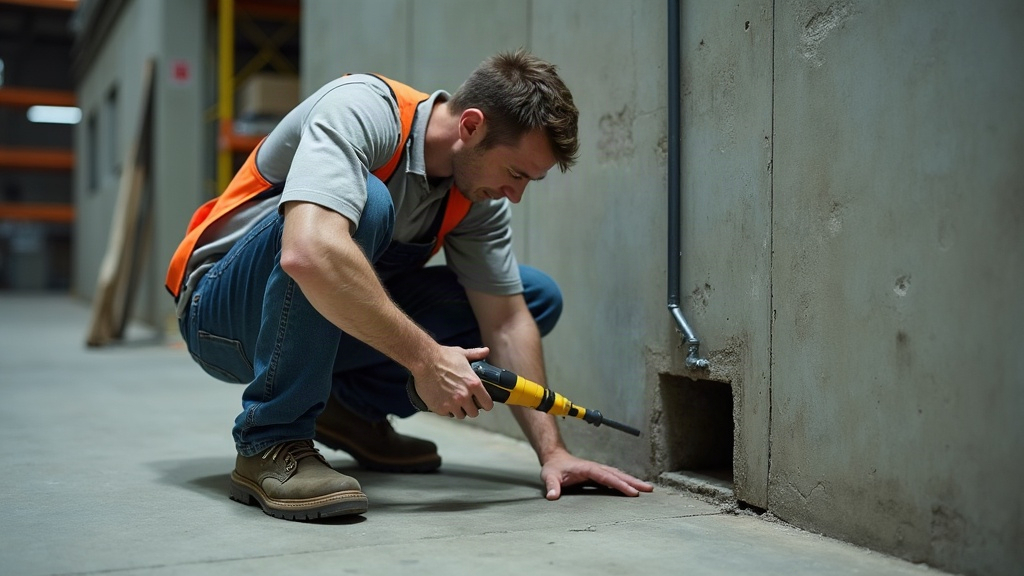
What makes it worse: worn-out boots with dead midsoles, no arch support, and shallow heel cups that let your fat pad spread laterally instead of staying under the heel bone where it belongs.
What to Look for in a Work Boot When Your Heels Are Killing You
Not all supportive boots are the same. Here's what actually matters, ranked by impact.
Heel cup depth
This is the single most important feature for plantar fasciitis. A deep, firm heel cup keeps the fat pad centered under your heel bone so it can absorb shock instead of spreading out to the sides.
Arch support
A real arch support reduces the strain on the plantar fascia by distributing load across the entire foot. Flat insoles do nothing. Look for a contoured footbed, or plan to swap in a quality orthotic.
Cushioned midsole
EVA midsoles are lighter and softer. Polyurethane midsoles are denser and hold up longer. For plantar fasciitis on hard floors, a dual-density setup that's firm at the arch and cushioned at the heel is the sweet spot.
Adequate toe box
A cramped toe box throws off your gait and adds forefoot strain that works its way back to the heel. Give your toes room to splay naturally.
Weight
Heavy boots add fatigue. Fatigue changes how you walk. Changed gait puts more tension on the plantar fascia. A lighter boot, especially one with a composite toe instead of steel, helps more than most people expect.
Did you know?
Plantar fasciitis is the most common cause of heel pain in the United States, affecting roughly 2 million people per year. Construction and electrical workers are among the highest-risk occupational groups due to prolonged standing on hard surfaces.
Can Your Work Boots Actually Cause Plantar Fasciitis?
Short answer: yes. A boot with a flat, unsupportive insole, a worn-down heel, or a rigid sole with no flex point puts mechanical stress directly on the plantar fascia every single step.
Most work boots are replaced every 6 to 12 months by the average tradesman. But the midsole, which provides cushioning and support, often starts breaking down around the 400 to 500 mile mark. You might still have good-looking leather on the outside and dead foam on the inside.
If you've had the same pair of boots for over a year and your heel pain started around the same time, your boots are a suspect.
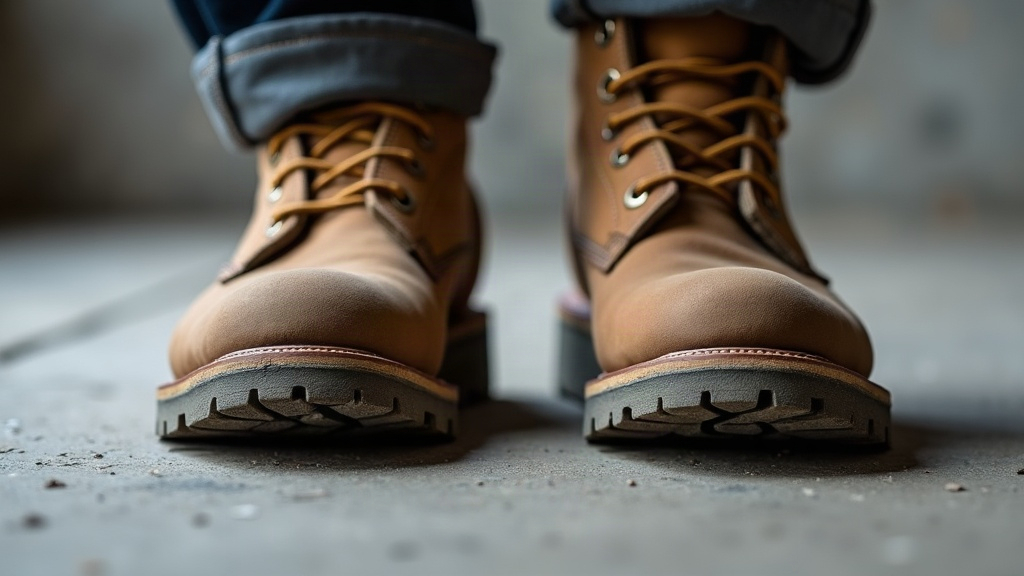
The Best Plantar Fasciitis Work Boots for Electricians in 2025
These picks are based on arch support quality, EH compliance, durability, and real feedback from tradespeople who wear them forty-plus hours a week.
Thorogood American Heritage 6" Moc Toe
Made in the USA, EH rated, with a removable Poron cushion insole and a genuine leather upper that molds to your foot over time. The moc toe construction gives extra toe box width, which is exactly what plantar fasciitis sufferers need.
Red Wing Iron Ranger 8111 (with aftermarket orthotic)
The stock insole is mediocre, but the boot's architecture is excellent: deep heel seat, solid arch shank, durable Vibram sole. Swap in a Superfeet Green and you have one of the best platforms for plantar fasciitis in the trade.
Keen Utility Philadelphia 6" Waterproof
Composite toe, EH rated, wide toe box by design. Keen builds their shoes around a wider forefoot, which naturally reduces the gait issues that aggravate heel pain. The heel lock system keeps the foot stable.
Timberland PRO Boondock Composite Safety Toe
Anti-fatigue technology embedded in the footbed, EH rated, and lighter than most steel-toe options. The heel-to-toe energy return is genuine, not just a marketing claim. Good pick for electricians who are on their feet all day with minimal sitting.
| Boot | EH Rated | Toe Type | Plantar Fasciitis Strength |
|---|---|---|---|
| Thorogood American Heritage Moc Toe | Yes | Soft toe / steel option | Wide toe box, removable Poron insole |
| Red Wing Iron Ranger 8111 | Yes (select models) | Steel toe | Deep heel seat, best with orthotic |
| Keen Utility Philadelphia 6" | Yes | Composite toe | Wide forefoot, heel lock, lightweight |
| Timberland PRO Boondock | Yes | Composite toe | Anti-fatigue footbed, energy return |
| Wolverine Overpass 6" Composite | Yes | Composite toe | Removable cushion footbed, light build |
Best Options for Women Electricians with Plantar Fasciitis
Women's feet are not just smaller men's feet. The heel is proportionally narrower, the arch profile is different, and most unisex or men's boots fit poorly enough that they create their own set of problems.
A boot that slips at the heel while you walk is not protecting your plantar fascia. It's actively irritating it with every step.
Top picks for women electricians:
- Keen Utility Atlanta Cool 2 (women's): EH rated, composite toe, roomy toe box, removable insole. One of the few true women's-last builds in the work boot category.
- Timberland PRO Titan Oxford (women's): Lower profile, EH rated, alloy safety toe. Good for women who find 6-inch shafts uncomfortable on the ankle.
- Danner Quarry USA (women's): Handcrafted, full-grain leather, EH rated, Vibram outsole. Premium price, but the arch support and heel seat are built-in, not afterthought level.
What Electricians Need That Other Workers Don't: EH Rating and Plantar Fasciitis
EH stands for Electrical Hazard. An EH-rated boot has a non-conductive outsole that can withstand 18,000 volts under dry conditions. It's a non-negotiable for anyone working on or near live circuits.
The complication: the outsoles that provide EH protection also tend to be stiffer and less flexible, which can reduce natural foot movement and increase plantar fascia tension.
The solution is to prioritize the footbed, not the outsole, for shock absorption. A well-cushioned, anatomically shaped insole inside an EH-rated boot compensates for what the stiff outsole takes away.
Did you know?
ASTM F2413 is the standard governing EH-rated footwear in the U.S. To carry the EH designation, a boot must show no current flow or breakdown at 18,000 volts for one minute under dry conditions. Wet conditions void the rating entirely, which is why EH boots are a secondary protection, not a substitute for proper lockout/tagout procedures.
What Finally Helped Most Electricians Get Their Feet Right (Beyond the Boot)
A good boot is the foundation. But it rarely solves the problem alone. Here's what actually moves the needle.
Orthotic insoles
Superfeet Green and Powerstep Pinnacle are the two most consistent performers for plantar fasciitis. Pull out the stock insole, drop one of these in. The difference is noticeable within the first shift.
Morning stretching
Before your feet hit the floor in the morning, flex your toes back toward your shin and hold for 30 seconds. Do it three times. This pre-stretches the fascia before it takes any load. It's the cheapest thing you can do and it works.
Anti-fatigue mats
When you're stationary at a panel or workbench for extended periods, a portable foam mat under your feet reduces direct concrete contact. Some electricians carry a 12-inch square of anti-fatigue matting in their bag for exactly this reason.
Replace boots before they die
Don't wait until the sole is separating. If the midsole feels flat and you're not getting any spring back when you press your thumb into it, the cushioning is gone. A new pair every 10 to 12 months is a reasonable standard for full-time tradespeople.
