


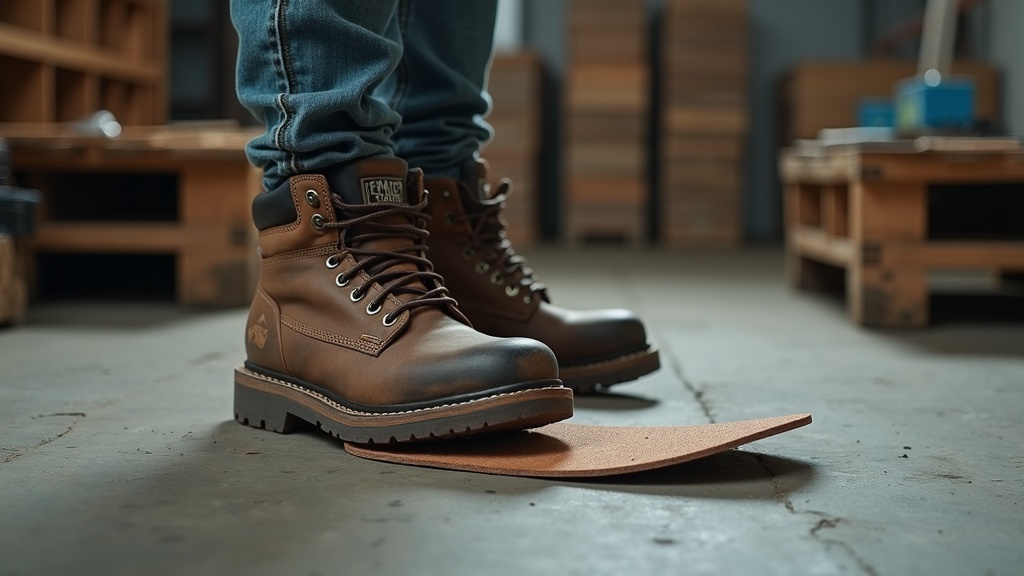
Your feet hurt at the end of a shift and you're not sure if a new pair of insoles will fix that or just waste twenty bucks. Fair question. The answer lives in one thing: matching the insole type to what your feet actually need, not what the packaging promises.
Soft is not always better. Firm is not always harsh. And the stock foam that came with your boots? It stopped doing anything useful around week three. Here's what you need to know before you buy.
Key points at a glance
- Soft insoles absorb shock but offer little structural support and wear out faster.
- Firm insoles stabilize your arch, reduce fatigue, and last longer on hard surfaces.
- Concrete and hard floors favor firm or semi-rigid insoles over pure cushioning foam.
- Plantar fasciitis and flat feet almost always respond better to firm or semi-rigid support.
- Semi-rigid EVA insoles are the practical middle ground for most tradespeople.
- Most insoles need replacing every 6 to 12 months depending on daily wear intensity.
What a Good Work Boot Insole Actually Gives You
The Short Answer: It Depends on Your Floor, Your Job, and Your Feet
There is no universal winner in the soft vs firm insoles for work boots debate. Someone standing on rubber anti-fatigue mats in a machine shop has different needs than a roofer walking on plywood all day or a warehouse picker logging ten miles on bare concrete.
Three variables decide everything: the surface under your feet, the physical demands of your trade, and whether you have an underlying foot condition. Get those three right, and the choice becomes obvious.
What Soft Insoles Actually Do (And Where They Fail You)
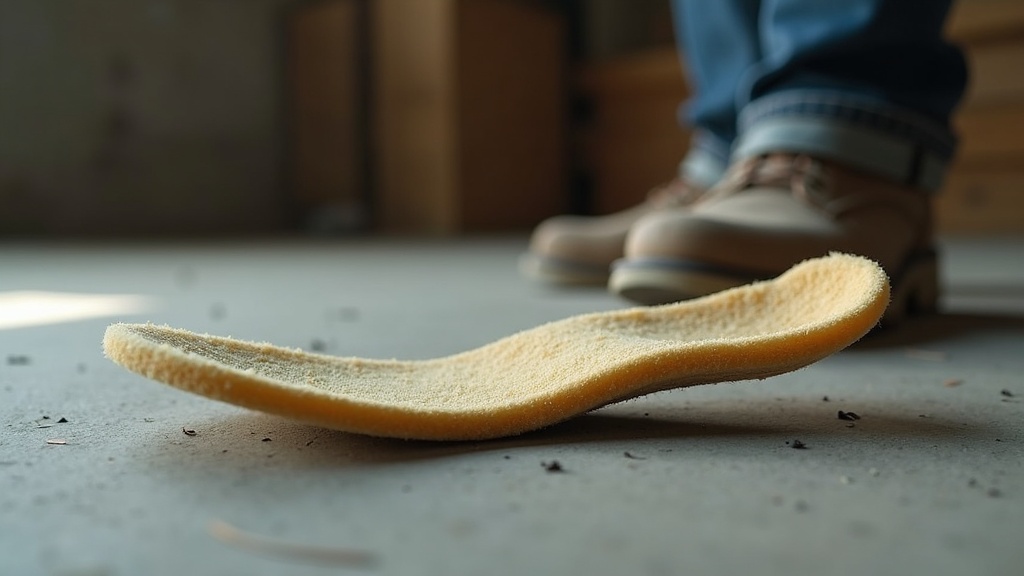
Soft insoles, usually made from memory foam, gel, or open-cell foam, are built around one idea: cushion the impact. They feel good in the store and they feel good on day one.
The problem is compression. Memory foam and gel compress under body weight and never fully recover. After a few weeks, you're standing on a flattened slab of foam that offers almost nothing. On hard floors, that collapse happens even faster.
- Good for: occasional wear, low-impact work, softer surfaces, short shifts
- Bad for: concrete all day, heavy body weight, arch problems, long-term use
- Lifespan on a job site: often 3 to 6 months before they're functionally dead
What Firm Insoles Actually Do (And Who Needs Them Most)
Firm insoles use a rigid or semi-rigid shell, usually polypropylene, carbon fiber, or high-density EVA, to hold the shape of your arch and control how your foot moves through each step. They do not squish. That is the point.
By keeping your arch from collapsing, they reduce the chain reaction that runs up your leg: overpronation, shin splints, knee pain, lower back strain. For people on their feet all day, that structural support is worth more than cushion.
- Good for: concrete floors, heavy loads, flat feet, plantar fasciitis, long shifts
- Bad for: people who need volume (they can make a tight boot tighter)
- Lifespan: typically 12 to 24 months, often longer with carbon fiber shells
Did you know?
The average warehouse worker walks between 10 and 15 miles per shift. At that distance, every millimeter of arch collapse multiplies into thousands of stress repetitions on the plantar fascia, Achilles tendon, and knee joints by end of shift.
Concrete and Hard Floors All Day: Which Insole Wins
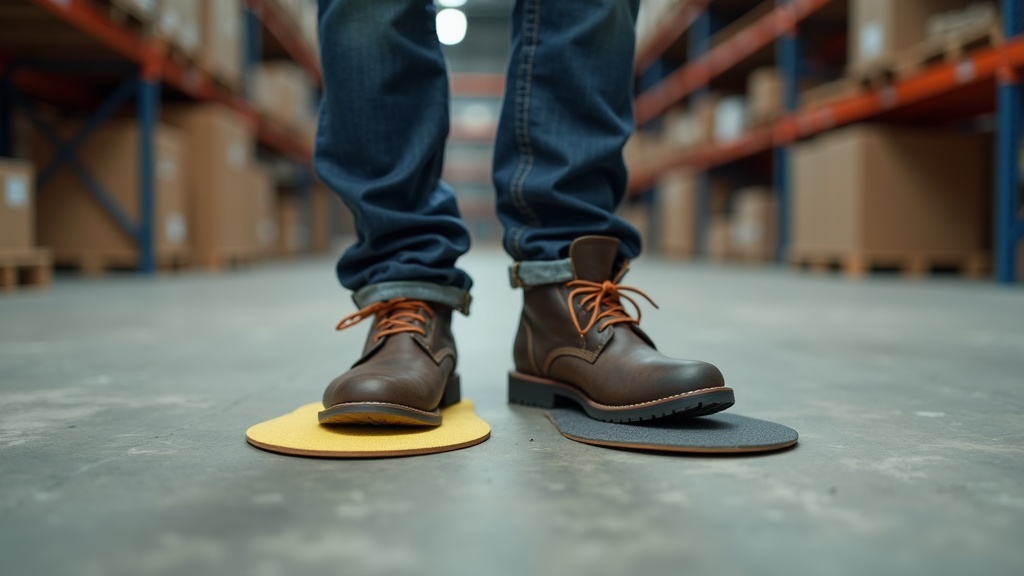
Concrete does not give. Every step sends a jolt straight up through your heel. The best insoles for work boots on concrete combine a firm or semi-rigid base with a thin top layer of cushioning, usually polyurethane or dual-density EVA.
Pure soft insoles feel like the right choice on concrete because you want relief. But they bottom out fast and leave you worse off than before. A firm base with a thin cushion layer handles the impact and does not collapse.
For insoles for warehouse workers, look for: a heel cup (keeps your heel centered), a firm arch platform, and a top cover that wicks moisture. Brands like Superfeet Green, Spenco Polysorb, and Timberland Pro are consistently solid options at reasonable prices.
Plantar Fasciitis, Flat Feet, and Arch Pain: Firm Is Usually Your Friend
If you've got plantar fasciitis and you're searching for hard or soft orthotics for plantar fasciitis, the research is pretty clear: semi-rigid to firm orthotics outperform soft ones for most people with this condition.
Plantar fasciitis is an overuse injury caused in large part by the plantar fascia being stretched repeatedly with each step. A firm orthotic reduces that stretch by supporting the arch and limiting excessive pronation. Soft insoles let the arch collapse on every step, which is exactly what keeps the injury from healing.
- Flat feet: Need arch structure, not just cushion. Firm wins.
- Plantar fasciitis: Semi-rigid with a deep heel cup. Firm wins.
- High arches: Need cushion in specific spots. A softer top layer on a firm base works best.
- Neutral arches, no pain: Semi-rigid EVA covers you well.
The Case for a Middle Ground: Semi-Rigid Insoles and EVA Foam
Most workers do not need a clinical orthotic and do not want to spend $150 on custom insoles. Semi-rigid EVA foam insoles hit the practical sweet spot: enough structure to support the arch, enough flex to not feel punishing, and a price point under $50.
EVA (ethylene-vinyl acetate) comes in different densities. Higher density EVA acts almost like a firm insole. Lower density acts more like cushion. The best semi-rigid options layer them: hard base, softer top. That is what soft insoles for standing all day should actually look like, not pure memory foam.
| Insole Type | Best For | Lifespan | Avoid If |
|---|---|---|---|
| Soft / Memory Foam | Short shifts, soft surfaces, occasional wear | 3 to 6 months | Concrete floors, arch problems |
| Gel | Heel cushioning, low-volume boots | 4 to 8 months | Full-day arch support needs |
| Semi-Rigid EVA | Most tradespeople, warehouse, mixed terrain | 8 to 14 months | Severe flat feet needing clinical support |
| Firm / Rigid Shell | Plantar fasciitis, flat feet, concrete, heavy work | 12 to 24 months | Tight-fitting boots with no extra volume |
| Custom Orthotics | Chronic pain, prescription needs, specific diagnoses | 2 to 5 years | Budget-limited situations |
Top Picks by Trade: What to Buy Without Wasting Your Money
Here is where the rubber meets the road. These are reliable options for best insoles for work boots in specific trades, without the upsell.
Construction and Roofing
- Superfeet Green: High-density foam base, rigid stabilizer cap, deep heel cup. Built for hard, uneven surfaces.
- Timberland PRO Anti-Fatigue: Inverted cone geometry absorbs impact well on mixed terrain.
Warehouse and Logistics
- Spenco Polysorb Cross Trainer: Semi-rigid, lightweight, holds up well on concrete over a full shift.
- Dr. Scholl's Work Insoles: Budget-friendly semi-rigid option. Not the most durable, but solid for workers who rotate boots often.
Manufacturing and Assembly Lines
- Powerstep Pinnacle: Dual-layer design (firm base, softer top) with antimicrobial top cover. Good for stationary standing.
Did you know?
A 2014 study published in the Journal of Foot and Ankle Research found that prefabricated semi-rigid orthotics reduced plantar fasciitis pain as effectively as custom orthotics in the majority of patients tested, at a fraction of the cost.
How to Know When Your Insoles Are Done and Need Replacing
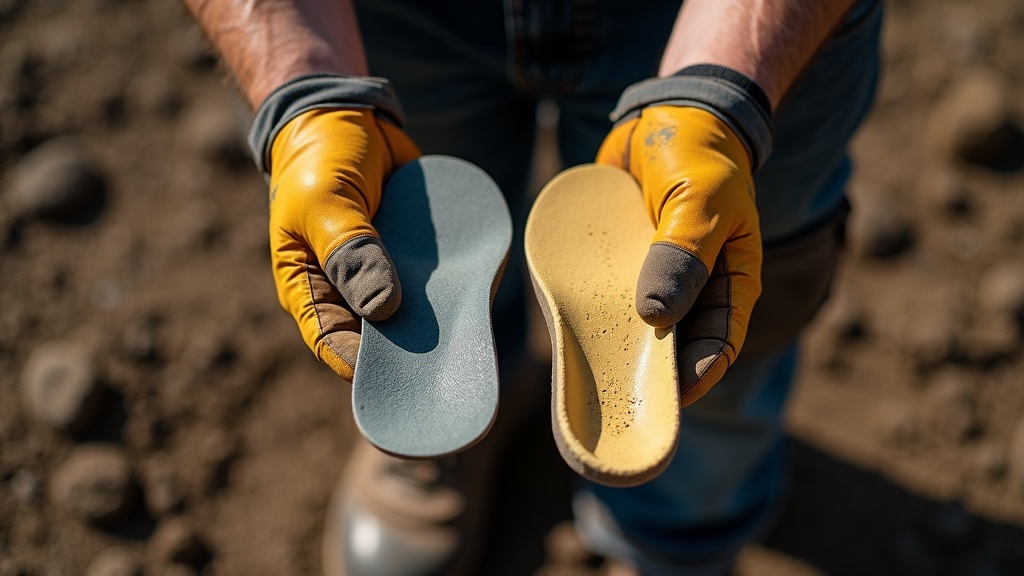
Most workers wait too long. By the time you feel the pain coming back, the insole has been useless for weeks. Here are the signs to check every few months.
- The heel cup has collapsed: Press your thumb in. If it doesn't spring back, it's done.
- Visible thinning at the ball of the foot or heel: The material has compressed beyond recovery.
- Your arch aches again after it had stopped: The support structure has given out.
- The top cover is cracked, peeling, or smooth as glass: Traction and comfort are gone, and moisture buildup follows.
- You've logged more than 500 hours on them: For most full-time workers, that's 6 to 9 months. Mark the date when you put them in.
Replacing insoles is a $30 to $50 decision that protects a body you need for the next 20 years of work. That math is not hard.
