


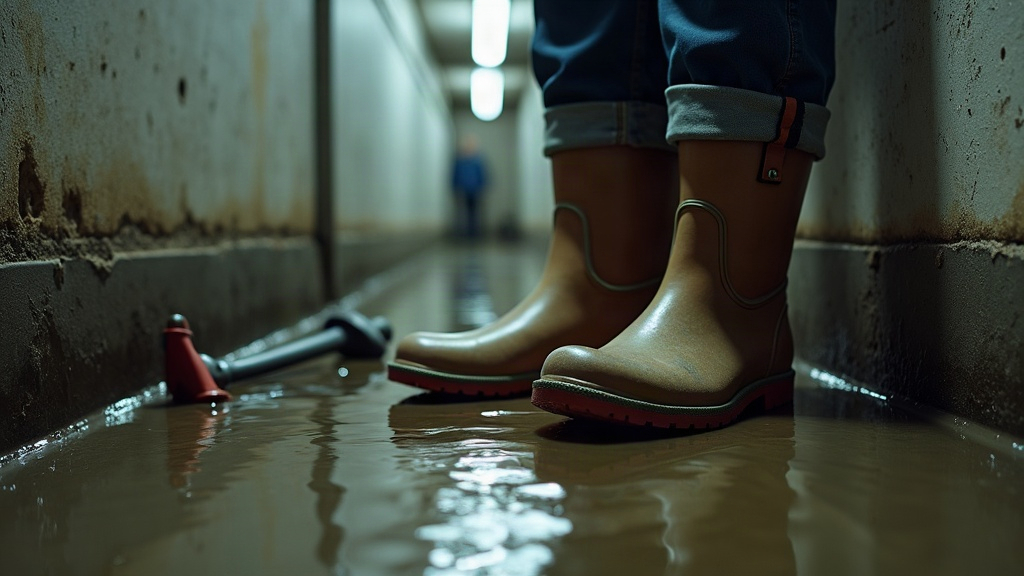
Most plumbers don't think about their feet until something goes wrong. You're pulling a crawlspace job, you're ankle-deep in a flooded basement, and by hour six your socks feel like wet rags wrapped around raw skin. That's not just discomfort. That's damage stacking up shift after shift.
This guide covers the full picture of water standing plumbers foot health moisture management: what the water is doing inside your boot right now, what gear actually holds up, and how to recover when the damage is already done.
Key points at a glance
- Standing water softens and breaks down skin fast, opening the door to fungal infection and nerve damage within a single shift.
- Trench foot is a real occupational hazard for plumbers, not just a wartime condition, and it can develop in hours, not days.
- Waterproof boots alone are not enough: moisture from sweat builds up inside any sealed boot without proper socks and ventilation.
- Merino wool and synthetic-blend moisture-wicking socks outperform cotton in every wet-work scenario, full stop.
- Hot water and cold water affect foot recovery differently, and choosing the wrong one after a wet shift slows healing.
- A few daily habits, each under five minutes, are the difference between feet that last a career and feet that quit on you at fifty.
What This Guide Gets You
What Standing Water Does to Your Feet Over a Full Shift
Skin is tougher than it looks, but prolonged moisture exposure breaks down its outer barrier faster than most people realize. After about 30 minutes of continuous wetness, the outer layer of skin begins to macerate: it softens, swells, and loses its structural integrity.
By hour three, that softened skin is significantly more vulnerable to friction, bacterial entry, and fungal colonization. The webbing between your toes is the first place you'll feel it: raw, itchy, peeling.
By the end of an eight-hour shift in wet conditions, you've put your feet through the equivalent of a mild chemical exposure. The damage isn't visible yet. But it's there.
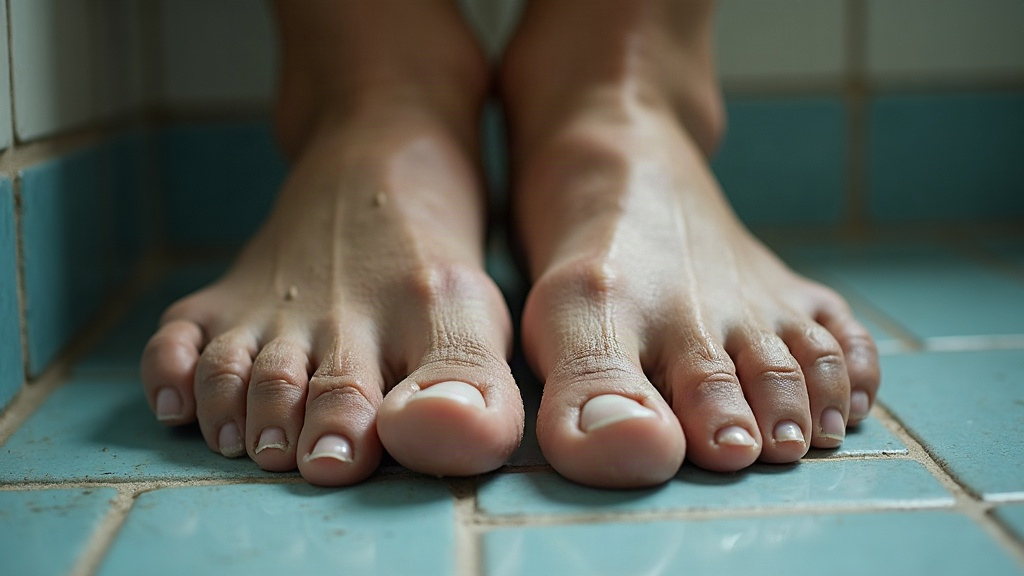
Symptoms of Water Damage: When Your Feet Are Telling You Something Is Wrong
Most guys push through the discomfort. That's the job. But there's a difference between normal end-of-day soreness and your feet actually signaling a problem that won't fix itself overnight.
Early warning signs
- Persistent itching between the toes (athlete's foot starting up)
- Skin that looks white, wrinkled, or almost translucent
- Hot spots or raw patches on the sole or heel
- Odor that's worse than usual, even right after cleaning
Signs the damage is more serious
- Numbness or tingling in the toes or forefoot
- Skin that cracks and bleeds easily at the heel or between toes
- Swelling that doesn't go down after a night's rest
- Pain from foot pain from standing in water that radiates up into the ankle
Did you know?
Tinea pedis (athlete's foot) thrives in pH levels between 4.5 and 7.5, which matches the environment inside a wet work boot almost exactly. Studies from occupational health clinics show that trades workers who spend more than four hours per day in wet footwear have up to three times the rate of fungal foot infection compared to dry-trade workers.
Trench Foot Is Not Just a War Story: It Happens on Jobsites Today
Trench foot got its name from World War I soldiers who stood in flooded trenches for days. But trench foot prevention in trades is a legitimate occupational health issue today. You don't need to be in a war zone. You need a wet crawlspace, rubber boots with no airflow, and a few consecutive days of wet work.
The condition develops when cold, wet conditions cause blood vessels to constrict. Reduced circulation means the tissue starts to break down. Symptoms include redness, blistering, swelling, and in severe cases, tissue that turns dark and loses sensation.
The key fact: trench foot can develop in as little as 10 to 12 hours of continuous wet-cold exposure. That's one shift.

How to Treat Waterlogged Feet After a Wet Day on the Job
When you get home after a wet shift, the first 30 minutes matter more than people think. Here's what to do, in order.
- Get the boots off immediately. Don't sit on the couch for an hour first. The longer wet material stays against your skin, the more maceration continues.
- Dry between every toe with a clean cloth, not just a quick wipe. The web spaces hold moisture longest.
- Let your feet air out for at least 20 minutes before putting on any socks or slippers.
- Apply an antifungal powder or spray if you've been wet for more than four hours. Don't wait for symptoms to appear.
- Treat any raw spots with a barrier cream like zinc oxide or a petroleum-based product before bed.
For waterlogged feet treatment, consistency beats any single product. The routine above, done nightly during wet-work weeks, prevents 90% of the problems that sideline tradespeople.
Moisture Management From the Ground Up: Boots, Socks, and Insoles That Actually Work
Gear matters. But most guys spend money in the wrong order. They buy expensive waterproof boots and pair them with cheap cotton socks. That's backwards.
Waterproof work boots for plumbers
Look for boots rated IP67 or higher for water immersion, or at minimum with a full rubber lower that extends above the ankle. Waterproof work boots for plumbers need a sealed toe box, not just a water-resistant membrane. Brands like Muck Boot, Bogs, and the Rocky Mudcat hold up in real immersion, not just puddle splashes.
Moisture-wicking work socks
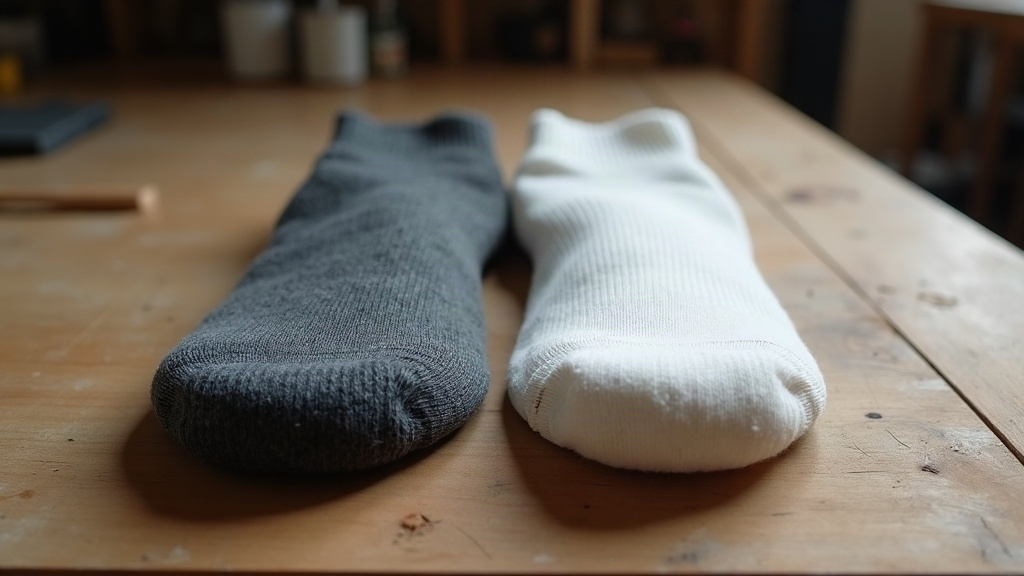
Cotton holds moisture against your skin. It's the worst material you can wear in a wet work environment. Moisture-wicking work socks made from merino wool or synthetic blends (polyester-nylon-elastane) actively move sweat away from the skin surface. Darn Tough and Smartwool make work-grade versions built for heavy use.
Insoles
Your stock boot insole is almost certainly foam covered in fabric that soaks up sweat and bacteria. Replace it with a antimicrobial cork or EVA insole. Superfeet and Sole both make options that dry faster and support the arch better than the factory insert.
| Sock Material | Moisture Control | Durability for Trades | Best For |
|---|---|---|---|
| Cotton | Poor, holds moisture | Wears fast under boots | Dry, light-duty work only |
| Merino Wool | Excellent, wicks and breathes | Good with reinforced heel/toe | All-day wet work, cold conditions |
| Synthetic Blend (Poly/Nylon) | Very good, dries fastest | Excellent, resists abrasion | High-sweat shifts, summer work |
| Wool-Synthetic Hybrid | Excellent, best of both | Very good | Year-round wet-work environments |
| Bamboo Blend | Good, naturally antimicrobial | Moderate | Sensitive skin, mild conditions |
Hot Water or Cold Water for Foot Recovery: What the Evidence Says
There's a lot of bad advice floating around on this one. Here's what's actually supported by sports medicine and occupational health research.
After a standard wet shift: lukewarm water (not hot) for washing. Hot water feels good but dilates blood vessels and can increase swelling in already-stressed tissue.
When your feet are sore and inflamed: a cold soak (around 55 to 60°F, 13 to 15°C) for 10 to 15 minutes reduces inflammation more effectively than heat. This is the same principle used in athletic recovery.
When your feet are cold and circulation is poor (end of a cold crawlspace job): warm them gradually with a dry towel, then a warm (not hot) soak. Jumping straight into hot water when extremities are cold can cause a painful vasodilation response.
Did you know?
Contrast hydrotherapy (alternating cold and warm water soaks) has been shown in physical therapy research to improve peripheral circulation by up to 95% compared to passive rest alone. For tradespeople with chronic foot fatigue, 3 cycles of 1 minute cold / 3 minutes warm is more effective than a single long hot soak.
Daily Habits That Keep Your Feet Functional All Week Long
The guys who reach retirement with feet that still work aren't lucky. They just built a few habits that the rest ignored.
Before the shift
- Apply a thin layer of anti-chafe balm or petroleum jelly between the toes and at the heel before putting on socks.
- Start with dry socks. Sounds obvious. Check anyway.
- Rotate your boots if you work wet conditions more than three days a week. One pair cannot dry out fully in 12 to 16 hours.
During the shift
- If you can grab a 20-minute break, pull your boots off and let your feet breathe. Even this short window reduces maceration significantly.
- Carry a spare pair of socks for wet-work days. Switching at lunch costs nothing and saves your skin literally.
After the shift
- Stuff boots with newspaper or use a boot dryer overnight. Boot dryers (around $25 to $40) pay back in boot life and foot health within weeks.
- Clip toenails straight across. Curved cuts in wet conditions invite ingrown nails that turn into serious infections fast.
- Moisturize the heel and sole with a urea-based cream (10% to 25% concentration). This repairs the fissures that wet work causes before they become painful cracks.
When to See a Doctor Instead of Toughing It Out
Most foot problems from wet work environment foot care failures respond to home treatment. Some don't, and waiting makes them worse.
See a doctor or podiatrist when:
- Skin between the toes is cracked, weeping, or bleeding and hasn't improved after five days of antifungal treatment
- You have numbness or loss of sensation in any part of the foot that persists beyond 24 hours after leaving the wet environment
- A blister or raw area shows signs of infection: red streaking, warmth spreading beyond the wound, pus, or fever
- Your standing water foot damage symptoms include significant swelling in one foot but not the other
- You're diabetic. Full stop. Any foot wound or persistent skin breakdown with diabetes needs professional eyes on it within 24 to 48 hours.
Your week-one action list
You don't have to overhaul everything at once. Start here.
- Throw out your cotton work socks. Replace with merino or synthetic-blend.
- Order a boot dryer if you don't have one. Under $40, and your boots will last twice as long.
- Pick up an antifungal powder and a urea heel cream at the drugstore this week.
- If you've had any numbness or persistent skin breakdown, book a podiatrist appointment before your next wet-work week.
Your feet carry every pound of your body through every hour of every shift. The investment in moisture management for plumbers is measured in minutes and a few dollars a week, not in career-ending injuries that compound until you can't work.
