


You've been wearing steel toe boots for years. The protection is real. But so is the fatigue, the soreness, and the way your feet feel by the end of a long shift. Most people assume that's just the price of working in a hazardous environment. It doesn't have to be. Some of what you're feeling is the job. But a meaningful chunk of it is the steel cap — and the specific ways it puts stress on your feet that nobody explains when you buy a pair.
The weight is the first thing. It's also the one people underestimate most
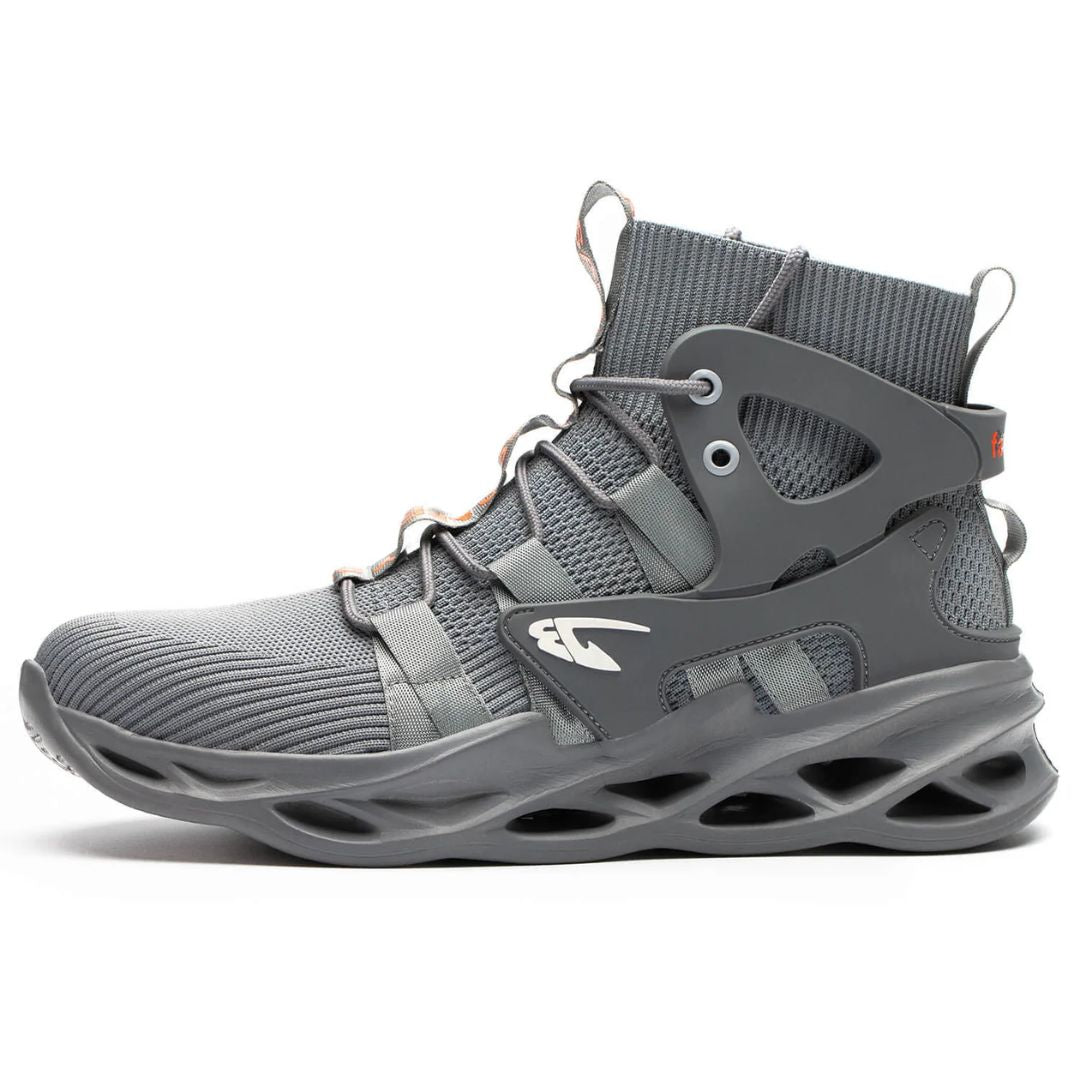
Steel toe caps are dense. A standard steel cap adds roughly 100–150g per boot over a composite alternative. That sounds like nothing.
Do the math. An average warehouse worker takes around 15,000 steps per day. At 100g extra per foot, that's an additional 1.5 tonnes of total lift over a full shift. Your legs are doing that work. Your hips, your knees, your lower back — they're doing that work too, whether you notice it directly or not.
The result isn't usually dramatic. It's cumulative. A low-grade fatigue that builds week over week. Legs that feel heavier by Thursday than they did on Monday. A general sense of being worn down that gets attributed to the job rather than the boots.
That's the steel toe doing its quiet damage — not through any single injury, but through thousands of repetitions.
Do you work during hot weather? Here’s what you need to know: Summer Workwear: Expert Picks and Tips for Staying Comfortable at Work
The toe box issue: tight, cold, and unyielding
Steel caps are rigid. That's the point — they're designed to resist 200 joules of impact and 15kN of compression. But that rigidity doesn't disappear when you're just walking across a concrete floor.
Toe compression. In boots where the steel cap sits close to the toes, the foot naturally pushes forward into the cap throughout the day. This compresses the toes laterally, which can cause nail bruising, bursitis, and over time, the early stages of hammer toe or bunion development. It's not instant, but it accumulates across years of daily wear.
Cold conduction. Steel conducts temperature. In cold environments — outdoor sites, cold storage, early morning winter shifts — the cap acts like a heat sink. Your foot warms the metal; the metal stays cold. The result is persistent cold toes even when the rest of the boot is insulated. Long exposure to this creates discomfort and, in extreme cases, increased risk of chilblain in susceptible workers.
Pressure points. The front rim of the steel cap can create a distinct pressure point across the top of the toes, especially in boots where the cap sits lower. After a few hours, that pressure becomes hard to ignore. It's a common complaint that gets written off as "that's just what steel toe boots feel like" — but it isn't inevitable.
What happens further up the chain?
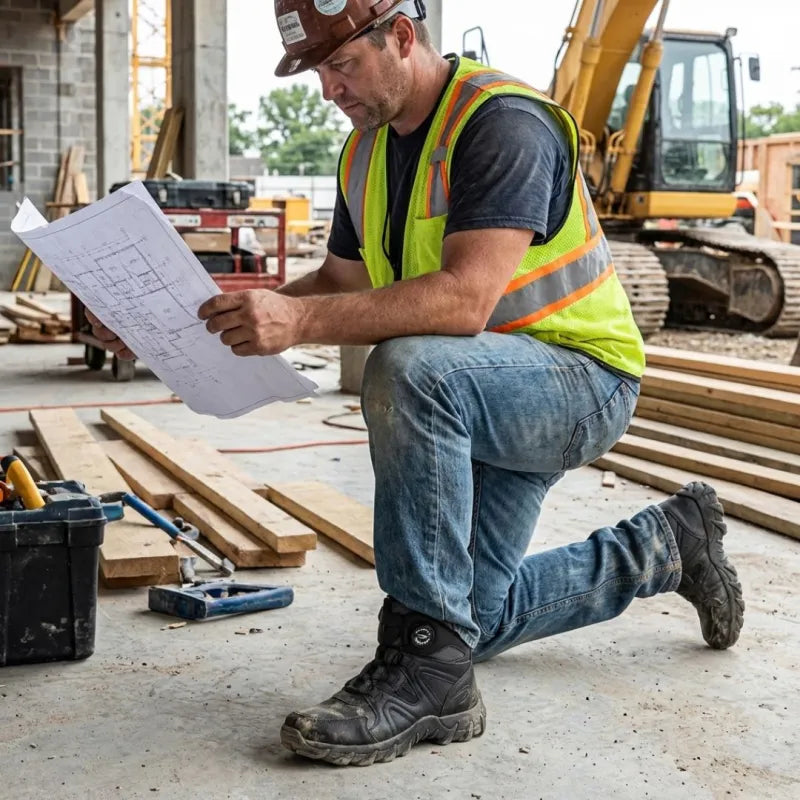
The side effects of steel toe boots don't stay in the toe box. Because of the weight and rigidity, they change how people move.
Altered gait. Heavy boots affect stride. People naturally adapt by lifting their feet higher and shortening their steps — a movement pattern that puts extra demand on the hip flexors and lower back. Over months of daily wear, this contributes to chronic lower back tension that workers often attribute to their job conditions rather than their footwear.
Knee and ankle load. Each step in a heavy boot transfers more impact through the heel. Without adequate midsole cushioning — which many traditional steel toe boots lack — that load travels directly into the ankle joint and up to the knee. Construction workers and warehouse staff who spend years in heavy steel toed footwear show higher rates of knee complaints than those in lighter, better-cushioned alternatives.
Plantar fascia strain. Many steel toe boots have relatively flat, rigid insoles. Flat + rigid = no arch support. The plantar fascia absorbs the slack, working harder to maintain arch integrity throughout the day. This is one of the most direct mechanical routes from steel toe boots to heel pain — and it's one of the more preventable ones.
For foot pain at work, check out: Orthopedic Work Boots: Comfort, Support & Expert Recommendations in 2026
Who actually needs steel toe caps — and who might not?
Steel caps exist for a reason. On heavy construction sites, in mining, in environments with falling or rolling objects that can exert significant force — steel is the appropriate standard. It provides maximum impact and compression protection, and in genuinely high-hazard environments, that matters.
But a lot of workers wear steel toe boots by default — because that's what their employer has always stocked, because that's what the safety aisle sells, or simply because they've never been told there's an equivalent alternative.
Composite toe caps — made from carbon fiber, Kevlar, fiberglass, or plastic compounds — meet the same EN ISO 20345 safety standards as steel. They pass the same 200J impact and compression tests. They're certified for the same workplace environments. And they do it at 20–30% less weight, with no cold conduction, and with a more curved internal geometry that reduces toe compression.
For workers in warehouses, logistics, light construction, maintenance, and technical or electrical environments, composite toe is often the better choice — not a compromise, a genuine upgrade.
Mason's top 5 composite toe work boots
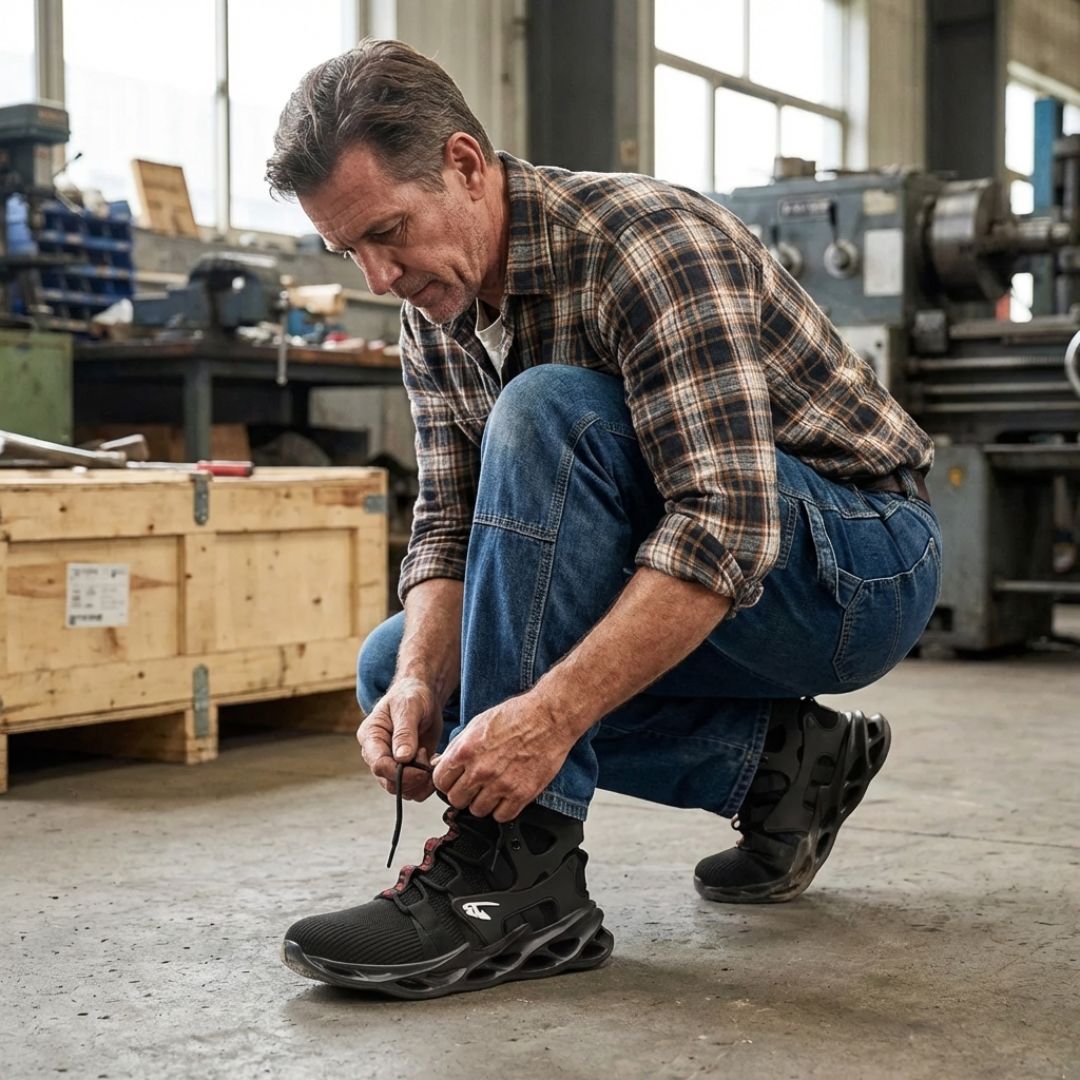
If the side effects of steel toe boots have been building up on you — the fatigue, the cold toes, the ache in your knees by end of shift — here's what Mason's composite toe work boots collection offers.
1. MOTION™ Tactical Comfort Boots | Composite Toe
Mason's primary composite toe boot. Non-conductive, EN ISO 20345 certified, designed specifically for technical and electrical work environments where steel toe would create a conductivity risk.
Beyond the electrical protection, the MOTION Tactical is built for workers who move constantly — targeted heel cushioning, a flexible forefoot, and enough arch support to hold up through a full shift. Lighter than any equivalent steel toe boot in the range. This is the model for workers who've been tolerating steel toe side effects for years without realizing there was a direct like-for-like replacement.
See the MOTION Tactical Comfort Boots
2. ATLAS® S3 Pro Safety Boots
The ATLAS S3 Pro is Mason's flagship construction boot — certified S3, anti-slip outsole, reinforced ankle support, and waterproof construction. It also comes in a version with composite toe protection for environments where the full boot structure is needed but the steel weight isn't.
For workers on sites who want the ankle coverage and heavy-duty outsole of a traditional work boot, without the cumulative fatigue of steel, this is the one. Full site-ready protection, minus the specific side effects that come from carrying metal on your feet all day.
See the ATLAS® S3 Pro Safety Boots
3. ATLAS® S3 Pro Safety Trainer
The lighter, lower-profile version of the ATLAS range. Less ankle height, more like a safety sneaker — with a composite toe cap, Kevlar puncture-resistant midsole, and a memory foam insole.
The right pick if the main issues you've been experiencing from steel toe boots are weight fatigue and cold toes rather than ankle instability. The trainer silhouette also flexes more naturally through the forefoot, which reduces the midfoot stiffness that contributes to plantar fascia problems in stiffer boots.
See the ATLAS® S3 Pro Safety Trainer
4. POLAR™ S3 Winter Safety Boots
The cold-toe problem is at its worst in winter. The POLAR S3 addresses exactly that: thermal insulation designed for sub-zero conditions, waterproof exterior, and a slip-resistant outsole rated for snow and ice.
Available with composite toe protection, the POLAR removes the heat-sink effect entirely — your toes stay warm because there's no metal to pull the heat out. For outdoor workers who've spent winters with cold, aching toes inside supposedly insulated steel toe boots, this is the model worth trying.
See the POLAR™ S3 Winter Safety Boots
5. NOVA™ S3 Safety Trainer
The most mobility-focused option in the Mason range. Lightweight, ergonomic, designed for workers who cover serious ground — delivery, field work, active site movement — and need protection that doesn't slow them down.
The NOVA S3 has the lowest overall weight in the lineup. If the primary side effect you've been dealing with is leg fatigue and heavy-legged afternoons, the weight reduction here is the most direct fix. Still fully EN ISO 20345 certified. Still protects against the impacts your job actually exposes you to.
See the NOVA™ S3 Safety Trainer
The insole piece nobody mentions
Switching from steel to composite toe removes the weight problem and the cold conduction problem. It doesn't automatically fix arch support or heel cushioning — that depends on what's inside the boot.
If you've been wearing steel toe boots with flat stock insoles for years, the plantar fascia strain and heel pain may continue even in a new composite pair, until the insole situation gets addressed.
Mason's TECKRS Pro Cushion Insole is the pairing that completes the switch — memory foam cushioning designed for long shifts, real arch support, shock absorption that holds up past the first few hours. It's worth adding to any of the models above, especially if you're coming from years of under-supported steel toe boots.

When steel toe is still the right answer
One thing worth being honest about: composite toe isn't for every environment. On sites where extremely heavy objects are moved — I-beams, machinery, large stone slabs — the compression forces involved can exceed what composite materials handle as comfortably as steel. Some employers also have site-specific requirements for steel toe. Check your workplace standards before switching.
For most workers in warehouses, logistics, light construction, maintenance, and technical environments, composite passes the same standards and is a genuine upgrade. But there are environments where steel is the right call — and in those environments, the answer is good steel toe boots with proper cushioning and arch support, not switching categories.
What Are the Side Effects of Steel Toe Boots: Short answer
The side effects of steel toe boots — fatigue, cold toes, toe compression, gait changes, and plantar fascia strain — are real, measurable, and underreported. They don't show up as injuries. They show up as the slow grind of a job being harder on your body than it needs to be.
Composite toe work boots meet the same safety standards. They weigh less, conduct no cold, and fit the toe more naturally. For most working environments, the switch is straightforward.
