


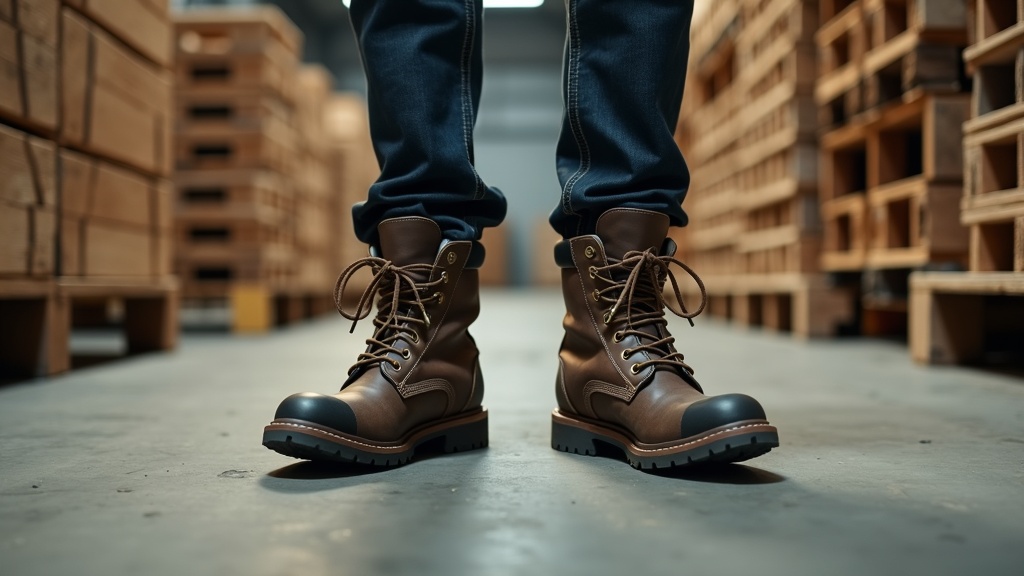
By the end of a 10-hour shift, your feet don't just hurt. They burn, they swell, they smell like a locker room in July. Most guys blame the boots. The boots aren't innocent, but the sock underneath is usually doing more damage than you think.
The right work sock won't make your job easy. But it will get you to the end of the shift without limping to your car. Here's what you need to know before your next pair goes in the cart.
Key points at a glance
- Cushioning in the heel and ball of the foot matters more than overall thickness
- Moisture-wicking is non-negotiable for sweaty feet locked inside boots all day
- Merino wool outperforms synthetic on odor control; synthetic wins on durability and price
- Mild graduated compression helps reduce leg fatigue on concrete, not just for medical use
- Women-specific fits exist and actually reduce blister risk compared to unisex sizing
- Cheap socks with flat seams and no reinforcement will fall apart in under a month
What a Good Work Sock Does for You
Why Your Feet Are Wrecked by Quitting Time (And It's Not Just the Boots)
Warehouse work is brutal on feet for three specific reasons: hard floors, trapped heat, and repetitive pressure. Concrete has zero give. After a few hours, your heel and ball of foot take a beating with every single step.
Your boots trap heat and sweat. Wet skin blisters faster, rubs more, and breaks down faster. A sock that holds moisture against your foot is basically sandpaper in slow motion.
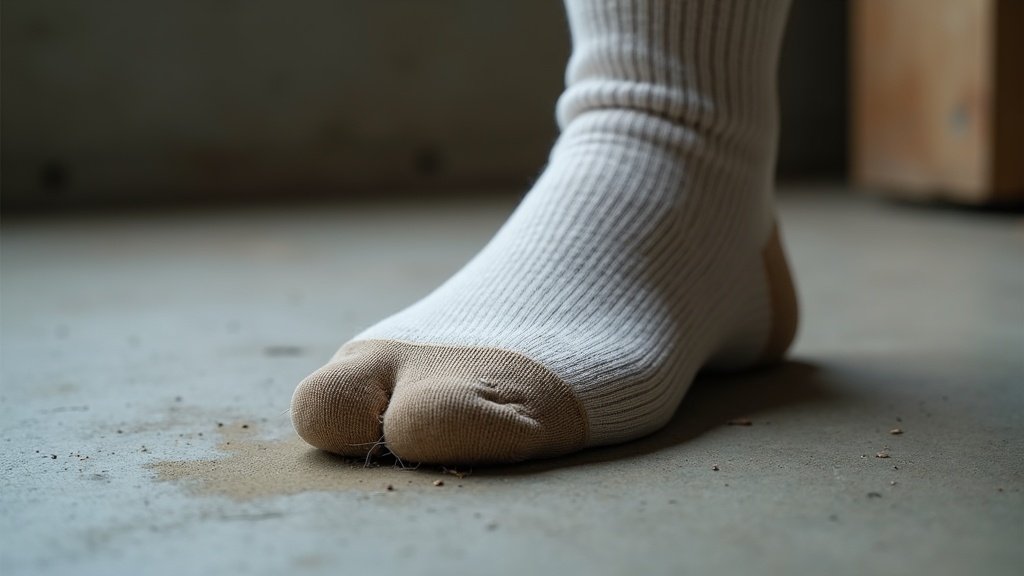
Then there's the steel toe cap. That hard box right at the front creates a friction point exactly where cheap socks wear through first.
What Actually Matters in a Warehouse Work Sock
Forget the marketing copy. These are the features that actually change how your feet feel at hour nine.
Cushioning placement
You want targeted padding in the heel and ball of the foot, not a uniformly thick sock that just makes the boot tighter. Terry loop cushioning in those two zones absorbs impact without adding bulk everywhere.
Moisture control
Look for a fiber that wicks: merino wool, CoolMax, or a polyester-nylon blend. Cotton feels good out of the dryer. By hour three in a boot, it feels like a wet sponge.
Fit and stay-up power
A sock that slides down inside the boot creates a ridge at the arch and causes hot spots. Look for a reinforced arch band and a secure cuff that stays put through a full shift.
- Crew height or over-the-calf for boot coverage
- Seamless or flat-knit toe box to prevent blistering under the steel cap
- Reinforced heel and toe zones (look for "double-layer" in the spec)
Did you know?
The average warehouse worker takes between 10,000 and 15,000 steps per shift. That's roughly 7 miles of walking on concrete or hard flooring, most of it in a boot that flexes less than a running shoe.
The 5 Best Work Socks for Warehouse Long Shifts
These aren't ranked by price. They're ranked by how well they hold up in the real conditions you're working in.
1. Darn Tough Boot Sock Full Cushion
Made in Vermont, backed by a lifetime guarantee. Merino wool construction keeps odor down even on back-to-back shifts. The heel and toe reinforcement is built into the knit, not glued on. Worth every penny of the higher price tag.
2. Thorlos Thick Cushion Work Boot
The thick pad under the heel is what Thorlos is known for, and it delivers. Good choice if your main complaint is foot fatigue rather than overheating. Runs slightly warm, so factor that in for summer work.
3. Carhartt Force Midweight Crew
Best value for daily rotation. FastDry technology pulls sweat away effectively. The nylon reinforcement at the heel and toe holds up to the steel cap better than most socks in this price range. Available in multipacks.
4. Wigwam Merino Wool Comfort Hiker
A solid merino option at a lower price point than Darn Tough. Not quite as durable long-term, but excellent for moisture and temperature regulation. Works well for workers in temperature-controlled facilities.
5. Dickies Dri-Tech Moisture Control Crew
The budget pick that actually works. Synthetic blend, good wicking, reinforced toe. Won't last as long as the top-tier options, but if you're buying in bulk and rotating daily, these hold up better than anything else at their price.
Merino Wool vs. Synthetic: Which One Wins on a 10-Hour Shift
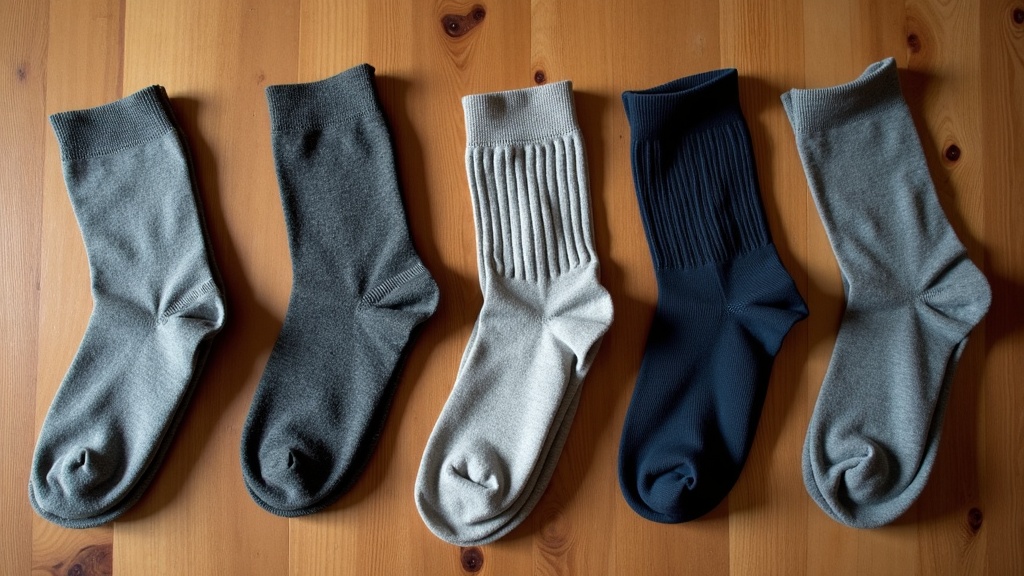
This is the real debate. Here's how they actually compare where it counts.
| Category | Merino Wool | Synthetic Blend |
|---|---|---|
| Odor control | Excellent, naturally antimicrobial | Moderate, degrades over time |
| Moisture wicking | Very good, absorbs then releases | Excellent, fast-drying |
| Durability | Good, but needs gentle washing | Very good, machine-wash tough |
| Temperature regulation | Excellent in heat and cold | Runs hotter in warm conditions |
| Price | $18-$35 per pair | $5-$18 per pair |
| Best for | Sweaty feet, odor control, cold facilities | Budget rotation, warm environments |
Bottom line: if you sweat heavily and work near others, merino is worth the price premium. If you're rotating through six pairs a week, a quality synthetic blend makes more financial sense.
Do You Actually Need Compression Socks for Warehouse Work
Compression socks aren't just for post-surgery recovery. Mild graduated compression (15-20 mmHg) genuinely reduces leg fatigue when you're standing on concrete for hours at a stretch.
What compression does: it supports the veins in your lower leg, reducing blood pooling and swelling. By hour eight, your legs feel less like dead weight. That's not a placebo. It's basic circulatory mechanics.
What to buy: look for graduated compression specifically, not uniform compression. The pressure should be highest at the ankle and ease off toward the knee. Brands like Sockwell, Physix Gear, and Copper Fit all make versions designed to fit inside work boots without being too thick.
Did you know?
A 2016 study published in the Journal of Occupational and Environmental Medicine found that workers who wore graduated compression socks during shifts involving prolonged standing reported significantly lower levels of leg fatigue and discomfort by end of shift compared to those in standard socks.
Best Work Socks for Women in the Warehouse
Women working warehouse jobs have mostly been told to just buy men's socks in a smaller size. That's bad advice. Women's feet have a different heel-to-toe ratio and a narrower heel, which means a men's sock bunches at the back and causes blisters.
Women-specific work socks are now made by Darn Tough, Smartwool, and Carhartt. They use a shorter foot bed and a lower arch position. If you've been getting blisters on the back of your heel, the sock fit is almost certainly the reason.
- Darn Tough Women's Boot Sock: same lifetime guarantee, women-specific last
- Smartwool Women's Hike Full Cushion: works well in steel toe boots, merino blend
- Carhartt Women's Force: best budget option with a proper women's fit
How to Make Your Work Socks Last Longer Than a Month
The sock isn't the only problem. How you wash and rotate them determines how long they stay functional.
- Wash in cold water, not hot. Heat breaks down elastic fibers and shrinks merino wool faster than anything.
- Skip the dryer when you can. Air-dry your better pairs. At minimum, use low heat.
- Rotate at least 5-6 pairs. Wearing the same pair two days in a row doesn't let the cushioning recover fully between shifts.
- Turn them inside out to wash. Cleans where the sweat actually sits and reduces fiber pilling on the outside.
- Replace on a schedule. If you wait until there's a hole, you've already been wearing a compromised sock for weeks.
What to Skip: Red Flags on Any Work Sock Label
Some socks look the part and fall apart by week three. These are the signs to walk away.
- "Cotton-rich" blends above 50% cotton: cotton holds sweat, period
- No mention of reinforced heel or toe: it'll wear through at the steel cap in weeks
- Uniform thickness with no zone cushioning: thicker everywhere just means a tighter boot
- Raised interior toe seam: that ridge becomes a blister by hour four
- No sizing beyond S/M/L: vague sizing means poor fit, which means bunching
Your Next Move: A Simple Buying Plan
You don't need to overthink this. Here's a straightforward plan based on your situation.
- Sweaty feet, bad odor: go merino wool, minimum 60% merino content, Darn Tough or Wigwam
- Leg fatigue, swelling by end of shift: add one pair of graduated compression socks (15-20 mmHg) and test them for a week
- Steel toe friction blisters: prioritize seamless toe construction and a snug heel fit, Thorlos or Darn Tough
- Budget-focused: Carhartt Force or Dickies Dri-Tech in a 6-pack, rotate daily, replace every 3-4 months
- Women workers: buy women-specific sizing, not unisex small
Spend $25 on a single quality pair first. Wear it for a full week. If your feet feel meaningfully better, you'll know exactly what to buy six more of. That's the only field test that matters.
