


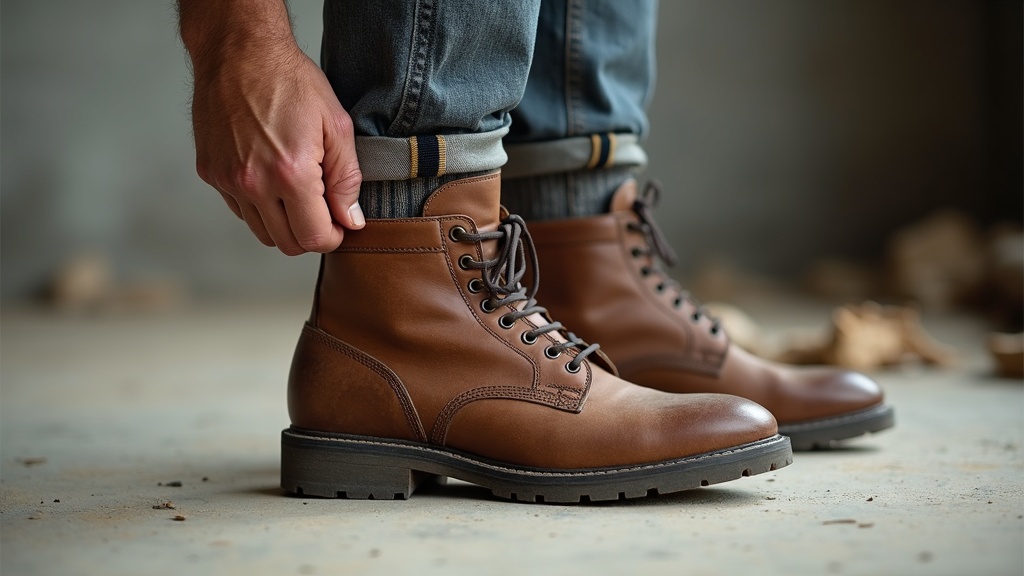
You're three hours into a shift and your sock is already bunched under your heel, the elastic's shot, and there's a blister forming where the seam shouldn't be. That's not bad luck. That's a bad sock.
The difference between a sock that holds up for two years and one that disintegrates in six washes comes down to where it was made, what it's made of, and whether anyone on the production floor actually gave a damn. Here's what the data and the jobsite both say.
Key points at a glance
- USA-made work socks use tighter needle counts and heavier yarn weights than most imports at the same price point.
- Merino wool and ring-spun cotton outlast cheaper blended imports by a wide margin in abrasion tests.
- Cost per wear flips fast: a $18 American-made sock worn 200 times costs less than a $6 import worn 40 times.
- Brands like Darn Tough, Thorlos, and Wigwam still manufacture meaningful production in the USA with real lifetime guarantees.
- For light-duty or office use, imported socks can be perfectly fine. For boots, concrete, and 10-hour shifts, they usually aren't.
What a durable work sock actually does for you
Why Your Socks Are Falling Apart Before Lunch
Most imported work socks are knit on high-speed machines at 200+ needles per inch, optimized for volume, not durability. The yarn is combed cotton or a synthetic blend, spun to the minimum weight needed to hold shape off the shelf.
The heel and toe are the first to go. On a cheap imported sock, the reinforcement there is often just a slightly thicker section of the same weak yarn, not a true terry or nylon-reinforced panel. After 15 washes, it's thin as paper.
Add eight hours of friction inside a steel-toed boot, and that sock is done by the end of the month.
How USA-Made Work Socks Are Built vs Imported Ones
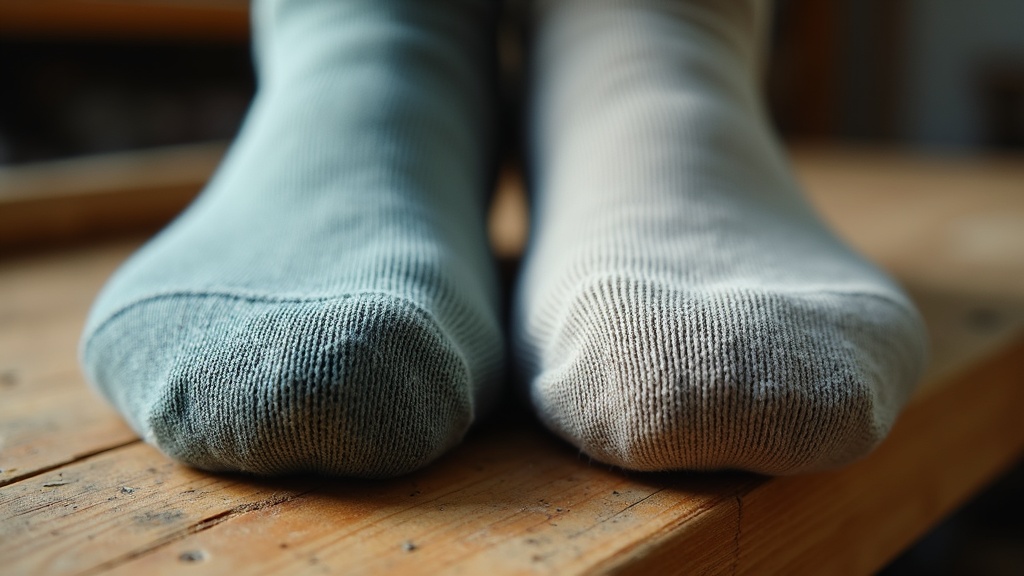
American sock mills like Thorlo in Statesville, NC, and Wigwam in Sheboygan, WI, still run on 144 to 200-needle machines but use heavier gauge yarns and proprietary cushion systems engineered specifically for footwear performance, not fast fashion.
The key differences come down to three things:
- Yarn weight: USA mills typically use 6- to 12-ply yarns in the cushion zones. Most imports use 4-ply or less.
- Knit structure: Reinforced heel and toe loops are actually knit in, not heat-bonded or glued.
- QC standards: Domestic production runs shorter batches with tighter rejection rates. A sock that slips spec gets pulled, not shipped.
That's not nationalism, that's engineering. The output is a sock that actually behaves like PPE for your foot.
Did you know?
North Carolina is still home to more than a dozen active hosiery mills. The state produced over 60% of U.S. domestically manufactured socks at its peak in the 1990s and several major brands never left, including Thorlos, which has been knitting in Statesville since 1980.
Materials That Actually Hold Up: Wool, Cotton, and Synthetics Compared
The fiber is where durability starts, before construction, before brand, before price. Here's how the main options stack up for trade work.
| Material | Durability | Moisture Control | Best For |
|---|---|---|---|
| Merino Wool | Excellent (150-200+ wears) | Outstanding, odor-resistant | All-season outdoor trades, HVAC, landscaping |
| Ring-Spun Cotton | Good (100-150 wears) | Breathable, slower drying | Dry indoor trades, summer work |
| Nylon Blend (60/40) | Very Good (130-180 wears) | Fast-drying, moderate wicking | Heavy boot use, construction, roofing |
| Combed Cotton (import standard) | Fair (30-60 wears) | Adequate for light use | Office, casual, non-trade use |
| Acrylic Blend | Poor to Fair (20-40 wears) | Poor, traps heat and odor | Avoid for full-day boot wear |
Merino wool blended with nylon is the sweet spot for most tradespeople. The wool handles temperature and odor, the nylon handles abrasion. That's why Darn Tough's core formula has barely changed since the company launched.
The Real Cost Per Wear: Cheap Imported vs Pricier American-Made
A six-pack of imported work socks costs around $14 to $18. Sounds like a deal until you're replacing them every two months.
Run the numbers over one year of daily work wear:
- Imported 3-pack at $9: replaced every 6-8 weeks, roughly 5 purchases per year, total spend $45, estimated wear life per pair: 35-45 uses.
- USA-made pair at $18 (Darn Tough, Thorlos): one purchase, worn 150-200 times before showing real wear, effective cost per wear under $0.10.
The American-made sock pays for itself before February if you start in January.
Who Makes the Most Durable Work Socks in the USA Right Now
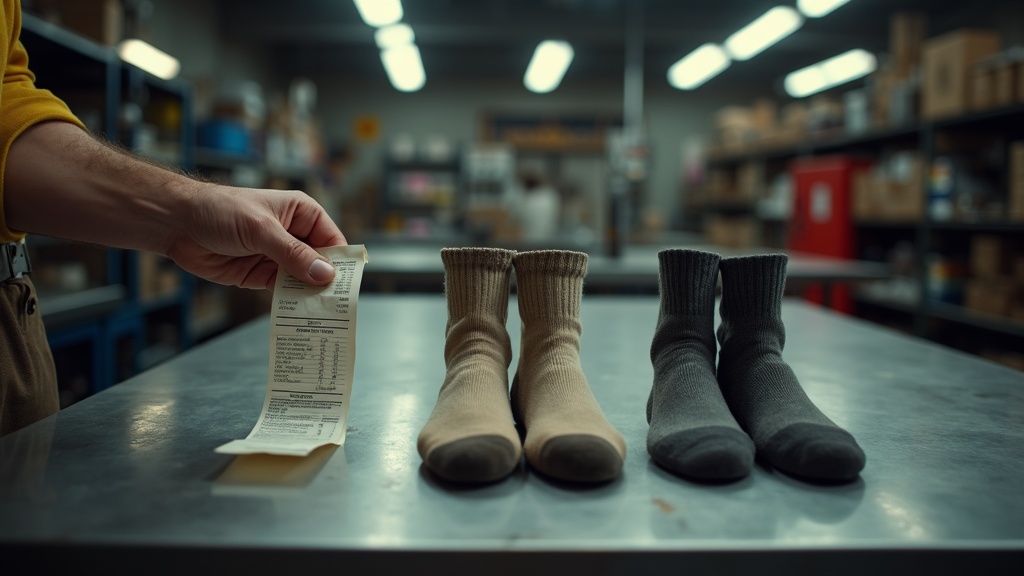
A few brands are worth your money and honest about where their socks actually come from.
Darn Tough Vermont
Made in Northfield, Vermont. Merino wool and nylon blend. Unconditional lifetime guarantee, no questions asked. If the sock fails, they replace it. That guarantee only works because the sock rarely fails.
Thorlos
Statesville, North Carolina. Specializes in activity-specific padding systems. Their work boot sock uses a distinct thick-and-thin cushion knit that reduces hot spots inside steel-toed boots better than most competitors.
Wigwam
Sheboygan, Wisconsin, since 1905. Their F2 Boot and Mule work socks use a wool-nylon-polyester blend designed for heavy boot use. Good value at mid-price.
Fox River
Iowa-based, partial USA manufacturing. Their GX series is built for outdoor and trade work. Worth verifying "Made in USA" on the specific SKU before buying.
Did you know?
Merino wool fibers can bend back on themselves over 20,000 times before breaking. Conventional wool breaks at around 3,000 cycles. That flexibility is why a merino work sock holds its cushion structure long after a synthetic equivalent has gone flat.
What to Look For on the Label (And What to Ignore)
Labels lie by omission. Here's how to cut through the noise fast.
Look for:
- "Made in USA" with a specific state or mill name. Vague claims like "crafted in America" mean nothing legally.
- Wool or nylon content above 50% for trade applications. Below that, you're in fashion-sock territory.
- Needle count above 144 for a tighter, more durable knit.
- A real guarantee, not a 30-day return window dressed up as a warranty.
Ignore:
- "Premium comfort" with no fiber breakdown listed.
- Padded packaging on a $4 sock. That money went into the box, not the knit.
- "Moisture-wicking" claims on 100% acrylic. Acrylic does not wick. It holds heat.
USA-Made Picks for Men and Women in the Trades
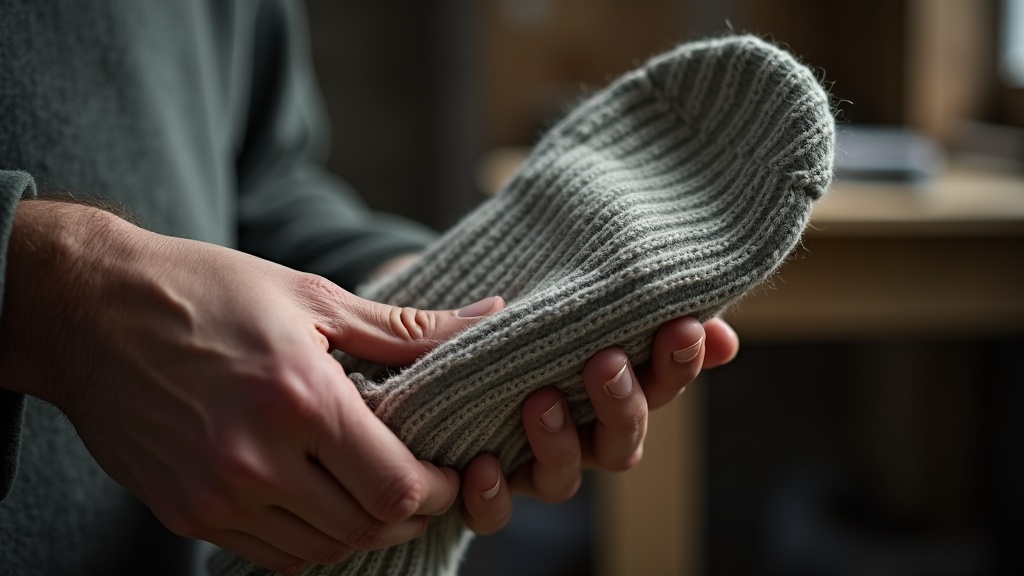
Both men and women in construction, electrical, plumbing, and other trades need the same core features: a reinforced heel and toe, a cushioned sole, and a cuff that doesn't slide into the boot. The good news is most USA-made work socks are built unisex by function.
Best for women in the trades
Darn Tough's Women's Hiker Crew and Thorlos Women's Work Boot sock are cut for a narrower foot with the same cushion and reinforcement specs. Don't buy a men's sock and size down. The fit difference causes bunching, and bunching causes blisters.
Best for men in the trades
Darn Tough Men's Boot Full Cushion or the Wigwam F2 Boot. Both run true to size, both hold up past 150 wears with normal machine washing. The Wigwam costs about 30% less and still outperforms anything imported at double the price.
The Straight Answer: When Imported Socks Are Fine and When They Are Not
Imported socks are fine for:
- Office environments or light indoor work in sneakers
- Backup pairs carried in a truck for emergencies
- Low-budget situations where you're cycling through multiple pairs a week anyway
Imported socks are a bad call for:
- Any shift over six hours in a work boot
- Concrete, roofing, framing, or any surface that generates heat and friction
- Anyone dealing with foot fatigue, hot spots, or recurring blisters
The rule is simple: if your feet are your tools, protect them the same way you protect every other tool you use. A $6 import on a ten-hour pour is like using a Harbor Freight wrench on a quarter-inch torque spec. It might work. It probably won't.
Buy two or three pairs of real USA-made work socks. Rotate them. Wash them cold. They'll outlast every cheap alternative you've tried, and your feet will feel it by the end of the first shift.
