


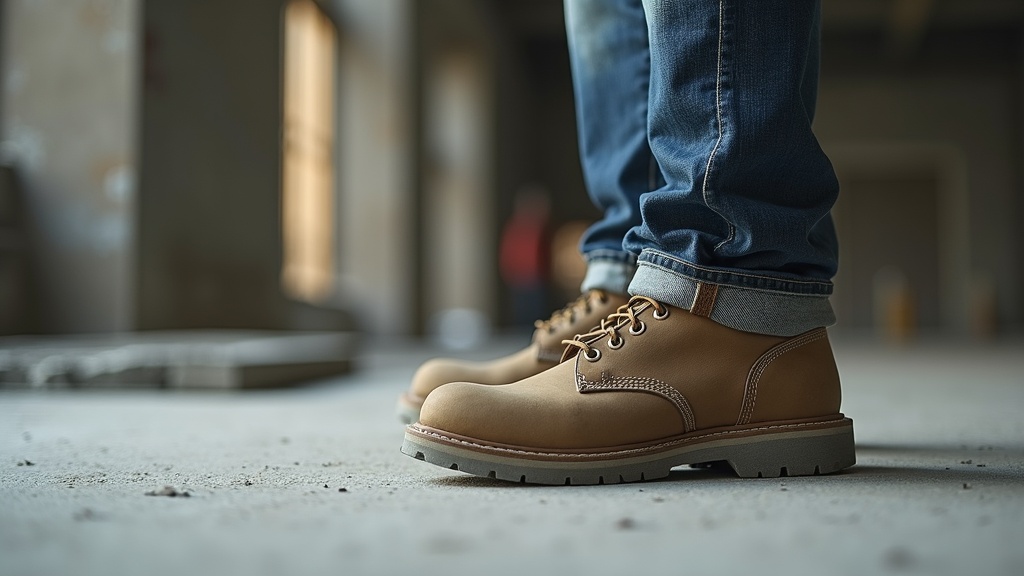
You clock in at 6 a.m. and by noon your ankles are throbbing, your arches feel like they're caving in, and your lower back is already talking to you. If you have flat feet and you're standing or walking on hard surfaces all day, that is not just discomfort. That is your body absorbing shock it was never meant to handle without support.
The right work socks will not fix flat feet. But the wrong ones will make everything worse. Here's what actually works, what to look for, and which features are worth paying for.
Key points at a glance
- Flat feet overload your ankle joint on every single step, especially on concrete and asphalt.
- Ankle support in work socks works best when it combines targeted compression with a built-in arch band.
- Compression socks reduce swelling and fatigue for workers who stand all day, but grade and fit matter a lot.
- Cushioning zone placement is as important as thickness: heel and forefoot need the most padding.
- Men and women need different fits. A sock that bunches or slips is doing nothing for your ankle stability.
- The best socks pair with orthotics. One without the other leaves you halfway there.
What good flat-feet work socks actually do for you
Why Flat Feet Become a Real Problem on the Job
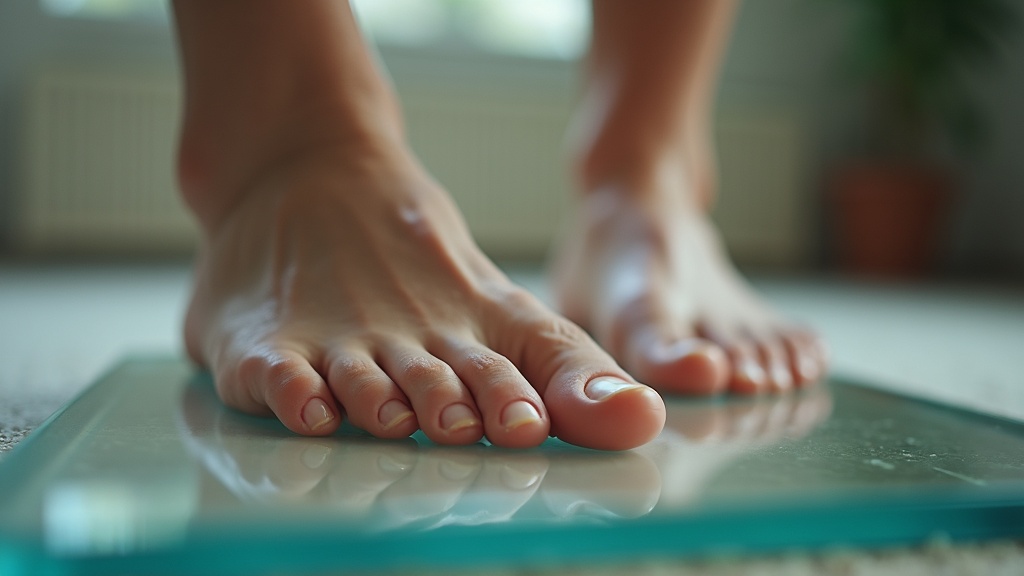
Flat feet, or overpronation, means your arch collapses inward when you put weight on your foot. On a normal day, that's manageable. On a 10-hour shift on a concrete slab, it becomes a chain reaction.
When your arch drops, your ankle rolls inward. That torques your knee, stresses your hip, and hammers your lower back. Every step is a small misalignment multiplied by thousands of steps a day. That's why flat-footed workers report more plantar fasciitis, shin splints, and chronic ankle pain than anyone else on the crew.
Do Ankle Supports Actually Help Flat Feet? The Straight Answer
Yes, but not in isolation. Ankle support from a sock stabilizes the joint and limits inward roll. It won't lift your arch on its own, which is why you need arch support built into the sock, or from an orthotic, or ideally both.
A sock with a figure-eight ankle wrap, a ribbed ankle cuff, or targeted compression around the malleolus (the bony bump on each side of your ankle) gives your joint a firmer environment to work in. That matters when you're carrying tools, climbing ladders, or standing on uneven ground.
Did you know?
Studies on occupational foot health show that workers in manufacturing and construction who use compression and arch support hosiery report up to 34% less end-of-shift foot fatigue compared to those wearing standard cotton socks. The difference compounds over weeks of consecutive shifts.
What to Look for in Work Socks When You Have Flat Feet
Not all work socks are built the same. Here is what separates a sock that actually helps from one that just covers your foot.
Arch band
A band of tighter knit that runs across the midfoot. It holds the arch from collapsing as you load your foot. This is non-negotiable for flat feet.
Ankle compression zone
Extra compression right around the ankle joint, not just the calf. This is what gives you lateral stability inside your boot.
Heel cup structure
A reinforced heel pocket keeps your foot from sliding around. Sliding means friction. Friction means blisters and lost support.
Cushioning in the right places
Dense padding under the heel and forefoot. The midfoot should be thinner so the arch band can do its job without bulk fighting against your insole.
Moisture management
Merino wool or synthetic moisture-wicking blends. Wet feet swell. Swollen feet lose support and gain blisters.
Ankle Support vs. Arch Support: You Need Both, Here's Why
These two things work together. Your arch collapsing is what drives your ankle inward. If you only support the ankle without supporting the arch, you're fighting the symptom, not the cause.
Think of it this way: the arch band is the foundation, the ankle compression is the frame. Build without a foundation and the frame still wobbles. The socks that perform best for flat-footed workers address both in the same garment.
Do Compression Socks Work for Flat Feet on the Jobsite?
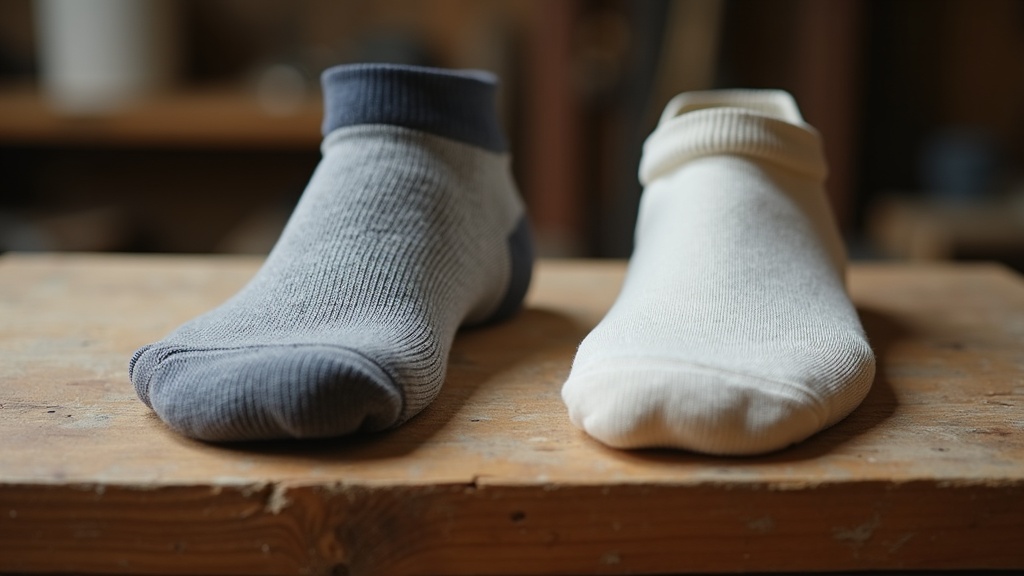
They work well when you pick the right compression grade. For a full shift on your feet, 15 to 20 mmHg is the sweet spot for most workers. Enough to improve circulation and reduce swelling, not so tight that you're fighting to get them on at 5 a.m.
Graduated compression, which is tighter at the ankle and gradually looser up the calf, moves blood back up toward your heart. That directly reduces the swelling and heaviness that flat-footed workers feel by hour six. Pair that with arch support and you've got a real system.
Did you know?
Plantar fasciitis affects roughly 2 million Americans every year. Workers with flat feet are among the highest-risk groups, and standing on hard surfaces for more than 6 hours a day is one of the top documented triggers. Proper foot support worn consistently can meaningfully cut that risk.
Best Work Sock Features for Flat Feet: A No-BS Checklist
- Built-in arch band: woven compression across the midfoot
- Ankle compression zone: tighter knit at and around the ankle joint
- Reinforced heel cup: prevents sliding and absorbs heel strike
- Graduated compression: 15 to 20 mmHg for all-day wear
- Moisture-wicking material: merino wool, CoolMax, or nylon blend
- Crew or over-the-calf height: anything shorter loses the compression benefit at the ankle
- Correct fit by gender: men and women have different foot widths and arch profiles
- Reinforced toe box: especially important in steel-toe or composite-toe boots
Top Picks for Ankle Support in Work Socks for Flat Feet
These are the features and brands that come up again and again among workers who've actually worn them through full shifts. No paid rankings here, just what holds up.
| Sock / Brand | Best For | Key Feature | Compression |
|---|---|---|---|
| Darn Tough Work Over-the-Calf | Construction, heavy labor | Merino wool, lifetime warranty, dense heel/toe cushion | Moderate ankle |
| Thorlos Padded Work Crew | Standing all day, warehouse | Clinically proven cushioning zones, arch band | Light to moderate |
| Sockwell Plantar Crew | Plantar fasciitis, flat feet | Figure-eight ankle wrap, strong arch band, merino blend | 15 to 20 mmHg |
| Feetures Elite Heavy Cushion | Men and women, wide feet | Anatomical left/right fit, targeted arch compression | Moderate |
| Copper Fit Energy OTC | Budget pick, ankle swelling | Graduated compression, copper-infused odor control | 15 to 20 mmHg |
Tips to Get More Out of Your Work Socks Every Shift
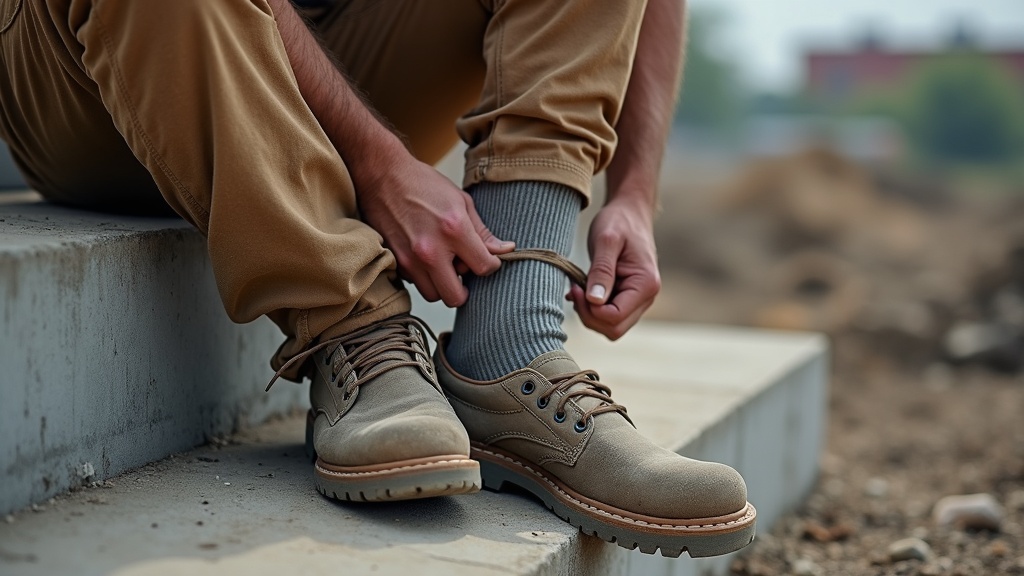
A great sock worn wrong doesn't do much. Here's how to get the most out of what you're wearing.
- Seat the arch band properly. Pull the sock all the way up until the arch band sits centered on your midfoot. Not on your heel, not sliding toward your toes.
- Pair with a flat-feet orthotic. The sock handles the surface compression. A quality insole like Superfeet Green or Powerstep handles the structural lift from below.
- Rotate two pairs per day if you can. Compression materials lose elasticity when they're hot and wet. A fresh pair at lunch is not overkill on a long shift.
- Wash on cold, hang dry. Heat kills elastic fibers. That arch band that felt firm on day one will feel like a limp noodle after six hot machine washes.
- Replace every three to four months if you're wearing them five days a week. Worn-out compression is not compression.
- Women: size matters more than you think. Women's ankle support work socks are cut narrower through the heel and have a shorter arch band. Wearing a men's sock on a women's foot means the arch band sits in the wrong place every single time.
What Workers with Flat Feet Say After a Full Day on Their Feet
The feedback pattern from flat-footed workers is consistent. The ones who made the switch to structured compression socks report three things above all else: less ankle soreness by the end of the shift, noticeably less lower back fatigue, and fewer hot spots and blisters.
The workers who are disappointed with compression socks are almost always wearing the wrong size, not seating the arch band correctly, or skipping the orthotic that would complete the system. The sock is one part of a stack, not a miracle on its own. Get the stack right and you will feel the difference within a week.
Start with one pair of a structured arch-support sock rated for all-day compression. Wear it for a full week. Track how your ankles feel at hour eight compared to your old socks. That test will tell you everything you need to know.
