



You grabbed a pair of sandals this morning and now you're second-guessing yourself in the parking lot. Fair question. The answer isn't a simple yes or no, and anyone who tells you otherwise hasn't spent much time on actual job sites or in actual offices.
Where you work determines everything. A construction site and a creative agency are not the same planet. This guide breaks it down by situation, by regulation, and by common sense, so you can make the right call before you walk through that door.
Key points at a glance
- Sandals are fine in many low-risk office and creative environments, full stop.
- OSHA does not have a blanket ban on open-toe shoes, but industry-specific rules apply.
- On job sites involving heavy equipment, falling objects, or chemicals, open-toe shoes are a hard no.
- Business casual sandals exist and can look genuinely professional when chosen carefully.
- Your employee handbook usually has the final say, not fashion opinion.
- Foot protection comes first. Dress code is a secondary concern.
What this article does for you
The Short Answer: It Depends on Where You Work
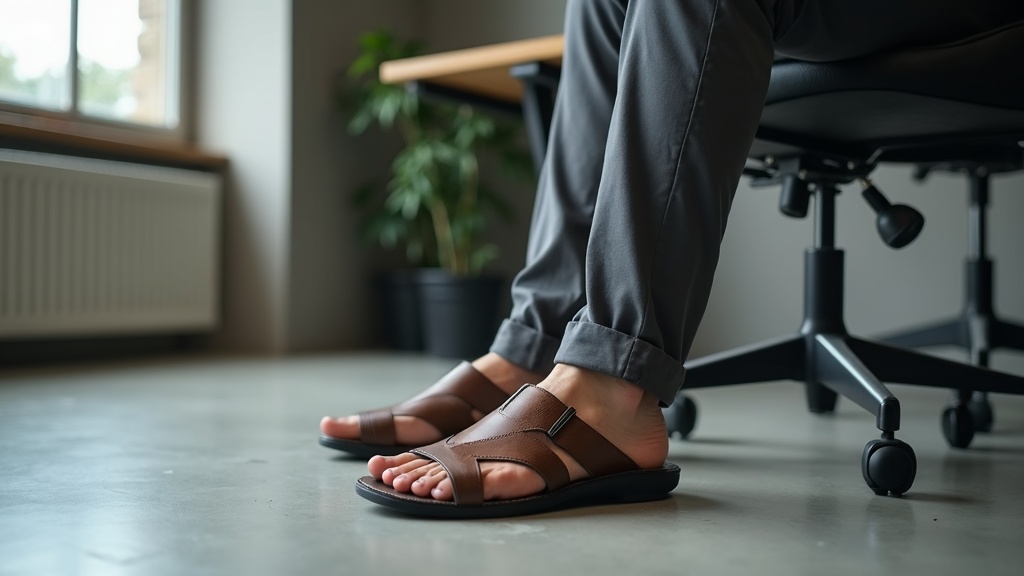
Sandals at the office: probably fine if your dress code is business casual or relaxed. Sandals on a construction site, a warehouse floor, or a commercial kitchen: not a chance.
The real question isn't whether sandals are professional or unprofessional in some abstract sense. The question is whether your specific work environment has hazards that an open-toe shoe can't protect you from. Start there, not with fashion.
What OSHA Actually Says About Sandals at Work
OSHA's general industry standard (29 CFR 1910.136) requires employers to provide protective footwear when workers face hazards from falling or rolling objects, sharp objects on the floor, wet slippery surfaces, or electrical hazards. It does not issue a universal ban on sandals or open-toe shoes.
What OSHA does require is that employers conduct a hazard assessment. If that assessment identifies foot hazards, the employer must enforce protective footwear. Period. If no foot hazard exists, there is no federal OSHA mandate against wearing sandals.
Did you know?
According to the Bureau of Labor Statistics, nearly 60,000 foot injuries occur in U.S. workplaces each year. The majority happen in industries where protective footwear was either not required by policy or not worn by the employee.
State OSHA plans (like California's Cal/OSHA) may have stricter rules. Always check your state's version, not just the federal standard.
Jobs Where Sandals Will Get You Hurt or Fired
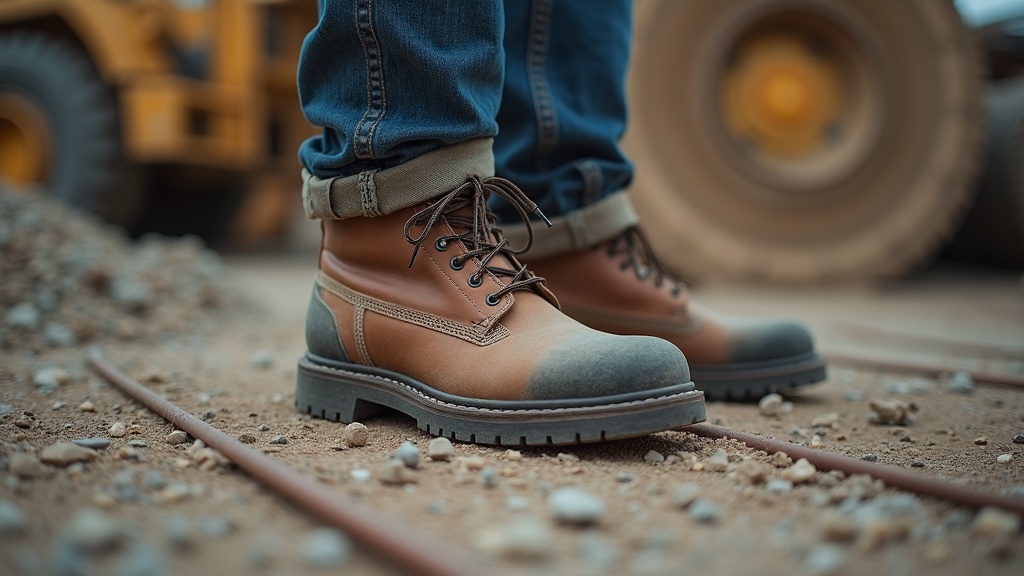
No wiggle room here. These environments require fully enclosed, often steel-toed footwear. Showing up in sandals isn't just a policy violation, it's genuinely dangerous.
- Construction and job sites: Falling tools, rebar, concrete, heavy equipment. One dropped beam ends your summer.
- Warehouses and distribution centers: Forklifts, pallet jacks, heavy loads. Open toes and rolling equipment don't mix.
- Manufacturing plants: Machinery, sharp metal parts, hydraulic equipment. Steel-toed boots are mandatory, not optional.
- Commercial kitchens: Hot oil, dropped knives, wet floors. Non-slip enclosed shoes are a baseline requirement.
- Chemical labs and facilities: Spills, corrosive substances, electrical hazards. Sandals offer zero protection.
- Healthcare settings with biohazard exposure: Blood, sharps, chemical agents. Closed-toe shoes are standard protocol.
Jobs Where Sandals Are Perfectly Fine
A lot of men work in environments where no real foot hazard exists. In these workplaces, sandals are a reasonable call, especially in summer.
- Desk-based office jobs (tech, finance, marketing, consulting)
- Creative agencies and design studios
- Remote work or work-from-home days
- Retail environments with relaxed dress codes
- Outdoor events, trade shows, or casual client meetings
- Teaching in non-lab environments
The key variable: does your employer have a written dress code, and does it specifically address open-toe shoes? If it doesn't mention it, you have room to ask. If it says "closed-toe shoes required," that's your answer.
What Makes a Sandal 'Work-Appropriate' vs. a Safety Problem
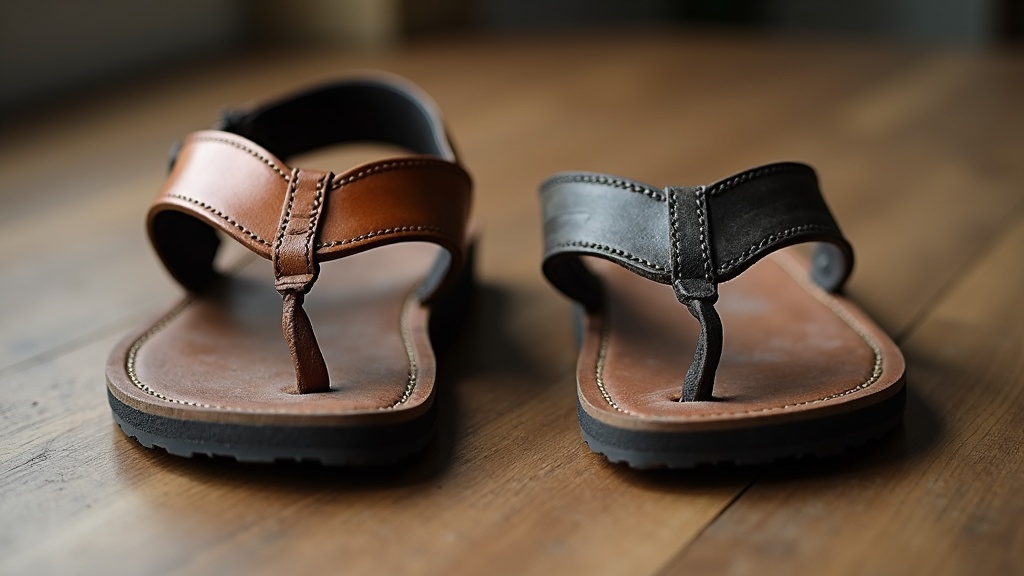
Not all sandals are created equal. A flip-flop from the gas station is not the same thing as a leather strap sandal with arch support and a solid sole.
When evaluating whether a sandal is work-appropriate for a low-hazard office environment, look at these factors:
| Feature | Work-Appropriate | Not Work-Appropriate |
|---|---|---|
| Material | Full-grain leather, nubuck, quality suede | Foam, cheap plastic, rubber flip-flop |
| Strap design | Adjustable back strap, multi-strap, heel support | Single thong, no heel strap |
| Sole | Firm, non-slip, at least 8mm thick | Thin foam, slippery bottom |
| Color | Tan, brown, black, navy | Neon, graphic print, bright novelty colors |
| Overall look | Structured, clean lines, intentional design | Beach-ready, worn-out, beachwear silhouette |
The rule of thumb: if it looks like you grabbed it from your beach bag, leave it at home. If it looks like you chose it deliberately, you're probably fine.
Best Sandal Options for Men Who Work on Their Feet
If you're on your feet all day in a low-hazard environment, comfort matters as much as looks. These styles consistently hold up:
- Birkenstock Arizona or Boston (leather): Contoured cork footbed, excellent arch support, holds up for years. Classic for a reason.
- Ecco Offroad / Ecco Yucatan: Sport-sandal construction with serious cushioning. Works in casual offices without looking like athletic gear.
- Teva Hurricane XLT2: More outdoorsy, but the strap system is secure and the sole is grippy. Good for anyone who walks between indoor and outdoor environments.
- OluKai Ohana: Genuine leather, drop-in heel, comfortable enough for an eight-hour day. Reads clean without being overdressed.
- Thursday Boot Co. Sandals: Built on the same last as their dress shoes. Looks intentional next to slacks or chinos.
Did you know?
Birkenstock's footbed design, developed in Germany in the 1960s, was originally sold through orthopedic shoe stores as a corrective insole. What became a fashion staple started as a medical product.
How to Tell If Your Workplace Allows Open-Toe Shoes
You don't have to guess. Three quick steps to get a real answer:
- Read the employee handbook. Look for sections on dress code, PPE, or footwear. If it says "closed-toe shoes" anywhere, that's binding.
- Look at what your coworkers wear. If half the office is already in sandals, your employer has already signaled tolerance.
- Ask HR directly. A quick, professional email takes two minutes. Phrase it as: "Our dress code doesn't specify footwear, is there guidance on open-toe shoes in the summer?" That's not a strange question.
One caveat: some roles involve occasional site visits or client facilities with their own PPE requirements. Even if your main office is sandal-friendly, keep a pair of closed-toe shoes in your car or desk drawer for those situations.
Protect Your Feet First, Worry About the Dress Code Second
The conversation about sandals at work has two completely separate tracks. One is about safety. The other is about appearance. Most people online are arguing about the appearance side while ignoring the safety side entirely.
If your job has foot hazards, no sandal on the market is the right answer. It doesn't matter how good they look or how much they cost. A broken toe or a chemical burn is a hard lesson you don't need to learn firsthand.
If your job has no foot hazards, a well-chosen leather sandal with real support and a clean design is not unprofessional. It's a practical choice for a hot day. Pair it with trousers or neat chinos, keep your feet clean and your nails trimmed, and nobody in a reasonable workplace is going to say a word.
Know your environment. Read the policy. Choose the right sandal for the right situation. That's the whole answer.
