


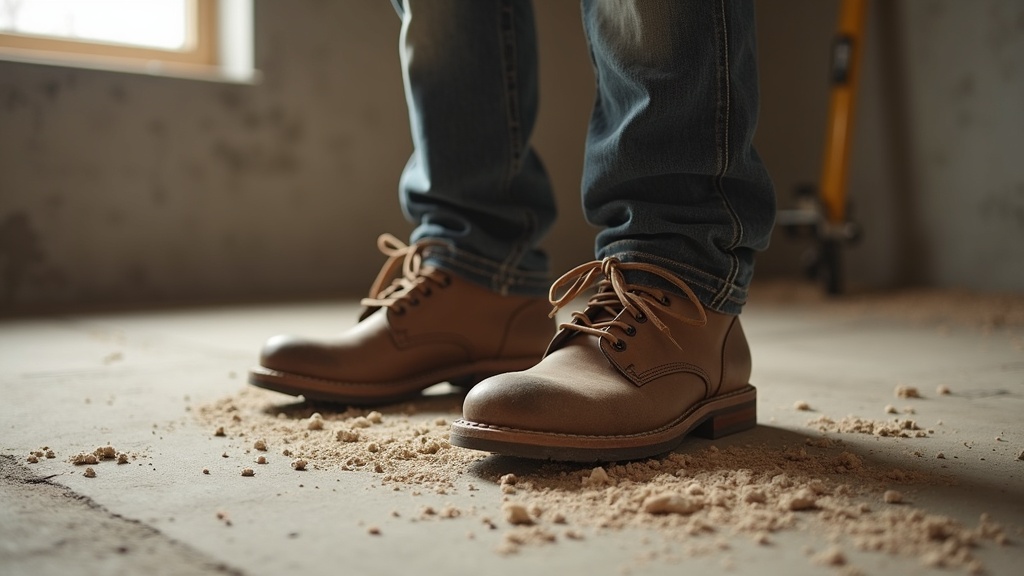
Your feet take somewhere between 8,000 and 10,000 steps on a typical workday. On concrete, with a tool belt around your waist and plywood sheets to haul, that number hits harder than it sounds. Repetitive strain doesn't announce itself. It builds quietly over months until one morning you can't put weight on your heel without wincing.
The fix isn't always expensive. Sometimes it's a $50 insole that actually fits the demands of carpentry work. But the wrong one makes things worse. Here's what actually works, and why.
Key points at a glance
- Stock boot insoles compress and fail within weeks on a real jobsite.
- Plantar fasciitis and Achilles tendonitis are the two most common repetitive strain injuries for carpenters.
- Arch support profile matters more than cushioning thickness for all-day standing.
- Concrete and wood subfloor demand different insole firmness levels.
- Superfeet and a handful of direct competitors stand out for heavy-duty trades use.
- Proper fit inside the boot is as important as the insole itself.
What a Good Carpenter's Insole Does for You
What Repetitive Strain Actually Does to a Carpenter's Feet and Joints
Every time your heel slaps concrete, a shockwave travels up through your ankle, shin, knee, and hip. One step is nothing. A thousand steps over eight hours, five days a week, on hard surfaces with extra weight on your frame, is a different story entirely.
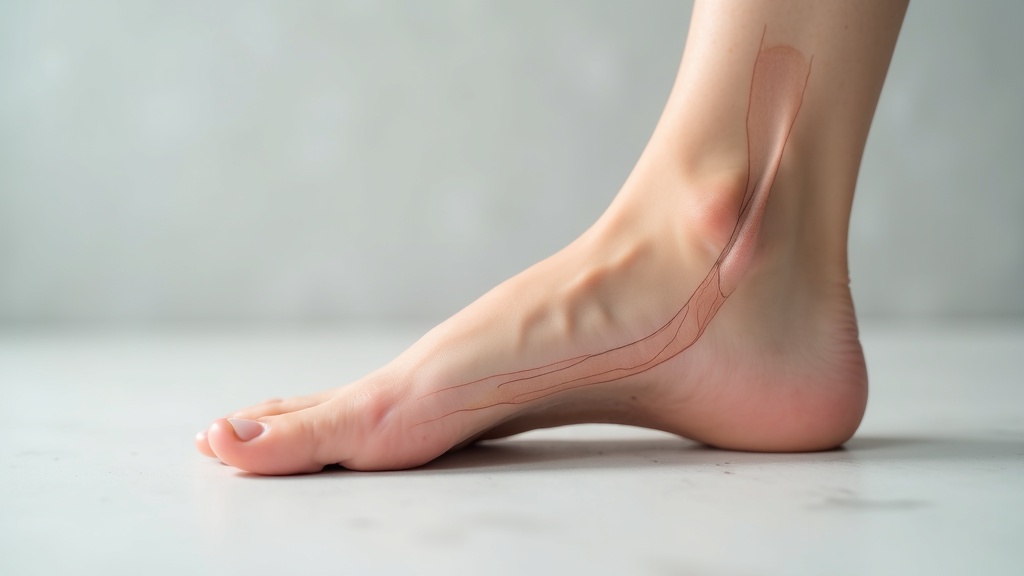
Plantar fasciitis is the most common result: the thick band of tissue running along the bottom of your foot gets micro-torn faster than it can heal. You feel it as sharp heel pain first thing in the morning or after sitting down for lunch.
Achilles tendonitis follows a similar pattern. The tendon gets loaded and reloaded without adequate recovery time. Add a work boot with a stiff, unsupported insole and you've got a recipe for chronic inflammation that can sideline you for weeks.
Why the Stock Insoles in Your Work Boots Are Already Failing You
Boot manufacturers build to a price point. The insole that ships inside your $180 Timberland PRO or Red Wing is a flat piece of EVA foam designed to pass a comfort test in a showroom, not survive a framing crew in January.
EVA foam compresses and stays compressed. Within two to four weeks of daily use, the original thickness is gone. What you're walking on at that point is essentially a thin fabric layer over the boot's midsole, which offers close to zero arch support and almost no shock absorption.
This is not a flaw in the boot. It's just a design reality. The boot is built to protect your toes and ankle. The insole is your job to manage.
Did you know?
A study published in Applied Ergonomics found that workers standing on concrete for more than four hours per day showed measurably higher rates of lower limb musculoskeletal disorders compared to those standing on cushioned or yielding surfaces. The surface beneath your feet matters as much as the boot above it.
What to Look for in an Insole Built for Carpentry Work
Not all insoles marketed to tradespeople are actually built for them. Here's what separates a real option from a repackaged running shoe insert.
Arch support profile
You want a medium to high arch with a firm, structured shell underneath the cushioning layer. Soft foam alone won't hold your arch through hour nine. Look for a polypropylene or carbon fiber base.
Heel cup depth
A deep heel cup cradles the fat pad under your heel and stops it from spreading sideways under load. That's direct plantar fasciitis prevention. Shallow heel cups are useless on concrete.
Metatarsal support
Often overlooked. A slight metatarsal pad behind the ball of the foot takes pressure off the forefoot during prolonged standing. Carpenters squat, kneel, and shift weight constantly. That pad helps.
Material durability
Gel and foam both work. Foam tends to be more consistent across temperatures (gel firms up in cold). For outdoor winter framing, high-density EVA or PU foam outperforms gel in the cold.
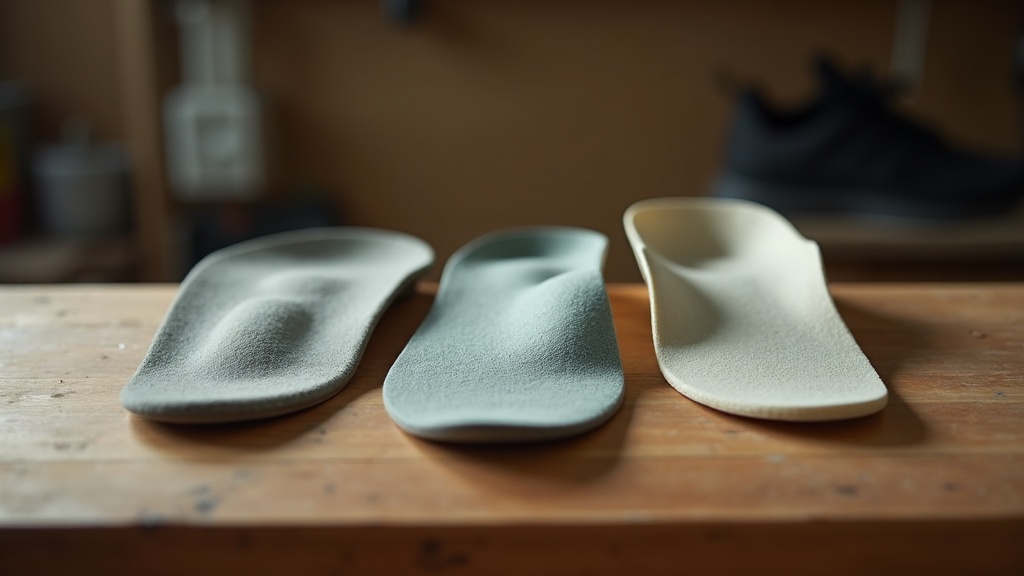
The Best Insoles for Carpenters and Repetitive Strain (Ranked and Tested)
These are the options worth your money. Tested across concrete slabs, wood subfloor, and mixed jobsite terrain over multiple weeks of actual use.
| Insole | Best For | Arch Type | Price Range |
|---|---|---|---|
| Superfeet GREEN | All-day concrete standing, high arch | High, firm shell | $45, $55 |
| Superfeet WORK | Heavy boots, wide-toe work | Medium-high, semi-rigid | $50, $60 |
| Sof Sole WORK | Plantar fasciitis, budget pick | Medium, gel heel | $20, $30 |
| Timberland PRO Anti-Fatigue | Fatigue reduction, mixed terrain | Low-medium, inverted cone foam | $25, $35 |
| PowerStep Pinnacle | Tendonitis, overpronation | High, dual-layer | $45, $55 |
| Dr. Scholl's Work | Casual use, mild support | Low, soft foam | $15, $20 |
Superfeet GREEN is the benchmark. It's been the go-to for trades workers for two decades because the rigid cap under the arch actually holds its shape over a full season. The WORK model adds a wider platform for heavier-duty steel-toe boots and a slightly more cushioned top layer.
PowerStep Pinnacle is the right call if you're dealing with active tendonitis or you overpronate. The dual-layer foam gives more cushion than Superfeet while still providing real structural support.
Will Insoles Help With Tendonitis and Plantar Fasciitis?
Yes, with a realistic expectation. Insoles don't heal tissue. They reduce the mechanical load that's causing the damage, which gives your body a chance to catch up.
For plantar fasciitis: a firm, deep heel cup with good arch support is the priority. The goal is to stop the fascia from being stretched out every single step. Superfeet GREEN and PowerStep both do this well.
For Achilles tendonitis: look for a slight heel lift (3mm to 6mm) built into the insole. This shortens the effective load on the tendon during push-off. The PowerStep Pinnacle includes this. If your current insoles are flat, that's part of the problem.
Did you know?
Plantar fasciitis affects roughly 1 in 10 people at some point in their lives, but construction workers and tradespeople develop it at significantly higher rates due to prolonged standing on hard surfaces. The Bureau of Labor Statistics consistently lists foot, ankle, and lower leg injuries among the top musculoskeletal complaints in the construction sector.
Hard Concrete vs. Wood Subfloor: Does the Surface Change What You Need?
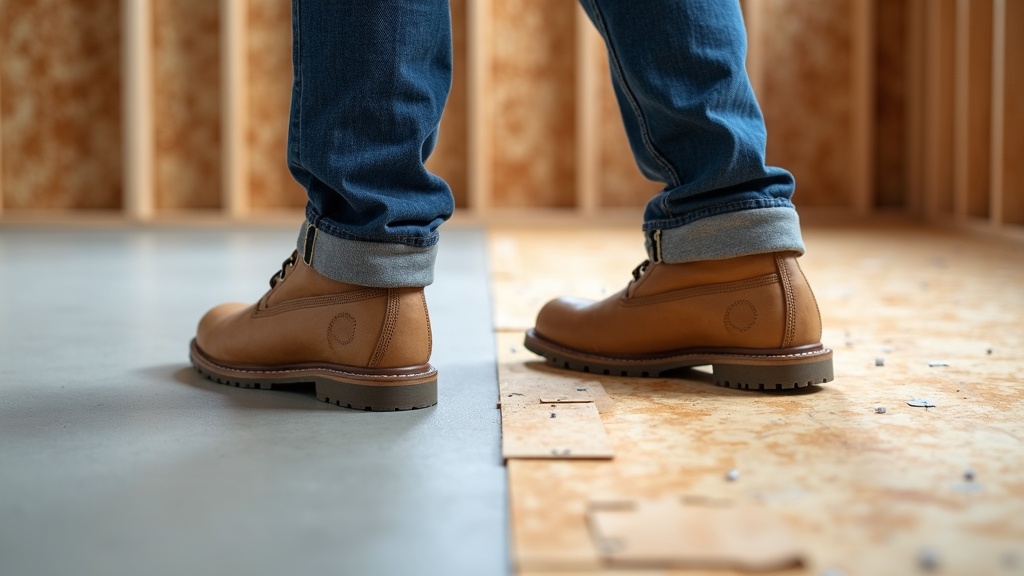
It does. Concrete has zero give. Every bit of shock absorption has to come from your boot, your insole, and your body. On concrete, you want a firmer, more structured insole with serious arch support. Superfeet GREEN or the PowerStep Pinnacle are the right tools here.
Wood subfloor, OSB, and even packed dirt have some natural flex. They absorb a fraction of the impact. On these surfaces, a slightly softer insole with more cushioning and less rigid arch support is tolerable and can actually feel better on long shifts.
If your week mixes both (which it usually does), go with the firmer option. Concrete is the more damaging surface, so you optimize for that.
How to Get the Right Fit in Your Work Boot
An insole that's even a half-size too long will fold under your toes or bunch up. Most quality insoles are sold in size ranges (Men's 9, 10.5, for example) and are designed to be trimmed with scissors to fit your boot's exact shape.
- Pull the stock insole out first and use it as a template to trace the trim line.
- Trim conservatively: cut less than you think, test the fit, then trim again.
- Your heel should sit fully inside the heel cup. If it's hanging off the back edge, the insole is too short.
- After inserting, lace your boot with the same tension you use on the job. Some insoles add enough volume that you need to lace slightly looser to avoid toe compression.
- Break them in for a half-day before relying on them for a full shift. Your foot will adjust to the new arch contact.
Replace insoles on a schedule, not when they feel dead
By the time foam feels flat, it's been flat for weeks and you've already absorbed the damage. For full-time jobsite use, replace every four to six months. Write the install date on the insole with a marker.
