


Your feet hurt. Not in a vague way. In a dead legs by hour six, dreading the second half of the shift kind of way. The easy explanation: work boots are bad for walking. Heavy, stiff, designed for protection first and everything else never. Except that's not quite right.
The boots aren't the problem. The type of boots is
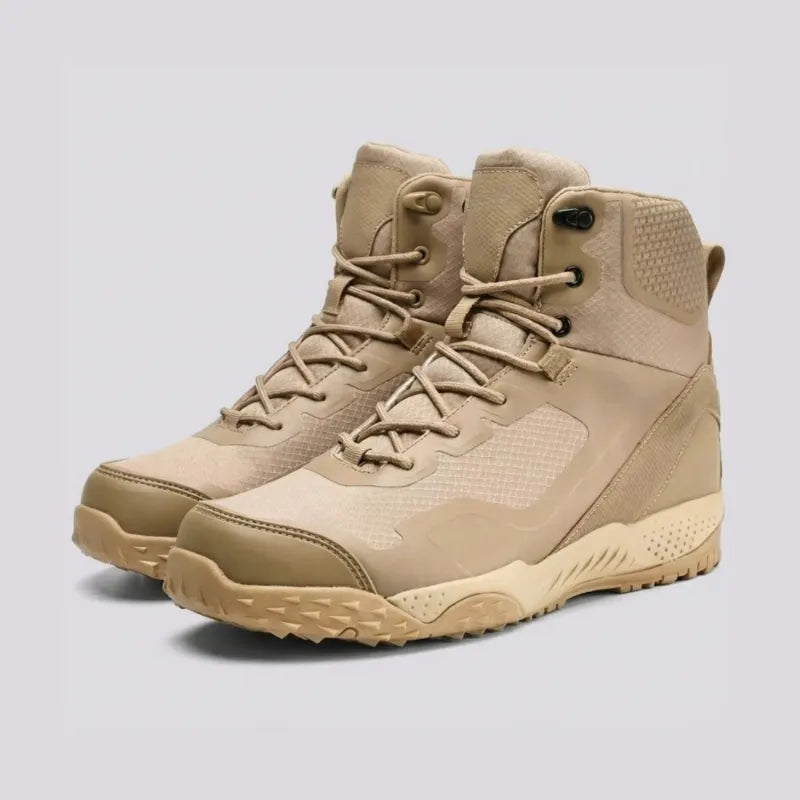
Traditional work boots got their reputation for a reason. Thick leather uppers, steel toe caps, rubber soles that could outlast a building site. They were built to take a hit — not to move in for ten hours. Walking in those all day on concrete or warehouse floors? Your legs feel it. Your back feels it. Your knees definitely feel it.
But that was a different era of workwear. The mechanics haven't changed — what's changed is what you can actually buy. The question isn't whether work boots are bad for walking in general. It's whether yours are working against you.
What actually makes a boot painful to walk in?
Here are a few reasons why your boots are so uncomfortable to wear.
Weight comes first
Most people don't realize how much shoe weight compounds over a full shift. A 200g difference per foot sounds small. Multiply that by 15,000 steps — the average warehouse worker's daily count — and you're lifting an extra 3 tonnes of combined foot weight across the day. That's not a rounding error. It shows up as leg fatigue, hip tension, and a general feeling of being ground down by hour eight.
Steel toe caps are the main culprit here. They're heavy by necessity. Which is why composite toe technology exists: the same certified impact protection, 20–30% lighter, built from carbon fiber, Kevlar, or fiberglass instead of metal.
Then there's where the boot bends — or doesn't
Pick up any work boot and flex it. A well-designed shoe bends at the ball of the foot, roughly a third from the toe. That's where your foot bends with each step.
A stiff-soled boot that resists that flex — or bends in the wrong place — means your foot has to fight the shoe on every stride. Do that for eight hours and your plantar fascia, your Achilles, and your metatarsals are all absorbing extra load they weren't supposed to take.
Cheap boots and old boots are usually the worst for this. The midsole stiffens or degrades, the flex point moves, and what used to be a decent shoe becomes something that actively hurts you.
Cushioning that doesn't hold up

Here's something nobody tells you when buying work footwear: midsole cushioning typically degrades after 400–500 hours of active use. At 40 hours per week, that's three months.
A boot that felt great in October is often a hard shell by January. The foam has compressed. The energy return is gone. And you're now walking on essentially a rigid platform, passing every impact directly into your heel and ankle.
The insole looks fine. The outsole looks fine. But the boot is functionally dead, and you're attributing the pain to working long hours rather than worn-out footwear.
And the one people rarely think about: the toe box
Too narrow and your toes are compressed — which changes how you push off and loads the wrong tendons. Too much volume and your foot slides around with each step, forcing your muscles to stabilize constantly. Either way, you're not walking efficiently. And inefficient walking, over a full shift, is exhausting.
Discover this: Best Work Socks – Experts' picks for 2026 for comfort at work
When walking in boots is actually fine — or better
Here's the thing. The right work footwear can outperform a casual sneaker for long days on hard floors.
Sneakers are designed for varied movement on varied surfaces. They're usually lightly cushioned, low-profile, and flexible in ways that work well for the gym or a morning run but break down fast under repetitive industrial use.
A well-engineered safety shoe, by contrast, is designed specifically for people who walk on concrete for eight to twelve hours. Firmer midsoles that don't compress and flatten. Toe caps that don't add excess weight. Shanks that control midfoot flex so your arch isn't doing all the work.
The workers who hold up best through long shifts tend to be in footwear that's structured without being rigid. Not a hiking boot. Not a running shoe. Something built for this specific kind of demand.
Which brings us to the category that solves most of walking in work boots problems: composite toe safety shoes.
Mason's top 5 composite toe safety shoes for walkers
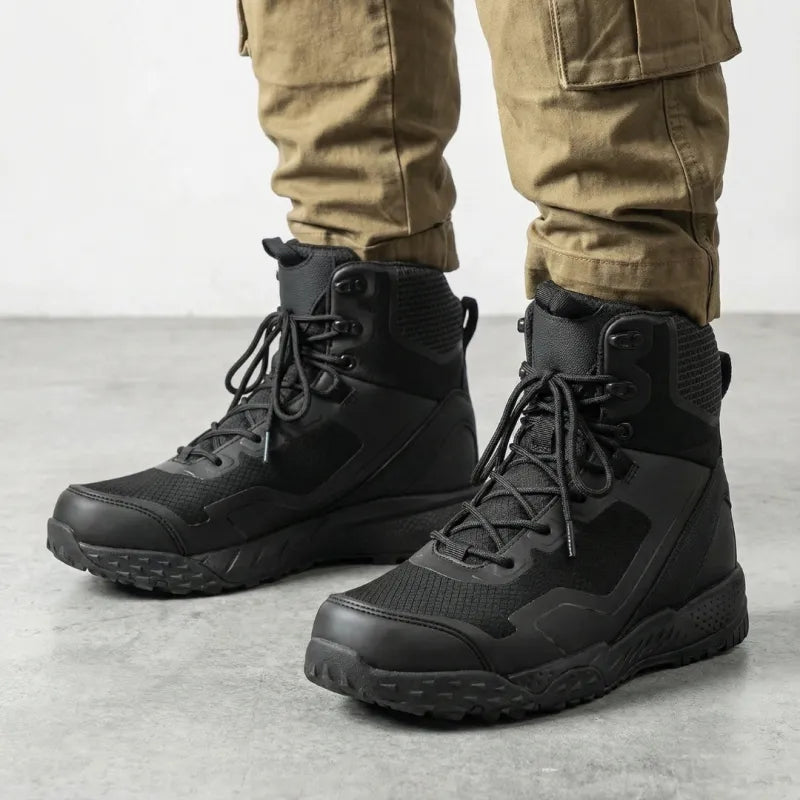
If you're putting in serious steps every day and your current boots are slowing you down, this is where to start. Mason's composite toe safety shoes are built around the walking-first principle — protection that doesn't come at the cost of comfort.
1. ATLAS S3 Pro Safety Trainer
The one Mason users come back to again and again. Certified S3 protection, Kevlar puncture-resistant midsole, a memory foam insole, and a quick-lock closure system that removes the pressure-point problem of uneven lacing.
What makes it work for walking: the outsole flexes exactly where your foot does. Combine that with composite-style lightness and you get a shoe that genuinely doesn't slow you down through a shift.
Real quote from a verified buyer: "I walk 25,000 steps a day in a warehouse. With my old safety shoes, my feet were destroyed by the evening. With these, there's no comparison."
2. ATLAS S3 Pro Safety Trainer — Women's fit
Same protection and construction as the men's version, built to the actual dimensions of a woman's foot rather than a scaled-down men's last. The fit difference matters more than people realize — especially for long walking days where a slightly off heel cup or a tight forefoot has nowhere to hide.
3. MOTION Tactical Comfort Boots | Composite Toe
The choice for technical environments where you can't use steel. Non-conductive composite toe, EN ISO 20345 certified, insulated enough for cold storage or early outdoor shifts without adding the kind of stiffness that makes cold-weather boots miserable to walk in.
If electrical hazard protection is part of your job requirements, this is the model to look at. It doesn't sacrifice walking comfort to get there.
4. Mason Lightweight Safety Shoes
Sometimes the main issue isn't arch support or cushioning — it's pure weight fatigue. If your legs feel heavy by mid-afternoon regardless of how good the insole is, a lighter shoe changes the equation.
Mason's lightweight safety shoe range cuts shoe weight to the minimum the safety standards allow. Less gram per step, sustained across a full shift, makes a real physical difference. Good for delivery workers, field workers, and anyone who covers serious ground rather than standing in place.
5. Slip-On Safety Toe Shoes
A specific fix for a specific problem: if you've ever had Achilles or heel pain that got worse after a long shift, there's a decent chance your lace-up boot is part of it. Lacing too tight, pressure from eyelets, or a stiff heel collar sitting in the wrong place all contribute.
Slip-on safety shoes remove that variable. The heel fit is more consistent, there are no pressure points from lacing, and getting them on and off is faster — which matters if you're changing footwear between zones multiple times a day.

One thing that makes any of these better
Even a well-designed shoe comes with a stock insole sized for an average foot. If you've had persistent walking pain, adding a proper aftermarket insole — specifically one with real arch support and heel cushioning — is often the fastest single change you can make.
Mason's TECKRS Pro Cushion Insole is built for exactly this: shock absorption across long shifts, not just initial comfort when you first put them on. The boot handles structure. The insole handles fine-tuning. You need both.
Read this also: Steel Toe vs Composite Toe Boots: Expert Guide to Choosing the Best Protection
How to tell if your current boots have already given up
Three checks worth doing right now:
- The flex test. Hold the boot at heel and toe and bend it. It should give at the ball of the foot — about a third from the front. If it resists completely, or bends in the middle, your foot is fighting it with every step.
- The age check. 400–500 hours is roughly the life of a midsole under active use. At 40 hours a week, that's three months. If you can't remember when you bought your current pair, they're probably past it.
- The end-of-day fit check. Feet swell by up to half a size during a shift. If your boots feel fine in the morning but tight or uncomfortable by afternoon, they're sized for a rested foot — not the foot that's actually wearing them for ten hours.
If all three come back wrong, you've found your answer.
Are Work Boots Bad for Walking? The short answer
Work boots are not bad for walking. Heavy, rigid, worn-out, or badly fitted boots are. The workers who hold up best through long shifts aren't in the thickest boots or the lightest sneakers — they're in footwear designed specifically for sustained movement on hard surfaces. Composite toe safety shoes are where that balance sits. Same certified protection, less weight, more flex, and built for the kind of walking that actually happens on a job.
