


Choosing between steel toe vs composite toe boots is not just a matter of preference. It directly affects your safety, daily comfort, and compliance with workplace regulations. The wrong choice can lead to fatigue, long-term foot pain, or insufficient protection against real job-site hazards. Steel toe boots are ideal for heavy-duty environments with high impact risks. Composite toe boots are lighter, non-conductive, and better suited for electrical settings or long hours on your feet. When certified, both options provide equivalent impact protection.
These safety standards are defined by recognized organizations such as ASTM International in North America and the International Organization for Standardization worldwide. In this in-depth guide, we will break down the full steel toe vs composite toe boots comparison: real-world protection, comfort, durability, job-site conditions, and regulatory requirements.
Steel Toe or Composite Toe?

In the steel toe vs composite toe boots debate, the difference is not about basic protection. When certified under standards set by ASTM International or the International Organization for Standardization, both types provide excellent impact and compression resistance. The real distinction lies in weight, conductivity, and thermal performance. Here is a clear comparison:
|
Criteria |
Steel Toe |
Composite Toe |
|
Impact Protection |
Excellent |
Excellent |
|
Weight |
Heavier |
Lighter |
|
Conductivity |
Conductive |
Non-conductive |
|
Temperature Sensitivity |
Sensitive to cold/heat |
Thermal insulation |
|
Metal Detection |
Detectable |
Non-detectable |
|
Price |
Often more affordable |
Slightly more expensive |
In short, when comparing steel toe vs composite toe boots, the right choice depends on your real working conditions, not just the material.
Discover also: Waterproof Work Trousers: The Expert Guide to Staying Dry on Site
What Are Steel Toe Boots?

Steel toe boots are safety boots designed with a reinforced steel cap built directly into the toe box. This internal steel component protects the toes from falling objects, heavy compression, and crushing hazards. The reinforcement is permanently integrated into the structure of the boot, making it a core safety feature rather than an accessory. Steel toe technology became widely adopted during the industrial expansion of the 20th century. Heavy industries such as construction, mining, and manufacturing required stronger foot protection as machinery and material handling increased workplace risks. Since then, steel toe boots have remained a benchmark in industrial safety.
Today, certified models must comply with strict safety standards. In North America, they are regulated under ASTM F2413 by ASTM International. In Europe, they must meet EN ISO 20345 requirements defined by the International Organization for Standardization. These certifications ensure resistance to specific impact forces and compression levels.
Most steel toe boots can withstand impacts of up to 200 joules and significant compression pressure, providing reliable protection in high-risk environments.
Advantages of Steel Toe Boots
- Maximum structural strength
- More affordable in many cases
- Proven long-term durability
- Excellent resistance to repeated heavy impacts
Disadvantages
- Heavier than composite alternatives
- Conducts heat and cold
- Detectable in airport or security metal scanners
In the steel toe vs composite toe boots comparison, steel remains the traditional choice for high-impact protection.
You might also be interested in this: The Best Men’s Work Trousers to Buy in 2026
What Are Composite Toe Boots?
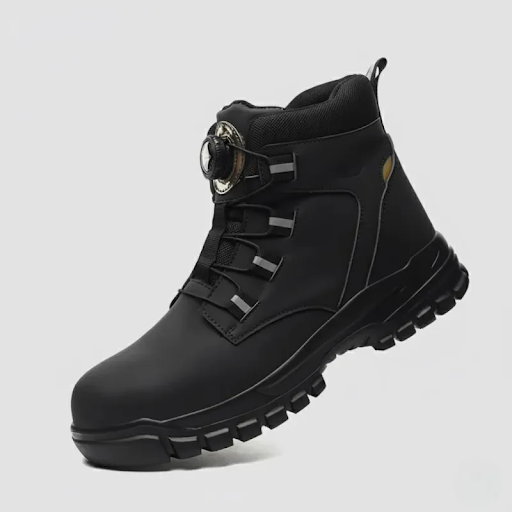
Composite toe boots are safety boots equipped with a non-metallic protective cap made from advanced materials such as fiberglass, Kevlar, carbon fiber, or high-density plastic. Unlike steel, these materials are engineered to provide strong impact resistance while significantly reducing overall weight. In the comparison steel toe vs composite toe boots, many workers assume composite means weaker. That is incorrect. When properly certified, composite toe boots must meet the same safety standards as steel toe models. In North America, this includes ASTM F2413 requirements defined by ASTM International. In Europe, EN ISO 20345 standards are governed by the International Organization for Standardization. Impact and compression resistance levels are equivalent when certified.
Composite toe technology was developed to address comfort concerns. The goal was simple: maintain safety while reducing weight and improving thermal performance.
Advantages
- Noticeably lighter than steel toe boots
- Non-conductive, ideal for electricians and electrical environments
- Better thermal insulation in extreme cold or heat
- Non-detectable by metal scanners
Disadvantages
- Slightly bulkier toe design in some models
- Often more expensive than steel alternatives
In the debate steel toe vs composite toe boots, composite stands out for comfort-driven performance without sacrificing certified protection.
Discover: Trousers women for work: Expert Guide to Choosing the Best Trousers Women
Steel Toe vs Composite Toe Boots: Which One Should You Choose Based on Your Job?

Choosing between steel toe vs composite toe boots largely depends on your work environment and the specific hazards you face daily. Understanding how each boot performs in different industries helps you make a safer, smarter choice.
Construction & Heavy Industry
For construction workers, demolition teams, or those handling heavy machinery, steel toe boots remain the recommended option. Their maximum impact resistance and long-term durability make them ideal for environments where heavy objects, falling debris, or high-pressure hazards are common.
Warehouse & Logistics
Workers in warehouses or distribution centers often spend long hours on their feet, moving quickly between aisles or climbing ladders. Here, composite toe boots offer a clear advantage. Their lighter weight reduces fatigue and makes it easier to stay comfortable throughout extended shifts, without compromising certified protection.
Electricians
Electricians or employees working near live circuits should choose composite toe boots without hesitation. Their non-conductive design significantly reduces the risk of electrical shock, while still providing certified impact and compression protection. Steel toe boots, in contrast, conduct electricity and pose an added hazard in these settings.
Manufacturing
In manufacturing environments, the choice depends on specific conditions. Steel toes are ideal for heavy-impact areas, while composite toes may be preferred in zones requiring more thermal insulation or long-distance walking. Always consider both the type of equipment and the physical demands of your tasks.
Airport / Security Jobs
For employees passing through security checkpoints or working in airports, composite toe boots are often mandatory. They avoid metal detectors, allowing for smoother access, while maintaining certified toe protection.
In the steel toe vs composite toe boots debate, there is no one-size-fits-all answer. Your job’s environment, exposure to electrical hazards, thermal conditions, and mobility needs will determine which option maximizes both safety and comfort. For all-day support, don’t forget to pair your boots with high-quality work socks like those offered by Mason Clothing to enhance cushioning, moisture control, and overall foot health..
Discover this: How Should a Work Boot Fit: Expert Guide for Optimal Comfort and Safety
Comfort Matters: Don’t Forget the Whole Boot Design
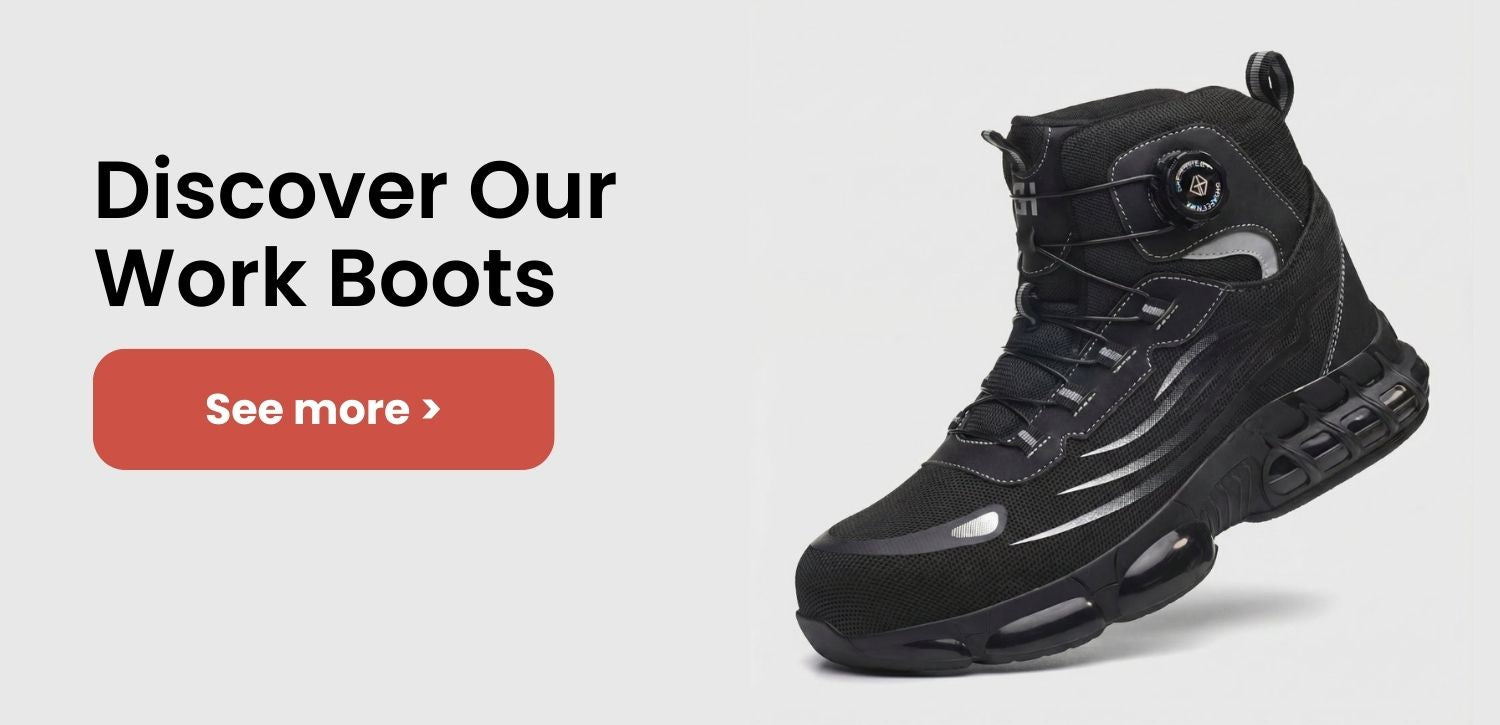
When evaluating steel toe vs composite toe boots, comfort goes far beyond the toe cap. The overall boot design plays a crucial role in preventing fatigue, discomfort, and long-term foot problems. Cushioning is essential. A well-padded midsole absorbs shock during walking, climbing, or standing for extended periods. Combined with an anti-perforation sole, it protects your feet from sharp objects while maintaining flexibility. Breathable materials in the upper part of the boot allow air circulation, reducing sweat, odor, and the risk of blisters.
Ankle support is equally important. Boots with proper cheville (ankle) reinforcement stabilize the foot, decreasing the likelihood of twists and strains, especially when carrying heavy loads or working on uneven surfaces. Finally, pairing your boots with high-quality work socks makes a significant difference. Technical socks, like those from Mason Clothing, provide extra cushioning, moisture-wicking properties, and reduce friction inside the boot. Together, they create a protective and comfortable environment for your feet.
Discover also: How Do Boot Sizes Work? Complete Guide to Getting the Right Fit
Steel Toe vs Composite Toe: Final Verdict
Choosing between steel toe vs composite toe boots depends on your real workplace risks. For a limited budget in heavy industry, steel toe boots offer maximum durability and protection. For long shifts requiring mobility, or in electrical environments, composite toe boots are lighter, non-conductive, and more comfortable. Composite toes also insulate better in extreme temperatures, while steel toes remain superior for repeated high-impact hazards. Always base your choice on actual risk, not preference. Pair your boots with quality work socks, like those from Mason Clothing, to enhance comfort, support, and all-day foot protection.
FAQ: Steel Toe vs Composite Toe Boots
Are composite toe boots OSHA approved?
Yes. Composite toe boots can meet OSHA requirements if they are certified under ASTM F2413 or EN ISO 20345 standards. Properly certified boots provide the same impact and compression protection as steel toe models.
Do steel toe boots hurt your feet?
Not if they fit correctly. Steel toe boots can feel heavier, but with proper sizing, cushioning, and quality work socks, they remain comfortable for long shifts. Foot discomfort usually comes from poor fit rather than the steel toe itself.
Are composite toe boots as strong as steel?
When certified, composite toe boots offer equivalent protection. They must pass the same impact and compression tests, making them just as safe as steel toe boots for workplace hazards.
