


The best heavy duty work socks have reinforced heels and toes, dense cushion under the heel and ball of the foot, and a blend with nylon for strength. A snug arch band and a firm cuff matter just as much. A sock that slides around inside the boot wears through fastest.
"Heavy duty" is printed on plenty of socks that are done in a few weeks. This guide is how to tell the difference before you buy.
In this guide
Key takeaways
- Heavy duty means reinforced where socks fail: the heel and the big toe.
- Nylon in the blend adds strength. Cotton on its own thins out fast.
- Cushion belongs under the heel and ball of the foot. Thick everywhere just means hot and tight.
- Fit is a durability feature. A sock that slips rubs itself thin.
- Care decides how long a good sock lasts: rotate pairs, skip high dryer heat, trim your toenails.
What makes a work sock heavy duty?
A heavy duty work sock has reinforced heel and toe zones, dense cushioning underfoot, and a yarn blend with nylon for abrasion resistance. Fit matters too. An arch band and a firm cuff stop the sock shifting, which is what wears holes fastest.
Check four things on the spec sheet, not the packaging photo:
- Reinforcement: extra yarn at the heel and toe, the two spots boots grind on every step.
- Cushion: padding under the heel and ball of the foot, where you hit the ground.
- Blend: a moisture-handling fiber like bamboo or merino, with nylon for strength and spandex for stretch.
- Hold: an arch band and a cuff that keep the sock in place all shift.
Why do work socks get holes?
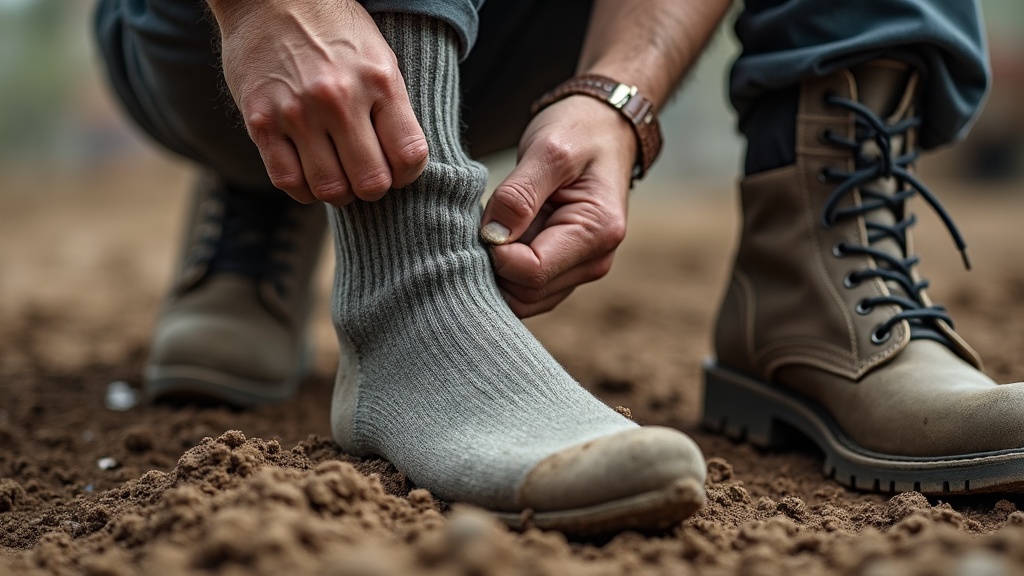
Work socks get holes where the boot rubs hardest, usually the heel and the big toe, and they wear faster when the sock slides, stays damp or goes through a hot dryer. Ask people who work in boots all day and you hear the same complaints:
- The heel wears through. The heel lifts and drops inside the boot on every step. A loose sock turns that into friction.
- The big toe blows out. Long toenails and a tight toe box push through the yarn from the inside.
- The elastic gives out first. The cuff stretches out, the sock slides down, and then the heel starts rubbing.
- The sock thins out in the wash. High dryer heat breaks down elastic and fibers faster than wearing does.
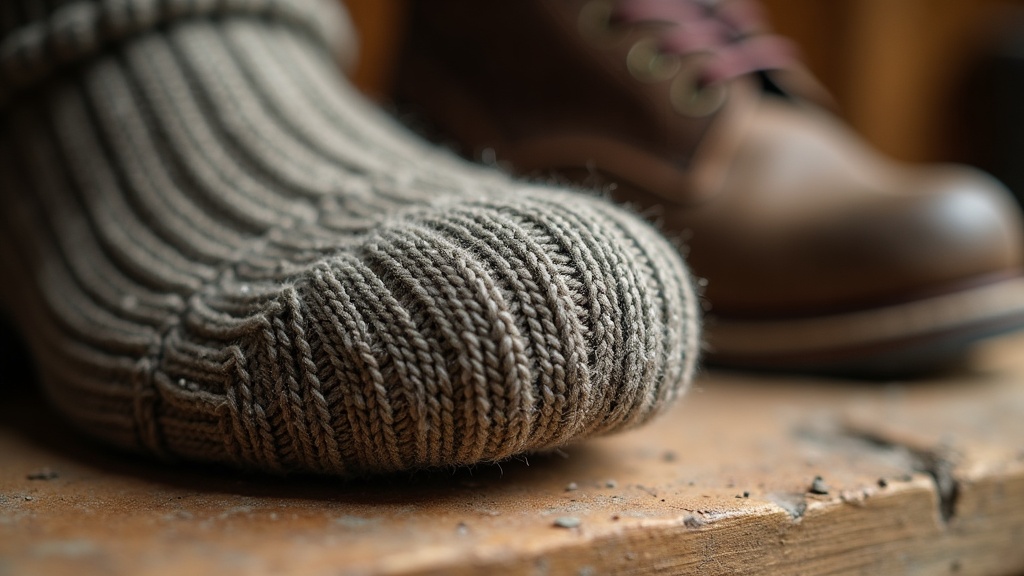
Each of these has a fix. Reinforcement handles the heel and toe. An arch band and a firm cuff stop the slide. Trimmed toenails and a cooler dryer setting do the rest.
What is the strongest material for work socks?
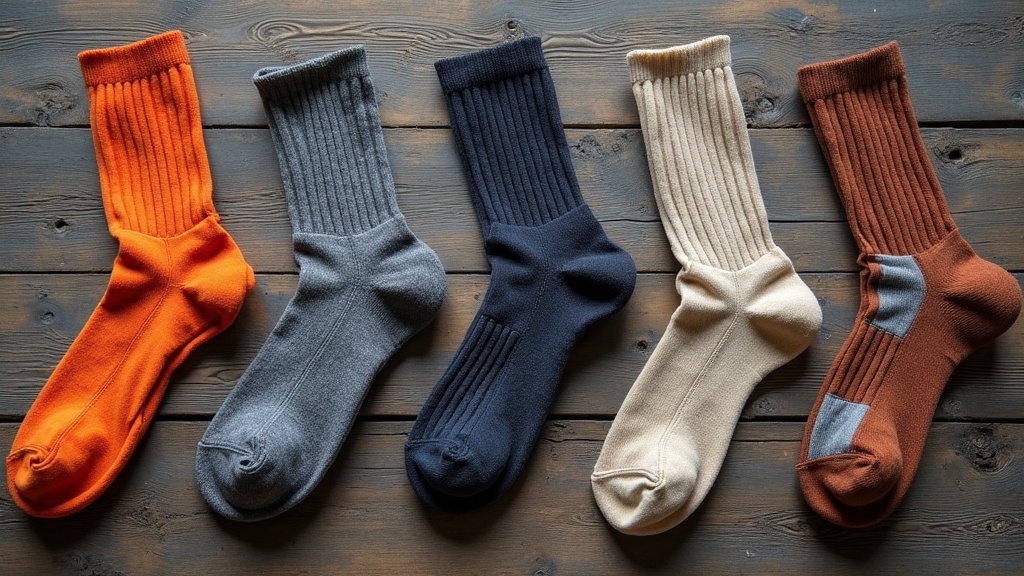
Nylon is the strongest common fiber in work socks, which is why durable work socks blend it with a softer fiber instead of using it alone. Nylon resists abrasion. Bamboo-derived fibers and merino wool handle sweat and feel soft. Spandex keeps the shape.
| Fiber | What it adds | Watch out for |
|---|---|---|
| Nylon | Strength, abrasion resistance | Feels clammy on its own |
| Bamboo-derived fibers | Softness, moisture handling | Needs nylon for strength |
| Merino wool | Moisture handling, warmth | Can run warm in summer |
| Spandex | Stretch, holds the shape | Weakened by high dryer heat |
| Cotton | Cheap, soft at first | Holds sweat, thins out fast |
If sweat is the bigger problem than wear, the guide to the best moisture-wicking socks for work goes deeper on fibers.
Which heavy duty socks suit your work surface?
The ground under your boots changes what wears out first.
Concrete and warehouse floors
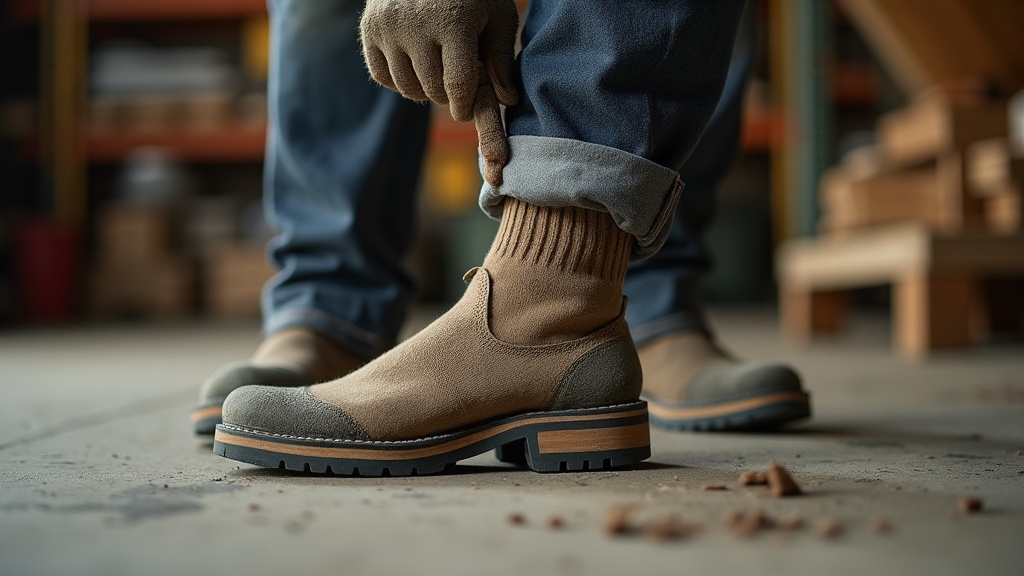
Hard floors pound the heel and ball of the foot all day. Put cushion first, under both. The guide to work socks for concrete floors covers this in detail.
Outdoor sites, mud and uneven ground
Uneven ground moves your foot around inside the boot. Hold matters most here: an arch band and a firm cuff stop the sock twisting. Wet sites also need a blend that wicks sweat, not cotton.
Ladders, roofs and steel toe work
Climbing presses the arch and the toes. Steel toe caps press the top of the toes too. Look for padding over the toes, not only under them. The guide to the best work socks for steel toe boots goes through it.
Cold sites
Cold work needs a heavier sock, as long as the boot still fits with it on. A squeezed foot gets cold faster. The guide to the best winter work socks covers layering and fit.
What are the best work socks for 12-hour shifts?
The best work socks for 12-hour shifts are fully cushioned, wick sweat, and fit snugly at the arch so they don't bunch. Rotating pairs lets each one dry out fully and keeps the cushion from flattening. On hot days, a fresh pair at lunch helps too.
For more on cushion levels, see the guide to thick cushioned work socks.
Which work socks last longest on the job?
The work socks that last longest combine reinforcement at the heel and toe, a nylon blend, a fit that doesn't slide, and a warranty that covers wear. The warranty tells you how long the brand expects the sock to hold up.
How you treat a sock matters as much as how it's made:
- Rotate at least five pairs, so no pair works two shifts in a row.
- Wash cold and hang dry, or use a low dryer setting.
- Keep toenails trimmed.
- Size by shoe size. A sock that's too big folds and rubs. A sock that's too small stretches thin.
Are expensive work socks worth it?
Expensive work socks are worth it when the extra cost buys reinforcement, a wicking blend and a warranty that replaces worn pairs. Compare the cost per month of wear, not the price per pack.
A cheap pair that blows out in a few weeks costs more over a year than a pair that lasts. Before you buy, check what the warranty covers and how you claim it.
How does MASON build heavy duty work socks?
MASON makes work socks for people on their feet all shift. Every pair has:
- A Reinforced Heel Cup and a reinforced toe
- Cloud Cushioning under the heel and ball of the foot
- An Arch Strap that keeps the sock from twisting
- Mesh Ventilation over the top of the foot
- A Double Cuffed Pull Tab to pull them on fast
Three pairs suit heavy duty work:
- Tradesman Socks: the everyday work sock for long shifts.
- Tradesman Heavyweight Socks: the heavier option in the range, for cold sites.
- The Work Week Pack: enough pairs to rotate through the week.
MASON work socks come in sizes that fit US men's 6 to 15 and US women's 7 to 13. Every order comes with a 99-day money-back guarantee, and a lifetime warranty after that. You can compare every pair in the full work sock range.
"Most comfortable sock I've worn. After 10 years of tree lopping and a further 10 years in construction, my feet have earnt their keep and deserve the best." Nick H., customer review
Checklist: is it really heavy duty?
- Reinforced heel and toe
- Cushion under the heel and ball of the foot
- Nylon in the blend, not pure cotton
- An arch band and a firm cuff
- A size chart based on shoe size
- A warranty that covers wear
FAQ
What are some good socks that don't get holes?
Socks that don't get holes have reinforced heels and toes, nylon in the blend and a fit that doesn't slide. Trimmed toenails and a low dryer setting help any pair last longer.
Do heavy duty work socks need to be wool?
Heavy duty work socks don't need to be wool. Merino wool and bamboo-derived blends both work, as long as nylon is in the mix for strength.
Are thick socks more durable?
Thick socks aren't automatically more durable. Reinforcement at the heel and toe matters more than overall thickness, and a sock that's too thick for the boot rubs more.
How many pairs of heavy duty work socks do you need?
Most people working five shifts a week need at least five pairs, so every pair gets a full wash and dry between wears.
Want more work sock guides like this in your Google results? Add masonclothing.com as a preferred source.
Next, see the guide to the best socks for work boots.
