


Your feet hit concrete at 6 a.m. and don't get a real break until you're back in the truck. Crawl spaces, slab floors, attic ladders, hours bent in weird positions wearing steel-toes that were never built for comfort. That's a plumber's day, and after a few years of it, your feet let you know.
A good insole won't fix a bad boot and it won't replace a podiatrist when things get serious. But the right one, dropped into the right boot, can cut your end-of-day pain in half. This guide cuts through the noise and gets you to what actually works on the job.
Key points at a glance
- Concrete floors transfer shock directly into your heel and arch, making plumbers especially vulnerable to plantar fasciitis and heel spurs.
- The best insoles for plumbers combine deep heel cupping, firm arch support, and a shock-absorbing layer thick enough to survive steel-toe boots.
- Flat-footed tradesmen need a different profile than high-arch workers, so there's no one-size-fits-all answer here.
- Most quality insoles last 6 to 12 months under heavy daily use. Rotating two pairs doubles that.
- Over-the-counter orthopedic insoles can get you 80% of the way there for under $60. Custom orthotics make sense only when OTC options stop working.
What a great insole does for you on the job
Why Plumbers Get Hit Harder by Foot Pain Than Most Trades
Carpenters and electricians move around. Plumbers spend long stretches standing completely still on concrete, then suddenly drop to their knees, crouch under a sink, or climb a ladder carrying 40 pounds of pipe. That stop-and-go pattern, combined with unforgiving surfaces, is a recipe for plantar fasciitis, heel spurs, and arch collapse.
Add steel-toed boots with little to no factory cushioning, and you've got a setup that grinds your feet down over years. The plantar fascia ligament, that band running along the bottom of your foot, takes a beating every single shift.
What to Look For in an Insole Before You Spend a Dime
Don't buy on marketing claims. Buy on specs. Here's what actually matters for insoles for standing on concrete all day:
- Deep heel cup: At least 14mm depth cradles your heel bone and stops it from rolling outward. Shallow cups are basically flat insoles with branding.
- Firm arch support: Soft foam alone doesn't support an arch. You want a semi-rigid or rigid shell under the foam layer.
- Dual-layer cushioning: A firm base absorbs impact, a softer top layer handles comfort against your sock. Both matter.
- Slim enough for your boot: A thick insole in a tight steel-toe creates pressure points. Check the profile before you buy.
- Moisture management: Sweaty feet in sealed boots are a separate misery. Look for a top fabric with some moisture-wicking ability.
Did you know?
Concrete is roughly 10 times harder than asphalt. Every step on a slab sends a shockwave up through your heel at a force equivalent to 1.5 times your body weight, according to biomechanics research from the University of Tennessee. That adds up to thousands of impacts per shift.
The 6 Best Insoles for Plumbers With Chronic Foot Pain
These picks are based on what holds up in real work boots under real conditions. No gel gimmicks. No insoles built for running shoes that compress flat by lunch.
1. Superfeet GREEN
The benchmark for best orthopedic insoles for work boots. A high-density foam cap sits over a rigid stabilizer cap that doesn't compress over time. Deep heel cup, firm arch. Built for wide, flat work-boot platforms.
2. Powerstep Pinnacle
Double-layer EVA foam with a semi-rigid arch shell. One of the most-recommended plantar fasciitis insoles for tradesmen by sports medicine clinics. Fits most steel-toe boots without modification.
3. Dr. Scholl's WORK Insoles
Specifically engineered for tradesmen spending 8-plus hours on hard surfaces. Massaging gel heel pad, reinforced arch zone. At under $20, it's the best value entry point on this list.
4. Sof Sole Airr Orthotic
Uses an air chamber in the heel for shock absorption rather than foam alone. Better than foam for repetitive hard-surface impact. Good choice if your heel pain is the dominant complaint.
5. Timberland PRO Anti-Fatigue
Designed specifically for Timberland's own work boot platform, but fits most similar lasts. Inverted cone geometry in the heel disperses impact outward instead of straight up. Durable for heavy duty insoles for blue-collar workers.
6. Kingfoam Elite
Originally from the skate world, now a cult pick among tradesmen. High-rebound polyurethane foam that bounces back faster than standard EVA. Holds up better at the heel under repetitive impact.
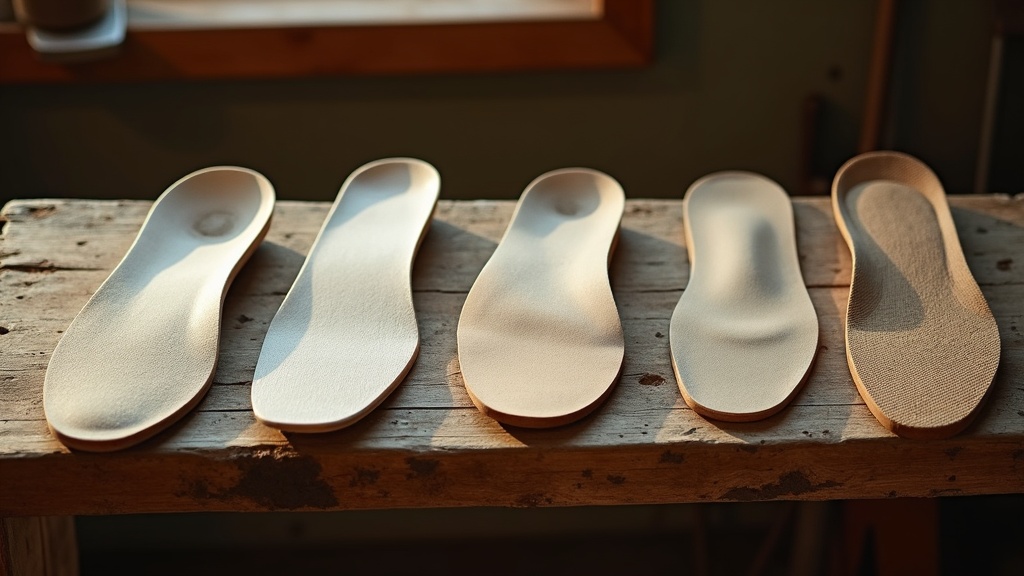
| Insole | Best For | Arch Type | Approx. Price |
|---|---|---|---|
| Superfeet GREEN | All-day slab work, high arches | High, rigid | $50 |
| Powerstep Pinnacle | Plantar fasciitis | Medium, semi-rigid | $40 |
| Dr. Scholl's WORK | Budget pick, heel pain | Medium, foam | $18 |
| Sof Sole Airr | Impact absorption, heel spurs | Medium, air heel | $45 |
| Timberland PRO AF | Fatigue, long shifts | Medium, inverted cone | $35 |
| Kingfoam Elite | Durability, rebound | Low-medium, PU foam | $40 |
Best Insole for Plantar Fasciitis Specifically
Powerstep Pinnacle is the go-to. The semi-rigid shell controls pronation (inward foot rolling) which is the main mechanical driver behind plantar fasciitis. It positions your heel correctly so the fascia ligament isn't being yanked with every step.
If you're waking up with serious heel pain for the first few steps in the morning, that's classic plantar fasciitis. An insole helps, but you also need to stretch your calf and plantar fascia before you hit the floor. That part is free and it works.
Did you know?
Plantar fasciitis affects roughly 2 million Americans each year, and tradesmen who stand on hard surfaces more than 4 hours a day face a significantly higher risk than office workers. The American Orthopaedic Foot & Ankle Society notes that supportive insoles are the first-line non-surgical treatment in most cases.
Best Insole for Flat Feet in Work Boots
Flat feet mean your arch makes full or near-full contact with the ground. That collapses your ankle inward (overpronation) and loads up your knees and lower back along with your feet. Insoles for flat feet in work boots need a firmer, higher arch profile, not just cushioning.
Superfeet GREEN or Superfeet BERRY (for narrower feet) are the strongest flat-foot options. They have a high, rigid arch that physically props up your foot structure instead of just sitting there looking like it does something.
What Podiatrists Actually Recommend (and What They Skip)
Most podiatrists will tell you to start with a quality OTC orthotic before spending $400 to $600 on custom molded orthotics. For the majority of tradesmen with arch support needs and plantar fasciitis, OTC options get the job done if you pick the right one.
What they don't recommend: gel-only insoles, foam insoles with no arch structure, and anything marketed primarily as a "comfort" insole. Comfort and support are not the same thing. A soft insole feels good in the store and does nothing for alignment on the job.
Custom orthotics make sense when you've got a documented structural issue, when OTC options have genuinely failed after 3 to 6 months of consistent use, or when a podiatrist finds significant leg-length discrepancy or severe pronation. Don't start there.
How to Make Your Insoles Last Longer on the Job
A $50 insole compressed flat in 90 days is $50 wasted. Here's how to actually protect your investment:
- Rotate two pairs. Alternate daily. Foam and polyurethane need 24 hours to decompress fully. One pair alone never fully recovers.
- Pull them out each night. Let the boot air out and let the insole breathe separately. Moisture kills the foam faster than use does.
- Replace at 6 months, not when they feel dead. They lose structural support before they feel flat. A compressed insole is doing more harm than good.
- Check your boot too. If the midsole of your boot is compressed, no insole compensates for that. Boots need replacing roughly every 12 to 18 months under daily trade use.
One last thing: size the insole to your boot, not your foot size. Most insoles come in ranges and need trimming. Cut along the guide lines provided, trim gradually, and test the fit before your first full shift. A poorly trimmed insole that bunches at the toe causes new problems.
