


Most people spend real money on work boots. Then they grab whatever socks are in the drawer. That's a problem — and it shows up about four hours into your shift when your heels are rubbing, your feet are sweating, or you can't feel your toes despite wearing supposedly insulated boots.
The sock is the interface between your foot and your boot. Get that wrong, and the best boots in the world won't save you from blisters, fatigue, or cold. Get it right, and your entire workday changes. Here's how to actually choose the best socks to wear with boots — and which ones are worth buying.
Why the Sock Matters More Than Most People Think?
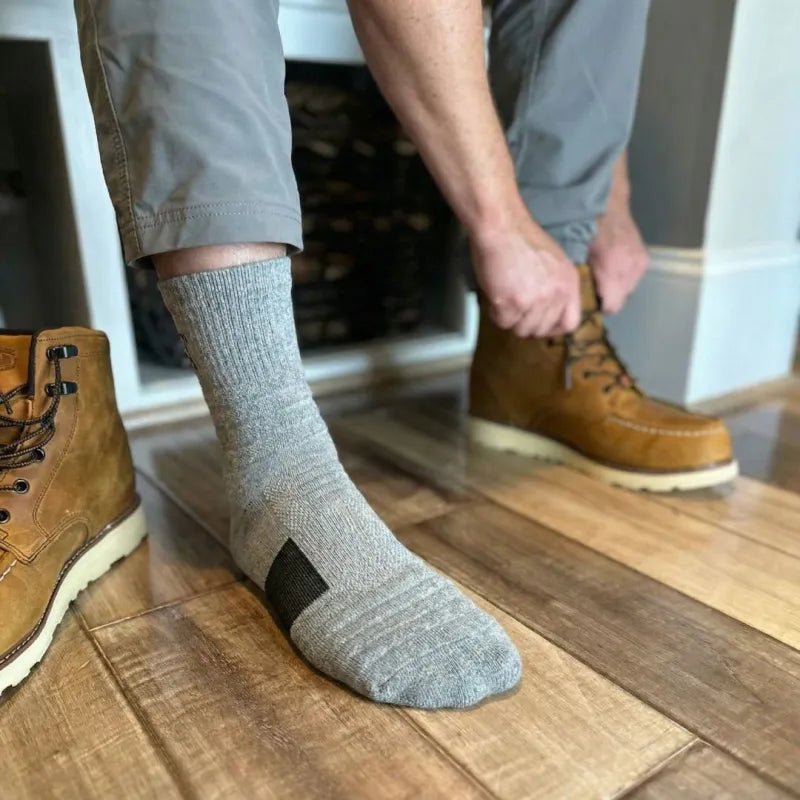
Here's what socks actually do inside a work boot:
They manage moisture. Your feet have roughly 250,000 sweat glands and can produce up to half a pint of sweat per day. Inside a sealed work boot, that moisture has nowhere to go unless your sock is actively pulling it away from the skin. If it sits there, you get softened skin, blisters, fungal risk, and — in cold weather — feet that feel cold even in warm boots.
They absorb impact. Every step on concrete or gravel sends a shockwave up through the sole of your boot. A cushioned work sock absorbs some of that before it reaches your foot, reducing cumulative fatigue over a 10-hour shift. This isn't a small effect: podiatric research consistently shows that cushioned socks measurably reduce plantar pressure and heel fatigue on hard surfaces.
They prevent friction. A sock that fits poorly — too loose, too short, the wrong material — creates friction points where the boot moves against your skin. That's where blisters come from. A well-fitted sock with reinforced heel and toe zones eliminates most of that.
They regulate temperature. In cold environments, the right sock retains heat while allowing moisture to escape. Get those two things wrong in either direction — too warm and you sweat and lose insulation, too thin and you just get cold — and your thermal system fails regardless of your boot.
The sock isn't an afterthought. It's the first layer of your foot protection system.
The 4 Factors That Determine Which Sock You Actually Need
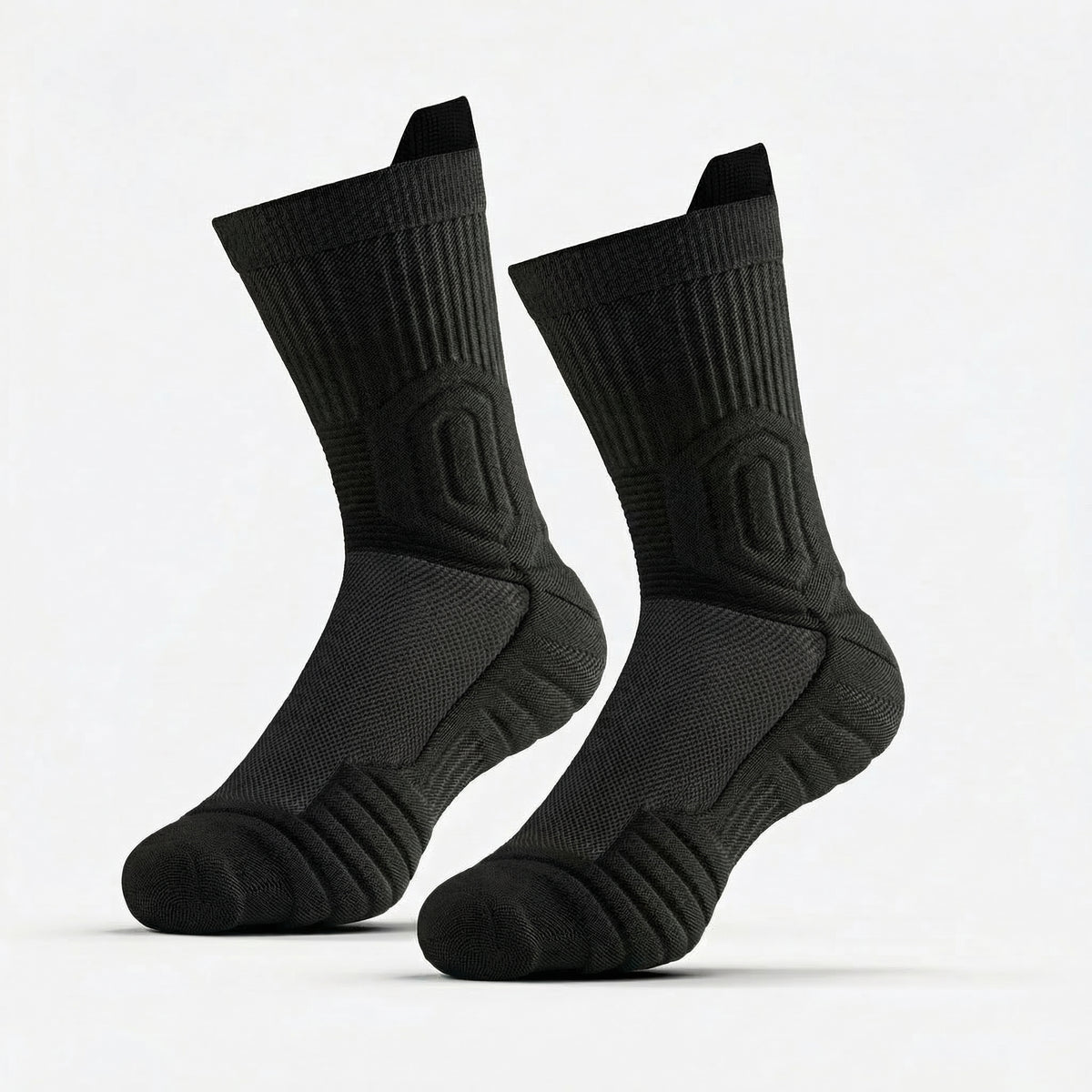
Before looking at specific socks, run through these four:
1. Your boot type. High-cut work boots, safety boots, and slip-on boots each fit differently and leave different amounts of room in the toe box. A sock that's too thick for a snug-fitting composite toe boot will create pressure points where you didn't have any. If you wear fitted boots, lean toward mid-weight socks. If your boots have more room, thicker is fine.
2. Your work environment temperature. This is the most important variable. Hot environments (warehouses, factories, summer outdoor work) need breathable moisture-wicking socks. Cold environments (outdoor winter work, unheated warehouses, construction in low temperatures) need insulating socks that still breathe. Getting this backwards — thick insulating socks in a hot environment — creates more problems than thin socks in the cold.
3. How long you're on your feet. Eight hours standing on concrete is not the same as eight hours moving around a warehouse. Static standing creates more heel and arch pressure, so more cushioning matters. Constant movement generates more heat and sweat, so breathability becomes the priority.
4. The specific hazards of your job. Outdoor exposure to moisture means you need a sock that performs even when damp. Environments with temperature swings need a sock that handles both ends. Jobs involving high activity levels need a sock that stays in place and doesn't bunch.
Check out our article on: Features of Work Boots: Complete Guide and Expert-Approved Features 2026
The Best Socks to Wear with Boots: Mason's Range by Use Case
Mason's sock collection covers four distinct profiles. Here's what each one is built for.
Breathable Work Socks (5 Pairs)
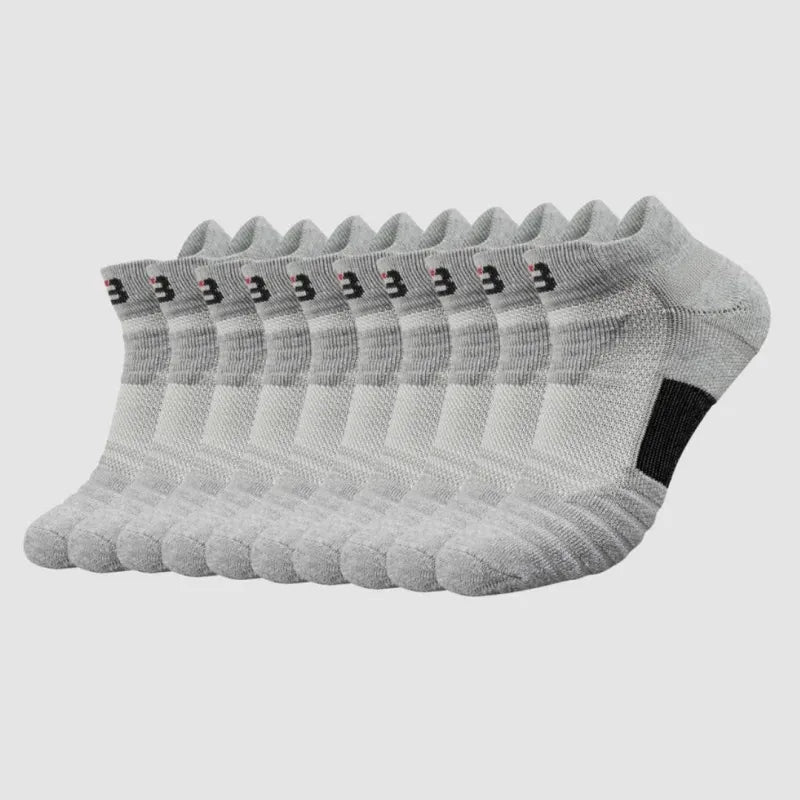
These are the socks for people who run hot or work in environments where ventilation is the problem. The technical fiber blend wicks moisture away from the skin and lets it evaporate rather than building up inside the boot.
Key features
- Moisture-wicking technical fabric — keeps feet dry throughout the shift
- Four-way stretch for natural foot movement
- Antimicrobial treatment — limits odor and bacteria buildup
- Reinforced heel and toe zones for durability
- Lightweight cushioning — enough to reduce fatigue without adding bulk
The antimicrobial treatment is worth noting specifically. In enclosed boots worn for 10+ hours, bacteria accumulate fast. A sock with built-in antimicrobial properties manages that at the source — which matters both for foot health and for the lifespan of your boots.
Five pairs in a pack means you're rotating properly, which is the single most effective thing you can do to extend sock life and keep feet healthy. Wearing the same pair two days in a row without letting them fully dry is how most work socks degrade prematurely.
- Who these are for: construction workers in summer, warehouse staff, logistics workers, anyone who ends the day with damp feet.
Warming Work Socks (5 Pairs)
The Warming Work Socks flip the priority: heat retention comes first, but without trapping moisture. The cotton/poly blend is heavier than the breathable model, giving you real insulation that holds body heat against your foot through a long outdoor shift.
Key features
- Premium cotton/poly blend — thicker knit for genuine thermal retention
- Moisture management — warm fibers that still allow moisture to escape
- Extra cushioning at heel and sole — impact absorption on cold hard surfaces
- Reinforced high-wear zones — durability under sustained use
- Designed for cold-weather boot pairings (works with insulated boots like the POLAR S3 Pro)
Here's the thing about cold feet that most people get wrong: they assume the problem is the boot. Often it's the sock. A thin sock inside an insulated boot creates a gap between the boot's thermal layer and your foot. The boot's insulation protects the air inside it — not your foot directly. A thick warm sock closes that gap and makes the system actually work.
The combination of Warming Work Socks with the Mason POLAR S3 Pro Winter Safety Boots is the right pairing for outdoor winter conditions. The insulated boot handles external cold and wet; the sock manages the thermal layer directly against your skin.
- Who these are for: outdoor workers in autumn and winter, anyone on cold concrete floors for extended periods, job sites in northern climates.
Bamboo Work Socks
Bamboo fiber is genuinely different from cotton or synthetic blends in a few specific ways that matter for work boots.
First, it's naturally thermoregulating — bamboo fiber responds to body temperature, helping keep feet cooler when you're active and warmer when you're stationary. That makes it useful across a wider range of conditions than a specialized hot-weather or cold-weather sock.
Second, bamboo is naturally antimicrobial and hypoallergenic. Workers with sensitive skin or foot hygiene concerns who've tried cotton and found it lacking often do significantly better with bamboo.
Key features
- Bamboo fiber — naturally thermoregulating, antimicrobial, hypoallergenic
- Excellent breathability — air circulation throughout the shift
- Soft against skin — no irritation on long shifts or with sensitive feet
- Moisture absorption and quick drying
- Compatible with all work boot types
The limitation of bamboo socks is that they're not specialized. If you're in extreme cold, a thermal sock will outperform them. If you're in a very hot, high-sweat environment, a technical moisture-wicking sock may perform better. Bamboo sits in the middle — which is the right call for most people working in variable conditions.
- Who these are for: mixed indoor/outdoor work, workers with sensitive skin or foot hygiene concerns, professionals who want one sock that works in different conditions.
NordWarm™ Heated Socks — Premium
This is the option for situations where standard insulating socks aren't enough. The NordWarm™ uses built-in heating technology to deliver consistent warmth across the foot — not just insulation, but active heat generation.
Key features
- Integrated heating system — active warmth, not just passive insulation
- Consistent temperature across the full foot — heel, arch, toe
- Maintains comfort and circulation in extreme cold
- Built for prolonged outdoor winter exposure
- Premium build for sustained daily use
These aren't for everyone. If your cold exposure is moderate — a cold warehouse, a winter construction site that's uncomfortable but manageable — the Warming Work Socks will handle it and cost considerably less. The NordWarm™ is for genuinely extreme conditions: outdoor workers in sub-zero temperatures, workers exposed to snow and wind for most of their shift, anyone whose feet simply don't warm up with conventional solutions.
- Who these are for: outdoor workers in northern winters, anyone who's tried everything else and still has cold feet.
Check out our guide on: Construction Worker Accessories: 7 Must-Have Expert Picks
A Quick Matching Guide
|
Your situation |
The right sock |
|
Hot warehouse, active movement |
Breathable Work Socks |
|
Cold outdoor work, winter sites |
Warming Work Socks |
|
Variable conditions, sensitive skin |
Bamboo Work Socks |
|
Extreme cold, sub-zero exposure |
NordWarm™ Heated Socks |
|
Long static shifts on concrete |
Warming or Breathable (depends on temp) |
The One Thing That Makes Any Sock Work Better
The biggest variable in sock performance isn't the product — it's how often you rotate pairs. A sock that gets worn daily without fully drying between uses loses its cushioning compression recovery, degrades its antimicrobial treatment, and breaks down its fibers significantly faster.
The 5-pair packs from Mason are specifically sized for a working week of proper rotation. Wear a pair, let it fully dry (ideally 24 hours), wash it, and cycle through. That's how you get 12+ months out of a quality work sock instead of burning through pairs every 3 months.
Pair that with the right boot for your conditions, and you'll notice a difference that's hard to explain until you've experienced it. Your legs feel less heavy at the end of the day. Your feet stay drier. The small problems — the rubbing heel, the cold toes, the 3pm fatigue — stop being constant background noise.
