


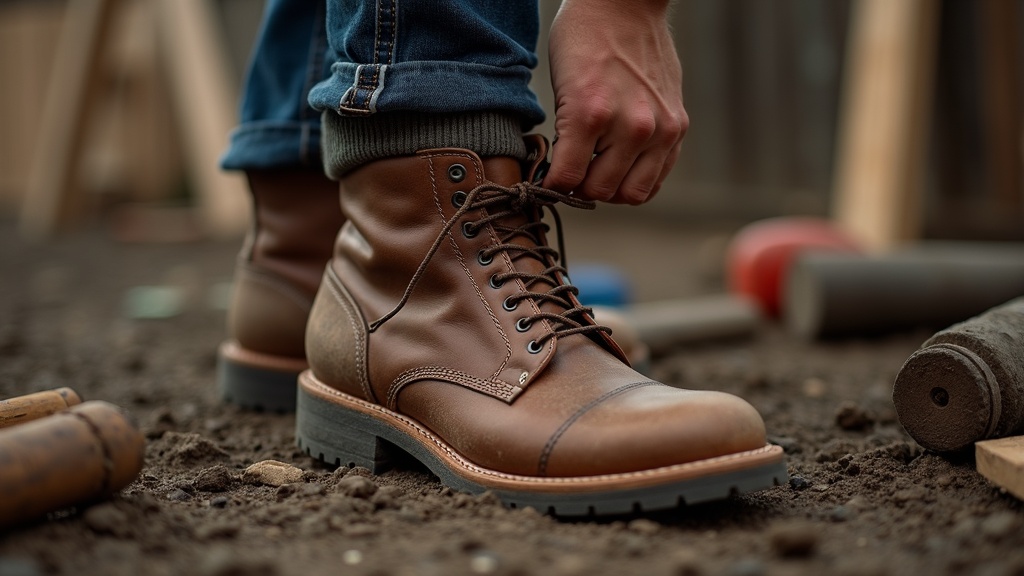
Your boots get all the credit. But it's your socks that decide whether you finish the shift standing or limping. The wrong pair means blisters at hour three, soaked feet by noon, and a bunched-up mess sliding down into the heel of your boot by two o'clock.
This is not a roundup of pretty packaging. Every pick here was evaluated based on one standard: does it hold up when you're on your feet all day doing actual work?
Key points at a glance
- Material matters more than brand: merino wool and nylon blends outperform cotton every time on a jobsite.
- Steel toe boots need extra cushioning at the toe box to prevent pressure sores and bruising.
- If your feet sweat heavily, moisture-wicking synthetic blends beat pure wool for all-day dryness.
- Over-the-calf socks stay up longer and protect the shin against boot shaft abrasion.
- Cheap cotton socks are the number one cause of blisters on the job. Avoid them entirely.
- With proper care, a quality pair of work socks can outlast six months of daily use.
What a great work sock actually gives you
Why Your Socks Matter as Much as Your Boots
A $200 pair of work boots does nothing for you if your socks are generating friction against your heel. Blisters form from repeated rubbing on skin that's hot and damp. The sock is the interface between your foot and the boot. Get it wrong and the boot itself becomes the problem.
Foot fatigue is also a sock issue. Standing on concrete for eight hours without proper cushioning grinds your joints down. A sock with a padded footbed changes that equation significantly.
What to Look for in a Work Boot Sock
Material
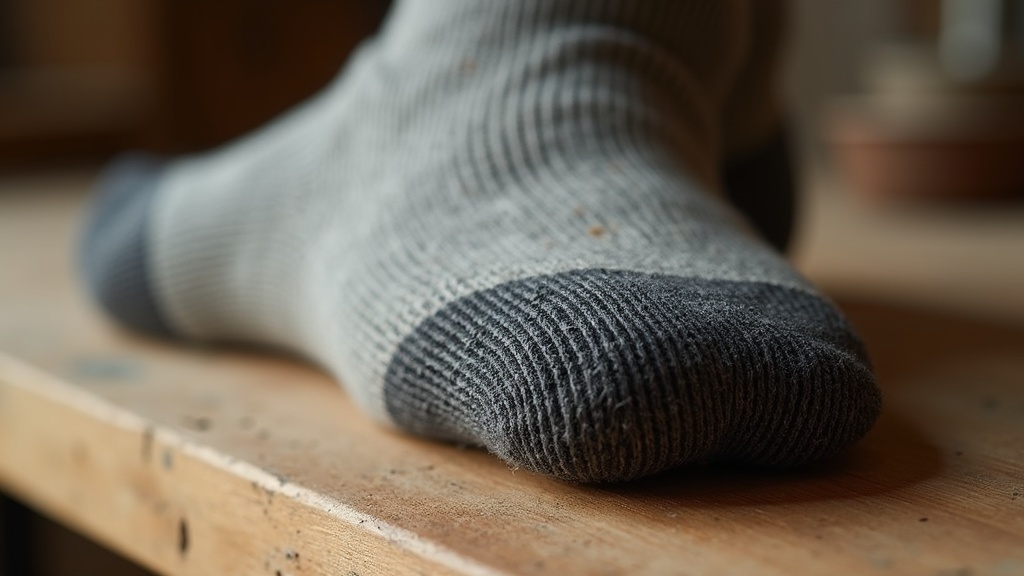
Merino wool is the gold standard. It regulates temperature, resists odor naturally, and stays soft against skin even when wet. For heavy sweaters, a merino-nylon blend adds durability without sacrificing moisture management.
Avoid 100% cotton. It absorbs moisture and holds it, turning your boot into a warm wet environment that breeds blisters and fungus.
Cushion level
- Light cushion: good for warmer months or lighter-duty work
- Medium cushion: the everyday workhorse, right for most tradesmen
- Heavy/full cushion: best for concrete floors, demolition, and long-haul standing
Fit and elasticity
A sock that won't stay up is a sock that's already failed. Look for a defined arch support band and a snug cuff. Work socks that stay up all day typically use a blend of nylon and elastane in the cuff zone.
Did you know?
The average worker takes between 8,000 and 10,000 steps on a jobsite per shift. Each step generates friction inside the boot. A sock with poor elasticity will shift with every step, compounding that friction across miles of movement by end of day.
Best Socks for Steel Toe Boots Specifically
Steel toe caps create a hard ridge where the cap ends. Without adequate padding, that ridge digs into the top of your toes on every forward step. The best work socks for steel toe boots have reinforced, cushioned toe boxes, not just a thicker footbed.
Look specifically for seamless toe construction. A seam pressing against a steel cap is a pressure point that builds into a sore by mid-afternoon.
- Darn Tough Boot Sock (Full Cushion): seamless toe, Vermont-made, lifetime guarantee
- Wigwam Merino Comfort Hiker: dense toe padding, stays put in tight-fitting boots
- Carhartt Force Midweight Crew: affordable, reinforced toe, solid for daily rotation
Check out our article on: Best Socks to Wear With Work Boots (Tested on the Job)
Best Socks for Sweaty Feet on the Job
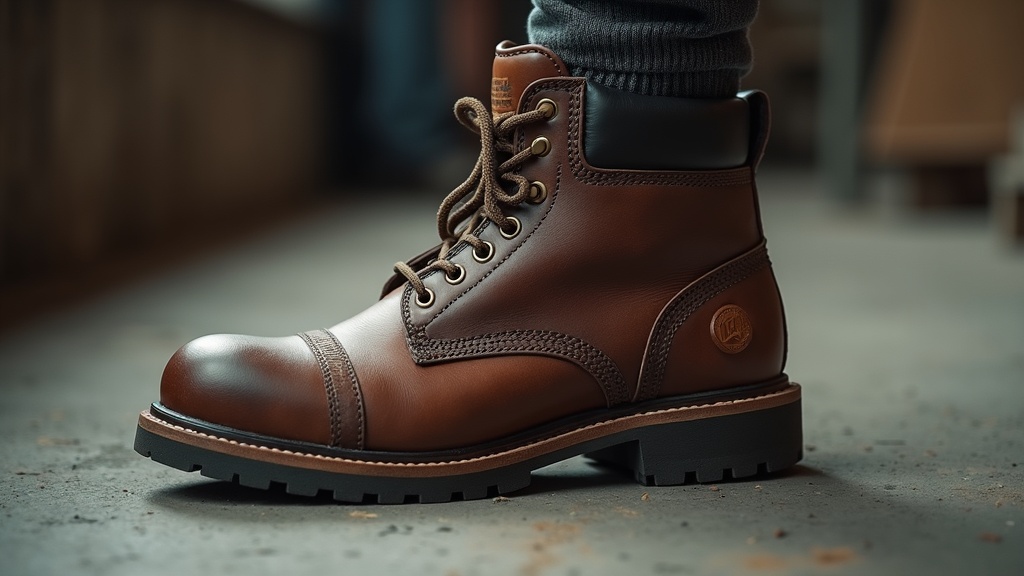
If your feet sweat heavily, pure wool can hold more moisture than you want. The best socks for sweaty feet in work boots use a merino-synthetic blend, typically 60% merino, 30% nylon, 10% elastane. The nylon speeds up evaporation.
CoolMax fiber is another legitimate option for hot climates and summer work. It's a polyester derivative engineered specifically for moisture transport. Not as odor-resistant as wool, but it dries faster.
Did you know?
Feet have roughly 250,000 sweat glands and can produce up to half a pint of sweat per day. Trapped inside a work boot, that moisture raises skin temperature and softens the outer layer, making it far more vulnerable to blister-causing friction.
Crew vs. Over-the-Calf: Which Height Actually Works
Crew height (hits mid-calf) is fine for low-cut work boots and most casual jobsite wear. The problem: with a tall work boot, the crew sock sits right at the boot shaft edge. That edge rubs the same spot on your leg all day.
Over-the-calf socks solve this completely. They cover the shin, eliminate shaft abrasion, and rarely slide down because the calf muscle holds them in place naturally.
| Sock Height | Best For | Watch Out For |
|---|---|---|
| Crew (mid-calf) | Low-cut boots, warmer weather, lighter-duty tasks | Slides down in tall boots, shaft rub on the leg |
| Over-the-Calf | Tall work boots, all-day standing, cold environments | Can feel warm in summer; sizing must be right |
| Quarter / Ankle | Low-cut athletic-style work shoes | No shaft protection, bunches in boot heel |
| Knee-High | Electrical work, chemical environments, rubber boots | Overkill for most trades, harder to find in quality wool |
Top Picks by Trade
Construction and general labor
You need heavy-duty work socks with full cushioning. Darn Tough Hiker Boot Sock and Thorlos Padded Hiking Crew both hold up to demolition, concrete, and constant ladder climbing.
Warehouse and distribution
Concrete floors all day means joint fatigue is your enemy. Go with a medium-to-heavy cushion crew sock. Farm to Feet Madison is a solid choice: American-made, merino wool, thick enough to matter.
Electrical work
You're often in tight spaces and kneeling on hard surfaces. An over-the-calf sock protects the shin when you're crouched next to a panel. Wigwam's 40 Below is built for just this kind of punishment.
Plumbing
Wet conditions are the constant. Moisture management is priority one. A merino-nylon blend like the Darn Tough Light Hiker gives you wool's odor resistance with nylon's fast-dry advantage.
Check out our article on: Best Heavy Duty Work Socks: Built for the Full Shift
What to Avoid: Cheap Socks That Will Wreck Your Feet
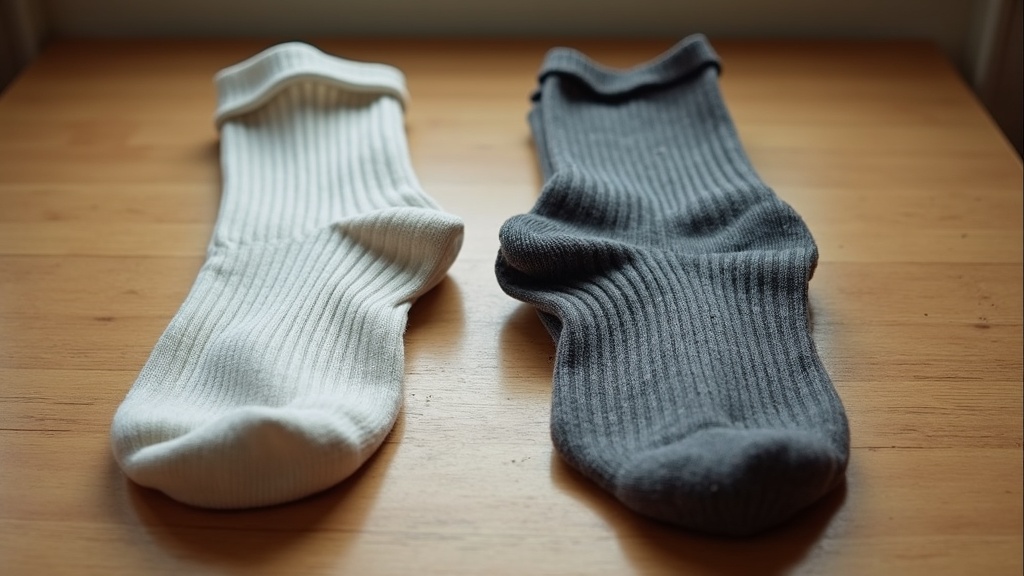
Cotton tube socks with no defined heel pocket. They look like socks. They function like sandpaper after the second hour. No arch band, no cushion zone, no real structure.
Watch out for these red flags on any label:
- 80%+ cotton content
- No mention of moisture-wicking or cushioning
- "One size fits all" (a sock that fits no one well)
- No reinforced heel or toe designation
- Price below $3 per pair for a work-specific sock
A six-pack of drugstore crew socks will cost you more in blister treatment and lost productivity than a three-pack of proper merino wool work socks. That's not an exaggeration.
How to Make Your Work Socks Last Longer
Quality socks are an investment. Treat them accordingly and they'll go six months to a year of daily use without falling apart.
- Rotate at least 3 pairs so no single pair takes consecutive daily punishment
- Wash in cold water, especially wool blends. Hot water breaks down elastane and shrinks fibers
- Air dry when possible. High heat in the dryer degrades the elastic cuff faster than anything else
- Turn inside out before washing to clean the sweat-contact surface more effectively
- Never wring out wool socks. Press moisture out gently and lay flat to dry
The bottom line is simple. Spend $15 to $25 on a pair of real work socks. Rotate three pairs. Wash them right. Your feet will tell you the difference by the end of the first week, and your joints will thank you six months from now.
