


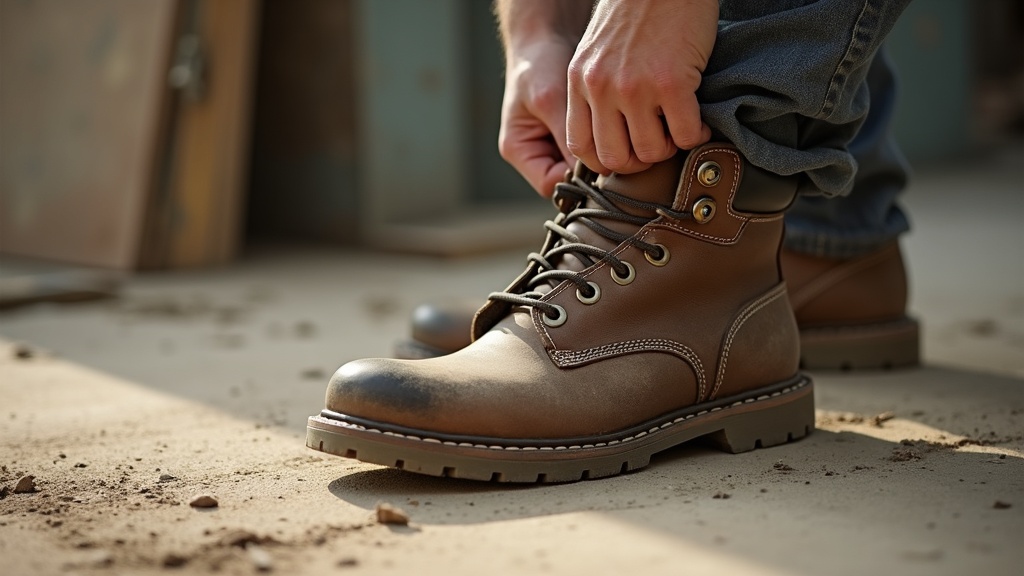
Your feet shouldn't feel like they've been through a meat grinder by 2 PM. Steel toe boots are non-negotiable on most job sites, but the sock you put on underneath? That part is completely in your hands.
The right pair of work socks can be the difference between grinding through a 10-hour shift and limping to your truck. Here's what actually works, ranked, explained, and sourced from real workers who stand on concrete all day.
Key points at a glance
- Steel toe boots concentrate pressure at the toe box, and only cushioning and fit can offset that.
- Merino wool and moisture-wicking synthetics outperform cotton for all-day comfort and odor control.
- Darn Tough and Carhartt lead the pack for heavy-duty durability and blister prevention.
- Compression socks can work with steel toe boots if you choose a low-compression, crew-height option.
- Women on the job need socks built for a narrower heel and lower arch, not just a smaller size.
- Sock choice alone won't fix a bad boot fit, but it can buy you two or three more comfortable hours per shift.
What a great work sock does for you
Why Steel Toe Boots Destroy Your Feet (And What Socks Actually Fix)
Steel toe boots are rigid by design. That steel cap doesn't flex. Every step, especially on hard floors or uneven ground, sends force straight back into your toes and metatarsals.
The other problem is volume. The steel cap takes up real space inside the boot, pushing your foot slightly back toward the heel counter. Without adequate sock cushioning, the fit gets either too tight at the toe or too loose in the heel, both of which cause friction, and friction causes blisters.
A sock can't fix a boot that's two sizes off, but it can absorb shock, reduce friction, and manage moisture, three of the four main causes of foot pain on the job site.
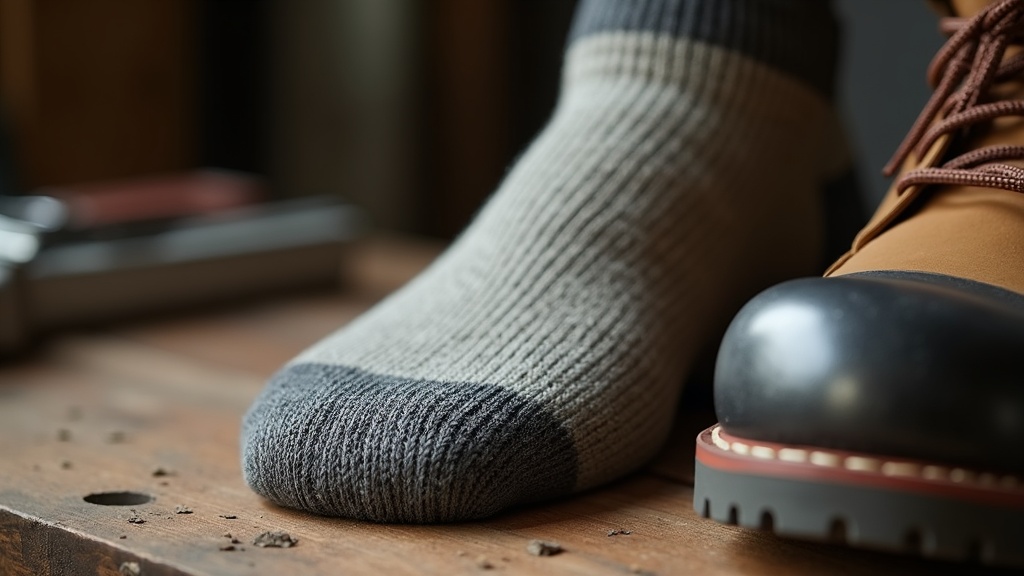
What to Look For in a Work Sock for Steel Toe Boots
Not every thick sock is a good work sock. Here's what actually matters:
- Cushioning zone placement: Look for reinforced cushioning specifically at the toe box and heel, not just a uniformly thick sock.
- Fiber content: Merino wool manages temperature and odor best. Nylon adds durability. Avoid 100% cotton, it holds moisture and causes hot spots.
- Fit and stay-up: A sock that bunches or slides inside your boot will create more blisters than no sock at all.
- Height: Crew or over-the-calf height protects the shin from boot shaft abrasion during long shifts.
- Seam construction: Flat-toe seams prevent pressure ridges under the steel cap.
Did you know?
Merino wool fibers can absorb up to 30% of their own weight in moisture before they feel wet to the touch, far more than cotton or most synthetics. That's why merino work socks stay comfortable well past the halfway point of a long shift.
The 5 Best Work Socks for Steel Toe Boot Pain, Ranked
These five hold up in real conditions. No affiliate fluff, just honest assessments.
1. Darn Tough Hiker Micro Crew Cushion
Best overall pick. Made from 66% merino wool, these are the gold standard for a reason. The cushion is dense under the ball of the foot and toe box, the seams are flat, and Darn Tough backs them with a lifetime warranty. They will outlast three pairs of anything from the big box store.
2. Carhartt Force Midweight Crew
A workhorse sock at a reasonable price. FastDry technology pulls moisture off the foot, and the reinforced heel and toe hold together through daily abuse. Great choice if you want solid performance without the Darn Tough price tag.
3. Wigwam At Work Heavy Duty Crew
Extra-thick cushioning makes this the right call for workers standing on concrete all day. Not the lightest option, but if your shift is 10 hours on a warehouse floor, that bulk is exactly what you need.
4. Farm to Feet Damascus Boot Sock
American-made from USA-sourced wool. The arch support is noticeably better than most work socks, and the moisture management is close to Darn Tough quality. Worth it if you want domestic manufacturing.
5. Dickies Steel Toe Work Crew
The budget pick that actually delivers. Designed specifically for steel toe boots, with extra cushioning built into the toe box to compensate for the cap. Not merino, but moisture-wicking poly-cotton blend performs better than plain cotton.
| Sock | Best For | Material | Price Range |
|---|---|---|---|
| Darn Tough Hiker Crew | Overall best, all-day shift | 66% Merino Wool | $28-$32 |
| Carhartt Force Midweight | Sweaty feet, value | Poly/Nylon blend | $14-$18 |
| Wigwam At Work Heavy Duty | Concrete floors, max cushion | Acrylic/Wool blend | $16-$22 |
| Farm to Feet Damascus | Arch support, USA-made | USA Merino Wool | $24-$28 |
| Dickies Steel Toe Crew | Budget pick, steel toe specific | Poly/Cotton blend | $8-$12 |
Best Pick for Sweaty Feet: Moisture-Wicking Options That Hold Up
Sweaty feet inside steel toe boots are a real problem. The boot doesn't breathe. When your sock saturates, your foot starts sliding, and that sliding becomes blisters within an hour.
The Carhartt Force line is the strongest moisture-wicking option at a mid-range price. For workers who run hot or work in warm environments, Darn Tough's Coolmax-blended options pull moisture even faster than the standard merino version.
One thing to avoid: any sock with a high cotton percentage. Cotton absorbs moisture and holds it against your skin. On a hot job site, a cotton sock is just a wet rag wrapped around your foot by noon.
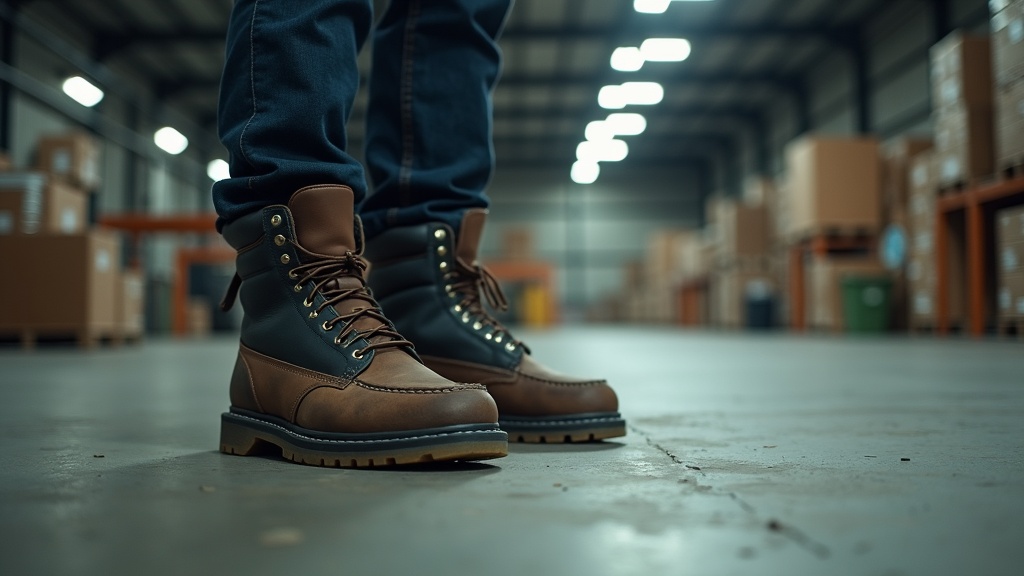
Should You Wear Compression Socks With Steel Toe Boots?
Workers who are on their feet for 8 to 12 hours often deal with swelling, fatigue in the calves, and that heavy-leg feeling by end of shift. Compression socks help with all three.
The catch: most medical-grade compression socks are too thin and not cushioned enough for a steel toe environment. You need a sock that offers mild compression (15-20 mmHg) and still has cushioning at the ball and toe.
Thorlos and CEP both make compression work socks that fit this profile. They won't squeeze your foot against the steel cap, and they support the arch and calf without the numbness that comes from too much compression inside a rigid boot.
Did you know?
Workers who stand for more than 8 hours a day have a measurably higher incidence of lower limb edema (fluid swelling) by end of shift. Mild graduated compression in the 15-20 mmHg range has been shown in occupational health studies to reduce that swelling and end-of-shift leg fatigue without restricting circulation.
Best Work Socks for Steel Toe Boots for Women on the Job
Most work socks are built on a men's last. That means a wider heel pocket and a proportional fit that doesn't translate well to a narrower female foot. The result: bunching at the heel, a sock that slips down mid-shift, and heel blisters.
Women on the job site need socks built on a women's-specific fit, not just a smaller size of the men's version.
- Darn Tough Women's Hiker Crew: Same wool quality as the men's version, built on a women's last with a narrower heel cup. Top pick.
- Smartwool Women's Hike Full Cushion Crew: Excellent arch support and merino quality, slightly more comfortable for narrow feet.
- Carhartt Women's Force Midweight Crew: The most affordable women's-specific option that still handles moisture well.
How to Stop Foot Pain in Steel Toe Boots Beyond the Sock
The sock does a lot, but it's not the whole answer. Here's the rest of the checklist:
- Check your boot fit: With the sock you plan to wear, your longest toe should sit about a thumb's width from the steel cap. Too close and every step presses steel against your nail.
- Add an aftermarket insole: The insole that ships with most work boots is minimal. A Superfeet or Powerstep insole adds arch support and cushioning the factory insole doesn't provide.
- Break in the boot properly: Wear new boots for short periods first. A boot that hasn't molded to your foot yet will create pressure points no sock can fix.
- Rotate your boots: Two pairs on rotation lets each pair fully dry out between shifts. A damp interior accelerates sock wear and blister formation.
What Workers on Reddit Actually Swear By
Scan r/Construction, r/Welding, or r/Truckers and the same names come up repeatedly. Darn Tough is the consensus best overall pick, with workers pointing to the lifetime warranty as proof the company stands behind the product. Several long-haul drivers and warehouse workers specifically call out the Carhartt Force as the best value for the money.
The recurring warning: don't cheap out on the first sock you try and then assume all work socks are the same. A $9 three-pack from a gas station and a $28 pair of Darn Tough are not the same product. One protects your feet through a 12-hour shift. The other is a gym sock wearing a hard hat.
The practical move: Buy one pair of Darn Tough first. Wear them for a full week. Compare that to what you've been wearing. Most workers never go back.
Explore more
Compression Socks for Working Out: What Actually Works
Best Socks for Work Boots: What Actually Holds Up All Day
Athletic Works Socks: Honest Review for Workers on Their Feet
Best Work Socks for Sweaty Feet: What Actually Works
