


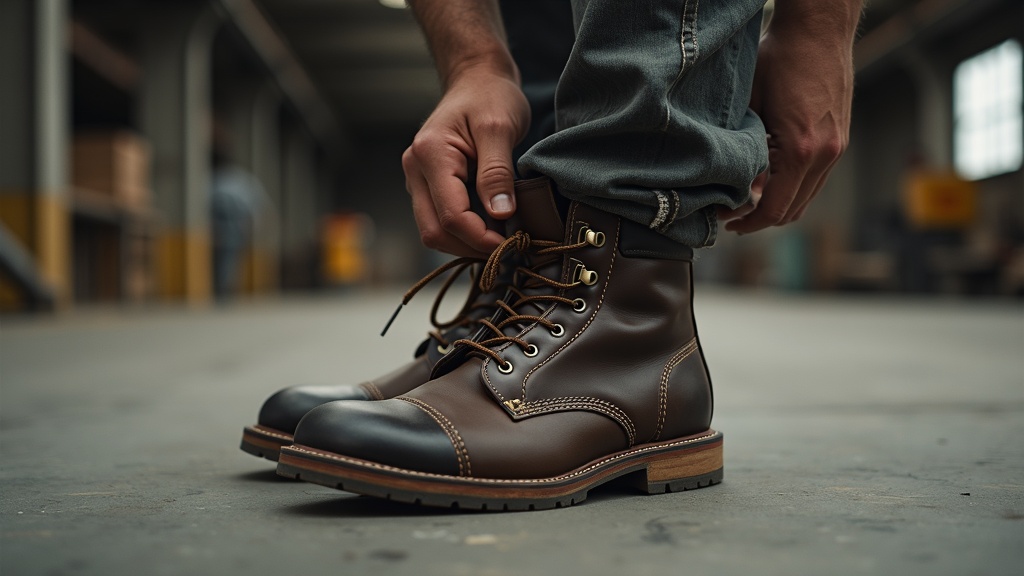
Your feet sweat. A lot. Eight, ten, twelve hours in work boots will do that. The problem isn't the sweat itself, it's what happens when that moisture has nowhere to go: blisters, foot rot, raw skin, and socks that feel like wet paper by lunch.
The right sock fixes most of that. The wrong one makes it worse. Here's what actually works on the job.
Key points at a glance
- Cotton holds moisture against your skin and never lets go. Skip it entirely.
- Merino wool and synthetic blends (nylon, polyester, coolmax) are the two real options for sweaty feet.
- Cushioning placement matters as much as fabric: heel and ball of foot take the most punishment.
- A sock that fits snug prevents blisters better than a thick one that bunches.
- Women's work socks now come in dedicated fits built for narrower heels and lower boot shafts.
- Proper washing and rotation extend sock life by months.
What a great work sock does for you
Why Your Feet Sweat So Much in Work Boots (And Why It Matters)
Your feet have more sweat glands per square inch than almost anywhere else on your body. Add a sealed work boot, a hot jobsite, and eight hours of walking on concrete, and you're generating serious moisture. Some people produce over a pint of sweat per foot per day in those conditions.
That moisture is the root cause of blisters, athlete's foot, trench foot, and the general misery of soggy feet at hour six. Your sock is the only layer managing all of that. It deserves more attention than you're probably giving it.
The Worst Thing You Can Do: Wear Cotton Socks on a Long Shift
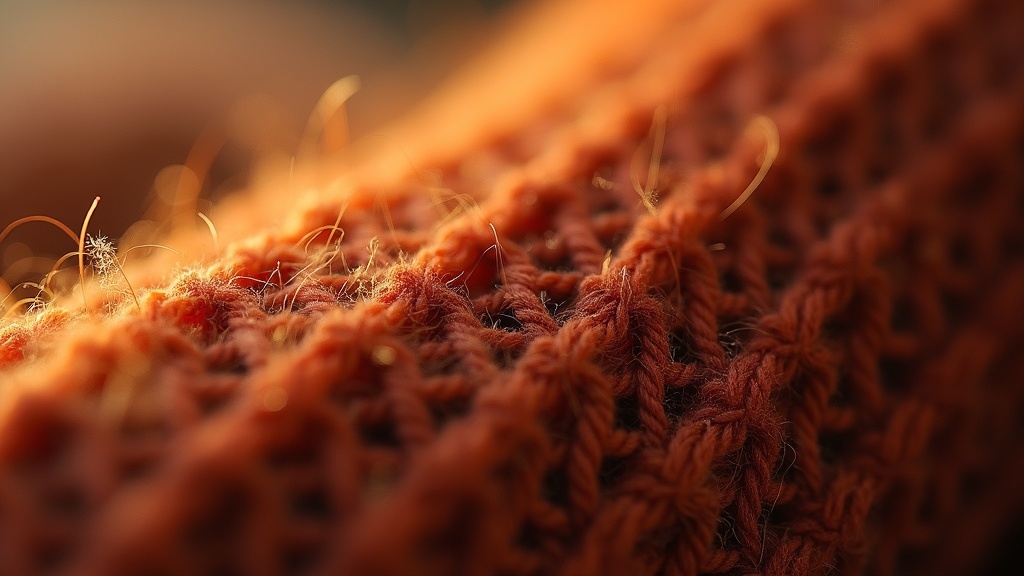
Cotton absorbs moisture just fine. The problem is it holds onto it. Once a cotton sock is wet, it stays wet, and it sits right against your skin all day long. That's friction. That's blisters. That's fungal infections.
Are cotton socks good for sweaty feet? No. Not on a jobsite, not in work boots, not even in lightweight shoes if you're on your feet all day. Cotton is fine for sitting at a desk. It has no place in a work boot.
Check out our article on: Best Work Socks for Sweaty Feet: What Actually Works
Did you know?
Cotton can absorb up to 27 times its weight in water, but it releases moisture very slowly. In comparison, merino wool stays comfortable at up to 35% of its weight in moisture because the water is absorbed into the fiber core rather than sitting on the surface against your skin.
What Material Actually Works for Sweaty Feet on the Job
You have two solid paths: merino wool or a performance synthetic blend. Both move moisture. They do it differently.
Merino Wool
Merino wool socks for sweaty feet are the best overall choice for most workers. The fiber wicks moisture into its core, regulates temperature in both heat and cold, and resists odor naturally without any chemical treatment. A quality pair can be worn two days in a row without smelling.
Synthetic Blends (Nylon, Polyester, CoolMax)
Best moisture-wicking work socks in the synthetic category move sweat fast, dry faster than merino, and cost less. The trade-off: they don't regulate temperature as well and they hold odor after multiple wears. Great for hot climates or humid jobsites where drying speed matters most.
Wool-Synthetic Blends
Most premium work socks land here: 60-70% merino, 20-30% nylon for durability, and a touch of spandex for shape retention. This is the sweet spot for heavy duty work socks that need to survive daily abuse.
| Material | Moisture Control | Odor Resistance | Durability |
|---|---|---|---|
| 100% Cotton | Poor (holds moisture) | Poor | Moderate |
| Merino Wool | Excellent | Excellent | Good (softer fiber) |
| Synthetic (CoolMax/Polyester) | Very Good (fast dry) | Fair | Very Good |
| Merino + Nylon Blend | Excellent | Excellent | Excellent |
| Bamboo | Good | Good | Moderate |
What to Look for Beyond the Fabric: Cushion, Fit, and Construction
Fabric is the foundation, but construction is what separates a sock that lasts a season from one that falls apart in six weeks.
Cushioning
Look for targeted cushioning at the heel and ball of foot, not uniform padding throughout. A thick sock that cushions everywhere compresses into nothing fast and adds bulk that causes heel slippage.
Fit and Arch Support
A sock with a defined arch band holds the sock in place and prevents it from sliding into your boot. Bunched fabric under your arch is a blister factory. Snug is better than loose.
Seam Placement
Toe seams that sit on top of your toes rather than across them make a real difference over a twelve-hour shift. Some premium socks use a hand-linked toe seam that's nearly flat. Worth the extra cost if you're prone to toe blisters.
Best Work Socks for Sweaty Feet Right Now (Picked for Performance, Not Price Tags)
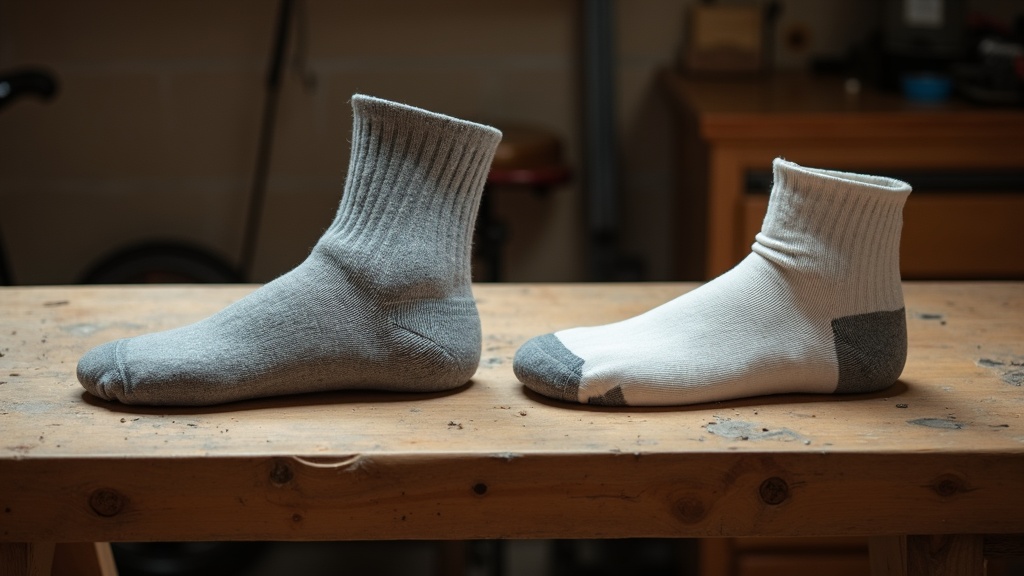
These are the picks that hold up on real jobsites, not just in lab tests.
- Darn Tough Hiker Micro Crew (Merino blend): Unconditional lifetime guarantee. Dense knit, stays up, excellent blister resistance. The benchmark for best work boot socks for men.
- Smartwool PhD Work Heavy Crew: Heavier cushioning than Darn Tough, built for concrete and standing all day. Merino-nylon blend that keeps its shape through heavy washing.
- Wigwam Cool-Lite Pro Crew: Best synthetic option. CoolMax core moves moisture fast. Cheaper than merino, and it shows in long-term odor control, but hard to beat for summer jobsites.
- Farm to Feet Madison (Mid-Weight): Made in USA, 90% merino. Excellent for moderate-to-heavy sweat and all-day standing. Slim profile fits well in tighter boots.
- Carhartt Force Midweight Crew: Budget-friendly synthetic blend. Not in the same league as merino for odor, but solid construction and widely available. Good starting point if you've never spent real money on socks.
Did you know?
The U.S. military switched infantry soldiers away from cotton socks decades ago, replacing them with merino wool and synthetic blends after field studies showed dramatically lower rates of blisters, foot infections, and trench foot in wet conditions.
Best Work Socks for Women with Sweaty Feet
Most work socks are still sized and shaped for men's feet. Women's feet tend to run narrower through the heel and lower in volume, which means a men's sock slips, bunches, and creates friction right where you don't want it.
Dedicated women's fits from Darn Tough, Smartwool, and Farm to Feet address this with a narrower heel cup and shorter leg length. The best work socks for women with sweaty feet are the same merino-nylon blends as the men's picks, just cut properly for the foot.
- Darn Tough Hiker Micro Crew (Women's): Same lifetime guarantee, narrower heel, excellent cushion distribution.
- Smartwool Hike Classic Edition Full Cushion (Women's): More cushion than the PhD line, good for women in heavier steel-toe boots.
- Bombas Merino Wool Work Sock (Women's): Softer hand feel, honeycomb arch support band, solid moisture management for moderate sweat levels.
Check out our article on: Men's Compression Socks for Work Boots: What Actually Works
How to Make Any Work Sock Last Longer and Smell Less
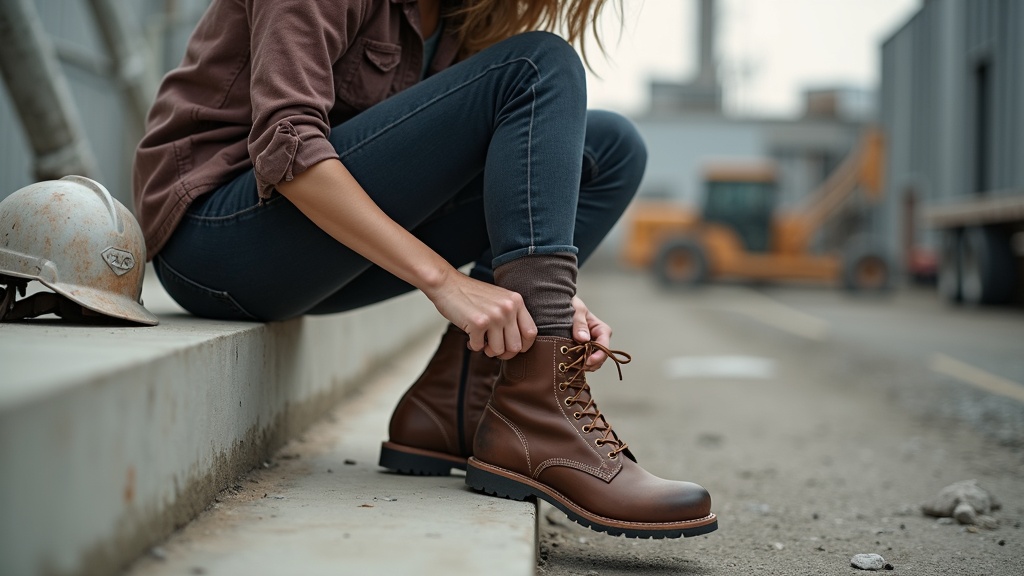
A $25 pair of Darn Toughs can last three years if you treat them right. Most people burn through them in eight months because they wash and dry them wrong.
- Rotate at least 5-7 pairs. Wearing the same socks every other day degrades the elastic and fiber faster than washing does.
- Wash in cold water, gentle cycle. Hot water shrinks merino and breaks down elastane.
- Air dry when possible. High heat in a dryer is the primary killer of merino wool socks. Low heat or hang dry extends life significantly.
- Turn inside out before washing. Skin oils and sweat residue accumulate on the inside face of the knit. Turning them inside out gets the detergent where it counts.
- Skip fabric softener. It coats moisture-wicking fibers and reduces their effectiveness over time.
The Bottom Line: What to Buy and What to Skip
If you take one thing from this: buy merino-nylon blend socks, buy enough pairs to rotate through the week, and wash them in cold water. That's 80% of the solution right there.
Spend the money. A $20-25 pair of Darn Toughs worn correctly outlasts five $4 cotton multipack socks and does your feet a fraction of the damage. Your feet carry you for a living. The sock between your skin and your boot is not the place to cut corners.
- Best overall: Darn Tough Hiker Micro Crew (Merino Blend)
- Best for extreme heat/sweat: Wigwam Cool-Lite Pro or any CoolMax synthetic blend
- Best budget pick: Carhartt Force Midweight (beats cotton by a wide margin)
- Best for women: Darn Tough Women's Hiker Micro Crew
- Skip: Anything with cotton as the primary fiber
