


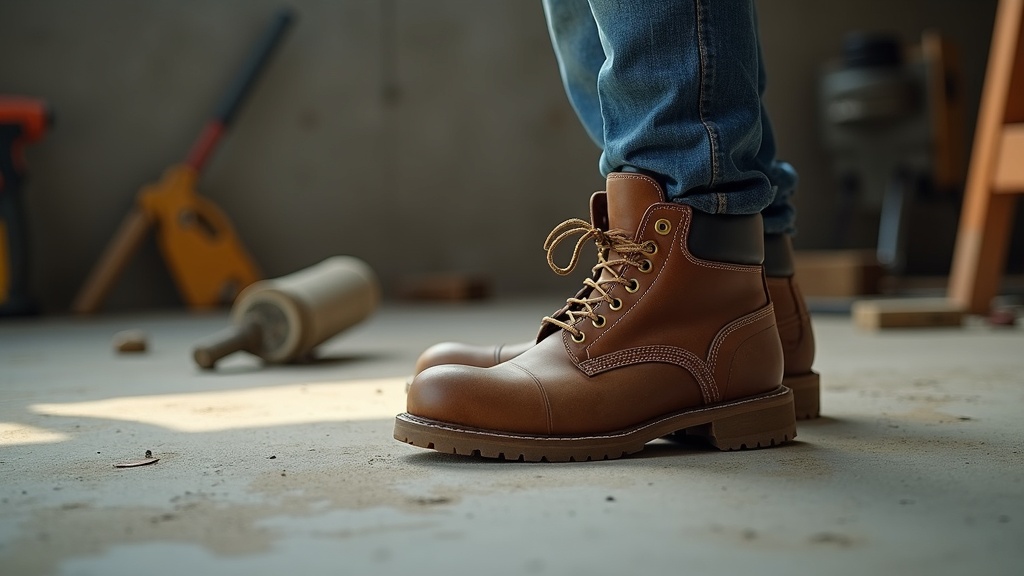
Your feet take somewhere between 8,000 and 10,000 steps on a jobsite every single day. By 3 PM, they're swollen, they ache, and the skin on your heels looks like sandpaper. That's not toughness. That's just damage adding up.
The right pair of men's compression socks for work boots won't turn a hard day easy. But they will keep your circulation moving, cut the swelling, and make the last two hours of your shift feel like the first two. Here's what actually works.
Key points at a glance
- Compression socks genuinely reduce foot and ankle swelling during long standing shifts
- 15, 20 mmHg is the sweet spot for most tradespeople; anything higher needs a doctor's input
- Over-the-calf length is the only style that stays put inside a work boot all day
- Merino wool beats synthetic in temperature control and odor resistance for sweaty feet
- Reinforced heel and toe construction is non-negotiable for steel toe boot wearers
- Washing in cold water and air-drying doubles the lifespan of compression socks
What good work boot compression socks actually give you
Why Your Feet Are Wrecked by Quitting Time (And What's Actually Causing It)
Standing on hard surfaces for 8 to 12 hours a day forces blood to pool in your lower legs. Gravity wins. Your veins have to work against it the whole shift, and by the end of the day, you've got swollen ankles, sore arches, and a dull throb that follows you home.
Add a steel toe boot with minimal flex and you've got extra pressure at the toe box and ankle every single step. That friction, combined with sweat and heat trapped inside leather or synthetic uppers, is exactly where blisters and skin breakdown start.
Check out our article on: Merino Wool Socks for Work: What Actually Holds Up on the Job
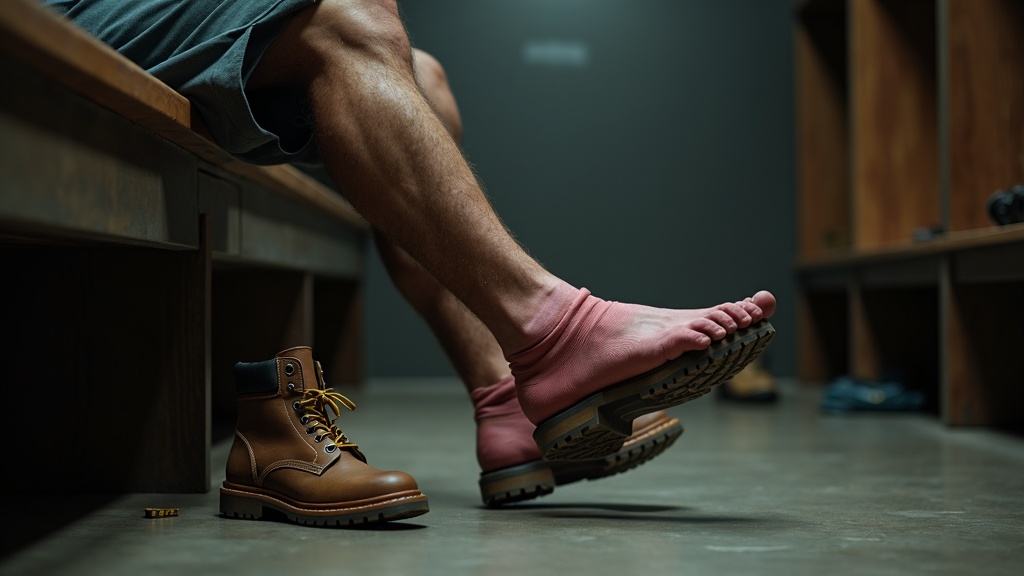
Are Compression Socks Good for Work Boots? The Straight Answer
Yes, compression socks work for work boots, provided you pick the right ones. A generic pharmacy compression sock built for office chairs won't cut it. You need a sock engineered for heavy use: thick enough to cushion, fitted enough to compress, and durable enough to survive a boot environment.
The research on graduated compression is solid. It squeezes hardest at the ankle and gradually releases pressure up the calf, which actively pushes blood back toward the heart. Less pooling means less swelling, less fatigue, and less pain at the end of a shift.
Did you know?
A 2014 study published in the Journal of Occupational Health found that workers who wore graduated compression stockings during long standing shifts reported significantly less leg swelling and fatigue than those in standard socks, with measurable differences in ankle circumference by the end of an 8-hour shift.
What to Look For in a Compression Sock Built for the Trades
Not every feature on the label matters. These ones do.
- Over-the-calf length: Crew socks slide down inside a boot. Over-the-calf socks stay put and deliver compression all the way up the leg where you actually need it.
- Reinforced heel and toe: Steel toe boots create friction and pressure points. A double-layer toe and heel pad is what stands between you and a blister by noon.
- Seamless or flat-seam toe: Any raised seam inside a steel toe box turns into a pressure point by hour four.
- Moisture management: Look for wicking fibers. A wet sock inside a boot is a hotbed for blisters and fungal issues.
- Arch support band: A compression band across the arch holds the sock's position and adds a little extra stability.
Compression Level, Cushion, and Fit: Getting the Numbers Right for Your Job
Compression is measured in millimeters of mercury (mmHg). For most tradespeople, 15, 20 mmHg is the working range. It's firm enough to make a real difference without cutting off circulation or making your boot feel tight.
If you're on your feet all day in construction, warehousing, or manufacturing, start there. If you have a diagnosed circulatory condition, talk to your doctor before going above 20 mmHg.
On cushion: a medium-cushion sock works for most applications. Go heavy-cushion if your boot insole is flat or you're on concrete all day. Light cushion if you need more room in the toe box of a narrow-fitted boot.
Material Breakdown: Merino Wool vs. Synthetic vs. Cotton for Work Boot Use
This is where most guys get it wrong. They grab whatever's on sale and end up with waterlogged feet by lunch.
| Material | Best for | Watch out for |
|---|---|---|
| Merino Wool | Temperature regulation, odor control, sweaty feet in all seasons | Higher price, needs gentle wash cycle |
| Nylon/Polyester Blend | Durability, moisture wicking, compression retention over time | Less breathable than wool, can retain odor |
| Copper-Infused Synthetic | Odor resistance, antimicrobial protection for heavy sweaters | Copper benefit fades after repeated washing |
| Cotton | Cheap, comfortable for light duty or dry environments | Holds moisture, loses shape fast, poor compression retention |
| Wool/Synthetic Blend | Balance of durability and temperature control, best value overall | Quality varies widely by brand |
Bottom line: if you have sweaty feet or work in variable temperatures, merino wool or a wool-synthetic blend is worth every extra dollar. Cotton is not a work boot sock material. It gets wet, stays wet, and destroys itself in two months.

The Best Men's Compression Socks for Work Boots Right Now
These are the options that consistently hold up in real working conditions, not lab tests.
For all-day concrete and construction
Darn Tough Hiker Boot Sock Full Cushion (Vermont, USA-made, merino wool, lifetime guarantee). 17, 20 mmHg compression, over-the-calf available. Expensive up front. Free replacement if they wear out.
For heavy sweaters and odor control
Comrad Companion Compression Socks. Copper-infused nylon blend, 15, 20 mmHg, machine washable. Hold their compression rating reliably past 50 washes in testing.
For budget-conscious workers
SB SOX Compression Socks. Under $20 for a two-pack. Not merino wool, but the compression is accurate, the seams are flat, and the sizing runs true. A solid entry point if you've never worn compression socks on the job before.
For steel toe boot wearers specifically
Thorlos Work Over-the-Calf Sock. Built specifically for the friction points created by steel toe caps. The toe box padding is notably thicker than standard socks. No compression label, but the graduated knit provides light compression (10, 15 mmHg equivalent) across the arch and ankle.
Check out our article on: Do Snow Socks Work on Ice? The Honest Answer for Workers
Did you know?
The average American construction worker walks the equivalent of 4 to 5 miles on a standard 10-hour shift, almost entirely on hard surfaces like concrete, asphalt, or steel grating. That's more daily impact stress on the feet than most recreational runners experience.
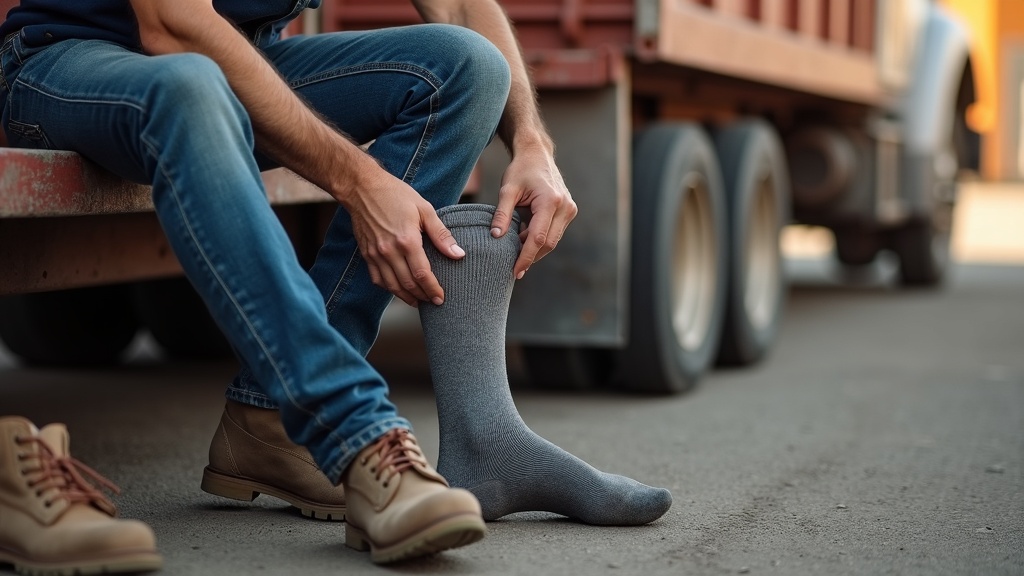
How to Make Your Work Socks Last (Most Guys Skip This)
A quality pair of compression socks costs $20 to $30. A little care doubles the number of wears you get out of them.
- Wash cold, always. Hot water breaks down the elastic fibers that create compression. Once those go, the sock is just a tube of fabric.
- Air dry or tumble low. Dryer heat does the same damage as hot water, faster.
- Rotate pairs. Wearing the same pair every day without a rest cycle degrades the compression rating in weeks. Three pairs minimum in rotation.
- Don't wring them. Squeeze gently. Wringing stretches the weave in ways it doesn't recover from.
- Replace when the compression feels loose. If the sock slides or feels like a regular sock, the therapeutic value is gone. Most quality pairs last 6 to 12 months with proper care.
Your Practical Starting Point
If you've never worn compression socks on the job, start with a 15, 20 mmHg, over-the-calf pair in a wool-synthetic blend. Wear them for a full week. You'll notice the difference in how your feet feel after hour six.
If you run hot and sweat heavily, go pure merino wool. If you're hard on gear and replace socks constantly, a reinforced nylon-spandex blend will outlast anything else. If you work in steel toe boots every day, prioritize the reinforced toe box over everything else on the spec sheet.
Pick three pairs, wash them cold, rotate them. Your feet carry everything you do all day. Twenty dollars is a reasonable price to stop limping to the truck at 5 PM.
