


Most people buy boots once and socks constantly. Then wonder why their feet hurt. The problem is rarely the boots alone. And it's rarely the socks alone. It's that the two were never chosen to work together, so they don't. The wrong sock in the wrong boot creates friction, pressure buildup, moisture problems, or thermal failure that neither product would cause on its own.
This guide covers the right boot and sock pairings for real job conditions, starting with what each combination actually needs to do, then mapping Mason's boot and sock lineup against those needs.
The System Logic: Why Boots and Socks Have to Match

A work boot and a work sock each solve part of the same problem: keeping your feet protected, comfortable, and functional through a demanding shift. When chosen together, they cover the full problem. When chosen separately, they often leave gaps or actively conflict with each other. Three examples of how that conflict shows up:
- The moisture gap. A robust waterproof boot keeps external moisture out, but if the sock inside can't wick away internal moisture (sweat), your feet sit in a damp environment anyway. A waterproof boot paired with a non-breathable sock is almost worse than no waterproofing at all, because the moisture is sealed in rather than simply kept out.
- The thermal contradiction. An insulated boot is designed to retain body heat. But if the sock doesn't hold heat against the foot, or actively conducts it away in cold conditions, the boot's insulation never reaches your toes effectively. You get a warm boot and cold feet.
- The pressure mismatch. A safety boot with a rigid toe cap creates consistent pressure on the top and sides of the toes. A thin, non-cushioned sock amplifies that pressure into pain by hour six. A properly cushioned sock with reinforced toe zones absorbs that pressure before it becomes a problem.
None of these are boot failures or sock failures. They're pairing failures. Get the combination right, and the two products amplify each other. Get it wrong, and they undermine each other.
Check this out: Work Boots for Back Pain: Expert Guide to Reducing Discomfort at Work
How to Read a Job Environment for Boots and Socks
Before looking at specific pairings, two questions determine most of the answer:
What's the temperature range you're actually working in? Not the season, but the actual temperature inside your work environment. A warehouse in July can be hotter than an outdoor construction site in October. An unheated factory floor in February can be as cold as outdoor work. Your thermal need is determined by where you spend eight hours, not what the calendar says.
How much does your body move during the shift? Static standing generates far less body heat and far more localized pressure (heel and ball of foot) than constant movement. Active movement generates more sweat and more heat. This determines whether moisture management or insulation is your first priority inside the boot.
Once you've answered those two questions honestly, the right pairing narrows significantly.
The Pairing Guide: Mason Boots and Socks by Job Type
Discover Mason boots and socks by job type:
Pairing 1: ATLAS® S3 Pro Safety Boots + Breathable Work Socks
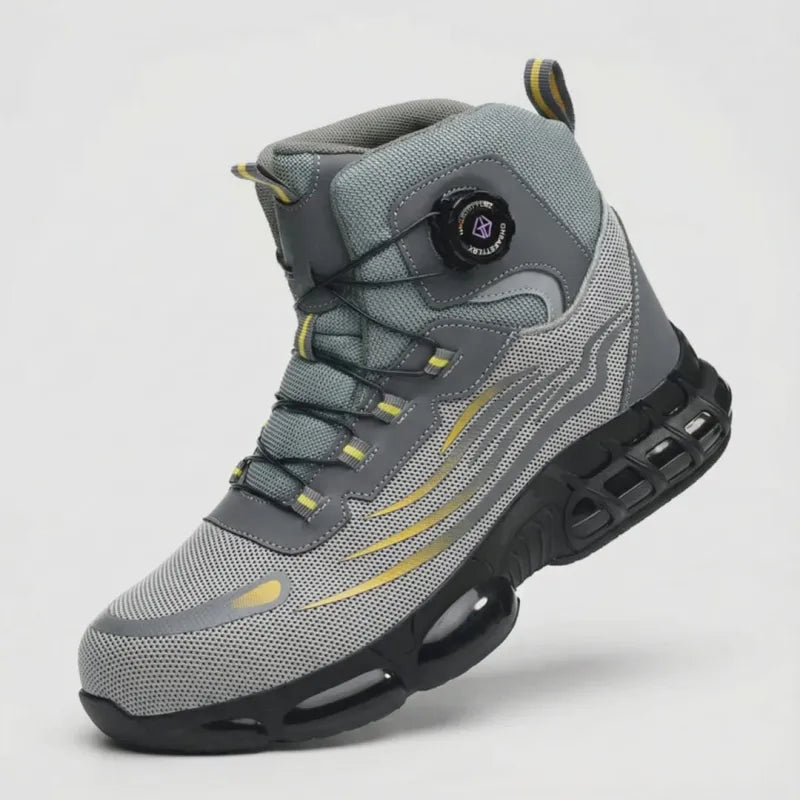
The boot: The ATLAS S3 Pro is built for demanding environments where protection can't be compromised. S3 certified with a steel or composite toe cap, puncture-resistant midsole, slip-resistant outsole, waterproof construction, and reinforced ankle support. It handles rough terrain, repeated impact, and sustained physical work, but it's also a fully enclosed boot that limits ventilation by design.
The sock problem it creates: Any enclosed, robust boot restricts airflow to the foot. In active work conditions (carrying loads, moving frequently, working in moderate or warm temperatures), that enclosed environment generates significant moisture buildup by midday.
Why Breathable Work Socks solve it: The technical moisture-wicking fiber blend pulls sweat continuously away from the skin and disperses it before it can saturate the sock or soften the skin. The antimicrobial treatment prevents the bacterial buildup that accelerates inside enclosed safety boots. Moderate cushioning absorbs impact at the heel and ball of foot without adding bulk that would tighten the toe box.
The result: a sealed protective boot that stays dry inside. Your feet arrive at hour ten in roughly the same condition they were at hour two.
Pairing 2: POLAR™ S3 Pro Winter Safety Boots + Warming Work Socks
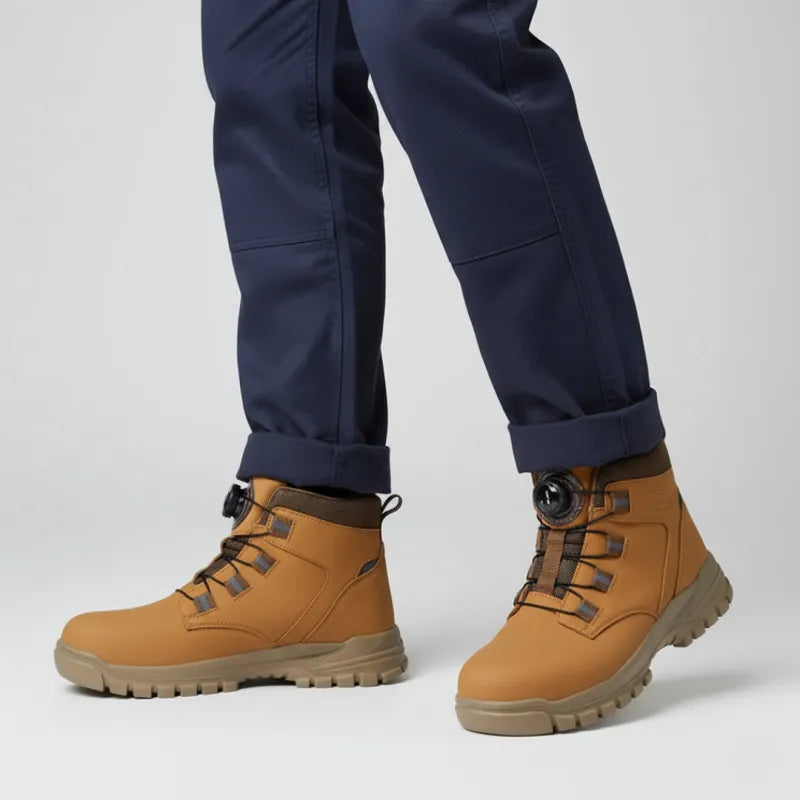
The boot: The POLAR S3 Pro is the cold-weather specialist in Mason's lineup. Fully waterproof construction keeps external moisture out. Thermal insulation retains body heat. S3 certification covers the full protection stack: toe cap, puncture-resistant midsole, slip-resistant outsole with winter traction. It's built for the conditions where most work boots simply stop performing.
The gap it leaves: No boot insulates the toe cap directly. Whether the cap is steel or composite, it sits inside the boot's thermal layer rather than within it. In extreme cold, that cap reaches ambient temperature faster than the rest of the boot. The boot is warm. The toes might not be.
Why Warming Work Socks close that gap: The premium cotton/poly blend is specifically heavier and denser than a standard work sock, thick enough to hold body heat directly against the toe and foot. It provides the thermal bridge between the boot's insulation and your skin that the boot's structure can't create on its own. Critically, the warming fiber still allows moisture to escape: trapped moisture in a cold insulated environment evaporates the heat it carries, cooling your feet from the inside. Warming Work Socks prevent that cycle.
This is the pairing for outdoor workers who come in at midday and still can't feel their toes. The boot handles external cold and wet. The sock handles what the boot can't reach.
Pairing 3: MOTION™ Tactical Comfort Boots + Bamboo Work Socks
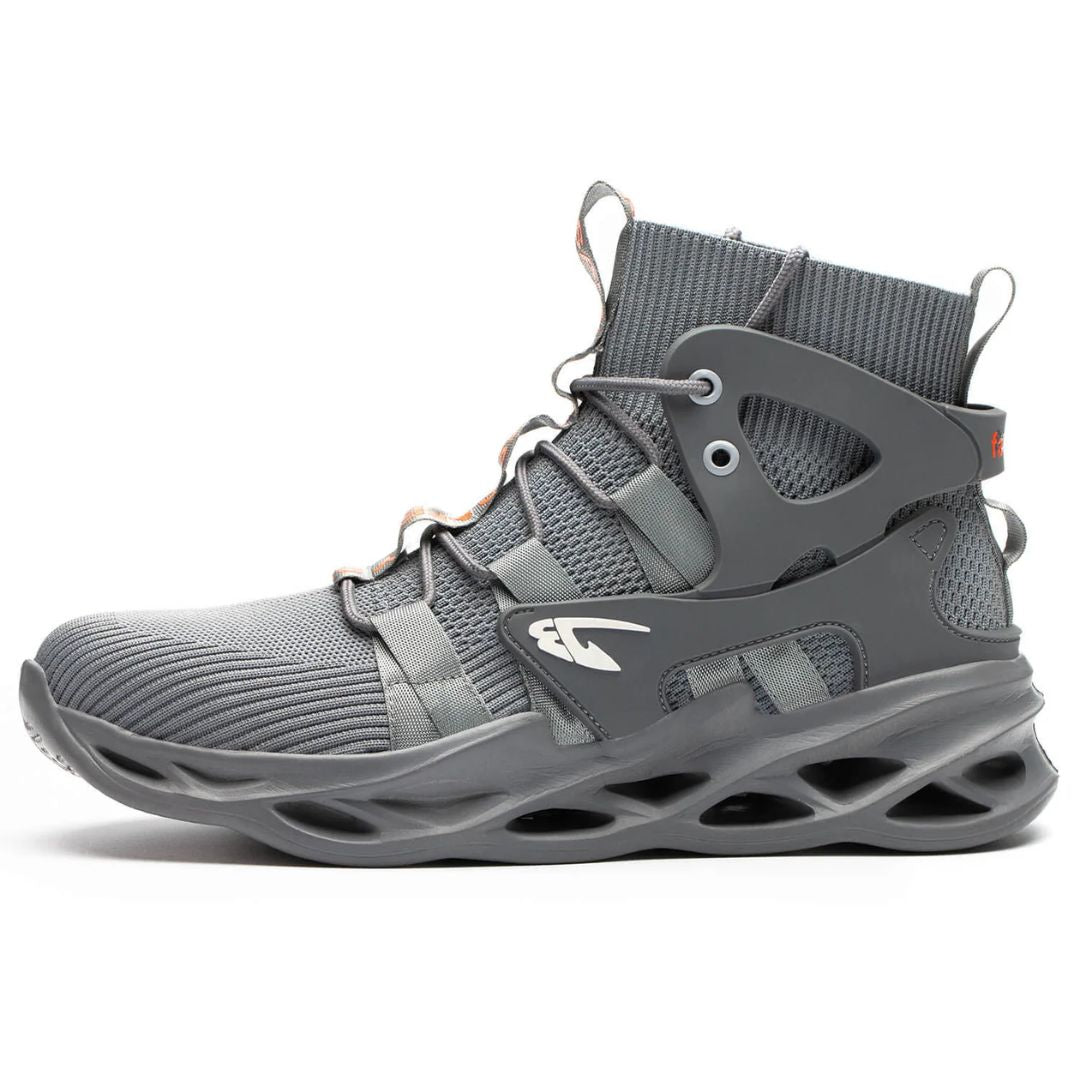
The boot: The MOTION Tactical prioritizes flexibility and reduced weight while maintaining certified protection. Composite toe, non-conductive, cushioned sole with targeted heel and arch support. It's the choice for workers who move constantly (logistics, security, warehouse roles with frequent area changes) where a heavier boot would create cumulative fatigue over a full shift.
The sock problem it creates: A lighter, more flexible boot breathes better than a fully rigid safety boot, but it also provides less thermal stability. Workers in variable conditions (moving between cold storage and ambient temperature, or between indoor and outdoor zones) need a sock that adjusts rather than locks into a fixed thermal profile.
Why Bamboo Work Socks are the right match: Bamboo fiber is naturally thermoregulating. It responds to foot temperature changes rather than maintaining a fixed insulation level. When you move from a cold zone to a warm zone, a bamboo sock adjusts. A fixed thermal sock doesn't, and the result is overheating and sweating that undermines comfort for the rest of the shift. Bamboo is also naturally antimicrobial without a chemical treatment that washes out over time, which matters for workers who move continuously and generate consistent foot moisture. The softness of bamboo fiber pairs well with the MOTION Tactical's more flexible, low-profile construction.
Pairing 4: Waterproof Slip-On Composite Toe Boots + Breathable Work Socks

The boot: The Waterproof Slip-On Composite Toe Boot is designed for wet environments: food processing, outdoor maintenance, facilities work where standing water or repeated wet exposure is routine. No laces means no absorption points, and the slip-on design allows quick removal at shift changes. The composite toe keeps the boot light while meeting safety standards.
The sock problem it creates: A fully sealed waterproof boot with no lace ventilation creates the most enclosed foot environment of any boot type. Sweat has nowhere to go except into the sock and against the skin. Without active wicking, this becomes a blister and skin-softening problem within a few hours, particularly for workers on their feet the entire shift.
Why Breathable Work Socks are the right call here too: The moisture-wicking fiber blend becomes even more important in a slip-on waterproof boot than in a laced boot. The sealed environment makes the sock's ability to pull and disperse moisture the only mechanism available for keeping the foot dry. Reinforced heel and toe zones address the friction points that a slip-on boot creates when the foot shifts slightly during movement.
Quick-Reference: Boot and Sock Pairing by Condition
| Work Condition | Boot Priority | Sock Priority | Recommended Pairing |
|---|---|---|---|
| Active physical work, moderate temps | Full protection, waterproof | Moisture wicking, antimicrobial | ATLAS S3 Pro + Breathable Work Socks |
| Outdoor work, cold or winter conditions | Thermal insulation, winter traction | Heat retention, moisture control | POLAR S3 Pro + Warming Work Socks |
| High-movement, variable temperature zones | Lightweight, flexible, low fatigue | Thermoregulation, natural antimicrobial | MOTION Tactical + Bamboo Work Socks |
| Wet environments, standing water | Fully sealed, slip-on, waterproof | Maximum moisture wicking | Slip-On Composite Toe + Breathable Work Socks |
The Details That Determine Comfort at Hour Eight
Beyond the specific pairings above, three variables consistently determine whether a boot and sock combination holds up through a full shift:
Sock height relative to the boot shaft. A sock that ends below the boot's collar creates a direct friction point where the boot edge meets bare skin. Over eight hours, that edge becomes a source of blisters and raw skin. The sock should extend at least one inch above the boot's collar. For tall boots, crew or knee-high socks prevent the collar from contacting skin at all.
Fiber content in the context of activity level. Pure cotton socks absorb moisture but hold it, which means the sock stays wet once it's wet. Cotton-synthetic blends wick more effectively. Wool regulates temperature well but runs thick, which changes the fit inside the boot. Bamboo offers a practical middle ground: soft, naturally antimicrobial, and more thermoregulating than cotton. For most work environments, the fiber choice should be driven by sweat volume and temperature variation, not by what's on sale.
Cushioning placement matched to load bearing. A sock with uniform cushioning throughout adds bulk without targeting it where impact actually occurs. The relevant zones are the heel (primary impact point for walking and standing), the ball of foot (primary pressure point for static standing), and the toe box (friction zone in enclosed safety boots). Cushioning in those three zones addresses the actual stress points. Cushioning everywhere else just adds thickness and can tighten the boot fit.
Sock Maintenance and Replacement: What Most Workers Get Wrong
The boot gets replaced when it wears out. The sock gets replaced... eventually. This creates a situation where a worker is pairing a well-maintained, structurally sound boot with a sock that has lost most of its functional properties: stretched-out elastic that allows the sock to shift and bunch, worn-through cushioning at the heel, degraded wicking fibers that now just hold moisture. The sock looks fine. It's not fine.
A practical rule: replace work socks when the heel cushioning becomes noticeably thinner, when the sock bunches or shifts during a shift despite correct sizing, or when foot odor becomes persistent despite washing. That last point is a sign the antimicrobial treatment (if any) has washed out and bacteria are colonizing the fiber. At that point, the sock is actively working against you regardless of how good the boot is.
For workers on their feet six or more hours per day, rotating between two or three pairs per week and replacing the full set every four to six months is a reasonable maintenance cycle. The cost of replacement socks is negligible compared to the cost of the boots they protect, and far less than the cost of foot problems that develop from inadequate sock maintenance.
Common Pairing Mistakes and How to Avoid Them
Wearing athletic socks with safety boots. Athletic socks are engineered for shoe lasts, not boot lasts. They're typically cut shorter, thinner at the ankle, and sized for the flex patterns of athletic footwear. In a rigid safety boot, they bunch at the ankle, provide inadequate cushioning at the pressure zones, and often end at exactly the point where the boot collar causes friction. The fix: buy socks designed specifically for work boots, not repurposed athletic socks.
Sizing up on socks to accommodate thick boots. A sock that's too large bunches and folds inside the boot, creating pressure points and friction that didn't exist before. If a boot feels tight with the correct sock size, the solution is to check the boot fit, not to go up a sock size. Many workers who size up on socks are actually dealing with a boot that's a half size too small.
Using winter socks year-round because they're comfortable. A thick thermal sock in a summer work environment traps heat and promotes heavy sweating, which accelerates skin softening and blister formation. Comfort in the first hour becomes discomfort by hour four. Match the sock weight to the actual thermal demand of the environment.
Ignoring sock wear patterns. How a sock wears tells you something about how your boot fits and how you move. Wear concentrated at the outer heel suggests overpronation and may indicate you need a boot with more arch support. Wear at the toe tips suggests the toe box is too short. Wear at the ball of foot is normal for static standing roles, but if it's extreme, a sock with heavier ball-of-foot cushioning will extend comfort significantly.
The Bottom Line on Boot and Sock Pairing
A work boot is an investment that lasts years. A work sock is a consumable that lasts months. The mistake most workers make is treating them as separate decisions. They're not. The boot sets the environment the sock has to function in: enclosed or open, insulated or ventilated, rigid or flexible. The sock determines whether that environment works for your foot or against it.
Get the pairing right and the boot performs as designed through a full shift. Get it wrong and the boot's engineering is partially or fully offset by a sock that can't keep up with the conditions it's placed in.
Mason's lineup is built so the boots and socks can be matched directly: the ATLAS S3 Pro with Breathable Work Socks for active enclosed environments, the POLAR S3 Pro with Warming Work Socks for cold outdoor work, the MOTION Tactical with Bamboo Work Socks for high-movement variable-temperature roles, and the Waterproof Slip-On with Breathable Work Socks for wet-environment work. Each pairing addresses the specific gap the boot creates, rather than just stacking two products and hoping they work together.
That's the difference between buying boots and buying a system.
