



You've spent good money on boots, kneepads, and a decent tool belt. But the socks? You grabbed a 10-pack at the big-box store for twelve bucks and didn't think twice. Most workers do exactly that. And most workers end up with blisters, soaked feet, and a sock drawer that looks like a crime scene by March.
Here's the real question: does paying $25 or even $35 for a single pair of work socks actually make financial sense? Run the math honestly, and the answer surprises people. Let's get into it.
Key points at a glance
- Cheap work socks typically last 3 to 6 months under daily trade use. Premium pairs routinely hit 2 to 4 years.
- Over a two-year period, quality socks often cost less per day than budget options replaced constantly.
- Bad socks contribute directly to blisters, plantar fasciitis, and fatigue. That's lost productivity, not just discomfort.
- Merino wool and reinforced nylon construction are the two markers that separate real work socks from everything else.
- Darn Tough's lifetime guarantee is real. Bombas works better for light trades. Know the difference before you buy.
- If you're in sandals or low-wear office shoes half the week, premium socks are overkill. Context matters.
What You Actually Get With Premium Work Socks
The Real Cost of Cheap Work Socks: Run the Numbers
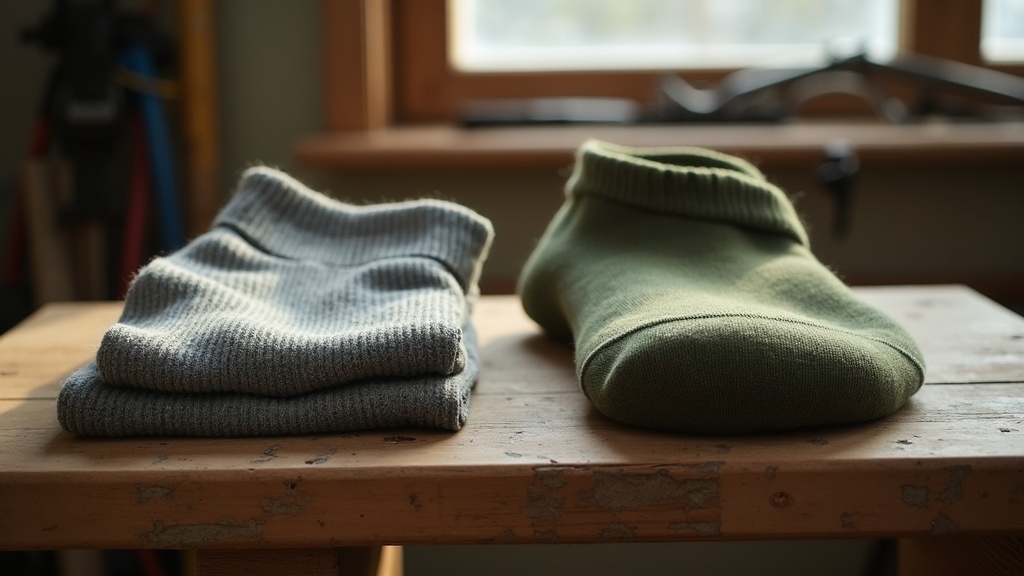
A 10-pack of budget cotton socks runs about $12 to $15. Sounds like a win. But on a jobsite, those things are threadbare within three months. You're buying three or four packs a year, spending $40 to $60 annually.
A pair of Darn Tough work socks costs $25 to $35. With normal rotation across five pairs, you're looking at $125 to $175 upfront. Those same pairs, under Darn Tough's conditions, routinely last two to four years. Spread that out: you're paying roughly $0.10 to $0.20 per day versus $0.11 to $0.16 for the cheap option, with none of the performance.
The cost gap is narrower than people think. And that's before you count what bad socks cost your body.
Why Work Socks Wear Out Faster Than You Think
A desk worker's socks last forever. A framer's socks take a beating every single day: friction inside steel-toe boots, moisture from sweat, compression from tight lacing, and abrasion from concrete and gravel.
Cheap cotton blends don't have the fiber density or reinforcement to handle that. The heel goes first, then the toe box. By month two, you've got thin spots. By month four, holes.
The trades that destroy socks fastest
- Concrete and masonry work: rough surfaces, constant kneeling, heavy boots
- Roofing: heat, sweat, and repetitive toe-push movement up slopes
- Electrical and HVAC: ladder climbing creates heel and arch wear at an accelerated rate
- Landscaping and outdoor labor: moisture exposure is relentless
Did you know?
The average person takes between 8,000 and 10,000 steps per day. A construction worker can hit 15,000 or more. That's roughly 150% more fiber stress per day than a standard consumer sock is designed to handle.
What Makes a Premium Work Sock Different: Materials and Construction
Two things separate a real work sock from a marketing exercise: fiber choice and how it's knitted.
Merino wool
Fine merino fibers wick moisture, regulate temperature, and resist odor naturally. You can wear a merino sock two days running and it won't wreck the inside of your boot. Cotton holds moisture. Merino moves it.
Nylon reinforcement
Merino alone isn't tough enough for heavy boot use. The best work socks blend merino with nylon (10% to 20%) in high-wear zones. That's what stops the heel from blowing out in month three.
Cushioning zones
A cushioned footbed and shin padding aren't luxury features. On concrete, that extra few millimeters of terry-loop knit is the difference between a normal Wednesday and a Wednesday where your feet are killing you by 2 pm.
| Material | Moisture Control | Durability | Best For |
|---|---|---|---|
| Merino Wool + Nylon | Excellent | High (2 to 4 years) | Heavy trade, all-day boots |
| Synthetic (polyester/nylon blend) | Good | Medium (1 to 2 years) | Warm-weather trades, light boots |
| Cotton blend (budget) | Poor | Low (3 to 6 months) | Light indoor use only |
| Bamboo blend | Good | Medium (1 to 2 years) | Moderate use, comfort-focused |
| Heavyweight wool (Darn Tough style) | Excellent | Very high (lifetime guarantee) | Toughest trades, cold conditions |
Foot Health on the Job: What Bad Socks Actually Cost You
This part doesn't get talked about enough. Your feet take the full weight of your body, your tools, and your gear, eight to ten hours straight. Bad socks don't just wear out. They cause problems.
- Blisters: friction from a loose, thin sock in a stiff boot. A blister on your heel on a Tuesday means you're limping through Thursday.
- Plantar fasciitis: no arch support, no cushioning, flat cotton sock. The inflammation builds over weeks. Treatment can run hundreds of dollars and months of modified duty.
- Athlete's foot and fungal infections: wet cotton is a petri dish. Merino and synthetics dry fast. Cotton doesn't.
A workers' comp claim or a missed day costs far more than a $30 sock. That's not an exaggeration. It's arithmetic.
Darn Tough, Bombas, and Other Premium Options Worth Knowing
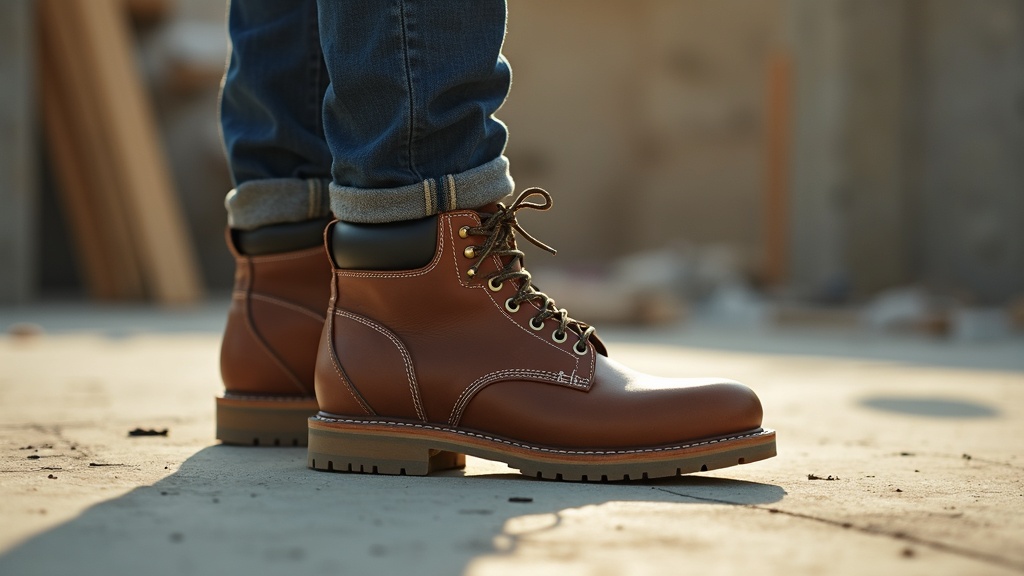
Darn Tough is the name that keeps coming up among trade workers, and for good reason. Made in Vermont, merino wool and nylon construction, unconditional lifetime guarantee. You mail in a worn-out pair, they send you a new one. No questions, no receipt required. For heavy daily use, Darn Tough is the benchmark.
Bombas makes a legitimately comfortable sock. Better cushioning than most, good construction. But their lifetime guarantee has conditions, and they're built more for the person who's on their feet a lot rather than the person framing houses in January. They're a solid choice for lighter trades or supervisory roles.
Other names worth looking at
- Farm to Feet: American-made merino, good value for the quality, less marketing budget than Bombas
- Wigwam: Wisconsin-made, long history in workwear, great heavyweight options at a slightly lower price point than Darn Tough
- Smartwool: excellent merino quality, more lifestyle-oriented but their Hike series holds up on active job sites
Did you know?
Darn Tough actually honors its lifetime guarantee at scale. The company processes tens of thousands of warranty replacements annually, and the returned socks are recycled through a textile program. The guarantee is a production and quality decision, not just a marketing line.
When Expensive Socks Are NOT Worth It
Straight talk: if you're in the trades but spend three days a week in a truck, at a desk, or in meetings, you don't need $35 socks for those days. Premium work socks are worth their price under sustained heavy use. Light wear doesn't justify the cost.
- If your boots come off at lunch and you're in sneakers by 1 pm, a mid-range option works fine
- If you rotate through 10 pairs a week and lose them constantly, fix the rotation problem before upgrading the sock
- If you genuinely prefer thin, lightweight socks and don't have foot pain, there's no rule that says you must go thick
How to Pick the Right Work Sock for Your Trade
Match the sock to the actual conditions you work in. Don't buy a sock because someone on the internet told you it was the best. Ask three questions:
How many hours are you in boots?
8 or more hours daily: go merino and reinforced nylon, minimum. Under 6: mid-range synthetic works fine.
What's your biggest foot problem right now?
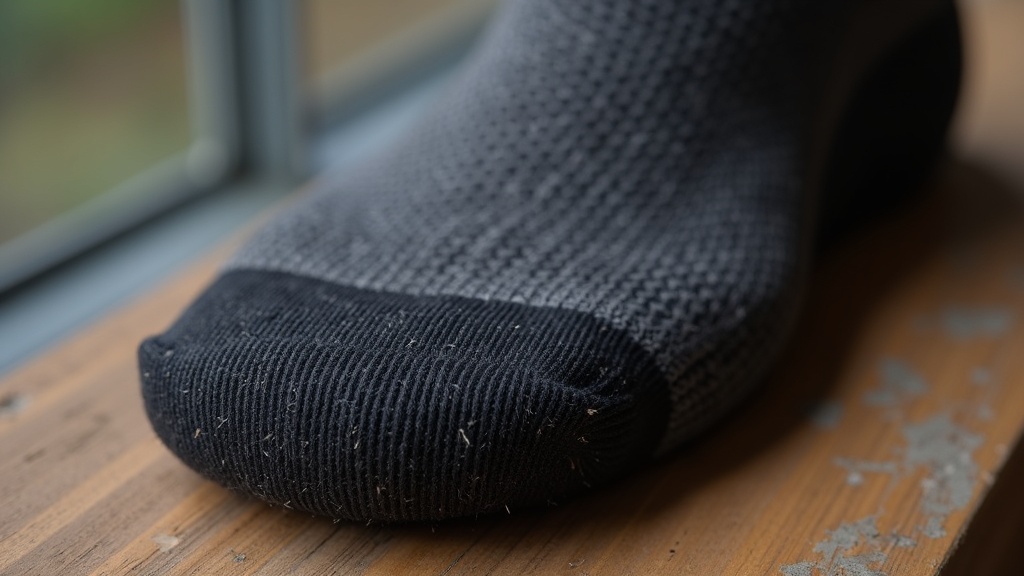
- Blisters: look for seamless toe construction and a snug fit with no bunching
- Sweating and smell: merino wool, specifically
- Heel and arch pain: full-cushion or over-the-calf styles with built-in arch support
- Cold feet in winter: heavyweight merino, over-the-calf height to keep heat in
What's your boot fit like?
A thick sock in a tight boot creates its own problems. If your boots run true to size or small, test your new sock thickness before a full shift. Some guys size up half a size specifically to accommodate a heavier sock.
The Verdict: What a Hard-Working Dollar Actually Buys You
Over two years, the cost difference between cheap and premium socks is smaller than most workers expect. When you factor in durability, foot health, and lost workdays, premium socks typically come out ahead on pure dollars. That's without counting the fact that your feet don't hurt at 4 pm.
Start with five pairs of Darn Tough or Wigwam. Rotate them properly, wash on warm not hot, air dry when you can. Give them six months. You'll have a hard time going back to the 10-pack.
The work sock isn't a luxury purchase. It's a tool. You wouldn't buy the cheapest drill bit for a job that demands precision. Same logic applies here, from the ground up.
Explore more
Compression Socks for Working Out: What Actually Works
Athletic Works Socks: Honest Review for Workers on Their Feet
Cotton vs Merino vs Synthetic Socks for the Trades: Real Talk
Compression Socks for Working Out: What Actually Works
