


Most guys have a drawer full of dead gloves. Pairs that lasted two weeks before the palm wore through. Pairs that protected the hand but killed all feeling in the fingers. Pairs that fit fine on day one and turned into cardboard by day five. The problem usually isn't bad luck. It's buying the wrong glove for the job — or buying purely on price and hoping for the best.
Here's what actually matters when you're looking for heavy duty leather work gloves with grip and dexterity, and how to match the right pair to the way you work.
Why Leather Still Wins for Heavy Work?
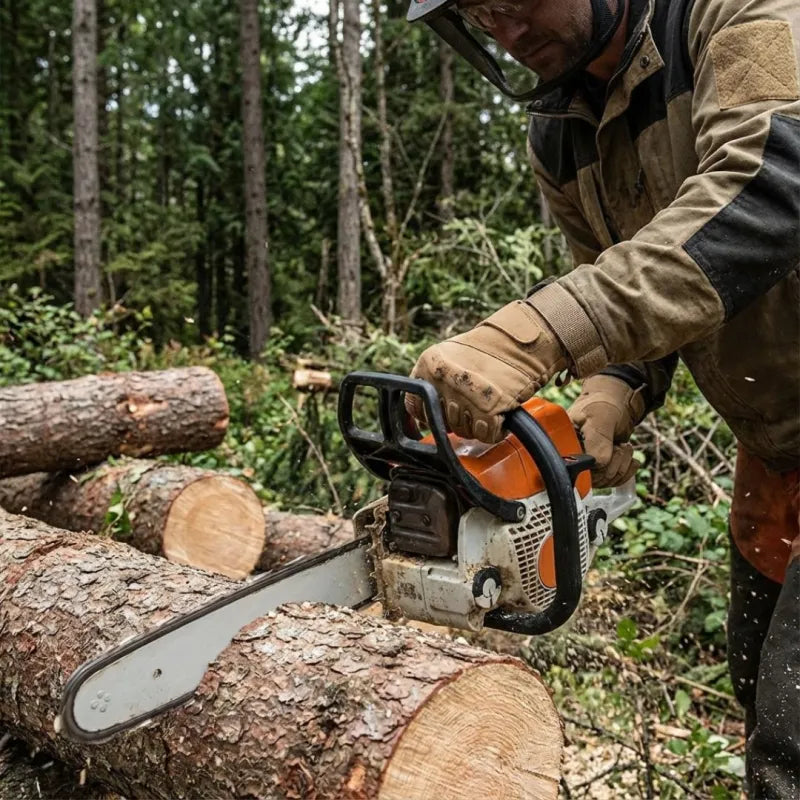
There's a reason leather hasn't been replaced by synthetics on most serious jobsites. Full-grain and top-grain leather handles abrasion better than nylon or polyester at the same thickness. It conforms to your hand over time. And it doesn't shred the same way when it catches on rough concrete, rebar, or framing lumber.
The catch is that not all leather gloves are equal — and leather alone doesn't give you grip or dexterity. That depends on the construction, palm reinforcement, and finger design. A thick leather palm with no grip texture is still going to slip on a wet surface. And a glove built purely for protection can reduce hand sensitivity enough that you're missing cuts, over-tightening fasteners, or fumbling small parts.
The best heavy duty leather work gloves with grip and dexterity solve both problems at once. That's harder to pull off than it sounds — and it's where most budget options fall short.
Check out this guide also: Essential PPE for Warehouse Workers: Complete Expert Guide
The Grip vs. Dexterity Trade-Off And Why It's Often False
Here's what a lot of product descriptions won't tell you straight.
Adding grip — through rubber overlays, textured palms, silicon coating — usually means adding material. More material means less sensitivity. That's fine for hauling lumber or moving aggregate. It's a problem when you need to handle small fasteners, pull wire, or feel the edge of a blade. So when someone says they want "grip and dexterity," they're really asking for a glove that doesn't force a choice.
That's achievable. But it requires a deliberate design: reinforced grip zones only where you need them, thinner leather or stretch panels at the fingers, and construction that doesn't bunch or stiffen at the knuckles.
The gloves that get this right are worth paying for. The ones that don't — you feel it immediately, and your wallet pays again in three weeks. This is the problem that made us look closely at what Mason is doing with their two flagship work gloves.
Mason Atlas Work Gloves — Built for All-Day Site Work

The Mason Atlas Work Gloves are designed for tradespeople who need a reliable workhorse glove across long shifts.
The Atlas sits in the category of heavy duty leather work gloves built for sustained use — framing, concrete work, general construction, material handling. The kind of work where your hands take a beating from morning until the end of the shift.
What stands out about the Atlas is the balance between palm protection and finger mobility. The leather palm is reinforced where abrasion is highest — heel of hand, thumb base — but the finger construction allows enough movement that fine motor tasks don't require removing the glove.
For tradespeople who switch between heavy lifting and more detailed work throughout the day, that matters. You're not constantly pulling gloves on and off, losing time and losing them in the process.
The grip performance on rough and slightly wet surfaces is consistent. Not a rubber-overlay grip — more the natural grip that comes from leather that's built to hold without being slick. If you spend most of your day doing general site work, the Atlas is the kind of glove that just disappears — you stop thinking about it, and your hands stay covered.
Check out this guide also: Prevent Foot Pain Working in a Warehouse: Guide for Long Shifts
Mason Titan Tactical Gloves — When Precision and Protection Both Matter
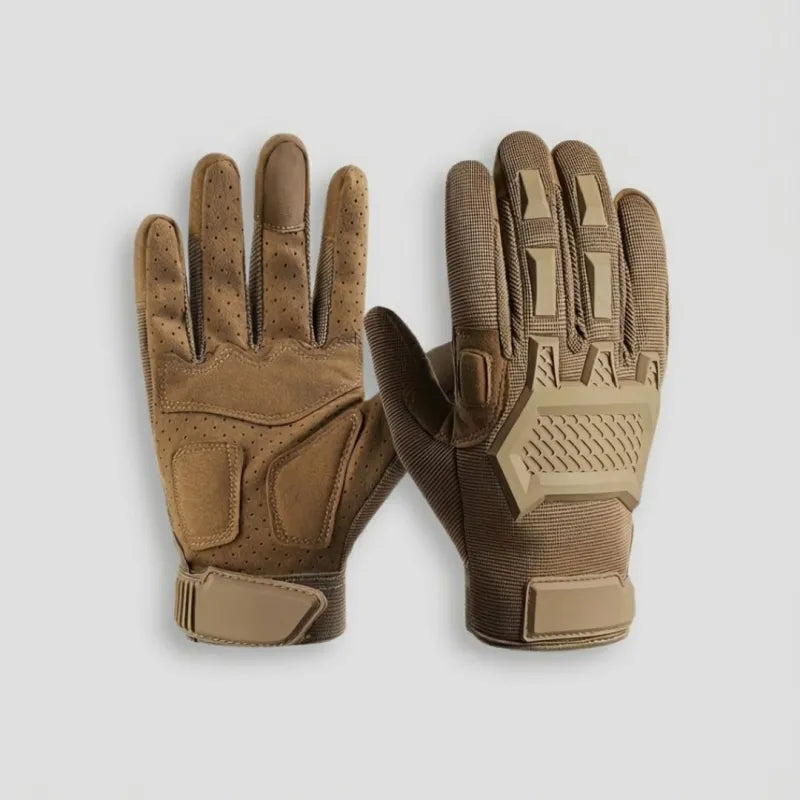
The Mason Titan Tactical Gloves come from a different design brief.
The Titan is built for work that demands both hand protection and precise control — the kind of tasks where you need to feel what you're doing while still being shielded from impact, abrasion, and sharp edges. Think electrical work, finishing carpentry, steel framing, or any trade where the hands are active in both heavy and detailed tasks across the same shift.
The construction is closer to a tactical design philosophy: reinforced at the knuckles and palm, with a more fitted cut at the fingers. The result is a leather work glove with grip and dexterity that doesn't sacrifice one for the other — you get the hand protection without losing your grip on a pencil or your feel for a screwdriver.
The Titan also performs well in situations with impact risk — not full impact-absorber territory, but enough reinforcement to take the edge off catching a piece of metal or getting caught in a pinch point. That kind of incidental protection adds up over a long week.
Where the Atlas is a workhorse, the Titan is more precise. Same durability standard. Different approach to how the hand moves inside the glove.
Atlas vs. Titan — Which One Is Right for You
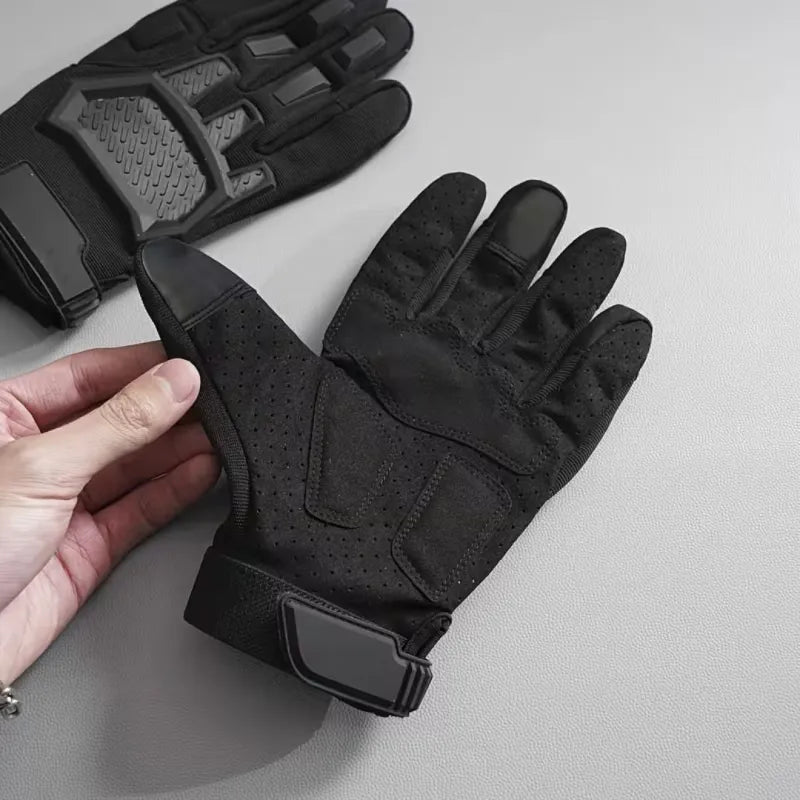
The honest answer is: it depends on your trade and how your day breaks down.
Go with the Atlas if:
- You're doing sustained heavy work — framing, laying block, hauling material
- You want all-day protection with reliable grip on rough surfaces
- Your main concern is a glove that lasts and doesn't distract you
Go with the Titan if:
- You're switching between heavy tasks and detail work throughout the day
- You need more finger precision — wire, fasteners, small parts
- Impact protection matters in your specific trade or environment
Both are heavy duty leather work gloves with grip and dexterity. Both are built to Mason's workwear standard — the same attention to material and durability that runs through everything they make, from their work boots to their site pants.
The difference is in the use case. Pick the profile that matches how you actually work, not just what looks good on a spec sheet.
Check out this guide also: Best Compression Socks for Work Tested by Experts
What to Check Before Buying Any Heavy Duty Work Glove?
Before you pull the trigger on any pair, run through these quickly.
- Palm reinforcement location. Where's the leather thickest? It should match your highest-wear zones. A reinforced palm that covers the wrong area doesn't help.
- Knuckle and finger flexibility. Put the glove on and close your fist. If it fights you, it'll fatigue your hand across a shift. Good construction moves with your hand.
- Wrist closure. Velcro, elastic, or open cuff — each has trade-offs. Velcro secures the fit but can catch on things. Elastic is easier but wears out. Open cuffs are fine if debris isn't an issue.
- Sizing. Heavy leather gloves that are slightly too big become dangerous — tools shift in your grip, you overcorrect. Size down if you're between sizes.
- Break-in time. Real leather gloves have a break-in period. A glove that feels stiff on day one usually fits better by day five. That's not a flaw — it's how leather works.
The Bottom Line
A good pair of heavy duty leather work gloves with grip and dexterity isn't a luxury. It's a basic piece of kit that affects how accurately you work, how fast your hands fatigue, and whether you walk away from a long week without cuts, rubs, or skin lost to abrasion.
Most guys find their gloves by trial and error. It doesn't have to be that way. Mason built the Atlas and the Titan with different tradespeople in mind. Both hold up. Both solve the grip-dexterity problem. Pick the one that fits your work, not just your hand.
