


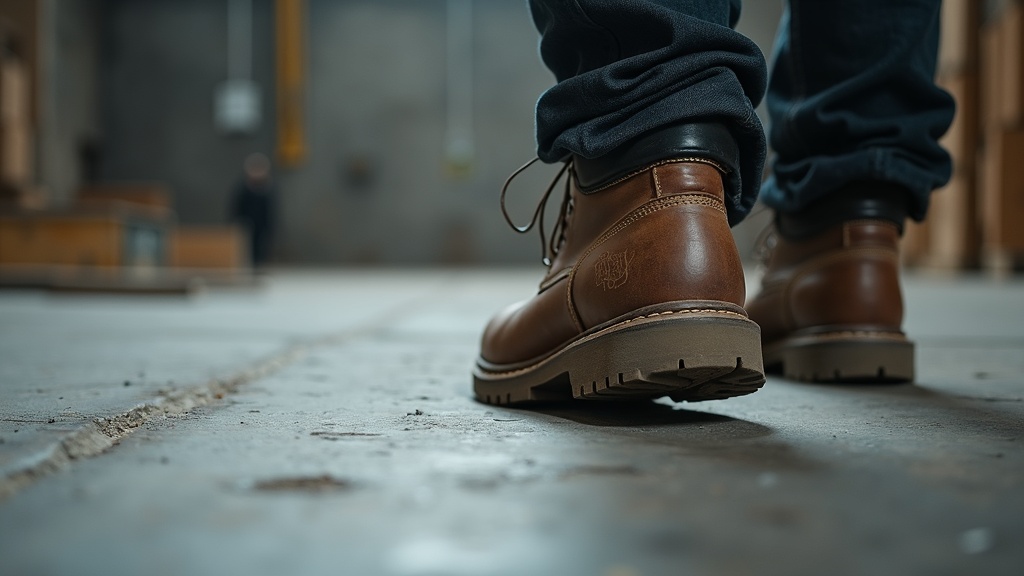
Your heel hits concrete ten thousand times a day, and concrete gives back nothing. No spring, no flex, no forgiveness. By hour six your feet aren't just tired, they're sending distress signals up your whole body.
This piece is about fixing that, not with vague advice about "taking breaks," but with the specific moves, gear, and habits that actually work when your livelihood depends on staying on your feet.
Key points at a glance
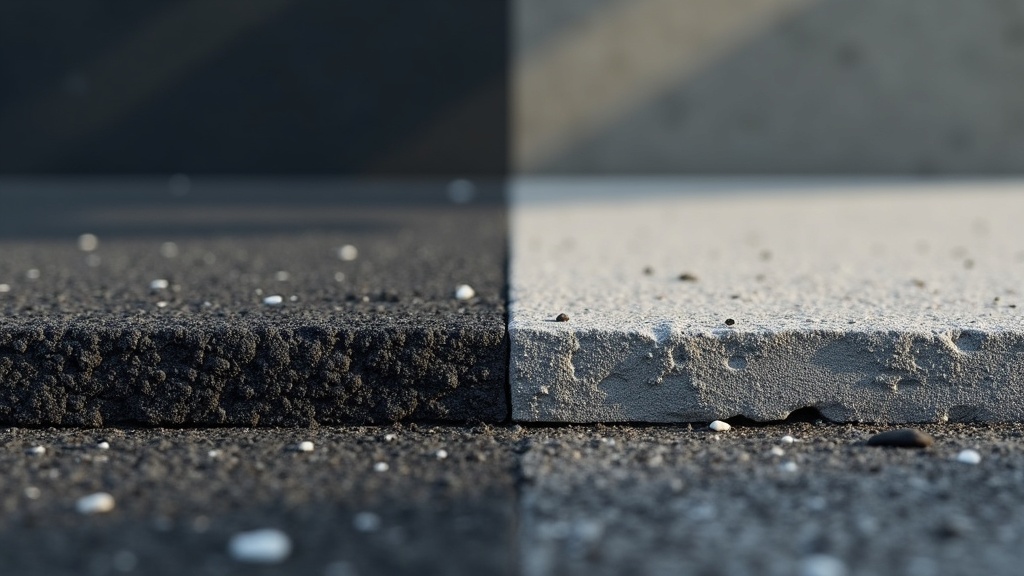
- Concrete is 10x harder than asphalt and returns zero energy to your body with every step.
- Plantar fasciitis is the most common injury from standing on concrete all day, and it's preventable.
- The right insole matters more than the boot brand for absorbing concrete impact.
- Knee and lower back pain are direct downstream effects of heel pain from concrete floors all day.
- Ignoring early symptoms turns a fixable problem into a surgical one.
- A simple end-of-shift routine cuts recovery time by morning.
What this guide does for you
Why Concrete Hits Different Than Other Surfaces
Concrete registers around 4,000 psi of compressive strength. Asphalt flexes a little. Rubber mats give back energy. Hardwood has some spring. Concrete does none of that. Every footfall is a dead stop.
That rigidity forces your body to absorb every pound of impact through your heel, arch, ankle, knee, and lower back. On a softer surface, the ground shares that load. On concrete, you carry it alone.
What's Actually Happening to Your Heel (The Short Version)
When you stand or walk on an unforgiving surface all day, the fat pad under your heel compresses and never fully recovers between steps. Over time, that pad thins out.
Meanwhile, the plantar fascia, a thick band of tissue running along the bottom of your foot, gets stretched and micro-torn every time your heel strikes hard ground. That's the slow burn you feel building through the afternoon.
Pain in the morning when you first step out of bed is the signature symptom. If you have it, you're already in early plantar fasciitis territory.
Did you know?
The heel fat pad in adults can thin by up to 30% over a lifetime of hard-surface work, a process that accelerates significantly when the dominant surface is concrete. Once lost, that padding does not grow back on its own.
Can Concrete Floors Cause Plantar Fasciitis? Yes, and Here's How to Tell
Plantar fasciitis from concrete floors is among the most common occupational foot injuries in warehouse, kitchen, and manufacturing work. The diagnosis isn't complicated, but people ignore the signs until they're limping.
Classic warning signs
- Sharp stab in the heel during your first few steps in the morning
- Pain that eases mid-morning but returns hard after lunch
- Tenderness right at the base of the heel, not the middle of the arch
- Tightness in the Achilles after you've been sitting for an hour
If three of those four match your situation, you're not dealing with general soreness. You have an injury that needs specific treatment, not just toughing it out.
The Gear That Makes or Breaks Your Shift: Boots, Insoles, and Socks
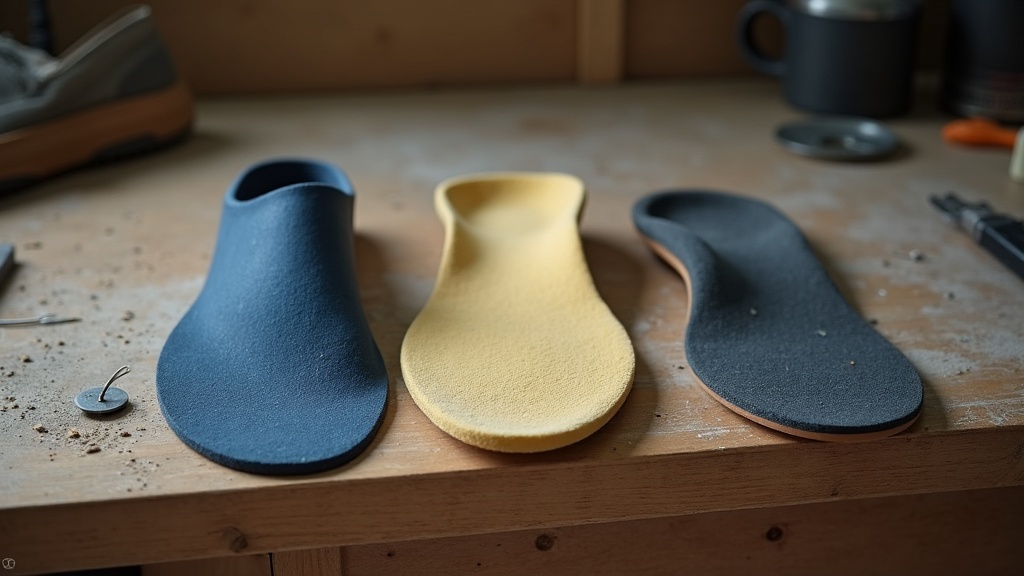
The stock insole that comes with most work boots for concrete floors is a cardboard-thin piece of foam that bottoms out by 10 a.m. Replacing it is the single highest-ROI move you can make for heel pain.
What to look for in an insole for concrete
- Deep heel cup: holds the fat pad in place under the heel bone instead of letting it spread sideways
- Firm arch support: reduces the stretch load on the plantar fascia
- Dual-density construction: soft top layer for comfort, firm base layer for support
- Full-length design: pressure distributed across the whole foot, not just the heel
| Insole Type | Best For | Concrete Rating | Avg. Cost |
|---|---|---|---|
| OEM (stock boot insole) | Nothing, really | Poor | Included |
| Gel heel cup | Mild heel ache, short shifts | Fair | $10, $20 |
| Over-the-counter orthotic | Early plantar fasciitis, long shifts | Good | $40, $60 |
| Custom orthotic | Chronic pain, structural foot issues | Excellent | $200, $500 |
| Anti-fatigue mat (workstation) | Stationary work, assembly lines | Excellent (when standing still) | $30, $80 |
Socks: the overlooked layer
A thick cushioned crew sock, merino wool or synthetic blend, adds meaningful padding and prevents the kind of micro-friction that creates hot spots. Cotton socks hold sweat and break down faster, skip them for long shifts on concrete.
What You Can Do Right Now to Kill the Pain After a Long Day
When you get home, the goal is to reduce inflammation and restore blood flow before you sleep. Do this consistently and your mornings change fast.
- Frozen water bottle roll: sit down, roll the arch of your foot over a frozen bottle for 5 minutes per foot. Cold reduces inflammation, the rolling loosens the plantar fascia.
- Towel stretch: loop a towel around your toes, pull your foot toward you with your knee straight, hold 30 seconds. Do it three times each foot.
- Calf raises on a step: lower your heel past the step edge, hold, rise slowly. This keeps the Achilles and plantar fascia from shortening overnight.
- Elevate before bed: feet propped above heart level for 15 minutes drains the inflammation fluid that builds up through the day.
Did you know?
Wearing unsupportive footwear while recovering from plantar fasciitis, even just walking to the bathroom barefoot on a tile floor at night, can undo a significant portion of the tissue healing that happens during sleep. Keep a pair of supportive slides next to the bed.
The Long Game: What Happens If You Ignore Heel Pain at Work
Early heel pain from concrete floors all day is a soft tissue problem. You can fix soft tissue problems. What you cannot easily fix is what happens next if you keep grinding on it.
The progression nobody wants
- Weeks 1, 4: Mild morning pain, goes away. Most people push through.
- Months 2, 3: Pain lasts longer into the day. Gait starts to compensate, shifting load to the outside of the foot.
- Months 4, 6: Heel spur formation begins. Bone grows to reinforce the chronically stressed insertion point.
- Beyond 6 months: Chronic plantar fasciitis requiring corticosteroid injections, physical therapy, or surgery in roughly 10% of cases.
The workers who end up needing surgery are almost never the ones who got hurt suddenly. They're the ones who waited.
Concrete Isn't Just Wrecking Your Feet: Knees, Back, and Calves
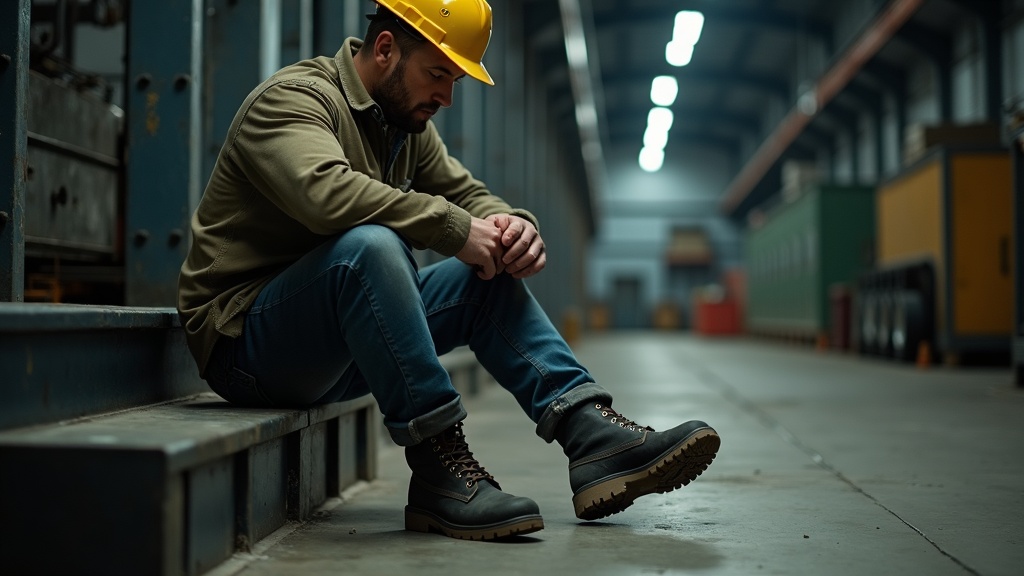
When your heel hurts, you shift your weight. That shift travels up the chain. Standing on concrete all day knee pain is a direct result of altered gait mechanics that begin in the foot.
What else takes the hit
- Knees: excess load on the medial compartment, early arthritis in workers over 40 who've been on concrete for years
- Lower back: the lumbar spine absorbs impact that the foot and knee no longer dampen effectively
- Calves: the gastrocnemius and soleus work overtime to stabilize an under-supported foot, leading to chronic tightness and shin splints in some cases
Leg pain from standing on concrete all day is often blamed on circulation or fatigue. Often it's biomechanical, and a better insole plus a daily stretch routine resolves it without any medical intervention.
The Bottom Line on Staying on Your Feet Without Burning Out
The job isn't going to get softer. The floor isn't going to change. What changes is how you meet it.
Start with the insole swap this week. A $50 orthotic insole is the cheapest injury prevention tool on the market for anyone doing eight-plus hours on concrete. Add the nightly stretch and frozen bottle routine. Give it two weeks.
If the pain doesn't ease, see a podiatrist before the six-month window closes on easy treatment. The workers who stay productive for decades aren't tougher than everyone else. They just dealt with problems when they were still small.
