



Most guys overthink this. Work boots and jeans have been paired together since before your grandfather punched his first time card. Get the fit right, pick the right cut, and you're done.
But get it wrong, and the whole thing falls apart. Bunched denim around the ankle, jeans riding up over the shaft, boots that look like they swallowed your legs. This guide fixes that, fast.
Key points at a glance
- Straight leg and slim straight jeans are the best cuts to wear with work boots
- Jeans over the boot works better on the job; tucking in is cleaner for casual wear
- The 2-finger rule keeps the fit right at the shaft without bunching
- Black boots and blue jeans is the most versatile combo you can build
- Avoid slim tapered jeans, they bunch up and look sloppy over a thick shaft
- Boot type changes the rules: Chelseas, lace-ups, and pull-ons each have a best approach
What You'll Get from This Guide
Jeans Over or Tucked In: What Actually Works on the Job
On the jobsite, jeans over the boot is the default. It keeps debris out, protects the shaft from scuffs, and it's faster to move in. No fuss.
Tucking jeans into your work boots, or blousing them, is a different look entirely. It works off the clock with a cleaner boot, but on a construction site it reads as trying too hard, and it can trap sawdust or concrete dust against the shaft.
The real question isn't which one is cooler. It's what situation you're dressing for.
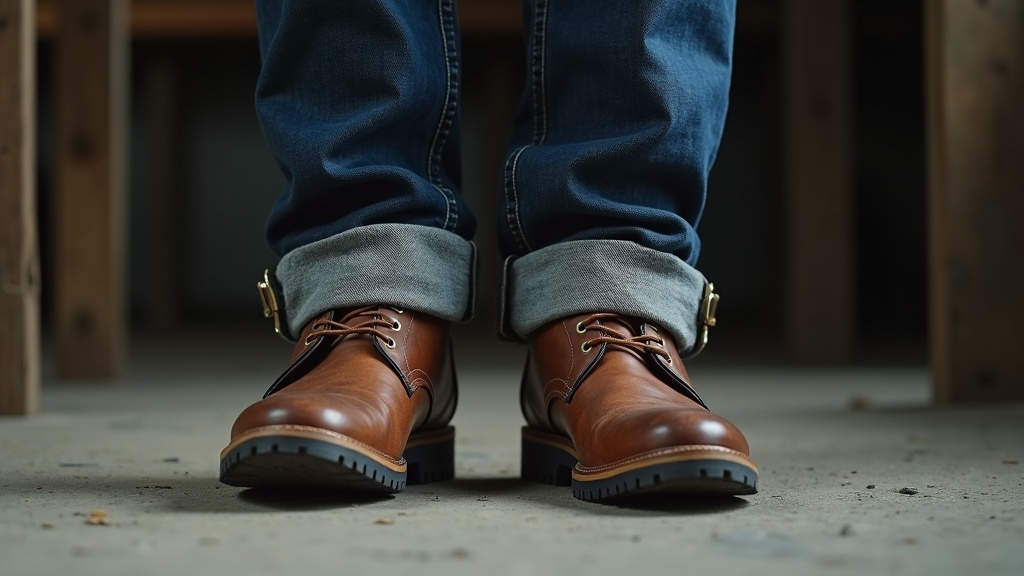
The Right Jeans Cut for Work Boots (And What to Skip)
This is where most guys go wrong. The cut of your jeans determines everything about how the boot sits and how the leg line looks.
Cuts that work
- Straight leg: The gold standard. Enough room in the leg to sit cleanly over the boot shaft without bunching. Works tucked or untucked.
- Slim straight: A little cleaner through the thigh, still has enough leg opening. Good for casual wear after work.
- Relaxed fit: Classic work jean. Plenty of room, easy to move in, stacks nicely over heavier boots.
- Bootcut: Technically designed for this exact purpose. Slightly flared leg sits right over the boot shaft. No bunching whatsoever.
Cuts to leave on the rack
- Slim tapered: The leg opening is too narrow. Fabric bunches around the shaft and you end up looking like you're wearing garbage bags over your feet.
- Skinny jeans: Same problem, worse outcome. The boot shaft stretches the leg, the seams sit crooked. Skip it.
Did you know?
The original "bootcut" jeans were developed in the 1960s for American cowboys who needed denim wide enough at the ankle to pull over riding boots without removing their spurs. The same logic applies today with steel-toe work boots.
The 2-Finger Rule and Other Fit Tips Worth Knowing
The 2-finger rule is simple: when your jeans are sitting on top of the boot, you should be able to slide two fingers between the boot shaft and the fabric without forcing it. Too tight means bunching when you walk. Too loose means the denim collapses and drapes like a curtain.
For length, aim for a slight break at the top of the boot. One clean fold at most. Heavy stacking looks sloppy and creates a tripping hazard on a real worksite.
A few more fit rules that hold up
- If you're tucking in: the jeans should reach the ankle bone, not hang below it.
- If you're going over: hem should touch the top of the boot with one fold, not pool around it.
- Raw denim shrinks. Size up one if you're buying new and plan to wash them.
| Jeans Cut | Best For | Over or Tucked |
|---|---|---|
| Straight Leg | Jobsite and casual wear | Both |
| Slim Straight | Casual off the clock | Tucked or light stack |
| Relaxed Fit | Heavy work, full-day wear | Over the boot |
| Bootcut | Any boot with a thick shaft | Over the boot |
| Slim Tapered | Not recommended | Neither |
How to Wear Work Boots with Jeans for a Clean Casual Look Off the Clock
After a long shift, you're not changing your whole wardrobe. The same boots that kept your toes intact on the job can carry you to the hardware store, the bar, or your kid's Saturday game without looking rough.
The move is simple: switch to a dark wash jean. Dark indigo or black denim immediately cleans up the look without any extra effort. Pair it with a plain crew-neck tee or a flannel shirt, leave the laces neatly tied, and you're done.
Cuffing once, just above the boot shaft, works well with a medium or light wash jean for a more casual, intentional look. Keep the cuff tight and even, not sloppy.

Black Boots and Blue Jeans: The Go-To Combo That Never Fails
Black work boots with blue jeans is the most reliable combination a working man can own. It works on the site, it works at the bar, and it works at a family cookout. No thinking required.
The contrast between black leather and blue denim is clean without being flashy. A darker denim keeps it polished. A medium wash keeps it relaxed. Either works.
Brown boots are a close second, especially with medium or light blue jeans. Tan and amber tones in brown leather pair naturally with denim's indigo. Just avoid very light wash jeans with very light brown boots: the tones bleed together and the boots disappear.
Did you know?
Levi Strauss originally reinforced denim jeans with copper rivets in 1873 specifically for miners and laborers whose pants kept tearing at the stress points. The work boot and jeans pairing is literally as old as American industry itself.
Common Mistakes That Make the Whole Outfit Look Sloppy
A good boot can't save bad denim. Here's what kills the look before it even starts.
- Too much stack: Jeans puddling around the ankle over a heavy boot looks like you grabbed the wrong size. One clean break, maximum.
- Wrong inseam length: Jeans that hit mid-shaft when you walk make the boot look stubby and the leg look short. Get them hemmed if you have to.
- Dirty boots, clean jeans: If you're wearing the outfit casually, wipe the boots down. Concrete dust and dried mud read as lazy, not rugged.
- Tapered jeans over a chunky boot: The silhouette looks bottom-heavy and the fabric bunches in a way that no amount of adjustment fixes.
- Overly distressed jeans with a work boot: Heavy rips and shredding look like a costume next to a real work boot. Light fading is fine. Blowout knees are too much.
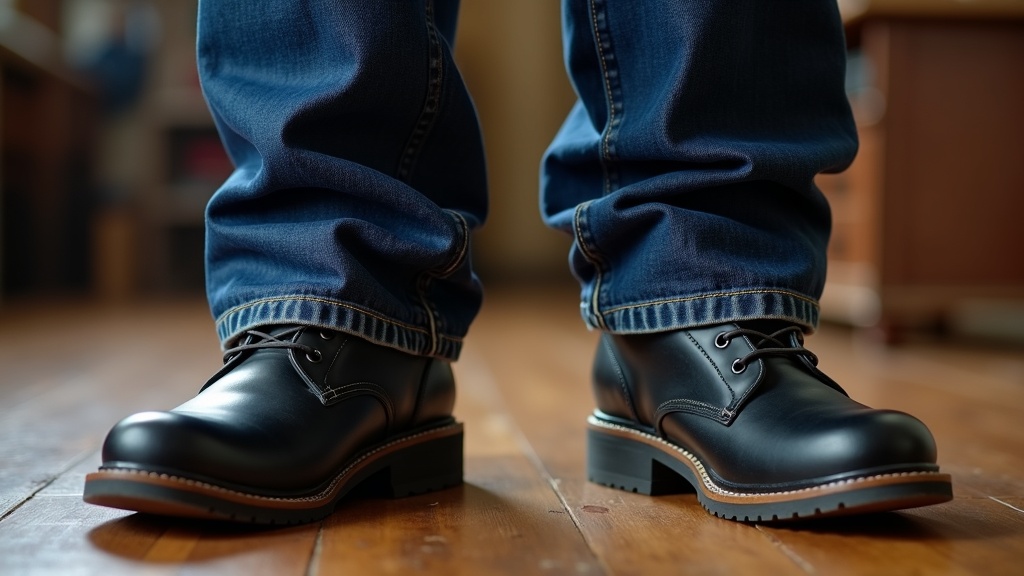
Quick Style Guide by Boot Type: Lace-Up, Chelsea, and Pull-On
Not all work boots sit the same way. The shaft height and silhouette of your specific boot should influence how you wear your jeans.
Lace-up work boots
The most common type on the job. Jeans over the top is standard. A straight or relaxed leg sits cleanly over the lacing without catching. Don't tuck into a high lace-up unless you're going for a very intentional look; it usually just looks rushed.
Chelsea work boots
Lower shaft, cleaner profile. This is the one boot where tucking slim straight jeans in works well. The elastic side panel keeps it looking tailored, not sloppy. Also pairs well with a single cuff over the boot for a casual outfit.
Pull-on work boots
Usually a taller shaft, sometimes 8 to 10 inches. Jeans over the boot is the only practical move here. Use a straight or relaxed leg and aim for a clean break right at the top of the shaft. Blousing doesn't work with most pull-on silhouettes.
Put it together: your action checklist
- Pick a straight leg or relaxed fit jean for work. Slim straight for casual.
- Check the leg opening: it should slip over the boot shaft without forcing.
- Use the 2-finger rule at the shaft before you walk out the door.
- Go dark wash for a cleaner off-duty look. Medium wash for relaxed weekends.
- Match boot leather color to denim depth: darker leather with darker denim, lighter with medium.
- Wipe the boots down if you're wearing them anywhere that's not a worksite.
