


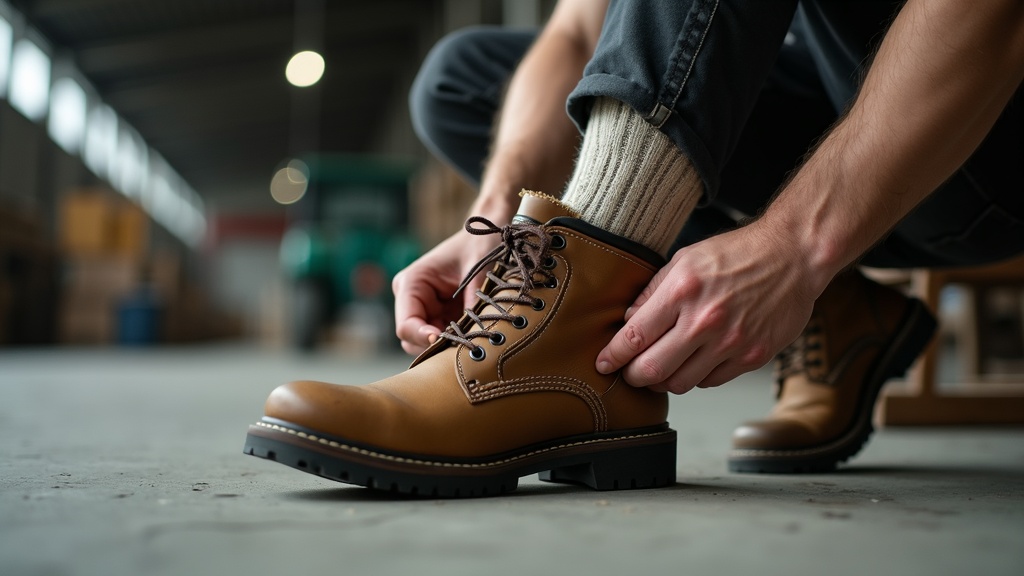
You're six hours into a twelve-hour shift and your sock has bunched up under your toe. That ridge of fabric has been grinding against the inside of your boot since lunch. By the time you clock out, you've got a blister the size of a quarter and a sock that looks like it went through a shredder.
That's not bad luck. That's a construction problem. The seam failed, and it took your foot with it. Here's what actually separates the socks that hold up from the ones that don't.
Key points at a glance
- Regular toe seams bulk up inside steel toe boots and create friction that wears out fabric fast
- "Seamless" means different things: true knit-in construction vs. hand-linked flat seams are not the same
- Seamless and hand-linked socks typically outlast standard seam socks by a significant margin under real work conditions
- Material matters as much as seam type: wool blends and nylon reinforcement add years to a pair
- A quality pair of work socks should last 6 to 18 months of daily wear before showing real degradation
- For steel toe boots specifically, a flat or no-seam toe is non-negotiable for both comfort and durability
What good work socks actually do for you
The Real Problem With Regular Seam Socks on a Long Shift
A standard sock has a toe seam stitched across the top of the foot. On a regular sneaker, you might not notice it. Inside a stiff work boot with a steel toe cap, that seam sits right where the cap ends and your toes begin. That edge becomes a pressure point, and pressure points become blisters.
The friction doesn't just hurt. It accelerates wear. The seam area is the first place the fabric thins out and holes form, because it takes more abuse than any other part of the sock.

What "Seamless" Actually Means (It's Not All the Same)
The word "seamless" gets thrown around on packaging and it can mean three different things.
- Circular knit with a knitted-in toe: The sock is knitted as a tube, the toe closed by knitting. There is literally no seam. This is true seamless construction.
- Hand-linked toe: The two sides of the toe are joined stitch by stitch on a machine, creating a flat, nearly invisible seam. Not truly seamless, but close. Often considered the gold standard for knit work socks.
- Machine-overlock seam marketed as "smooth": Still a raised seam, just ground down a bit. Don't be fooled by the label.
For the purposes of durability and comfort inside a boot, hand-linked and true seamless are both significantly better than a standard overlock seam.
Did you know?
Hand-linking a toe seam is a slower, more labor-intensive process than standard overlocking. A single operator can only link a few dozen pairs per hour compared to hundreds with automated overlocking, which is a big reason why hand-linked socks cost more.
Where Regular Seam Socks Fail First and Why
There are three places a regular work sock breaks down before anything else.
- The toe seam: Constant friction against the boot cap wears through the thread and then the fabric underneath.
- The heel: Shear stress on every step. If there's no reinforcement here, you'll have a hole in weeks.
- The arch band: Cheap elastic loses its grip, the sock starts sliding down, and the whole fit collapses.
When a regular seam sock fails at the toe, it usually means the sock is done entirely. The seam thread unravels and the surrounding fabric goes with it. A seamless or hand-linked sock doesn't have that single failure point at the toe, so it tends to wear more evenly across the whole sock.
Do Seamless Work Socks Actually Last Longer? The Straight Answer
Yes, with one condition: the rest of the sock has to be built right too.
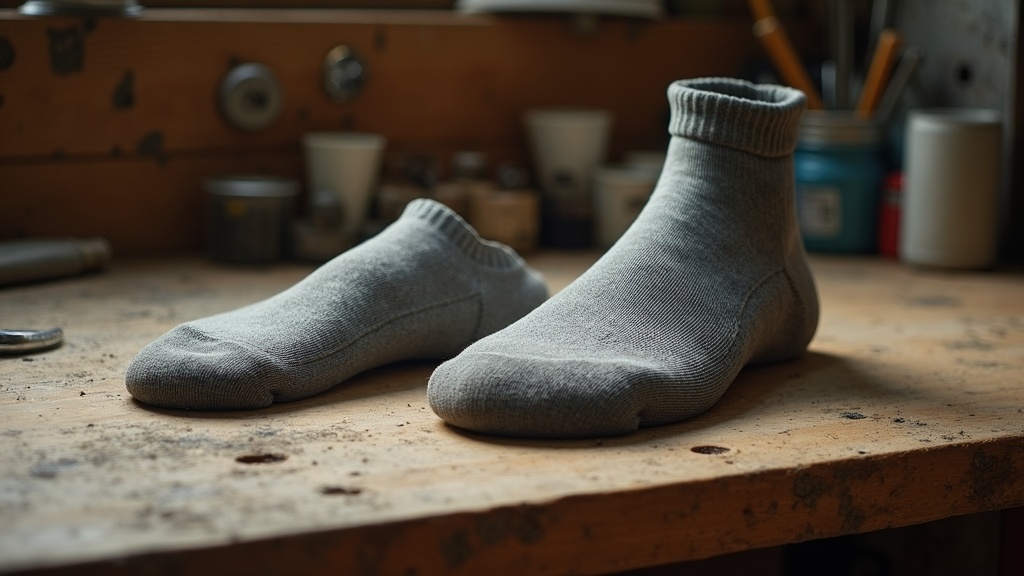
A seamless sock made from thin cotton with no heel reinforcement will still wear out in two months. The seam type determines where the sock fails first, but the material and construction determine how long it takes to fail at all.
When you combine a hand-linked or true seamless toe with a reinforced heel and toe zone and a quality fiber blend, you're looking at a sock that consistently outlasts a standard overlock sock by several months under the same daily conditions.
What Type of Socks Last the Longest on the Job?
The most durable work socks share a specific set of traits. Here's how the main options compare side by side.
| Sock Type | Durability | Best For | Weak Spot |
|---|---|---|---|
| Standard overlock seam, cotton | Low (2-4 months) | Light indoor duty | Toe seam, heel thinning |
| Hand-linked toe, wool/nylon blend | High (10-18 months) | Steel toe boots, construction | Cost per pair |
| True seamless knit, synthetic blend | Medium-high (8-14 months) | Warehouses, long shifts | Less cushion than wool |
| Flat seam, merino wool/nylon | Very high (12-18+ months) | All-season, all trades | Premium price point |
| Standard seam, poly/cotton, reinforced | Medium (5-8 months) | Budget-conscious buyers | Toe seam still a risk factor |
The pattern is consistent: wool or wool-blend fibers paired with flat or no-seam toe construction give you the longest service life. Nylon reinforcement at the heel and toe adds another layer of resistance to abrasion.
How Long Should Work Socks Last Before You Toss Them?
Here's a reasonable benchmark based on daily work wear, one pair per day, washed after every shift.
- Budget cotton work socks: 2 to 4 months before holes or elastic failure
- Mid-range reinforced socks: 5 to 8 months
- Quality seamless or hand-linked wool blends: 10 to 18 months
If your socks are going under 6 months regularly, something is off: either the sock quality is low, your boots are too tight, or you're washing on too high a heat setting. Hot water and high dryer heat break down elastic and fiber structure faster than foot friction does.
Did you know?
Merino wool fibers can bend back and forth over 20,000 times before breaking, compared to around 3,000 for standard cotton fibers. That mechanical resilience is a big part of why merino work socks hold up so much longer under repetitive stress.
Seamless Work Socks for Men and Women: What to Look For
The core checklist is the same regardless of gender. Sizing and fit profiles differ, but the construction priorities don't.
Must-haves for both
- Hand-linked or true seamless toe construction
- Reinforced heel and toe zone (look for nylon content of at least 15-20%)
- Moisture-wicking fiber: merino wool, CoolMax, or a nylon-wool blend
- Arch support band that holds through a full shift without sliding
- Boot height match: crew or over-the-calf for tall boots, no-show stays out of the equation entirely for work boots
For steel toe boots specifically
The toe box on a steel toe boot is narrower and more rigid than a soft-toe boot. Even a minor raised seam gets amplified inside that rigid cap. Stick to hand-linked or knitted-in seamless construction. Don't compromise here.
Worth the Extra Cost or Not? Our Honest Take
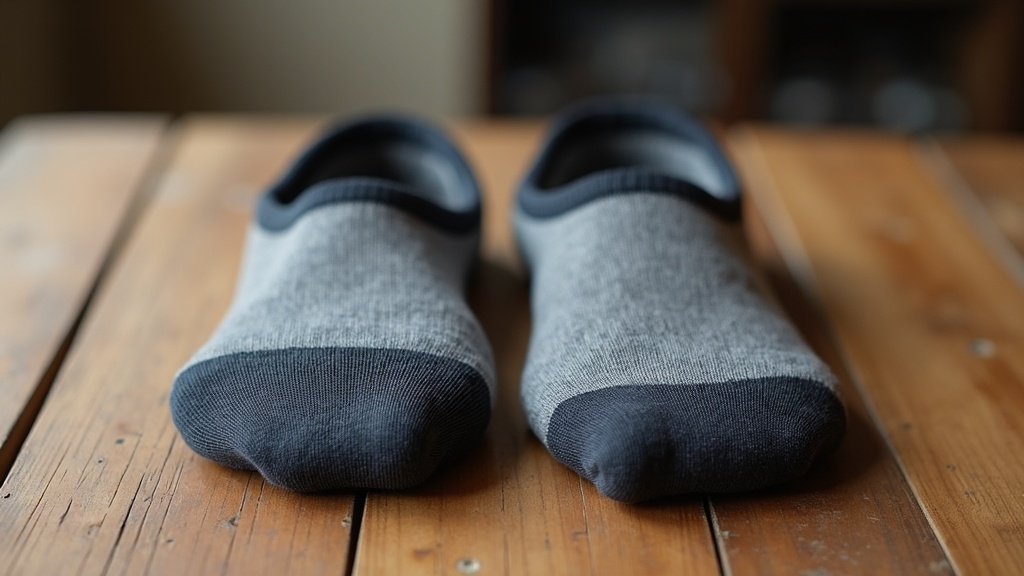
A quality pair of seamless or hand-linked work socks runs $15 to $25. A cheap 6-pack of cotton work socks is $12. Do the math over a year.
If cheap socks last 3 months and you buy 3 packs a year, you're spending $36 and replacing socks constantly. If one quality pair lasts 14 months, you spend $20 and spend zero time thinking about your socks at work. That's the better deal, and your feet know it by hour eight.
The one caveat: if your job involves chemicals, concrete dust, or anything abrasive enough to chew through any fabric, even the best sock won't last forever. In those conditions, plan to replace more often, but still go seamless, because the comfort return is real every single day.
The practical bottom line
- Buy seamless or hand-linked construction for any boot with a rigid toe box
- Choose wool or wool-blend for multi-season durability and moisture control
- Wash cold, dry on low heat to protect elastic and fiber integrity
- Rotate at least 3 to 4 pairs to reduce per-pair wear frequency
- Replace when the heel or ball of the foot starts thinning, not just when there's an actual hole
