


```html
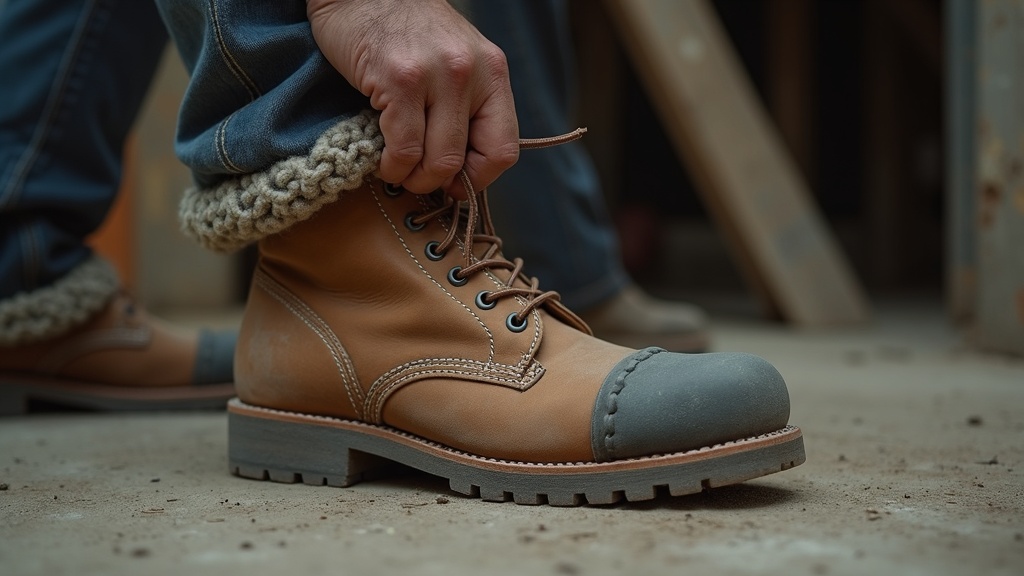
You spend ten, twelve hours a day on your feet. The boot gets all the credit, but the sock liner is the part that actually decides whether your feet make it to quitting time in one piece.
Get this wrong and you pay for it in blisters, soaked socks, and feet that feel like ground beef by 3 PM. Get it right and it's one of the cheapest upgrades you'll ever make to your workday.
Key points at a glance
- A sock liner sits next to your skin and moves moisture away before it turns into a blister problem.
- Merino wool handles heat, cold, and sweat better than most synthetics in a daily work environment.
- Steel toe boots concentrate pressure at the toe box, so padding and fit matter more than in regular footwear.
- Thin liners under thick socks is the layering setup that actually works for long shifts.
- Moisture-wicking fabric is the single most important spec for workers with sweaty feet.
- Avoid cotton as a base layer. It holds moisture against your skin all day.
What the right sock liner does for you
What a Sock Liner Actually Does Inside a Heavy Boot
A sock liner is a thin inner sock worn directly against your skin. Its job is to manage the environment between your foot and the outer work sock.
Heavy boots are stiff, warm, and not great at letting air circulate. Without a liner, your skin sits in a wet, friction-prone pocket for the whole shift. That's how you get hot spots, blisters, and raw patches on your heels and toes.
The liner acts as a transfer layer. Sweat moves through it, away from your skin, and into the outer sock where it can spread out and evaporate. Less moisture at the skin surface means less friction. Less friction means fewer blisters.
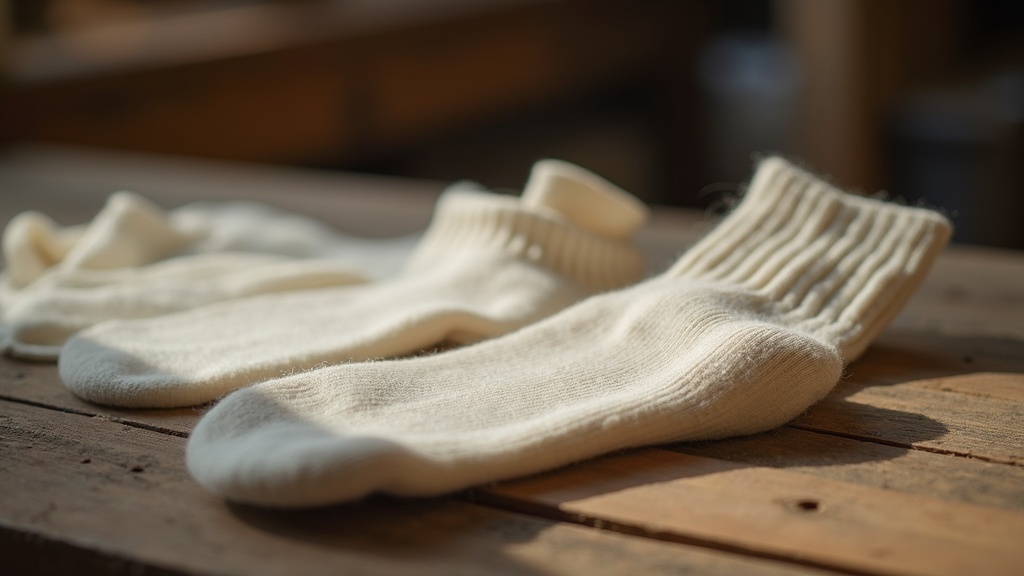
The Real Benefits: Blister Control, Moisture, and All-Day Comfort
The best socks for work boots to prevent blisters share one trait: they keep moisture off your skin and reduce the sock-on-skin friction that tears it up.
Blisters form when wet skin rubs repeatedly against a surface. A liner breaks that cycle. The liner moves with your foot, so friction happens between the liner and the outer sock instead of between the sock and your skin.
Comfort is the other side of it. A thin, well-fitted liner smooths out the interior of a stiff boot, fills small gaps, and keeps your foot from sliding around. That sliding is what wrecks heels by noon on a long shift.
Did you know?
The average worker's foot produces up to a cup of sweat per day. Inside an insulated steel toe boot with limited ventilation, that moisture has nowhere to go unless the sock actively moves it away from the skin.
Sock Liner vs. Regular Work Sock: Which One Do You Need?
A regular work sock is built for cushioning and durability. A sock liner is built for moisture management and friction reduction. They solve different problems.
If you run hot, sweat heavily, or do high-mileage work like concrete, roofing, or warehouse picking, you need both. The liner handles the wet and the friction; the outer sock handles the impact and the cold.
If your work is lighter and your feet run dry, a single quality midweight sock may be enough. But most guys doing heavy trades work will get more out of the liner-plus-sock combination than from any single sock alone.
Should You Wear Thick or Thin Socks with Work Boots?
The thick vs thin socks work boots debate comes down to fit and conditions. A thick sock in a boot that barely fits will compress your toes and cut off circulation. A thin sock in an oversized boot means your foot is swimming and rubbing all day.
- Thick socks work well in cold conditions, boots with extra room, or jobs with heavy impact on hard surfaces.
- Thin liners under a medium-weight outer sock give you the most control over fit and moisture across seasons.
- Midweight socks alone are the best single-sock choice if layering isn't your preference.
The real rule: your toes should be able to move slightly. If they can't, your sock is too thick for your boot's fit.
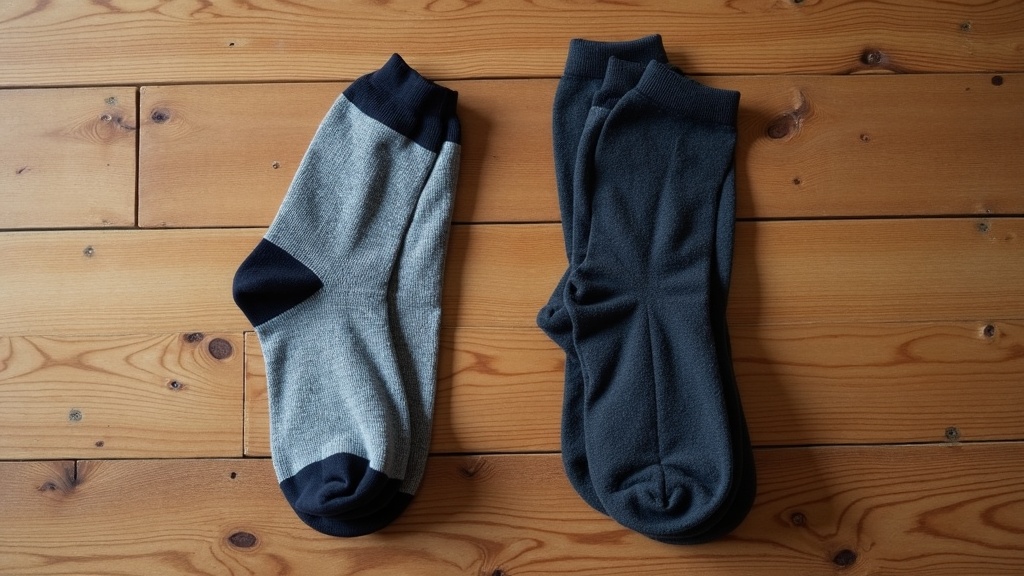
Steel Toe Boots Need More Protection, Not Less
Steel toe caps are hard. The edge of that cap sits right at the base of your toes, and every time your foot flexes forward, your toes press against it. Steel toe sock liner benefits are most obvious right there: padding across the toe box reduces that daily grinding contact.
The seam placement matters too. A poorly placed toe seam on a cheap sock will sit directly under the steel cap and create a pressure ridge across your toes by mid-morning. Look for flat-knit or seamless toe construction in any sock you're wearing inside a steel toe boot.
Composite and alloy toe boots have a slightly softer interior profile, but the same rule applies. Anything harder than your foot needs a buffer between it and your skin.
Did you know?
A steel toe cap adds roughly 3 to 5 millimeters of rigid material inside the toe box. That's enough to change the effective fit of your boot by half a size, which is why sock thickness matters more in steel toe footwear than in standard boots.
Best Sock Liner Materials for Sweaty, Hard-Working Feet
Material is everything for socks designed for sweaty feet in work boots. Here's how the main options actually perform on the job.
| Material | Moisture Control | Temperature Range | Durability |
|---|---|---|---|
| Merino Wool | Excellent, wicks and absorbs | Cold to moderate heat | Good, wears thin over time |
| Polyester / Nylon Blend | Very good, fast-drying | Warm weather and hot sites | Excellent, holds up to hard use |
| CoolMax / Polypropylene | Best for high-sweat conditions | Hot weather, summer pours | Good with proper washing |
| Cotton | Poor, holds moisture against skin | Any season, but not ideal | Average |
| Wool / Synthetic Blend | Very good, balanced performance | Year-round, most versatile | Very good |
Merino wool socks for work boots are the go-to recommendation for workers who deal with changing temperatures or need all-day odor control. Merino doesn't just wick: it absorbs up to 30% of its weight in moisture while still feeling dry against your skin.
For pure hot-weather sweating, a polypropylene or CoolMax liner beats wool on drying speed. But in a boot, drying speed matters less than moisture transfer away from skin. Merino wins that comparison most days.
How to Layer Sock Liners with Heavy Work Socks
The setup is straightforward. Thin liner goes on first, directly against your skin. Best heavy duty work socks go on over the liner as the outer layer.
The liner should fit snugly with zero bunching. Any fold or wrinkle in the liner will create a pressure point inside a stiff boot. If it bunches when you pull on the outer sock, size down or try a different brand cut.
Height matters too. For tall work boots, both layers should reach at least mid-calf. A liner that stops at the ankle will roll down inside the boot and bunch at the worst possible spot.
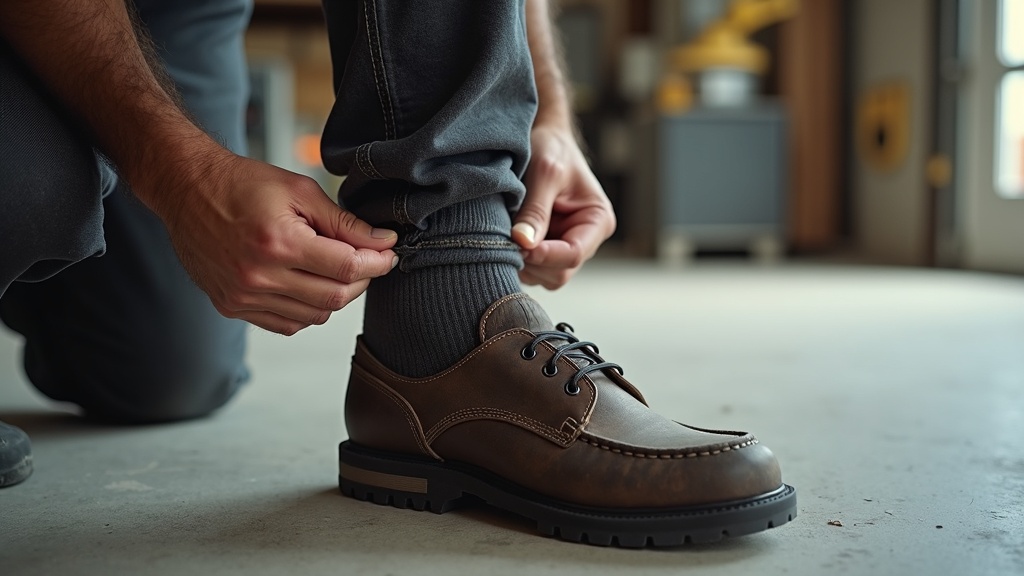
What to Look for Before You Buy (and What to Skip)
You don't need the most expensive pair on the shelf. You need the right specs for your actual working conditions.
Worth paying for
- Seamless or flat-knit toe: non-negotiable for steel toe boots.
- Moisture-wicking fabric: merino, polyester blend, or CoolMax depending on your climate.
- Reinforced heel and toe: where heavy boots destroy socks fastest.
- Arch compression: keeps the liner from sliding down inside the boot over a long shift.
- Tall cut: at least over the ankle, mid-calf for tall boots.
What to skip
- 100% cotton liners: they stay wet and create the exact conditions blisters need.
- Oversized or loose-fitting liners: they fold, they bunch, they make things worse.
- Novelty or dress-sock construction: thin elastic and fashion knits don't survive a trade workday.
The best work socks for steel toe boots are the ones that fit your boot's interior correctly, hold their shape after ten washes, and move moisture without holding it. Find those two things and the price tag largely sorts itself out.
A quick checklist before you add to cart
- Does it specify moisture-wicking or quick-dry construction?
- Is the toe seam flat or seamless?
- Is the height right for your boot shaft?
- Does it have arch support or compression to prevent slipping?
- Does the size chart match your boot size, not just your shoe size?
Answer yes to those five and you've found a liner worth trying. Anything that can't answer three of them isn't worth the shelf space.
Frequently asked questions
Do I really need a sock liner inside my work boots, or is a regular thick sock enough?
What's the best material for a sock liner if I sweat heavily at work?
Will wearing two socks make my steel toe boots feel too tight?
How often should I replace my work sock liners?
Can I use merino wool socks in hot weather or are they only for cold conditions?
What's the difference between a sock liner and the removable insole that comes with my boot?
```
